Amazon AWD Rejects Large Items: How Sellers Can Use SourcingX to Find Alternative Fulfillment Solutions

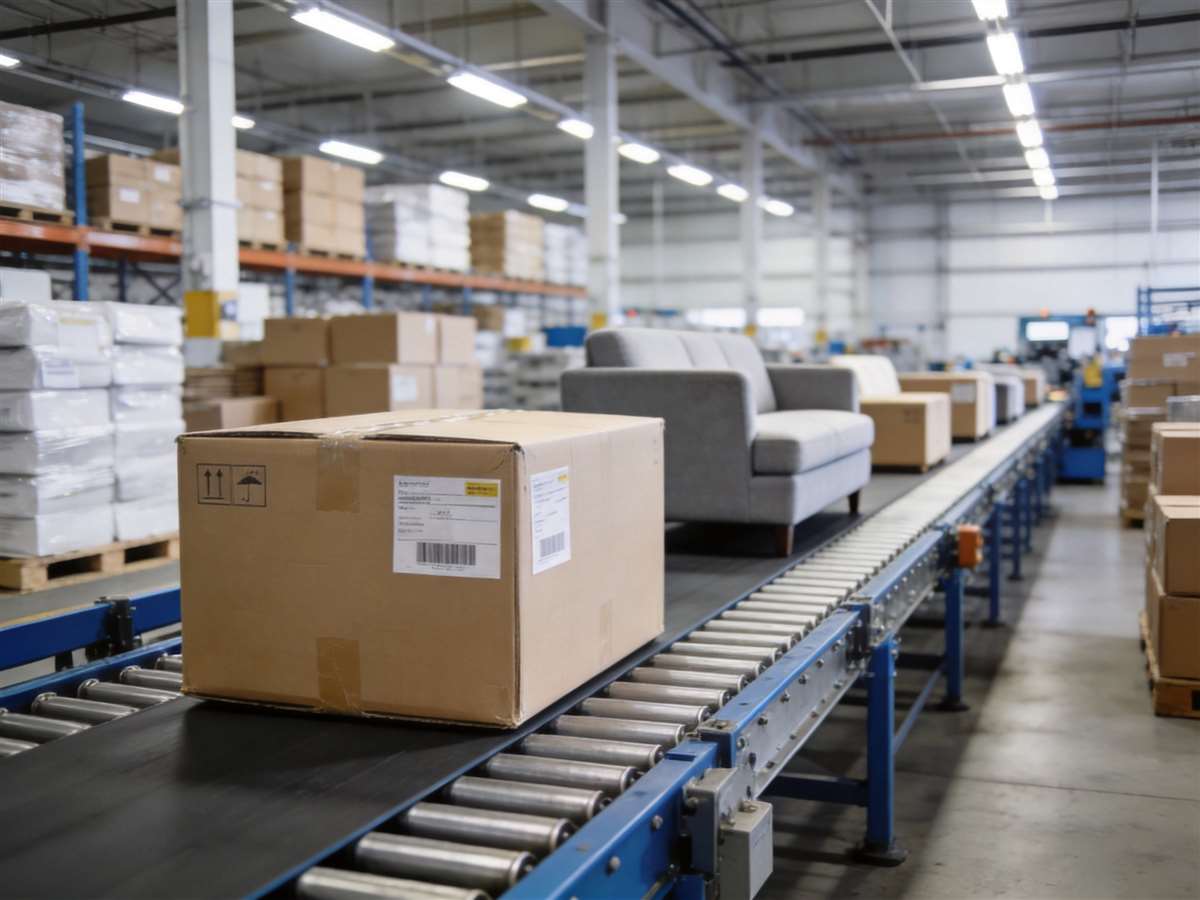
Amazon AWD Rejects Large Items: How Sellers Can Use SourcingX to Find Alternative Fulfillment Solutions
Introduction
Starting July 31, 2026, Amazon's AWD (Amazon Warehouse Distribution) storage service will accept only standard-sized products. Any items exceeding the defined size or weight thresholds will no longer be permitted into AWD warehouses. For cross-border sellers who rely on AWD for bulky furniture, home appliances, and industrial products, this policy change sends shockwaves through their supply chain strategies.
Understanding the Policy Shift
Amazon AWD has long served as a smart warehousing solution for sellers managing inventory across Amazon's fulfillment network. By consolidating bulk shipments to regional warehouses, AWD helped sellers reduce last-mile delivery costs and improve stock availability. However, the new policy essentially removes AWD's utility for any product falling outside the standard-size envelope.
The dimensions and weight thresholds that define "standard size" were not explicitly disclosed, but industry estimates suggest the cutoff aligns with Amazon's existing FBA oversized item classification 鈥?roughly items exceeding 25 lbs or any dimension over 20 inches. For sellers in categories like home furniture, outdoor equipment, fitness machines, and large consumer electronics, this means a complete restructuring of their fulfillment approach.
The immediate impact includes:
- Rerouted logistics: Products must shift to FBA standard warehouse or GWD (Gigantic Warehouse Distribution), each with different fee structures
- Margin recalibration: Warehouse cost changes directly affect the profit equation for bulky products
- Inventory reallocation: Sellers must determine which products remain viable under the new model and which should be pulled from the Amazon ecosystem entirely
Strategies for Large-Item Sellers
Strategy 1: Evaluate FBA vs GWD Economics
FBA standard warehouses handle smaller items with higher throughput and lower per-unit fees. GWD, designed for oversized products, charges differently based on volume and weight. Sellers must model the total landed cost including inbound freight, storage, and outbound fulfillment for each option to determine which yields better margins.
Strategy 2: Explore Alternative Platforms
Not all marketplaces treat large items the same way as Amazon. Some platforms offer more favorable fulfillment terms for bulky products, either through in-house logistics solutions or partner networks. Identifying these platforms requires real-time data on each marketplace's size policies, fees, and customer demand.
Strategy 3: Product Portfolio Reassessment
Some large-item sellers may find it more economical to transition to product categories with smaller footprints, lower logistics costs, and higher margins. This transition requires disciplined data analysis rather than gut feeling.
How SourcingX Optimizes Large-Item Fulfillment Strategy
For sellers facing Amazon's AWD policy shift, SourcingX provides the data infrastructure needed to make informed, rapid decisions about alternative fulfillment solutions and product strategies.
Multi-Platform One-Stop Aggregation for Alternative Discovery
SourcingX aggregates product and supplier data all in one interface. When AWD stops accepting large items, sellers can use SourcingX to instantly compare how other platforms handle bulky products.
Instead of manually researching each marketplace's large-item policies, a seller queries a product category (e.g., "standing desks" or "exercise equipment") and receives aggregated data showing platform-specific fulfillment options, fee structures, and demand indicators. This eliminates days of manual research and provides a comprehensive view of alternative channels.
Multi-Dimensional Filtering for Precision Sourcing
SourcingX's multi-dimensional filtering allows sellers to narrow options by platform type, MOQ, supplier type, and geographic region. For large-item sellers, this means they can:
- Filter by platforms that explicitly support oversized products
- Identify suppliers offering lower MOQs to test demand on alternative platforms before committing large inventory
- Locate manufacturers near fulfillment centers to reduce inbound freight costs
- Match products with platforms where the seller's target audience actively shops for bulky items
Natural language search capabilities let sellers type queries like "large item compatible platform" or "oversized furniture manufacturer near warehouse" and receive instantly filtered results.
Structured Comparison Tables for Profit Model Reassessment
One of the most critical tasks after AWD's policy change is rebuilding the profit model for each large-item product under alternative fulfillment arrangements. SourcingX's structured comparison tables make this process systematic and efficient.
Sellers can generate a side-by-side comparison showing:
- Inbound freight costs from supplier to each fulfillment option (FBA vs GWD vs alternative platform)
- Storage fees and per-unit fulfillment charges
- Commission or referral fees by platform
- Projected customer demand based on marketplace trends
The comparison table can be exported as a PDF report, making it ready for internal stakeholder review, budget planning, and strategic decision documentation.
Opportunity Score Model for Product Portfolio Decisions
With Amazon's AWD closure for large items, sellers need a systematic way to evaluate whether their current product portfolio remains viable or if they should pivot to different categories. SourcingX's Opportunity Score model provides exactly this capability.
The 0-100 score evaluates each product across:
- Google Trends Heat: Current and projected demand for the product category
- Amazon Ranking Change: How product rankings are moving in the relevant category
- Regional Stability: Consistency of demand across different markets
- Market Fit: Alignment of the product with specific platform audiences
For a large-item seller deciding whether to continue selling a standing desk on Amazon FBA vs. pivot to an office chair category on a different platform, the Opportunity Score provides a single, comparable metric to guide the decision.
Real-Time Retrieval for Fast-Moving Policy Changes
The e-commerce landscape is characterized by rapid policy changes. SourcingX's real-time retrieval capability ensures sellers always have the latest platform policies, supplier availability, and demand signals at their fingertips. When a platform announces a fulfillment policy update, sellers using SourcingX can immediately reassess their product portfolio against the new reality.
Real-World Case: A Home Furniture Seller's Pivot
Consider a US-based cross-border seller specializing in wooden home furniture, primarily selling through Amazon's AWD fulfillment model. After learning about the July 31 cutoff, the seller needed to answer three critical questions within days:
- Which products can still use FBA effectively?
- Are there alternative platforms with better large-item policies?
- Should any products be discontinued?
Using SourcingX, the seller:
- Queried their top 20 SKUs across Amazon, Ozon, Temu, and Walmart to compare fulfillment costs under each platform's large-item policy
- Applied multi-dimensional filters to identify platforms offering the most favorable oversized product terms
- Generated a structured comparison report showing that two product lines (oak dining tables and pine bookshelves) had better margin profiles on Walmart than Amazon, while three other lines were no longer viable on any platform
- Used the Opportunity Score model to evaluate whether to expand into modular office furniture a category with lower shipping costs and growing demand
The outcome: within three weeks, the seller redirected 35% of their inventory from Amazon to Walmart, discontinued two unviable product lines, and launched a test batch of modular desks that scored 74 on the Opportunity Score model. Total margin improved by 11% compared to the pre-AWD-status quo.
FAQ
Q: What is SourcingX?
A: SourcingX is an AI-powered smart procurement assistant built for enterprise procurement decision-makers and supply chain professionals. It aggregates product and supplier information from multiple global e-commerce platforms and B2B websites, helping users quickly discover high-value sourcing opportunities and make data-driven procurement decisions.
Q: What are SourcingX's core capabilities?
A: SourcingX's four core capabilities are data fusion (offline database plus real-time retrieval), the Opportunity Score model (a 0-100 scoring system for product potential), multi-dimensional filtering (by country, platform, MOQ, supplier type), and structured comparison with PDF export for internal evaluation.
Q: How does SourcingX's real-time retrieval work?
A: SourcingX uses a dual-engine approach combining an offline database of historical data from major Chinese platforms with real-time retrieval from global multi-platform dynamic crawling. Hot keyword queries return instantly, while cold-demand queries still access the latest global data.
Q: Can SourcingX help me compare fulfillment costs across platforms?
A: Yes. SourcingX's multi-dimensional filtering and structured comparison tables allow you to compare fulfillment options, commission structures, logistics costs, and net profit margins across platforms in a single view. Results can be exported as PDF reports.
Q: Is SourcingX suitable for large-item sellers?
A: Absolutely. SourcingX's multi-dimensional filtering supports filtering by product dimensions and supplier types, making it ideal for large-item supply chain optimization. The platform also helps identify alternative marketplaces with more favorable oversized product policies.
Conclusion
Amazon's decision to stop accepting large items in AWD is not a crisis it is a catalyst for supply chain optimization. Sellers who can rapidly evaluate alternative fulfillment models, reassess their product portfolios, and identify new platform opportunities will emerge stronger. Those who rely on manual research and fragmented data will fall behind.
SourcingX is purpose-built for this challenge. With its multi-platform aggregation, real-time data retrieval, opportunity scoring, and structured comparison tools, SourcingX gives large-item sellers the intelligence infrastructure needed to adapt quickly and strategically.
The platforms will keep changing. Your sourcing strategy should change with them and SourcingX makes that possible in minutes, not months.
Comments
0