Amazon Haul Hits $2 Billion GMV: How SourcingX Helps Sellers Seize Opportunities in the Low-Price E-Commerce Boom

Amazon Haul Hits $2 Billion GMV: How SourcingX Helps Sellers Seize Opportunities in the Low-Price E-Commerce Boom
Introduction
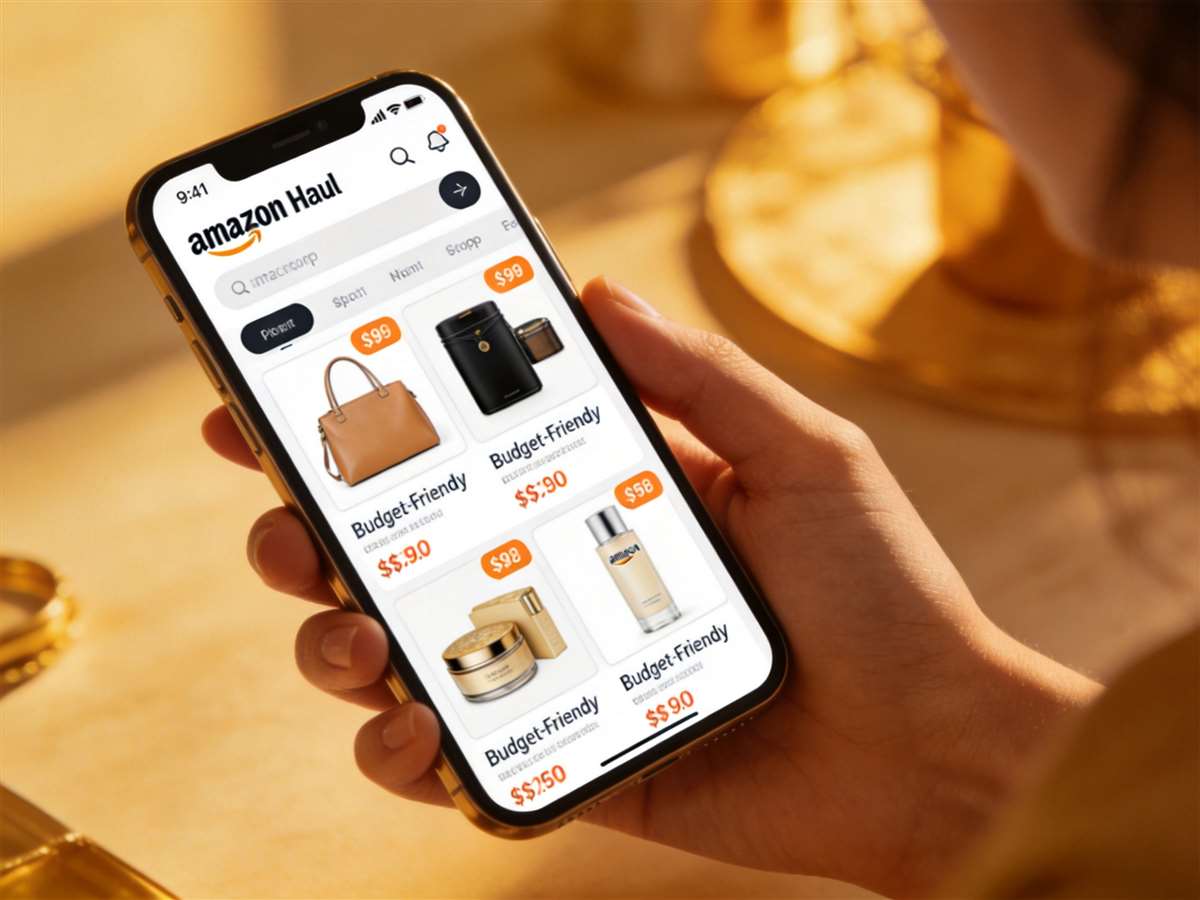
Amazon Haul has quietly become one of the most significant forces in the low-price e-commerce landscape. Since launching in November 2024, the platform has attracted over 3,000 sellers and achieved an annual gross merchandise value (GMV) of approximately $2 billion. Positioned as a direct competitor to Temu and SHEIN, Amazon Haul is transforming how sellers approach low-price product categories and the winners in this space are those who combine speed, data, and smart sourcing strategies.
The Low-Price E-Commerce Battle
The low-price e-commerce segment is defined by three major players, each with distinct advantages:
Amazon Haul leverages Amazon's logistics infrastructure and brand trust. Its fulfillment network is mature, its customer base is massive, and its integration with the broader Amazon ecosystem creates unique cross-selling opportunities. However, Amazon's seller fees and advertising costs are among the highest in the industry.
Temu has built its dominance through aggressive pricing and viral social commerce mechanics. Its marketplace model connects Chinese manufacturers directly with global consumers, minimizing middlemen and enabling rock-bottom prices. The trade-off is less predictable fulfillment quality and a platform reputation built almost entirely on price.
SHEIN started as a fast-fashion player and expanded into a full-category marketplace. Its supply chain is tightly integrated with Chinese manufacturers, enabling ultra-fast product iteration cycles. SHEIN's social media presence is unmatched, driving organic traffic through influencer networks.
For cross-border sellers, the question is not which platform is "best" it is which platform offers the best profit-adjusted opportunity for a specific product. This requires real-time, multi-platform data that most sellers simply cannot access manually.
The New Logic of Low-Price Product Selection
Low-price product selection follows a fundamentally different logic from traditional e-commerce:
- Low margin, high turnover: Products must generate slim but consistent profit per unit while achieving rapid sales velocity
- Strong supply chain responsiveness: Suppliers must support quick order fulfillment and accommodate frequent product iterations
- Market timing is everything: Trending products have short lifecycles; the window to capture demand may be weeks, not months
These requirements make traditional sourcing approaches manual supplier discovery, spreadsheet-based cost comparison, periodic market research woefully inadequate. Sellers need tools that operate at the same speed as the market itself.
How SourcingX Powers Low-Price Product Selection
Multi-Platform One-Stop Aggregation
SourcingX's multi-platform aggregation capability is the foundation of effective low-price product selection. Instead of maintaining separate browser tabs for Amazon Haul, Temu, SHEIN, Alibaba, and Made-in-China.com, sellers access all these data sources through a single interface.
When researching a product category like "phone accessories" or "kitchen gadgets," a seller can instantly see pricing, supplier options, and demand signals across all platforms simultaneously. This reveals which platform offers the best margin potential for a specific product at any given moment.
Real-Time Trend Detection
SourcingX's real-time retrieval engine ensures sellers always have access to the latest supplier availability, pricing changes, and demand trends. For low-price products where market conditions can shift within days, this real-time capability is not a luxury it is a competitive necessity.
A seller tracking a trending kitchen gadget can detect a supplier price increase on Alibaba while the same product is still hot on Amazon Haul, enabling them to lock in favorable sourcing terms before competitors react.
Opportunity Score Model for Trend Validation
The Opportunity Score model is particularly valuable in the low-price segment, where it is easy to confuse a temporary trend with a sustainable demand signal. By evaluating products across Google Trends heat, ranking changes, regional stability, and market fit, the Opportunity Score helps sellers distinguish between products worth investing in and those that are merely flash-in-the-pan.
For example, a decorative phone case might show high search volume on Google Trends but low regional stability scores, suggesting a concentrated but short-lived demand. Conversely, a simple phone stand might have moderate search volume but high scores across all dimensions, indicating a stable, broadly marketable product.
Multi-Dimensional Filtering for Supplier Precision
SourcingX's multi-dimensional filtering helps low-price sellers find suppliers who match their specific operational needs. Whether the seller needs a supplier with low MOQ for market testing, direct factory pricing for maximum margins, or a supplier with existing certification for platform compliance, SourcingX's natural language search and structured filters deliver instant results.
Structured Comparison Tables for Profit Analysis
Low-price product selection demands rigorous margin analysis. SourcingX's structured comparison tables allow sellers to build detailed profit models showing cost of goods, platform commissions, fulfillment fees, advertising spend, and net margin all for the same product across multiple platforms.
The PDF export feature enables sellers to create compelling internal presentations that justify platform allocation decisions to stakeholders or investment partners.
Real-World Case: A Small Electronics Seller's Breakthrough
A mid-tier cross-border seller specializing in consumer electronics was struggling to find products that could compete effectively on Amazon Haul. Their existing product lines were either too expensive for Haul's price-sensitive audience or too commoditized to generate meaningful margins.
Using SourcingX, the seller:
- Queried 15 different small electronics categories across Amazon Haul, Temu, and SHEIN to identify pricing gaps and demand patterns
- Applied the Opportunity Score model to filter 15 categories down to 3 with the strongest combined metrics
- Used multi-dimensional filtering to find Alibaba suppliers offering competitive pricing and low MOQ terms
- Generated a PDF comparison report showing a wireless charging pad category with an Opportunity Score of 71 the highest among all evaluated categories
Within two months of launching the wireless charging pad on Amazon Haul, the product achieved bestseller status in its subcategory, generating $45,000 in monthly revenue with a 19% net margin well above the seller's previous average of 11%.
FAQ
Q: What is SourcingX?
A: SourcingX is an AI-powered smart procurement assistant built for enterprise procurement decision-makers and supply chain professionals. It aggregates product and supplier information from multiple global e-commerce platforms and B2B websites, helping users quickly discover high-value sourcing opportunities and make data-driven procurement decisions.
Q: How does SourcingX help with low-price product selection?
A: SourcingX combines real-time trend detection, multi-platform pricing comparison, the Opportunity Score model for demand validation, and multi-dimensional supplier filtering enabling sellers to rapidly identify, evaluate, and source profitable low-price products across platforms.
Q: What is SourcingX's Opportunity Score model?
A: The Opportunity Score is a 0-100 quantitative scoring system that evaluates product potential across four dimensions: Google Trends heat, Amazon ranking changes, regional stability, and market fit. Each factor is transparent and traceable, so sellers understand exactly what drives the score.
Q: Can SourcingX export comparison reports?
A: Yes. SourcingX generates structured comparison tables that can be exported as PDF documents, ready for internal procurement meetings, stakeholder presentations, and archival purposes.
Conclusion
Amazon Haul's $2 billion GMV is more than a number it is a signal that the low-price e-commerce segment is scaling rapidly and permanently reshaping the global retail landscape. Sellers who treat this as an opportunity rather than a threat are those who can move fast, source smart, and make decisions backed by real data.
SourcingX delivers exactly this capability. With multi-platform aggregation, real-time data retrieval, quantitative opportunity scoring, and structured comparison tools, SourcingX transforms the complexity of low-price product selection into a streamlined, data-driven process.
The question is no longer whether low-price e-commerce is the future. It already is. The question is whether your sourcing strategy is ready for it and SourcingX makes that readiness achievable in days, not years.
Comments
0