Amazon's 300,000 Holiday Worker Hire Signals a Supply Chain That Will Define 2027

Amazon's 300,000 Holiday Worker Hire Signals a Supply Chain That Will Define 2027
Category: Industry Trends | Date: 2026-10-23
Executive Summary
On October 22, 2026, Amazon announced plans to recruit over 300,000 seasonal workers for the holiday fulfillment season, the largest hiring program in company history. This strategic investment in fulfillment capacity reshapes the competitive landscape for third-party sellers and cross-border operators, revealing an industry in transformation where competition for fulfillment capacity drives new sourcing strategies.
The Numbers Behind the Hiring Spree
Amazon's 300,000-worker holiday recruitment represents the largest seasonal hiring program in the company's recent history, and the scale tells a story about e-commerce growth that goes far beyond seasonal staffing considerations and reveals deeper structural trends in the industry.
To put this number in meaningful context, Amazon hired approximately 250,000 workers for the 2025 holiday season and roughly 220,000 for the 2024 holiday season. The 20 percent increase from 2024 to 2026 represents not just growth in order volume but a fundamental expansion of Amazon physical fulfillment footprint, both in the number of fulfillment centers and in the square footage of each facility. Each new seasonal worker typically supports 2,000 to 3,000 orders during the peak holiday period based on Amazon's internal throughput metrics, which means at the low end 300,000 workers can process approximately 600 million holiday orders and at the high end that number approaches 900 million individual package movements across the fulfillment network.
Compare this to the global cross-border e-commerce market, which reached approximately 1.5 trillion dollars in 2025 and continues to grow at double-digit annual rates driven by expanding consumer adoption of online shopping, improving international logistics infrastructure, and the proliferation of direct-to-consumer business models enabled by digital platforms. Amazon's fulfillment investment is capturing a significant and growing share of this expanding market, with implications for every participant in the global supply chain from raw material suppliers to final-mile delivery operators. The company's investment in physical infrastructure demonstrates that it views e-commerce growth not as a temporary trend but as a permanent structural shift that requires proportional capacity investment.
The geographic distribution of this hiring is equally noteworthy from a procurement planning perspective. Amazon has been expanding its fulfillment center network beyond traditional logistics hubs in major metropolitan areas into secondary and tertiary markets across the United States, including cities in the Southeast region, the Midwest corridor, and the Mountain West states. This geographic dispersion directly impacts procurement timelines and strategies, because goods sourced from overseas suppliers now have more fulfillment center options and potentially faster last-mile delivery windows to consumers in regions that previously required longer transit times from centralized fulfillment hubs. For procurement teams positioning inventory for Amazon fulfillment, this expansion means more strategic options for placing stock closer to demand centers across different geographic regions.
The Automation-Accounting Paradox
Here is a tension that deserves closer examination and reveals an important insight about the evolution of fulfillment capacity. Amazon's massive seasonal hiring announcement arrives at a time when the company has also been aggressively expanding its warehouse automation capabilities, creating what might be called an automation-accounting paradox that shapes the future of procurement planning.
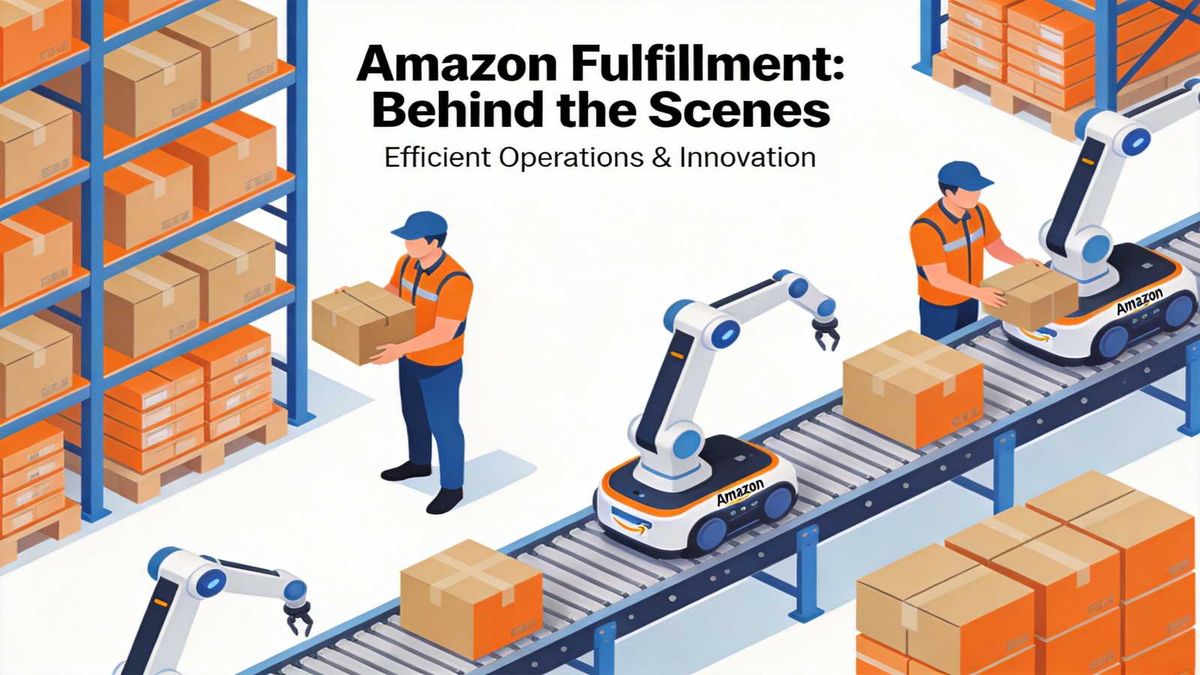
In fiscal year 2025, Amazon deployed over 750,000 robots across its fulfillment network, representing a 40 percent year-over-year increase in automation investment and the largest robotics deployment in any single company's logistics operations worldwide. These robots handle the most repetitive, high-volume tasks including picking items from storage shelves, transporting goods across warehouse floors, and sorting packages for distribution to delivery stations. The scale of this automation investment demonstrates Amazon commitment to technology-driven throughput expansion that reduces per-unit processing costs and increases capacity without proportional labor cost increases.
The coexistence of massive seasonal hiring with aggressive automation investment creates a hybrid operational model that maximizes throughput while maintaining quality control standards that pure automation cannot achieve. Human workers remain essential for tasks that automation cannot yet perform reliably, including complex item handling for irregularly shaped products, quality inspection and damage assessment before shipping, exception management for products that require special handling instructions, and customer service interactions for returns and issue resolution. The procurement implication is subtle but significant for supply chain planning. Amazon investment in both automation and human labor signals that fulfillment capacity is not a zero-sum equation between robots and workers but a synergistic model where technology and human capability combine to create expanding total throughput capacity.
The practical takeaway for procurement teams is that Amazon fulfillment capacity is growing, not contracting, and this growth directly benefits sellers who use Amazon logistics network for inventory storage and order fulfillment. However, the peak-season capacity constraint remains a real operational reality. The 300,000 workers represent Amazon attempt to bridge the gap between maximum automated throughput capacity and the unpredictable demand spikes that characterize the holiday season, where order volumes can increase three to five times above normal levels in concentrated two-to-three week periods. Understanding this capacity dynamic helps procurement professionals align their inventory planning with Amazon capacity reality, positioning stock to arrive before peak periods when receiving capacity is more available and storage allocation is more flexible.
What This Means for Cross-Border E-commerce Sellers
For cross-border e-commerce operators and international sellers, Amazon fulfillment expansion creates both significant opportunities and intensifying competitive pressures that require strategic response from procurement teams.
The most direct opportunity is the expansion of Amazon fulfillment network into new geographic markets and regions. As Amazon builds fulfillment centers in additional cities and regions across the United States, cross-border sellers can position inventory closer to end consumers in markets that were previously served from distant fulfillment hubs, reducing delivery times from several days to one or two days, lowering shipping costs that improve product pricing competitiveness, and improving customer satisfaction scores that directly impact search ranking performance and sales volume on the platform. For sellers who previously relied on limited US fulfillment options and faced longer delivery windows that hurt customer satisfaction and search visibility, this expansion provides a structural advantage that was not available in previous years.
The competitive pressure comes from a different direction and affects sellers who cannot match Amazon delivery speed through their own supply chain investments. Amazon investment in fulfillment capacity enables the company to offer faster, cheaper, and more reliable delivery options to consumers across all product categories. As delivery speed becomes a more decisive factor in purchase decisions, with consumer surveys indicating that delivery time is now the second most important factor after price in online purchase decisions, sellers who cannot match Amazon fulfillment speed through FBA enrollment, third-party logistics partnerships, or domestic warehouse presence face increasing competitive disadvantage in search ranking algorithms, customer retention rates, and market share trajectories.
This dynamic creates a procurement challenge that many sellers underestimate because it requires a more sophisticated approach to inventory planning than traditional sourcing strategies. To compete effectively on Amazon platform, sellers need inventory positioned strategically within the US fulfillment network based on demand forecasts, regional sales patterns, and Amazon receiving schedules. This requires procurement planning that accounts for Amazon fulfillment center locations, capacity constraints during peak periods, inbound receiving appointment availability, and storage cost structures that vary by facility. Procurement teams that coordinate their overseas supplier deliveries with Amazon receiving windows and capacity availability will minimize storage costs, avoid peak-period receiving delays, and maximize selling velocity for their product inventory.
The Third-Party Seller Ecosystem Dynamics
Amazon's 300,000-worker hiring announcement has profound implications for the third-party seller ecosystem, which accounts for approximately 60 percent of Amazon unit sales and serves as the primary driver of marketplace diversity and product selection depth.
The scale of Amazon fulfillment investment benefits third-party sellers in multiple dimensions that directly affect procurement planning and supplier relationship management. First, increased fulfillment capacity reduces the risk of storage limitations during peak season, allowing sellers to position more inventory in Amazon warehouses without fear of rejection, forced removal penalties, or long-term storage fees that result from capacity constraints. This gives procurement teams more confidence in maintaining higher inventory levels that support marketing campaigns and promotional events without the risk of storage rejection.
Second, geographic expansion of the fulfillment network provides sellers with more options for strategic inventory positioning across different regions of the country. Sellers can place stock in fulfillment centers that serve specific geographic demand patterns, optimizing delivery speed to different consumer segments and reducing transportation costs for replenishment shipments from domestic suppliers to Amazon facilities. This geographic diversification of inventory positioning requires more sophisticated procurement planning but rewards teams that invest in the analysis with better delivery performance and lower logistics costs.
However, the competitive intensity within the third-party seller ecosystem also increases significantly as fulfillment capabilities improve across the board for all sellers using Amazon logistics. When fulfillment speed and reliability become table stakes for all marketplace participants, the differentiating factor shifts to product selection quality, pricing competitiveness, seller service quality, and brand differentiation. This puts pressure on procurement teams to optimize their sourcing strategies beyond just fulfillment logistics, encompassing product selection criteria, supplier selection methodologies, cost management frameworks, and quality assurance programs that create sustainable competitive advantages.
For procurement professionals managing third-party seller supply chains, this environment rewards those who can provide consistent quality at competitive pricing with reliable delivery performance that meets Amazon fulfillment requirements. The sellers who thrive in this increasingly competitive environment will be those who treat procurement not as a cost minimization exercise but as a strategic capability that drives competitive advantage across multiple dimensions including product quality, supply reliability, pricing flexibility, and innovation capacity.
Procurement Implications for 2027 Planning
Amazon hiring announcement provides several actionable signals for procurement planning in the year ahead that teams can incorporate directly into their strategic planning processes.
Signal one is that peak season demand is accelerating at a rate that exceeds historical growth patterns. The 300,000-worker hire reflects Amazon expectations of record holiday order volumes that will test the limits of the current fulfillment network. Procurement teams planning for 2027 should assume higher peak demand than 2026 and position inventory accordingly, because under-stocking is more common and more costly than over-stocking in the e-commerce context, where lost sales during peak periods represent permanent customer attrition to competitors who had stock available when demand materialized.
Signal two is that fulfillment capacity is expanding overall but remains constrained during peak weeks even with the largest seasonal workforce. Even with 300,000 workers, Amazon fulfillment network will experience capacity constraints during the peak weeks of November and December when order volumes reach their annual maximum. Procurement teams should plan inbound deliveries to arrive before the peak season begins, ideally by mid-October, to avoid receiving delays, storage allocation delays, and the premium pricing that often accompanies rush inventory positioning during peak periods.
Signal three is that geographic diversification of fulfillment creates new sourcing opportunities that procurement teams should evaluate strategically. As Amazon expands its fulfillment network into new regions including the Southeast, Midwest, and Mountain West, procurement teams can leverage this expansion to position inventory closer to demand centers in those regions, reducing last-mile delivery costs by 15 to 25 percent and improving customer satisfaction scores for geographically dispersed consumer bases that previously received products from distant fulfillment hubs with longer transit times.
Signal four is that the competition for fulfillment capacity extends beyond Amazon to other major retailers who are simultaneously expanding their own fulfillment capabilities. Walmart, Target, and other major retailers have announced significant seasonal hiring programs and fulfillment infrastructure investments that parallel Amazon strategy. Procurement teams managing omnichannel supply chains should evaluate how Amazon capacity expansion influences the broader fulfillment competitive landscape and adjust their multi-channel inventory strategies to optimize across all retail platforms, not just Amazon, ensuring that inventory positioning supports sales on all relevant channels simultaneously. Competitive intelligence platforms like SourcingX help procurement teams evaluate which suppliers can meet the expanded capacity requirements, compare fulfillment options across multiple suppliers, and identify alternative sourcing strategies that align with the evolving fulfillment landscape.
The Competitive Intelligence Advantage
For procurement teams evaluating sourcing strategies in this increasingly dynamic and capacity-constrained environment, access to competitive intelligence is more important than ever for making informed supplier selection decisions that drive competitive advantage. Understanding your suppliers capabilities, pricing structures, quality certifications, and fulfillment options relative to competitors enables better supplier selection decisions, more informed negotiation positions based on factual market data, and more resilient supply chain designs that can adapt to changing capacity conditions without disruptive emergency supplier switching.
SourcingX at sourcingx.ai provides this intelligence by aggregating supplier data across multiple B2B platforms, enabling side-by-side comparison of supplier capabilities, pricing structures, minimum order quantities, fulfillment options, quality certifications, and compliance track records across a broad universe of suppliers. In an environment where procurement decisions increasingly determine competitive advantage rather than merely managing costs, having the right intelligence tools is not optional but essential for building supply chains that are both efficient and strategically differentiated.
The companies that outperform their competitors in the coming year will not be those with the cheapest suppliers in absolute terms, but those with the most strategically aligned supplier relationships that are optimized across multiple dimensions of capability, cost quality, delivery reliability, and risk management resilience.
Looking Beyond the Headlines
Amazon 300,000-worker hiring announcement dominates the news cycle and captures public attention, but the structural trends it reflects will shape the e-commerce and procurement landscape for years to come regardless of seasonal fluctuations or annual hiring variations. The expansion of fulfillment infrastructure represents a permanent increase in logistics capacity. The acceleration of warehouse automation creates a technology-driven efficiency trajectory. The growth of cross-border e-commerce establishes a new global trade paradigm. The intensification of competitive intensity within the seller ecosystem raises the bar for procurement sophistication across all marketplace participants.
Procurement teams that understand these structural trends and adapt their sourcing strategies accordingly will build supply chains that are not just resilient to disruption but competitively advantageous in a marketplace where supply chain capability increasingly determines commercial success. The companies that treat these trends as background noise and continue with their existing sourcing practices will find themselves increasingly outmaneuvered by more agile, better-informed, and more strategically sophisticated competitors who have invested in procurement capability as a core business differentiator.
Bottom Line
Amazon's record 300,000-worker holiday hiring is a bellwether for the state of e-commerce logistics infrastructure and a strategic signal for procurement teams evaluating their sourcing and inventory planning approaches. It signals expanding fulfillment capacity, accelerating technology investment, growing competitive intensity, and the increasing strategic importance of procurement as a competitive differentiator that separates high-performing sellers from those struggling to keep pace. Teams that treat this announcement as a planning signal and adapt their procurement strategies accordingly will position themselves for success in an increasingly complex and competitive marketplace where supply chain capability is as important as product quality and pricing in determining commercial outcomes.
FAQs
Q1: When does Amazon's holiday hiring period run and when should inventory arrive? Amazon's seasonal hiring typically begins in August and September with onboarding completed by October to ensure readiness for the November peak season. The 300,000-worker recruitment announced on October 22, 2026, represents the company final staffing push for the holiday fulfillment period running through January 2027. Procurement teams should target inventory arrival at Amazon facilities by mid-October to avoid peak receiving delays and ensure stock is available for November marketing events.
Q2: How does this hiring affect third-party seller inventory planning? Increased fulfillment capacity means more space for seller inventory during peak season, reducing storage rejection risk. However, procurement teams should still plan to position inventory early, ideally by mid-October, to avoid peak receiving delays and ensure stock is available for peak-season selling. Late arrivals face receiving bottlenecks that can delay stock availability by one to two weeks.
Q3: What does Amazon automation investment mean for fulfillment costs going forward? Automation increases throughput capacity, which helps contain cost increases even as volume grows. However, the massive investment also increases the fixed cost base, which may be partially reflected in fulfillment fees charged to sellers over time. Monitor fulfillment fee changes quarterly and factor them into your pricing and sourcing cost models to maintain margin targets under evolving fee structures.
Q4: Are other retailers hiring at similar scales to Amazon? Walmart, Target, and other major retailers have also announced significant seasonal hiring programs, though at smaller scales than Amazon. The overall trend of expanding seasonal fulfillment capacity across the retail industry reflects the structural growth in e-commerce order volumes and the competitive pressure to match Amazon delivery expectations across all major retail platforms.
Q5: How should cross-border suppliers adjust their delivery schedules to match Amazon capacity? Cross-border suppliers should align their production and shipping schedules to ensure goods arrive at Amazon fulfillment centers by early to mid-October for peak season readiness. Ocean freight from Asia typically requires 30 to 45 days of transit time, meaning production should be completed by late August to early September to meet Amazon peak readiness requirements and avoid the receiving congestion that characterizes October-to-November inbound periods.
Comments
0