Beyond China: The New Sourcing Map for Appliances

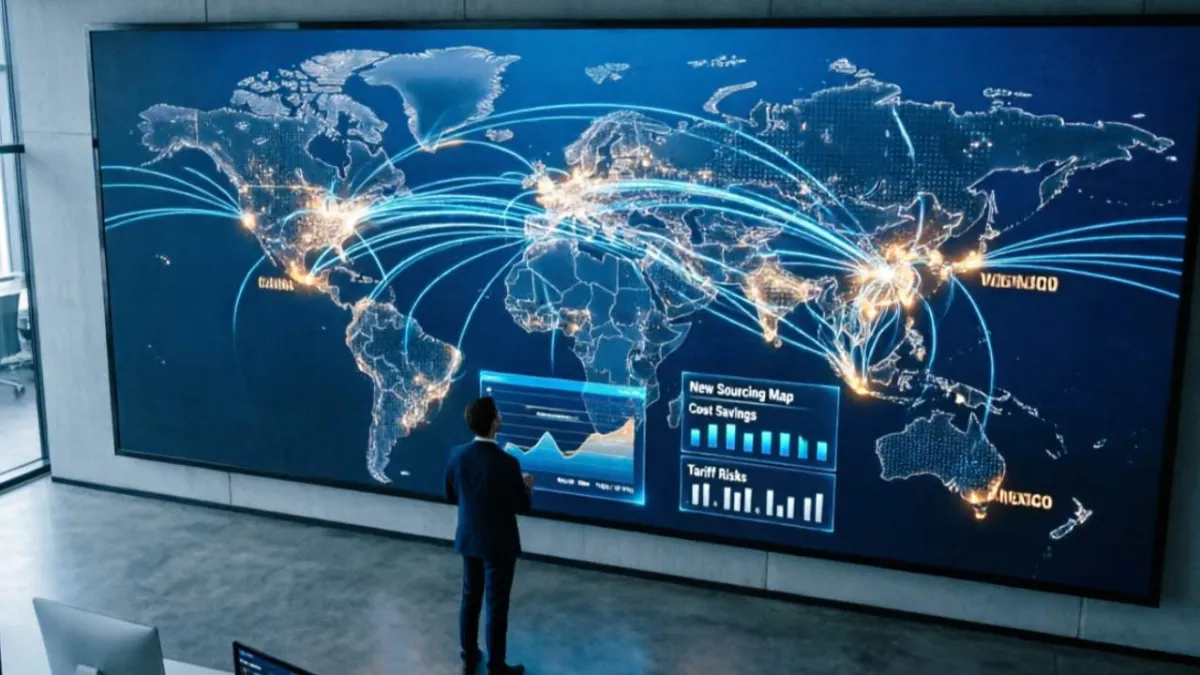
For two decades, the global home appliance supply chain was synonymous with a single destination: China. It was a model of unparalleled efficiency, offering a complete ecosystem from mold design to final assembly. However, as we navigate 2026, the "China-only" strategy is no longer a safety net—it is a single point of failure.
The global procurement map is being redrawn. This is not merely a shift in geography; it is a fundamental restructuring of how value is created and delivered. For procurement leaders, understanding this new topography is no longer optional; it is a matter of survival.
The Catalyst: Why the Map is Changing Now
The migration of appliance manufacturing is not happening in a vacuum. It is being driven by a convergence of three powerful forces that have reached a tipping point in 2026:
- The Tariff & Trade Wall: With the continuation of trade wars and the imposition of aggressive tariffs (such as the 50% levies on steel-based appliances in key markets), the cost advantage of manufacturing in China has eroded. Importers are actively seeking "duty-free" or "low-duty" jurisdictions to protect margins.
- The "China Plus One" Mandate: Supply chain resilience has moved from a buzzword to a boardroom mandate. The realization that a disruption in one region can paralyze global inventory has forced companies to diversify. Buyers are no longer asking if they should diversify, but where.
- The Rise of High-Value Alternatives: Nations like Vietnam, Mexico, and Thailand have graduated from assembling simple goods to manufacturing complex, smart appliances. With wages in coastal Chinese cities rising, these emerging hubs now offer a compelling mix of cost-competitiveness and improving infrastructure.
Mapping the Shift: The New Landscape
The migration is not random; it follows specific strategic corridors. We are witnessing a "Hub-and-Spoke" evolution where final assembly moves closer to the end consumer, while component manufacturing remains concentrated in industrial powerhouses.
The "Nearshoring" Corridor (Mexico → USA) For the North American market, Mexico has emerged as the primary alternative. It offers the dual advantage of USMCA compliance (zero tariffs) and logistical proximity.
- Trend: Major appliance giants are establishing "world-class" manufacturing bases here for refrigerators and washing machines to serve the US market.
The "Efficiency" Corridor (Vietnam/Thailand → EU & Global) Southeast Asia has become the new factory floor for high-volume electronics and small appliances.
- Trend: Vietnam is seeing a surge in exports for textiles and electronics, while Thailand is integrating vertically, producing everything from compressors to finished smart TVs.
The "Specialist" Corridor (Turkey → Europe) For the European market, Turkey is solidifying its position as a key supplier for white goods (major appliances), offering shorter lead times compared to East Asian imports.
SourcingX Insight: Google Trends data over the last 24 months shows a consistent upward trajectory in B2B search queries for "Appliance manufacturers in Vietnam" and "OEM Mexico," inversely correlating with a plateau in searches for generic "China sourcing." The demand signal is clear.
Operational Impact: The "So What?" for Buyers
Diversifying away from China solves the tariff problem but introduces new operational complexities. Procurement teams must be prepared for a different set of challenges:
- Fragmented Ecosystems: Unlike the "one-stop-shop" nature of the Pearl River Delta in China, emerging hubs often lack deep upstream supply chains. You might assemble in Mexico, but the compressors and chips likely still come from Asia. This requires managing a longer, more complex component supply chain.
- The Skill Gap: While labor is cheaper, the "institutional knowledge" of mass manufacturing found in China is still developing in newer hubs. Quality control protocols must be stricter, and on-site auditing becomes more critical.
- Logistics Volatility: While nearshoring reduces ocean freight risks, it increases reliance on cross-border trucking and rail, which have their own capacity constraints.
The SourcingX Strategy: Navigating with AI
In a fragmented market, information is the most valuable currency. Relying on outdated supplier lists or manual scouting is too slow for the 2026 landscape. This is where SourcingX transforms risk into a competitive advantage.
We move beyond simple directory listings by using AI-driven Sourcing Agents to map the new territory:
- Predictive Supplier Vetting: Our AI analyzes alternative manufacturing hubs to identify factories that have successfully pivoted from domestic production to export-quality standards. We filter for compliance, capacity, and financial stability before you ever make contact.
- Real-Time Cost Modeling: We help you calculate the Landed Cost—not just the FOB price. By factoring in tariffs, freight, and duty savings (e.g., via USMCA or ASEAN trade agreements), SourcingX reveals the true cost of moving production to a new country.
- Rapid Prototyping & Matching: Whether you need a smart refrigerator factory in Monterrey or an air fryer assembly line in Binh Duong, our platform connects you with verified partners who match your specific technical requirements.
The Verdict The era of relying on a single geography is over. The new sourcing map is complex, but it is also full of opportunity for those who can navigate it. Don't let the "Great Reconfiguration" catch you off guard. Use data to lead the pivot.
Comments
0