The China-EU Trade Awakening: What the 4.78 Trillion Yuan Numbers Tell Us About the Future of Sourcing

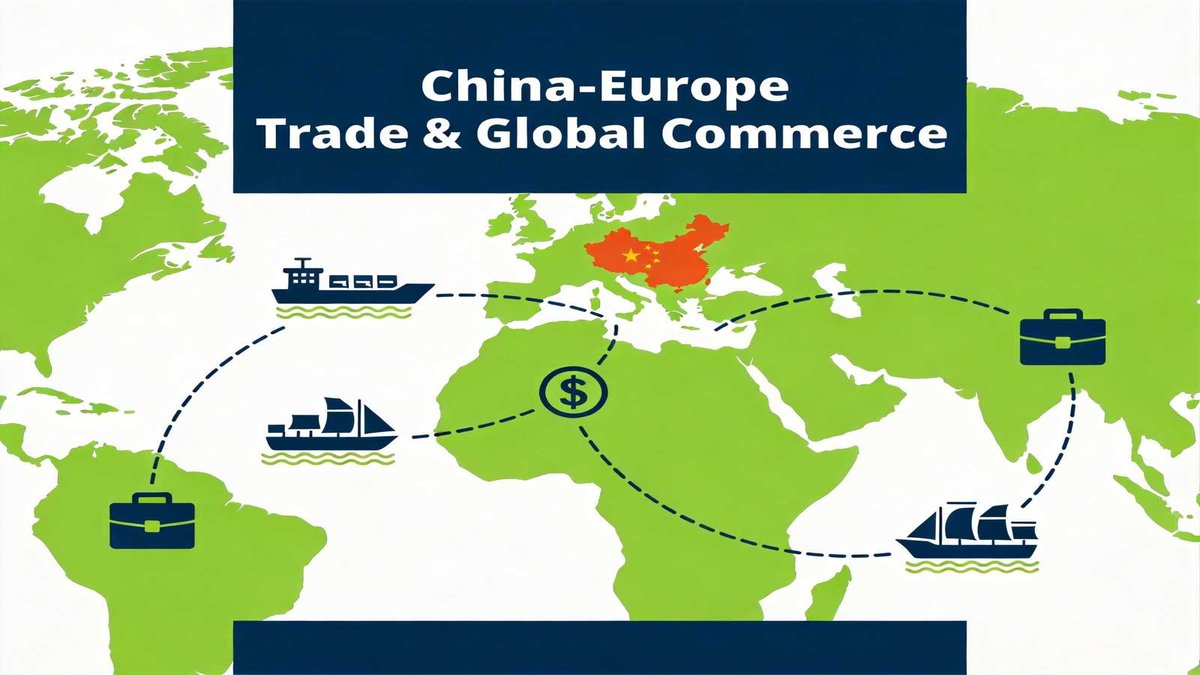
The China-EU Trade Awakening: What the 4.78 Trillion Yuan Numbers Tell Us About the Future of Sourcing
Category: Industry Trends | Date: 2026-11-06
Executive Summary
While the world's attention was drawn to trade tensions and tariff wars in recent years, a quiet transformation has been reshaping one of the world's most important commercial relationships. Germany's president, Switzerland's federal council president, and Austria's chancellor all visited China in rapid succession between October and November, culminating in a signed agreement to upgrade their free trade relationship.
The Diplomatic Signal
The wave of European visits to China in the fall of 2026 was unlike anything seen in recent memory. Germany's president, Switzerland's federal council president, and Austria's chancellor arrived in Beijing within a matter of weeks of each other, each carrying agendas that went far beyond ceremonial diplomacy. The common thread was clear: Europe wants deeper commercial engagement with China, but on terms that reflect a more mature and more complex bilateral relationship.
The most concrete outcome came from the Switzerland-China free trade agreement upgrade protocol, which aims to eliminate tariffs on 99% of bilateral trade. This is a staggering number that reflects not just a commitment to trade liberalization but a recognition of how deeply intertwined the Swiss and Chinese economies have become. Switzerland's financial services, pharmaceuticals, precision manufacturing, and watch industries all have significant exposure to the Chinese market. Removing tariffs on nearly all goods is the final piece of a commercial puzzle that has been assembling for decades.
But the significance extends beyond Switzerland. Germany's engagement with China reflects an industrial reality: German manufacturing, particularly in automotive, industrial machinery, and chemical sectors, depends on Chinese supply chains and Chinese market access. Austria's visit followed the same pattern -- a small but economically sophisticated European country recognizing that its commercial future is inextricably linked to China's growth trajectory.
The 4.78 Trillion Yuan Figure
The first three quarters of 2026 saw China-EU goods trade total 4.78 trillion yuan, representing an 8.4% increase from the same period the previous year. For perspective, an 8.4% growth rate in mature trade relationships is substantial. It means that despite geopolitical tensions, supply chain diversification efforts, and the global economic uncertainty that has characterized much of the past two years, Chinese-European commercial engagement continued to expand at a healthy pace.
What makes this figure particularly interesting is not just the total volume but what is driving the growth. The composition of China-EU trade has shifted dramatically over the past decade. Where once the relationship was characterized by European manufactured goods flowing to China and Chinese consumer goods and components flowing to Europe, the current trade structure is far more complex. China is exporting increasingly sophisticated manufactured products -- electric vehicles, lithium batteries, high-tech equipment -- to Europe while importing European industrial components, precision machinery, and specialty chemicals that are essential to Chinese manufacturing.
This evolution means that the China-EU trade relationship is no longer a simple buyer-seller dynamic. It is a multi-layered commercial ecosystem where both sides are simultaneously suppliers and customers, where competitive and cooperative interests coexist in the same supply chains, and where decoupling is not just politically difficult but commercially impractical for many sectors.
Beyond the Headlines: What the Trade Numbers Don't Tell You
The headline figures of 4.78 trillion yuan and 8.4% growth provide a broad overview, but they mask important structural changes that matter directly to procurement professionals.
The industrial cooperation frontier is expanding. The visits from European leaders highlighted a new dimension of the China-EU relationship: cooperation beyond traditional trade. Germany, Switzerland, and Austria are all pushing into areas like research and development collaboration, cross-border data management frameworks, and joint innovation projects. This is where the next wave of commercial value will be created -- not in simple goods trade but in integrated innovation ecosystems. For procurement leaders, this means that supplier relationships that include technology transfer, co-development, and joint manufacturing arrangements will become increasingly valuable.
The services-trade integration is accelerating. While the 4.78 trillion yuan figure only covers goods trade, the services dimension of the China-EU relationship -- financial services, professional services, logistics, and digital services -- is growing even faster. Chinese companies are increasingly using European service providers for logistics optimization, quality certification, market research, and compliance consulting. Conversely, European companies rely on Chinese digital infrastructure, supply chain management platforms, and e-commerce ecosystems. This services integration creates additional value that goods trade statistics alone cannot capture.
The regional dynamics within Europe matter enormously. The trade relationship between China and Northern Europe (Germany, Switzerland, Austria, Netherlands) looks very different from the relationship between China and Southern or Eastern Europe. Northern European countries tend to export higher-value industrial goods and import Chinese manufactured products, while some Southern European countries compete with Chinese products in consumer goods categories. Understanding these regional differences is critical for procurement strategy because the competitive dynamics, supplier availability, and pricing structures vary significantly across European regions.
Sourcing Implications for the China-EU Trade Evolution
The maturation of the China-EU trade relationship creates both opportunities and challenges for procurement professionals. Here is how to translate these macro trends into actionable sourcing strategy.
Opportunity: Access to Chinese Innovation Products
Chinese manufacturers are no longer just producing commodity goods. In categories like electric vehicles, lithium batteries, solar panels, and consumer electronics, Chinese companies are leading the innovation curve. The 33% growth in Guangdong's high-tech product exports in the first three quarters of 2026 -- of which new energy vehicles grew 25.5% and lithium batteries grew 38.4% -- demonstrates the scale and sophistication of Chinese innovation capacity.
For European and global procurement teams, this means that Chinese suppliers can be strategic partners for accessing cutting-edge products and technologies, not just cost-effective alternatives for commodity sourcing. The key is finding suppliers who are genuinely innovative rather than merely imitative, which requires deep supplier evaluation beyond price comparison.
Challenge: Compliance and Standards Complexity
As the China-EU trade relationship becomes more sophisticated, the compliance requirements on both sides are becoming more complex. European products entering China face increasingly stringent quality standards, certification requirements, and labeling regulations. Chinese products entering Europe face evolving environmental standards, carbon footprint requirements, and supply chain transparency mandates.
This compliance complexity increases the cost of sourcing from either side, but it also creates a premium for suppliers who can navigate these requirements efficiently. Suppliers with strong compliance capabilities, up-to-date certification portfolios, and experience with cross-border regulatory frameworks will command higher prices but deliver lower total cost of ownership through reduced compliance risk.
Strategic Shift: From Sourcing to Partnering
The evolution of the China-EU trade relationship reflects a broader shift in procurement philosophy. The traditional model of sourcing as a transactional, price-driven activity is being replaced by a model of sourcing as strategic partnership, where long-term relationships, co-development agreements, and supply chain integration create more value than short-term price optimization.
This shift requires procurement teams to invest in relationship-building, cross-cultural communication, and long-term supplier development. The tools and platforms that facilitate deep supplier evaluation and multi-dimensional comparison -- like SourcingX -- become essential infrastructure for a sourcing strategy that prioritizes partnership over transaction.
The Broader Context: China-EU Trade in a Fragmenting World
The continued growth of China-EU trade in 2026 is significant precisely because it is happening in a world where other major trade relationships are experiencing friction. The United States is discussing tariff changes for countries like South Africa and Rwanda. The United Kingdom is renegotiating its trade relationships post-Brexit. Southeast Asian countries are developing their own protectionist measures, as seen in Kazakhstan and Kyrgyzstan's temporary apple import bans.
In this context, the stability and growth of the China-EU trade relationship is a stabilizing force. It provides a counterweight to geopolitical fragmentation and gives companies on both sides of the relationship confidence to invest in cross-border supply chain relationships that require long-term commitment and significant upfront investment.
This stability is not guaranteed. The China-EU relationship faces real challenges, including disagreements over market access, intellectual property protection, and the pace of regulatory harmonization. But the fact that European leaders are traveling to China in such high numbers, signing substantive commercial agreements, and expressing commitment to deeper economic integration suggests that the overall trajectory remains positive.
Building a China-EU Sourcing Strategy for 2027
Given the trajectory of the China-EU trade relationship, here is a framework for building a sourcing strategy that capitalizes on the opportunities while managing the risks.
Diversify within Europe, not just across regions. Instead of treating Europe as a single sourcing block, differentiate your European sourcing strategy by region. Source precision components and industrial equipment from Germany and Switzerland. Source consumer goods and textiles from Southern European countries that may offer more competitive pricing. Source logistics and compliance services from countries with strong regulatory expertise like the Netherlands and Belgium. This regional differentiation maximizes the value you get from the diversified Europe market.
Invest in Chinese innovation sourcing. The growth of China's high-tech exports is not a temporary trend. It reflects structural changes in Chinese manufacturing capability, R&D investment, and innovation ecosystem development. Procurement teams that build deep relationships with innovative Chinese suppliers now will have access to leading-edge products and technologies that will be difficult to replicate in other sourcing regions. The key is to invest in supplier evaluation capabilities that can distinguish genuinely innovative companies from those that are merely marketing themselves as such.
Build compliance into your sourcing infrastructure. The increasing regulatory complexity of the China-EU trade relationship means that compliance cannot be an afterthought. Build compliance verification into your supplier onboarding process. Require up-to-date certifications from all new suppliers. Invest in tools and platforms that can help you track regulatory changes across both Chinese and European markets. The cost of compliance infrastructure is an insurance premium that pays for itself every time a regulatory change would otherwise disrupt your supply chain.
Monitor trade policy as a sourcing intelligence activity. The diplomatic visits and trade agreements between China and Europe are not just news items -- they are sourcing intelligence. Each agreement, each regulatory change, each diplomatic statement reveals something about the future trajectory of the China-EU trade relationship. Procurement teams that treat trade policy monitoring as a core sourcing activity will be ahead of their peers when it comes to anticipating supply chain disruptions or opportunities.
The Role of Digital Infrastructure in China-EU Trade
One element of the China-EU trade relationship that is growing rapidly but receiving insufficient attention is the role of digital infrastructure in facilitating cross-border commerce. China's e-commerce platforms, supply chain management systems, and digital payment ecosystems have created a digital trading infrastructure that is both highly efficient and increasingly accessible to European businesses. Simultaneously, European companies are leveraging Chinese digital tools for market research, supplier sourcing, and logistics optimization at a scale that was unthinkable a decade ago.
This digital integration creates significant efficiency gains but also introduces new compliance considerations. Data privacy regulations in Europe (GDPR and its evolving successors) interact with Chinese data management practices in complex ways. Cross-border data flows between Chinese and European systems must navigate both jurisdictions' regulatory frameworks, and companies that ignore these requirements face real legal and operational risks. Procurement teams that build digital compliance into their sourcing processes -- ensuring that data flows, supplier communications, and transaction records comply with both Chinese and European regulations -- will avoid costly disruptions.
The Cultural Dimension of Supplier Relationships
Beyond the technical and regulatory dimensions, the China-EU trade relationship has a cultural component that procurement professionals cannot afford to ignore. Chinese business culture emphasizes relationship-building (guanxi), long-term orientation, and mutual benefit over short-term transactional gain. European business culture, particularly in Northern Europe, tends to be more transaction-focused, deadline-driven, and contract-based. These cultural differences can create friction in supplier relationships if not understood and navigated properly.
Successful cross-border procurement in the China-EU context requires cultural fluency -- the ability to understand and adapt to different business norms, communication styles, and relationship-building approaches. This is not about stereotypes but about recognizing that business practices vary systematically across cultures and that effective procurement requires adapting your approach to the cultural context of your suppliers. Companies that invest in cross-cultural training for their procurement teams and that hire or consult with professionals who have deep experience in both Chinese and European business environments consistently outperform those that treat all supplier relationships the same regardless of cultural context.
Leverage technology for supplier discovery and evaluation. The China-EU trade corridor connects millions of suppliers across two continents. Finding the right suppliers requires tools that can search across platforms, compare suppliers on multiple dimensions, and surface quality and compliance signals that are not visible from a simple price comparison. Platforms like SourcingX enable procurement teams to navigate this vast supplier ecosystem efficiently, filtering by compliance certifications, quality ratings, and production capabilities to identify suppliers who match the specific requirements of the China-EU trade environment.
The Outlook: A Relationship Worth Betting On
The China-EU trade relationship in 2026 is stronger and more sophisticated than most observers realize. The 4.78 trillion yuan in goods trade, the high-level diplomatic engagements, and the expansion of cooperation into new areas like R&D and data management all point to a relationship that is not weakening but evolving.
For procurement professionals, this means that the China-EU corridor remains one of the world's most important sourcing pathways. The companies that will thrive in 2027 and beyond are those that understand this relationship not as a static arrangement but as a dynamic ecosystem that rewards strategic sourcing investment, deep supplier relationships, and compliance-aware decision making.
The suppliers who can serve this ecosystem -- with quality, compliance, innovation, and reliability -- will be the most valuable partners in the next decade of global trade. Finding and evaluating those suppliers is exactly what modern sourcing tools are built for.
FAQs
Q: What does the 99% tariff elimination mean for European and Chinese businesses? A: The Switzerland-China upgraded FTA protocol targets 99% of bilateral trade for zero tariffs. This will significantly reduce costs for Swiss exporters to China (particularly in pharmaceuticals, precision instruments, and watches) and Chinese exporters to Switzerland. The impact will unfold gradually as tariffs are phased out over the implementation period.
Q: How significant is the 8.4% China-EU trade growth given global economic conditions? A: An 8.4% growth rate in a mature trade relationship is robust, especially considering global economic uncertainty, supply chain disruptions, and geopolitical tensions. This indicates strong underlying commercial demand and resilience in the China-EU economic relationship.
Q: Are there risks to relying on the China-EU trade relationship for sourcing? A: The main risks include regulatory complexity (growing compliance requirements on both sides), geopolitical uncertainty (though the current trajectory is positive), and concentration risk if your sourcing is too dependent on a single country or region. Diversification within the China-EU framework is the recommended risk mitigation strategy.
Q: What categories offer the best sourcing opportunities in the current China-EU trade environment? A: Chinese high-tech products (electric vehicles, lithium batteries, solar panels, consumer electronics) offer strong value for European buyers. European precision machinery, industrial equipment, pharmaceuticals, and specialty chemicals offer strong value for Chinese and Asian buyers. The key is matching your product category needs with the regions where that category's suppliers are strongest.
Q: How should procurement teams prepare for further regulatory changes in the China-EU trade relationship? A: Build compliance verification into your supplier evaluation process, invest in trade policy monitoring capabilities, and develop relationships with trade compliance specialists on both the Chinese and European sides. Tools that provide structured supplier comparison across quality, compliance, pricing, and other criteria will be essential for navigating the increasingly complex regulatory landscape.
Comments
0