EU Anti-Dumping Probe Targets China's Furfuryl Alcohol -- The Industry That Refuses to Stay Dead

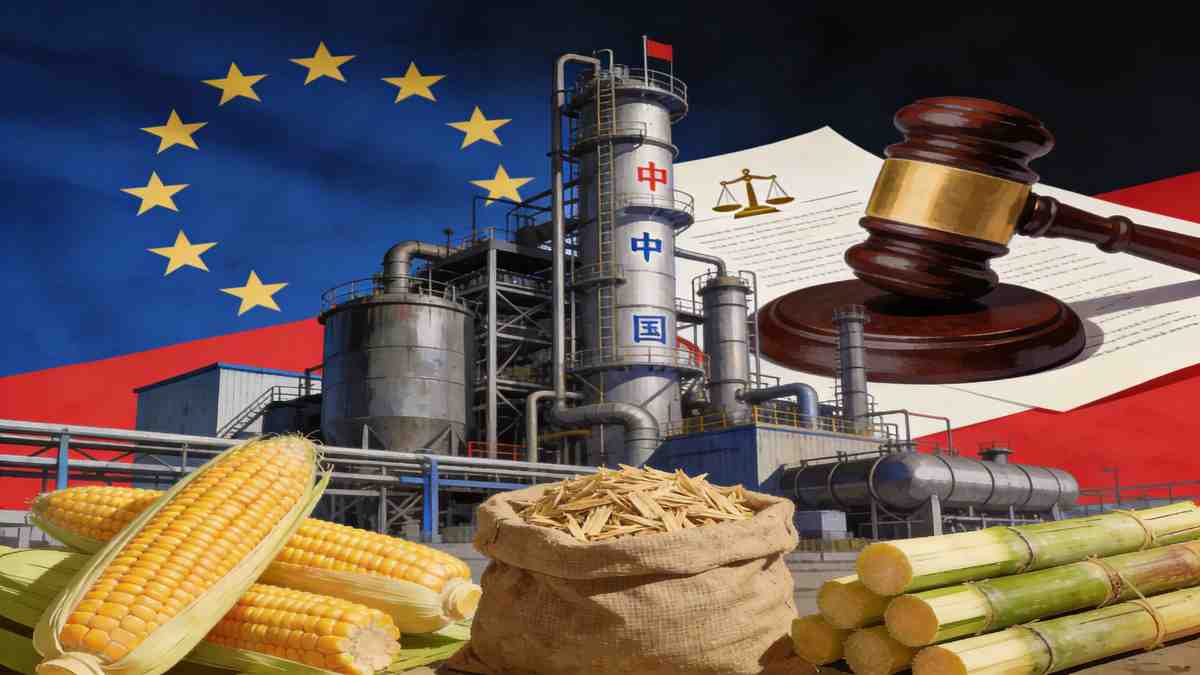
EU Anti-Dumping Probe Targets China's Furfuryl Alcohol -- The Industry That Refuses to Stay Dead
Category: Risk & Compliance | Date: 2026-10-22
Executive Summary
The EU's latest anti-dumping filing against Chinese furfuryl alcohol isn't just another trade case. It's a ghost from 2009 that refused to die. Eighteen years after the first probe, and nearly fifteen years after the duties were imposed, the EU is circling back -- and Chinese exporters need to understand this time will be different.
"Here We Go Again" -- But This Time, It's Personal
Let me be straight: the European Union's anti-dumping investigation into Chinese furfuryl alcohol (CN code ex 2932 13 00) announced on October 16, 2026 is not an isolated trade policy decision. It is a calculated escalation by two EU-based companies that have been watching China's bio-based chemical sector grow like cats watching a cream factory.
Trans Furans Chemicals BV and International Furan Chemicals BV filed this complaint on September 2, 2026. The EU Commission published its notice on October 16. The dumping investigation period runs from July 1, 2025 to June 30, 2026, while the injury assessment period extends all the way back to January 1, 2023. That three-year injury window is a red flag most commentators will miss.
Here's what they're not telling you: this is not the first time the EU has targeted Chinese furfuryl alcohol. In 2009, under Council Implementing Regulation (EU) No 1202/2009, the EU imposed definitive anti-dumping duties on Chinese-origin furfuryl alcohol following an expiry review. That duty expired in 2015. Since then, Chinese production capacity has nearly doubled, and European producers have been losing ground -- quietly but steadily.
The question is no longer whether this trade dispute matters to your supply chain. The question is whether you're prepared for the outcome.
Why Furfuryl Alcohol? A Chemical That's Bigger Than Its Price Tag
Furfuryl alcohol, also known as 2-furanmethanol, is not the kind of chemical that dominates headlines. It doesn't power your car or charge your phone. But it is an indispensable intermediate in foundry resins, corrosion inhibitors, agricultural chemicals, and increasingly, bio-based material science.
China dominates this market. According to recent industry analysis, Chinese producers account for a substantial majority of global furfuryl alcohol supply, leveraging cheap agricultural feedstocks -- corn cobs, sugarcane bagasse, and other biomass materials that are abundant and inexpensive in rural China. This feedstock advantage is structural, not cyclical. It cannot be replicated in Europe at competitive cost.
The EU producers -- Trans Furans and IFC -- are the remnants of what was once a broader European furan chemicals industry. Both are Belgian-based operations, part of a market that has been consolidating for decades. When two companies file a joint anti-dumping complaint, it signals desperation, not confidence. The European furan chemicals industry once had three or four viable producers. Now it has two, and both are filing a complaint against a Chinese market that has multiplied in size since the duties lapsed. This is not a case of a thriving industry being unfairly displaced. It is a case of a dying industry trying to use trade policy as a life raft.
Consider the timeline: the injury period starts in January 2023. This is the period after the worst of the supply chain disruption, during which European buyers presumably had time to diversify sourcing. If the EU producers can still claim material injury three years into a post-pandemic recovery window, their complaint carries more weight than a standard "market distortion" filing.
The Historical Precedent -- And Why This Time Is Worse
To understand the stakes, you need to understand 2009.
Back then, the EU imposed definitive anti-dumping duties of approximately 16.3% on Chinese furfuryl alcohol exporters who cooperated with the investigation. Non-cooperating Chinese firms faced a higher rate of around 64.9%. The duties were in place until their expiry in 2015.
When those duties lapsed, the market response was immediate and dramatic. Chinese exports surged. EU domestic producers saw market share erode. By 2020, the European furan chemicals sector had shrunk to roughly half its former size.
Now, eight years after the duty expiration, the EU is pulling out the same instrument again. This is a textbook expiry review scenario -- or more accurately, a new initial investigation that reads like an expiry review. The complaint itself essentially argues that lifting the old duties would lead to continuation or recurrence of dumping and injury, which is precisely the legal standard for an expiry review under EU regulation.
The difference? This time there is no duty in place to fall back on. If the EU imposes new duties this time around, they will be fresh, politically defensible, and likely more severe. And unlike 2009, when Chinese exporters could at least argue that European producers were falling behind on innovation, today's Chinese industry has achieved real economies of scale and process optimization that are hard to dismiss as mere "dumping." The Chinese furfural and furfuryl alcohol industry has evolved from a fragmented collection of small biomass processors into a concentrated group of large-scale producers with integrated supply chains. Many of these operations now process hundreds of thousands of tons of biomass annually, achieving cost structures that European producers simply cannot match without substantial subsidies.
Three Reasons Why Chinese Exporters Are In Deep Trouble
1. The Injury Window Is Brutal
The injury assessment period covering January 1, 2023 to the end of the dumping investigation period (June 30, 2026) is unusually long. Most anti-dumping cases look at a two-year window. Three years gives the complainants more data points to construct a narrative of sustained injury -- declining prices, lost market share, reduced capacity utilization, and deteriorating financial performance.
Chinese exporters who supplied the EU market during this period will face intense scrutiny. Even if individual margins were healthy, the aggregated data could paint a picture that supports an injury finding.
2. The Feedstock Argument Is a Dead End
Chinese producers have always tried to argue that their low cost comes from genuine competitive advantage -- access to cheap biomass -- rather than unfair pricing. While this argument holds theoretical water, EU anti-dumping investigations do not operate on "fairness." They operate on a comparison between normal value (usually the producer's domestic price or constructed cost) and export price.
If the EU determines that Chinese domestic prices are suppressed due to state support, overcapacity, or other distortions -- and the political climate in Brussels is not conducive to defending Chinese bio-based chemical producers -- then the feedstock advantage argument becomes less persuasive than it once was.
3. Geopolitical Winds Have Shifted
In 2009, trade remedy investigations were viewed through a more traditional economic lens. By 2026, the EU's trade policy is increasingly framed through the lens of strategic autonomy, supply chain resilience, and green transition. Furfuryl alcohol sits at the intersection of all three: it's a chemical derived from renewable biomass (green), critical to industrial applications (strategic), and currently dominated by Chinese suppliers (supply chain risk).
This confluence makes the political calculus in Brussels very different from 2009. Protecting a domestic furan chemicals industry is no longer just about preserving jobs in Belgium. It's about demonstrating that the EU can maintain critical bio-based chemical production capabilities within its own borders.
What Should Procurement Teams Do?
This is where I want to get practical. If you're sourcing furfuryl alcohol or any bio-based chemical intermediate for your operations, here is what I would do right now.
First, map your exposure. If you buy furfuryl alcohol from China and sell into the EU market, you are directly in the crosshairs. Even if you source it for domestic use, consider that supply chain disruptions could affect global availability and pricing. Use platforms like SourcingX to track alternative suppliers and benchmark current pricing before duties are imposed. Start building a supplier database now, not after the investigation begins. The companies that move fast will have options; those that wait will have only one option -- pay higher prices.
Second, prepare supplier documentation. Chinese manufacturers should be gathering every piece of evidence they can -- cost breakdowns, feedstock sourcing records, pricing history, capacity utilization data, and sales records for the EU market during the injury period. The individual dumping margin for each exporter will depend on the quality of their cooperation file.
Third, diversify your supply base. This is the single most important action. Trans Furans Chemicals BV and International Furan Chemicals BV will be the primary EU suppliers if duties are imposed, and their capacity is limited. Look at producers in other regions -- Southeast Asia, South America, and even the United States (Pennakem is a notable North American producer). While Chinese feedstock advantages may not be replicable everywhere, having alternative sources gives you leverage and risk mitigation.
Fourth, watch the procedural timeline closely. EU anti-dumping investigations follow a strict procedural calendar. The EU Commission will publish a notice of initiation, followed by questionnaires to Chinese exporters and EU producers, site visits, a provisional determination, and finally a definitive determination. Each stage offers opportunities to influence the outcome. Missing a deadline or failing to respond to a questionnaire can result in the application of the "facts available" rate, which is almost always punitive.
The Counterargument -- And Why It Falls Short
A fair-minded observer might argue that this anti-dumping complaint is legitimate. EU producers did invest in furfuryl alcohol production. They faced genuine competitive pressure from low-cost Chinese imports after the duties expired. Market share loss is market share loss, and no industry is entitled to protection simply because it once had a dominant position.
There is truth in this argument. Markets change. Industries that relied on protection decades ago must eventually compete on merit. And the EU's trade remedy system is designed to address precisely this scenario -- where dumped imports cause or threaten material injury to a domestic industry.
But here's where the argument breaks down: the EU furfuryl alcohol industry did not collapse because of unfair trade. It collapsed because of structural factors -- higher energy costs, stricter environmental regulations, aging infrastructure, and a global market that shifted toward more efficient producers. Anti-dumping duties in 2026 will not restore a competitive European industry. They will raise prices for EU buyers, disrupt established supply chains, and likely face legal challenges at the WTO level.
Furthermore, the timing is suspiciously convenient. As the EU pushes its Green Deal industrial plan and bio-based chemical production incentives, protecting an existing -- however diminished -- domestic furan chemicals capability aligns perfectly with broader policy objectives. Trade remedies and industrial policy have never been clean separations.
What This Means for the Broader Chemical Trade Landscape
The furfuryl alcohol case is not happening in isolation. The EU has been increasingly active in trade remedy investigations across the chemical sector -- from basic chemicals to specialty intermediates. The pattern is clear: when Chinese bio-based chemical production reaches scale that threatens European producers, Brussels responds with trade instruments.
But there's a deeper story here. China's bio-based chemical industry is built on agricultural waste streams that are inherently sustainable. Furfural and furfuryl alcohol production uses corn cobs, bagasse, and other biomass residues that would otherwise be burned or left to decompose. This is circular economy in action.
Yet the EU's trade policy framework does not yet adequately reward sustainable sourcing advantages. A Chinese producer with a genuinely lower carbon footprint may still face dumping findings if their prices are below EU domestic prices -- even when those prices reflect genuine efficiency gains from sustainable feedstock processing.
This is a structural gap in the EU's trade remedy system, and it is one that will only widen as the world transitions toward bio-based alternatives to petroleum-derived chemicals.
The Bottom Line
The EU's anti-dumping investigation into Chinese furfuryl alcohol is a reissue of a case that expired nearly a decade ago, filed by two companies that have been losing ground for longer, against an industry that has grown more competitive during the gap. It is politically expedient, economically questionable, and likely to be a short-term pain for a long-term structural reality.
For sourcing professionals, this case is a reminder: trade remedies are not just compliance checkboxes. They are supply chain events. The best preparation is visibility -- knowing your suppliers, understanding your cost structure, and maintaining alternative options before the news breaks.
In an era where SourcingX helps procurement teams monitor global sourcing landscapes in real time, tools that provide market intelligence and supplier discovery capabilities are not luxuries. They are necessities for navigating a trade environment where anti-dumping investigations like this one are becoming the norm, not the exception.
FAQs
What is furfuryl alcohol and what is it used for?
Furfuryl alcohol (2-furanmethanol, CAS 98-00-0) is a chemical derived from furfural, which itself is produced from agricultural biomass like corn cobs and sugarcane bagasse. It is primarily used as a precursor for foundry resins, corrosion inhibitors, agricultural chemicals, pharmaceuticals, and bio-based materials. It is a critical but relatively niche chemical in the industrial chemicals supply chain.
What is the timeline for the EU anti-dumping investigation?
The dumping investigation period runs from July 1, 2025 to June 30, 2026. The injury assessment period is longer, covering January 1, 2023 to the end of the dumping investigation period. The EU Commission will issue a provisional anti-dumping duty determination typically within about nine months of the investigation's initiation (around July 2027), followed by a definitive determination approximately six months later (around January 2028).
Which companies filed the complaint?
The complaint was filed by two Belgian-based companies: Trans Furans Chemicals BV and International Furan Chemicals BV. These are the primary remaining EU producers of furfuryl alcohol. They submitted their application to the European Commission on September 2, 2026, and the Commission published the initiation notice on October 16, 2026.
What anti-dumping duty was imposed on Chinese furfuryl alcohol in 2009?
In 2009, the EU imposed definitive anti-dumping duties under Council Implementing Regulation (EU) No 1202/2009. Cooperating Chinese exporters received a duty rate of approximately 16.3%, while non-cooperating firms faced a rate of around 64.9%. These duties were in effect until their expiry in 2015, after which Chinese exports to the EU surged.
How will Chinese exporters respond to this investigation?
Chinese exporters who want to avoid high duty rates should actively cooperate with the EU Commission by submitting detailed questionnaires, providing cost and pricing data, and demonstrating that their export prices are fair. Failure to cooperate typically results in the application of the highest available duty rate under the "facts available" rule. Chinese industry associations may also file WTO complaints or pursue diplomatic channels, though these approaches are unlikely to change the outcome of the investigation itself.
Comments
0