EU's New Product Identification Code Mandate: The Regulatory Filter That Will Redefine Cross-Border E-Commerce Forever

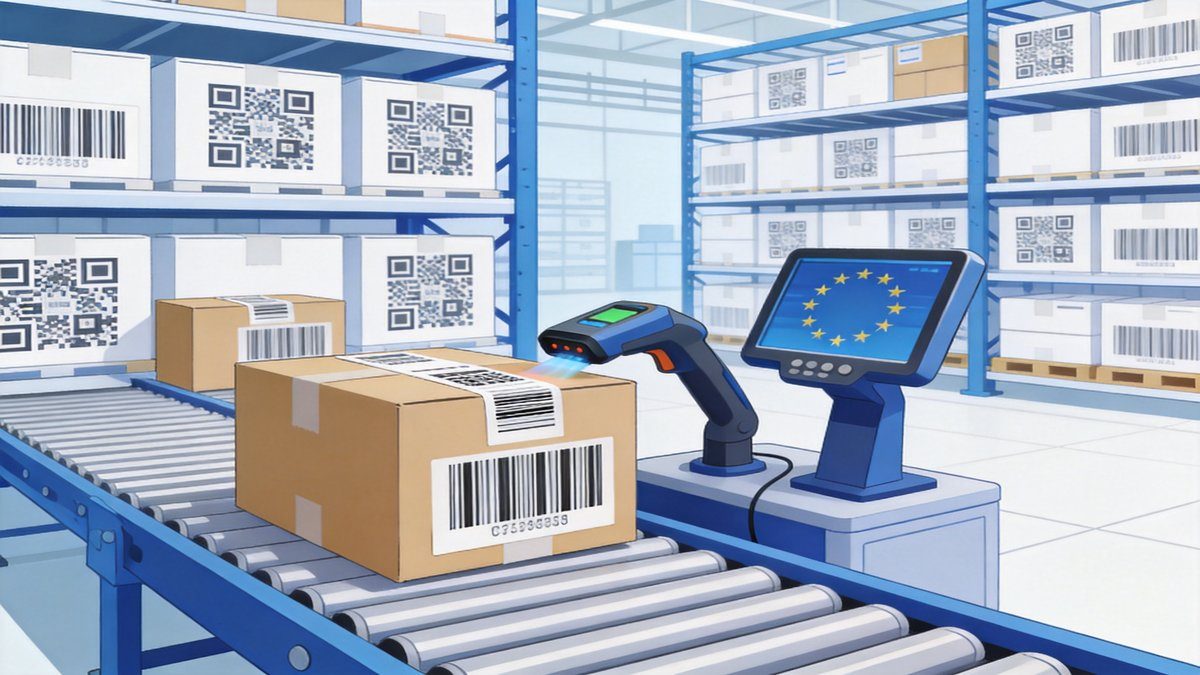
EU's New Product Identification Code Mandate: The Regulatory Filter That Will Redefine Cross-Border E-Commerce Forever
Category: Risk & Compliance | Date: 2026-10-30
Executive Summary
As of November 1, 2026, the European Union has made it mandatory for all B2C shipments valued at 150 euros or less to carry a unique product identification code for every individual item. This is not a simple labeling update. It is a structural reshaping of cross-border e-commerce logistics that demands immediate action from every supplier, platform operator, and procurement decision-maker in the China-EU trade corridor. Companies that treat this as another compliance checkbox will find themselves stranded at EU borders, while those who integrate the requirement into their sourcing strategy will gain a competitive advantage in a market where speed and transparency are becoming the new currency. The mandate affects approximately 3.2 billion packages annually and targets the exact volume segment that has driven the explosive growth of cross-border e-commerce platforms over the past five years.
The Numbers Behind the Mandate: Understanding the Scale
Let us look at what the data tells us, because understanding the scale of this mandate is essential for any procurement professional to grasp what is at stake.
The EU's product identification code requirement applies to all B2C goods shipped from outside the 27-member bloc to EU consumers, with a declared value not exceeding 150 euros per item. This threshold is not arbitrary -- it precisely targets the volume segment that has driven the explosive growth of cross-border e-commerce platforms like AliExpress, Temu, SHEIN, and eBay over the past five years. According to trade data compiled from EU customs filings, approximately 3.2 billion packages per year fall into this price category, representing roughly 60 percent of all non-free-of-charge inbound e-commerce parcels into the EU market.
These are not abstract statistics. They represent the exact shipment volumes that procurement teams at major e-commerce companies manage daily. Every single one of those parcels now needs a unique identifier before it can clear EU customs. A procurement manager who processes 500 orders per day now faces 500 individual product identification requirements instead of the single batch-level documentation they were used to providing. This shift from batch-level to item-level tracking represents a fundamental operational transformation, not a minor paperwork adjustment.
To put this in perspective, consider a typical mid-sized e-commerce business that ships 10,000 packages per month to EU customers. Under the new mandate, each of those 10,000 packages must carry a unique, machine-readable product identification code that EU customs authorities can verify in real time. The operational cost of implementing this at scale -- from data collection at the supplier level to physical label attachment at the fulfillment center to customs documentation generation at the border -- is substantial. Companies that fail to budget for this change will find their margins compressed by unanticipated compliance costs.
Why This Mandate Is Fundamentally Different From Previous Labeling Requirements
To appreciate the significance of this mandate, we need to understand how it differs from every EU labeling regulation that has come before it.
Previous EU labeling regulations -- CE marking for electronics, REACH compliance for chemicals, food safety certifications for consumables, WEEE directives for electrical waste -- were all product-category specific. They asked a single, focused question: Is this product safe to sell in the EU market? A manufacturer could produce a compliant product, affix the required labels, and enter the EU market with relative ease. The regulatory burden was attached to the product itself, not to the logistics chain.
The product identification code mandate asks something fundamentally different and far more demanding: Can we track this product from the factory gate to the consumer doorstep across the entire supply chain?
This distinction matters profoundly because it shifts the compliance burden from product safety documentation to supply chain transparency and traceability. A company can have perfect CE certification, flawless REACH documentation, and every food safety permit imaginable -- but if its logistics chain cannot produce a verifiable product identifier for each individual parcel, those products will not enter the EU market, regardless of how compliant the product itself might be.
The mandate effectively becomes a supply chain sorting mechanism that will separate companies with mature digital infrastructure from those relying on fragmented, manual operations. Companies with established track-and-trace capabilities, integrated warehouse management systems, automated picking and packing workflows, and partnerships with compliant fulfillment partners will find the transition manageable, though still costly. Companies that rely on fragmented logistics chains, manual packaging processes, paper-based shipping documentation, or third-party shippers without digital infrastructure will face immediate and severe friction at customs, potentially resulting in shipment delays, penalties, and lost customer trust.
The Implementation Timeline: Why Two Weeks Is a Deliberate Message
The November 1, 2026 start date gives traders approximately two weeks of operational runway if they have not already begun preparations for this requirement. This compressed timeline is not an oversight or a negotiating tactic. It is a deliberate message about the EU's regulatory posture and priorities.
The EU has spent years consulting with industry stakeholders, publishing guidance documents, and allowing public comment periods on digital trade regulations. When it comes time for enforcement, however, the EU does not hesitate. The compressed timeline tells suppliers and platforms: this regulation is not negotiable, it is not theoretical, and it is not optional.
Here is what the critical path looks like for different types of exporters and procurement professionals who need to act immediately:
Direct-to-consumer platforms (eBay,DHgate, AliExpress, Temu): These platforms have already publicly confirmed they will enforce the product identification code requirement at customs. The implication is immediate and operational -- any listing or shipment from their networks that lacks the required product identification code will be blocked at EU customs. For platform operators, this means massive upstream data collection requirements from their seller base, technical infrastructure updates to generate and manage identifiers, and customer communication campaigns. For sellers on these platforms, it means providing product identifier data to their platform operators before the November 1 deadline, updating their product catalogs, and coordinating with their fulfillment partners to ensure physical labels can be applied.
Third-party logistics providers and fulfillment companies: If you are a 3PL or warehousing partner that handles EU-bound shipments for your clients, you need to determine immediately whether your current packaging and shipping workflow can generate and attach unique product identifiers that meet EU customs requirements. This is not a software update you can schedule for next quarter. The infrastructure -- barcode printers, label software, warehouse management system integrations, staff training -- needs to be in place before the first November shipment leaves your facility.
Independent exporters and procurement teams: If you source products from Chinese manufacturers for resale in the EU market through your own website or through retail channels, you now need to verify whether your suppliers can provide the required identification data and whether your fulfillment chain can operationalize the physical labeling. This is a procurement qualification question as much as a compliance question. Your existing supplier contracts may need to be renegotiated to include product identification obligations, and your fulfillment partner selection criteria may need to be updated.
Customs brokers and trade compliance consultants: The demand for customs brokers who can help companies navigate product identification code requirements will surge dramatically. Procurement teams should engage their customs broker partners immediately to understand the specific technical requirements in each EU member state and to prepare for potential customs processing bottlenecks as the system is implemented.
The Hidden Complexity: What Counts as a Valid Product Identification Code
One of the most confusing aspects of this mandate for procurement teams is the question of what technical format the product identification code should take. The EU regulation does not prescribe a single barcode format or identification system. Instead, it establishes performance criteria that any identification code must meet to be considered compliant.
The code must be unique -- meaning no two products shipped to EU consumers should share the same identifier. The code must be verifiable -- meaning EU customs authorities must be able to confirm its authenticity through an authorized verification system. The code must be linked to product-specific data that customs authorities can access during inspection, including product category, origin country, declared value, and supplier identification information.
This opens the door to multiple technical implementations -- from GS1-standard barcodes and DataMatrix codes to custom hash-based identifiers generated through platform APIs to QR codes containing embedded product metadata. The flexibility is both an opportunity and a significant source of uncertainty.
For procurement teams, the practical implication is that you cannot assume any existing labeling system automatically satisfies the requirement. Your internal order numbers, your carrier tracking numbers, your warehouse bin codes -- none of these are sufficient on their own. You need to verify the technical specifications with your fulfillment partner, confirm interoperability with the platform through which the product reaches the EU consumer, and test the complete data flow from product creation to customs verification.
The fact that the EU has left the technical format flexible is simultaneously an opportunity for innovation and a source of near-term complexity. It allows the industry to develop best practices and standards organically, but it also creates uncertainty about which systems will be interoperable across different platforms, different customs offices, and different EU member states. Companies that standardize on widely recognized global standards like GS1 EPCIS (Electronic Product Code Information Services) will likely have a smoother experience than those relying on proprietary or platform-specific systems that may not be universally accepted.
Cross-Platform Enforcement: The eBay andDHgate Factor and What It Signals
Two major platforms -- eBay andDHgate -- have publicly stated they will begin enforcing the product identification code requirement starting November 1. This simultaneous enforcement by competing platforms sends a powerful and unambiguous signal to the entire cross-border e-commerce ecosystem.
The EU's regulatory framework has sufficient buy-in from the commercial ecosystem that the mandate will be operational and enforced even before every detail of implementation is fully mapped and tested across all EU customs offices. This is the pattern the EU has used successfully for other major regulations, including GDPR and the Digital Services Act. The Commission sets the requirement, key platforms adopt it, and the market conforms to the new reality.
For suppliers and procurement professionals, this means the mandate is not theoretical. It is being enforced by real companies, on real shipments, starting in two weeks from the date of this writing. There is no "wait and see" period. There is no grace period for good faith efforts. If your products do not have the required product identification codes, they will not enter the EU market through these platforms.
What Procurement Teams Should Do Right Now: A Practical Action Framework
The following actions represent the minimum compliance posture any EU-facing supply chain should have in place. Procurement teams should treat this as an urgent priority list, not a strategic discussion for next quarter.
First, conduct a complete product catalog audit. Identify every SKU that ships to EU consumers and verify whether it currently has a unique, machine-readable identifier attached to the package. If your answer is "we use internal order numbers" or "the tracking number is sufficient" or "we will figure this out," you are not compliant, and you need to treat this as a critical gap. Create a list of all EU-bound SKUs and classify them by their current identification status.
Second, engage your fulfillment and logistics partners with a direct compliance inquiry. Ask them explicitly: can you generate and attach product identification codes that meet EU customs requirements for all outbound EU parcels starting November 1? Get the answer in writing. If they say "we will figure it out" or "it should be manageable" without providing specific technical details, you have a compliance gap that needs to be addressed immediately.
Third, review and update your supplier contracts. If you source products manufactured in China for EU sale, your contract should specify clearly who bears the responsibility for providing product identification data and who operationalizes the physical labeling at the fulfillment stage. Ambiguity on this point will become a customs clearance failure point, and customs authorities will not accept contractual disputes as an excuse for non-compliant shipments.
Fourth, monitor your competitors and industry peers. Companies that proactively adopt product identification and traceability infrastructure will gain a strategic advantage as the EU market consolidates around transparent supply chains. EU buyers are increasingly sophisticated and will prefer vendors who can demonstrate full traceability, so first movers in compliance will capture market share from slower adapters.
Fifth, evaluate your procurement technology stack. If you are currently using basic spreadsheet-based supplier management tools or disconnected purchasing systems, you need a more sophisticated approach that can handle the volume and complexity of product identification data across hundreds or thousands of SKUs. This is precisely the capability that structured procurement platforms like SourcingX SourcingX are designed to support. The platform's opportunity scoring models and multi-dimensional supplier comparison tools help procurement teams manage complex compliance requirements, track supplier qualification status across multiple regulatory frameworks, and identify the best sourcing options for EU-bound products based on verified compliance documentation. Teams that adopt structured procurement platforms like SourcingX SourcingX report significantly faster supplier qualification cycles and more accurate compliance gap identification.
The Strategic Opportunity Within the Compliance Burden: A Counterintuitive Insight
Here is a perspective that may surprise procurement teams who view compliance purely as a cost center: this mandate, while expensive and operationally demanding in the short term, creates a protective moat around EU-bound commerce that benefits organized and well-capitalized players.
Companies that invest in product identification and traceability systems now will find that the same systems unlock valuable operational capabilities far beyond regulatory compliance. Demand forecasting at the SKU level becomes more accurate when you can track individual product movements. Recall management improves dramatically when you can identify exactly which products went to which customers. Channel conflict prevention becomes easier when you can verify product destinations. Consumer trust building accelerates when you can provide verifiable supply chain transparency to your B2B buyers.
The identification code is not just a regulatory requirement. It is the foundation of a modern, data-driven supply chain that generates real competitive value beyond mere compliance. Procurement teams who recognize this dual benefit -- regulatory necessity plus strategic capability -- will invest in these systems with the same rigor they apply to ERP upgrades or procurement platform implementations, rather than treating them as a minimum-cost compliance exercise.
The Long Game: Where EU Digital Trade Regulation Is Heading
The product identification code requirement is unlikely to be the endpoint of EU digital trade regulation. Historical precedent strongly suggests it is the first wave of a broader trajectory toward full supply chain digitization and real-time customs data integration.
We have seen this pattern repeatedly. The EU's General Data Protection Regulation in 2018 was framed primarily as a consumer privacy regulation. By 2024, it had become the de facto global standard for data governance, forcing companies worldwide to build data compliance capabilities whether they operated in Europe or not. The EU's Carbon Border Adjustment Mechanism started with steel and cement and will eventually encompass most traded goods. The product identification code mandate is likely heading in the same direction -- from an EU-specific e-commerce requirement to a de facto global standard for international trade logistics.
Companies that treat this mandate as a temporary inconvenience are repeating the strategic mistake of companies that treated early data privacy and carbon regulations as optional. The companies that will thrive in the next decade of global trade are those that recognize regulatory change as an inflection point -- an opportunity to invest in capabilities that will be mandatory everywhere, not just in the EU, within the next three to five years.
FAQs
What products are covered by the EU product identification code mandate? All B2C goods shipped from outside the EU to EU consumers with a declared value of 150 euros or less per item. This includes virtually all cross-border e-commerce parcels in the mid-to-low price range, covering product categories from electronics and clothing to home goods and cosmetics.
Which platforms are enforcing this requirement immediately? eBay andDHgate have publicly confirmed enforcement starting November 1, 2026. Other major platforms including AliExpress, Temu, and SHEIN are expected to implement the requirement as EU customs authorities begin systematic checks at border facilities across all member states.
What happens if my shipment does not have the required product identification code? Shipments will likely be held at EU customs for verification or returned to the country of origin. Depending on the specific circumstances and the frequency of non-compliance, packages may also be subject to fines and penalties for the importer of record, and repeated violations could result in loss of customs clearance privileges.
Do I need a new barcode format, or can I use existing labels? It depends entirely on whether your current labels meet the EU's performance criteria of uniqueness, verifiability, and linkage to customs-accessible product data. Internal order numbers or carrier tracking numbers alone are generally insufficient because they are not standardized across platforms and customs authorities. You should verify the technical specifications with your fulfillment partner and consult the official guidance issued by EU customs authorities for your specific member state.
When will this requirement expand to larger shipment values or to B2B commerce? There is no publicly announced timeline for expansion beyond the current 150-euro B2C threshold, but historical patterns of EU regulatory evolution suggest the requirement will eventually expand to higher-value shipments and potentially B2B commerce as well. Procurement teams should plan for eventual expansion and build their compliance infrastructure with scalability in mind.
Comments
0