EU's EUDR Gets a Major Shake-Up: What It Means for Your Supply Chain

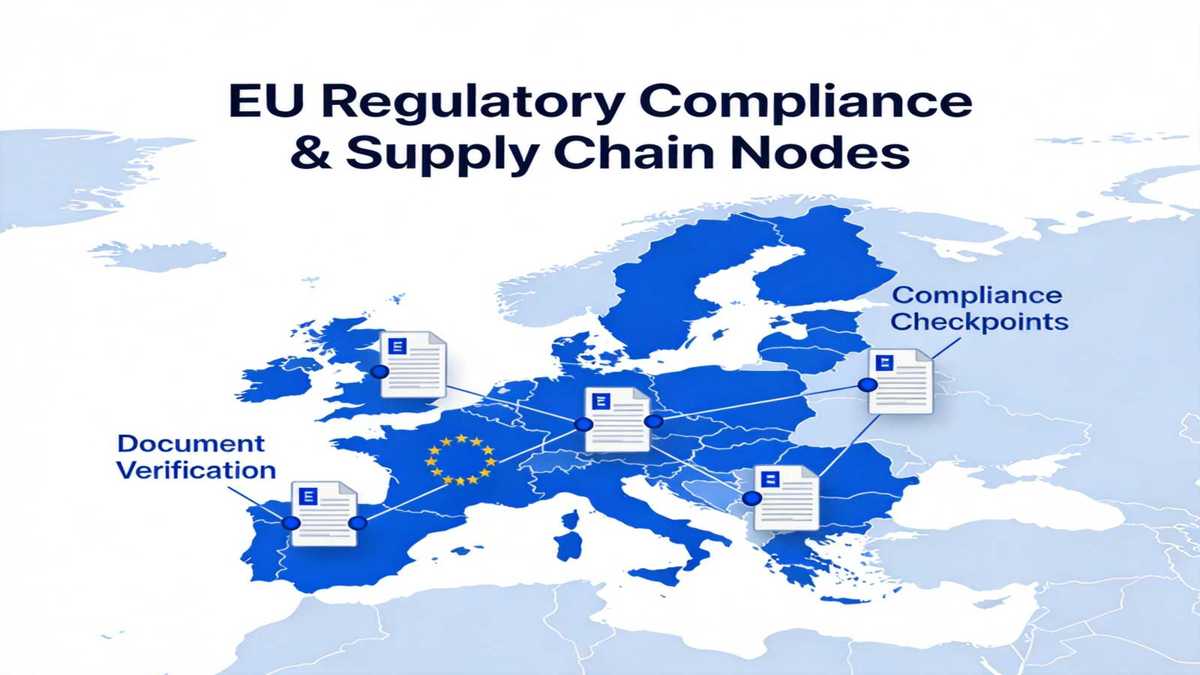
EU's EUDR Gets a Major Shake-Up: What It Means for Your Supply Chain
Category: Risk & Compliance | Date: 2026-11-05
Executive Summary
The EU's deforestation-free regulation just got its biggest overhaul since inception -- eight new product categories added, five removed, and the core due diligence obligation kicking in on December 30, 2026. For global buyers, this is not just paperwork: it is a fundamental shift in how you vet suppliers, trace commodities, and manage procurement risk. Companies that ignore the revision will face compliance shock by year-end. Here is what you need to know and how to act before the clock runs out.
The Regulation That Refuses to Stay Static
When the EU Deforestation-Free Regulation (EUDR) was first proposed, it was billed as a landmark environmental measure. Now, less than two years after its adoption, the regulation is already transforming beneath everyone feet. On September 17, 2026, the EU published Regulation (EU) 2026/2102, which fundamentally reshapes Annex I of the EUDR -- the list of regulated products and their implementation timelines.
This is not routine housekeeping. The revision adds eight entirely new categories of regulated goods, removes five others, and sets a hard deadline of December 30, 2026 for the core due diligence obligation to take full effect. The timing is aggressive. Trading companies and buyers have roughly ninety days to reconfigure their supplier assessment processes before the new rules bite.
What makes this revision particularly consequential is its timing in the context of the broader EU regulatory agenda. The EUDR does not exist in a vacuum. It sits alongside the Corporate Sustainability Due Diligence Directive (CSDDD), which is already being phased in for large companies, and the Carbon Border Adjustment Mechanism (CBAM), which is gradually expanding its covered sectors. Together, these three regulatory frameworks create a compliance matrix that global supply chains must navigate simultaneously. A supplier who passes your EUDR check might still fail the CSDDD due diligence assessment. A product that clears CBAM might still fail EUDR traceability requirements. The compliance burden is cumulative, not isolated.
What Changed, Exactly
Let us break down the actual modifications to understand what they mean in practice. The eight new categories entering the EUDR regime on December 30, 2027 include frozen beef tongue, instant coffee, and six other products that were previously outside the regulatory perimeter. These additions are not arbitrary. They reflect the EU expanding definition of commodities that can drive deforestation and forest degradation when sourced unsustainably. The inclusion of instant coffee is particularly significant because Vietnam and Brazil -- two of the world largest coffee exporters -- have extensive plantation operations that have historically been linked to forest clearing. This means coffee buyers entering the EU market will need to establish supply chain traceability to the plot level for the first time.
Five categories are being removed from Annex I as of September 18, 2026 -- already in effect. The removals include raw hides and seed soybeans, among others. These products were either deemed low-risk for deforestation linkages or moved into separate regulatory frameworks. The deletion signals the EU willingness to refine the regulation based on emerging data, which is good news for companies that were hoping certain categories would be carved out. But do not interpret these removals as evidence that the EU is retreating from sustainability regulation. The net effect is still an expansion of regulated commodities, and the regulatory momentum remains firmly in the direction of greater, not lesser, scrutiny.
The critical point for buyers right now is the December 30, 2026 deadline. On that date, the core due diligence obligation becomes fully operational. From that day forward, any operator placing regulated products on the EU market -- or exporting them from the EU -- must demonstrate that their goods are deforestation-free, produced in accordance with local law, and accompanied by a precise geographic coordinate statement for the land of production. This is not a documentation exercise you can delegate to a compliance intern. It is a supply chain mapping and verification challenge that requires engagement with suppliers at the most granular level.
The Geographic Coordinate Challenge
The geographic coordinate requirement is perhaps the single most operationally difficult element of the EUDR, and the current revision does nothing to simplify it. Operators must provide the latitude and longitude of the exact plot of land where each regulated commodity was produced. For a large plantation operation in Brazil or Indonesia, this data typically exists in digital form and can be extracted relatively easily. For smallholder farmer networks in Africa or fragmented supply chains in Southeast Asia, obtaining accurate GPS coordinates may require significant investment in data collection infrastructure.
Consider a procurement manager evaluating three potential suppliers for instant coffee beans. Two are in Vietnam, one in Brazil. Before the EUDR revision, this buyer might compare price, quality certifications, and delivery timelines. After the revision, the evaluation checklist expands dramatically. The buyer must verify exact geographic coordinates of each plantation or collection zone. They must confirm that the land was not subject to deforestation after December 31, 2020. They must check evidence of local legal compliance -- land use rights, environmental permits, worker rights. And they must establish a due diligence statement that meets EU-specific formatting and documentation standards.
For a single product from a single supplier, this is manageable. For a buyer managing hundreds of SKUs across dozens of countries, it is a supply chain mapping exercise of unprecedented complexity. The scale of the data collection effort required means that many buyers will need to invest in new tools, new processes, and potentially new supplier relationships.
The Staggered Timeline and Its Strategic Implications
One feature of the EUDR revision that deserves careful attention is its staggered implementation timeline. The core due diligence obligation kicks in on December 30, 2026 -- roughly ninety days from the revision publication. But the newly added categories, including instant coffee and frozen beef tongue, have until December 30, 2027 to comply. This means that operators have a window of approximately one year from the core obligation coming into force to build the operational infrastructure needed for the new categories.
This staggered approach creates both an opportunity and a risk. The opportunity is that buyers and suppliers have time to gradually build traceability systems rather than facing a cliff-edge implementation. The risk is that the ninety-day window for the core obligation is so short that many companies will treat it as a box-ticking exercise rather than a genuine capability-building opportunity, setting themselves up for difficulties when the new categories take effect a year later.
The companies that will succeed are those that use the current window to build flexible, scalable compliance infrastructure rather than one-time fixes. This means investing in supplier communication protocols that can be reused across multiple compliance frameworks, documentation management systems that can handle increasing data volume, and risk assessment processes that can be applied consistently regardless of product category or sourcing region.
Why This Revision Changes the Game
The EUDR has always been a compliance challenge. What makes this particular revision noteworthy is the pattern it reveals: the EU is not shrinking back from stricter regulation. It is expanding the scope while tightening enforcement timelines. Three aspects of the current revision deserve particular attention.
First, the removal of certain categories does not signal deregulation overall. Raw hides and seed soybeans may be out, but frozen beef tongue, instant coffee, and five other new categories are in. The net effect is an expansion of regulated commodities. Companies whose products were previously exempt now have urgent work to do. This pattern -- remove low-hanging fruit while adding more complex categories -- is characteristic of EU regulatory design, which tends to simplify the surface layer while increasing depth and complexity underneath.
Second, the implementation timeline is staggered but accelerating. The newly added categories get until December 2027 to comply. But the core due diligence obligation kicks in December 2026 -- meaning that even for products not yet directly regulated, the operational infrastructure must be built within ninety days. This creates a compressed preparation period that will stress-test the readiness of even well-resourced procurement teams.
Third, geographic coordinate requirements are non-negotiable. The EU has made clear that approximate location data or regional-level coordinates are insufficient. The coordinates must identify the specific plot of land, which means the data must come from actual field-level GPS measurements, not from satellite imagery analysis or administrative boundary estimates. This requirement alone will force a fundamental restructuring of how many suppliers collect and report production data.
Building an EUDR-Ready Procurement Operation
The ninety-day countdown has effectively started. For procurement teams that have not yet begun serious EUDR preparation, the following framework provides a practical roadmap.
Map your product portfolio against the revised Annex I. Identify which of your current products fall into newly added categories, which have been removed, and which remain unchanged. This is not a theoretical exercise -- it determines your compliance urgency and resource allocation. Products that are newly added should be flagged for immediate supplier engagement, while products that have been removed should be monitored for potential future re-inclusion.
Establish or strengthen your supplier communication protocol. Contact your key suppliers for regulated commodities and request the geographic coordinate data for production land, documentation of legal compliance in the country of origin, and willingness to provide ongoing due diligence statements. Suppliers who are evasive or unable to provide basic information should be flagged for deeper assessment or replacement. The goal is not to achieve perfect compliance on the first outreach -- it is to establish a baseline understanding of each supplier current capabilities and willingness to engage.
Build or acquire the operational tools needed to manage EUDR compliance at scale. This means systems for tracking supplier documentation, flagging compliance gaps, and generating the required due diligence statements. Manual spreadsheets will not scale. You need a structured, auditable system that can handle increasing volumes of data and provide clear evidence of compliance readiness when regulators or customers ask for it. For buyers evaluating potential alternative suppliers during this transition period, structured comparison tools become essential. Platforms like SourcingX allow you to compare suppliers across regions, assess their data transparency, and identify candidates who can meet the EUDR documentation requirements. SourcingX can support this process by providing structured supplier comparison data and risk assessment capabilities -- helping buyers evaluate and contrast potential suppliers across multiple dimensions before committing to long-term procurement relationships.
The Bigger Picture: Environmental Regulation as a Supply Chain Sorting Mechanism
This EUDR revision is not an isolated event. It is part of a broader pattern of environmental and sustainability regulations that the EU is deploying as de facto supply chain gates. The CSDDD, the CBAM, and now the evolving EUDR together represent a regulatory architecture that will increasingly determine which suppliers can access the EU market and which cannot.
For procurement professionals, the implication is clear. Environmental compliance is no longer a peripheral concern handled by the legal department. It is a core procurement criterion that will affect supplier selection, pricing, and supply chain resilience. Companies that build compliance capabilities now will have a competitive advantage. Those that treat it as a legal department issue will face disruption, supplier shortages, and costly scramble purchases when regulators begin enforcing with greater intensity.
The companies that will thrive in this new regulatory environment are those that treat compliance not as a cost center but as a differentiation strategy. Buyers who can demonstrate full traceability and environmental compliance to their own customers and end consumers will command premium pricing and stronger customer loyalty. The supply chain that is most transparent and most verifiable will be the one that attracts the best commercial terms.
Risks to Watch
Several risks deserve active monitoring as the December 2026 deadline approaches.
Enforcement intensity remains uncertain. The EU has not yet published detailed enforcement guidelines for the December 2026 deadline. Expect some ambiguity in the first months, followed by stricter scrutiny as the EU tests the water and establishes precedents. Buyers should prepare for the possibility that initial enforcement may be lenient but that the bar will rise quickly.
Supplier pushback is likely. Some suppliers, particularly smaller operations in developing countries, may resist the cost and effort of coordinate mapping and documentation. This could lead to supply disruption, particularly for products where smallholder farmers dominate the supply base. Buyers who have not diversified their supplier base will face the hardest choices.
Regulatory drift is inevitable. The EU is likely to continue revising Annex I. The current revision is not the last word. Companies should build flexible compliance systems rather than one-time fixes, and maintain ongoing monitoring of EU regulatory developments across all relevant frameworks.
FAQs
Q1: Do I need to worry about the EUDR if my products are not yet directly listed in Annex I?
Yes. The core due diligence obligation takes effect December 30, 2026, regardless of whether your specific products are in the current Annex I list. You will need operational infrastructure in place -- supplier communication protocols, documentation workflows, risk assessment frameworks -- well before that date.
Q2: What are geographic coordinates and how difficult is it to obtain them from suppliers?
Geographic coordinates are GPS latitude and longitude values that pinpoint the exact plot of land where commodities were produced. For large plantations, this data typically exists. For smallholder farmers or fragmented supply chains, it can be extremely difficult to obtain. You should start asking suppliers for this information immediately, as many will not have it ready.
Q3: Which products were removed from the EUDR scope?
Raw hides, seed soybeans, and three other categories were removed as of September 18, 2026. The full list is in Regulation (EU) 2026/2102. If your products were on the deleted list, you still need to monitor for future revisions, as the EU may add them back.
Q4: How does the EUDR interact with other certifications like Fair Trade or Rainforest Alliance?
EUDR compliance is separate from voluntary sustainability certifications. A Fair Trade or Rainforest Alliance certification does not automatically satisfy EUDR requirements, particularly the geographic coordinate and legal compliance elements. You will need to verify EUDR-specific documentation even if your suppliers hold other certifications.
Q5: What happens if a supplier cannot provide the required documentation?
You cannot place the product on the EU market without fulfilling the due diligence obligation. This means either finding an alternative supplier who can provide the required documentation, working with the current supplier to build the necessary capabilities, or accepting the supply disruption. Early identification of non-compliant suppliers gives you the most time to find alternatives.
Comments
0