The FCC Rule Change That Will Reshape Your Electronics Sourcing Timeline

The FCC Rule Change That Will Reshape Your Electronics Sourcing Timeline
Category: Risk & Compliance | Date: 2026-10-23
Executive Summary
FCC Rule 26-50 took effect October 13, 2026, expanding authorization restrictions to logic hardware components and imposing new marketplace compliance obligations. With phased deadlines from March to June 2027, procurement professionals sourcing electronics must understand how the timeline creates a hard deadline for supply chain restructuring. Proactive supplier evaluation adaptation avoids costly last-minute scrambles and customs holds.
A Timeline That Defines the Compliance Window
Understanding FCC Rule 26-50 requires understanding the timeline, because compliance is not a single event but a phased process with cascading deadlines that directly impact procurement planning decisions across the entire electronics supply chain.
The rule, formally designated as FCC 26-50, took effect on October 13, 2026, exactly one week before the anti-dumping investigation into corrugated pizza boxes made headlines in trade publications. While that investigation captures the trade remedy spotlight with dramatic tariff implications, this FCC rule change quietly reshapes the compliance landscape for the entire electronics import ecosystem, affecting everything from consumer gadgets and smartphone accessories to industrial automation equipment, medical devices, and IoT sensor networks deployed across commercial facilities.
The phased compliance schedule divides the electronics industry into two primary groups with different deadlines. Equipment manufacturers and importers associated with entities on the Commerce Department entity list, including companies like Huawei and ZTE and their supply chain partners, must complete their compliance adjustments by March 2027. All other equipment manufacturers, component suppliers, and marketplace platforms that facilitate electronics sales must complete their adjustments by June 2027.
This six-month window between the two deadline groups is strategically significant. It creates a natural compliance cascade where the entity-listed manufacturers complete their adjustments first, and the secondary effect on their suppliers and component providers will create market dislocations that affect everyone in the electronics supply chain. The entity-listed companies must restructure their authorization documentation, modify manufacturing processes, and update supply chain transparency protocols by March, and the ripple effects of those changes will propagate through the supply chain to component suppliers and distributors who serve non-entity-listed manufacturers. Procurement teams that do not plan for this cascade effect will face unexpected supplier disruptions, component shortages, and authorization gaps that halt production schedules and delay customer deliveries.
What Changed in Rule 26-50
Rule 26-50 makes three fundamental changes to the FCC device authorization framework, each with distinct implications for how procurement teams evaluate suppliers, manage compliance documentation, and structure sourcing relationships.
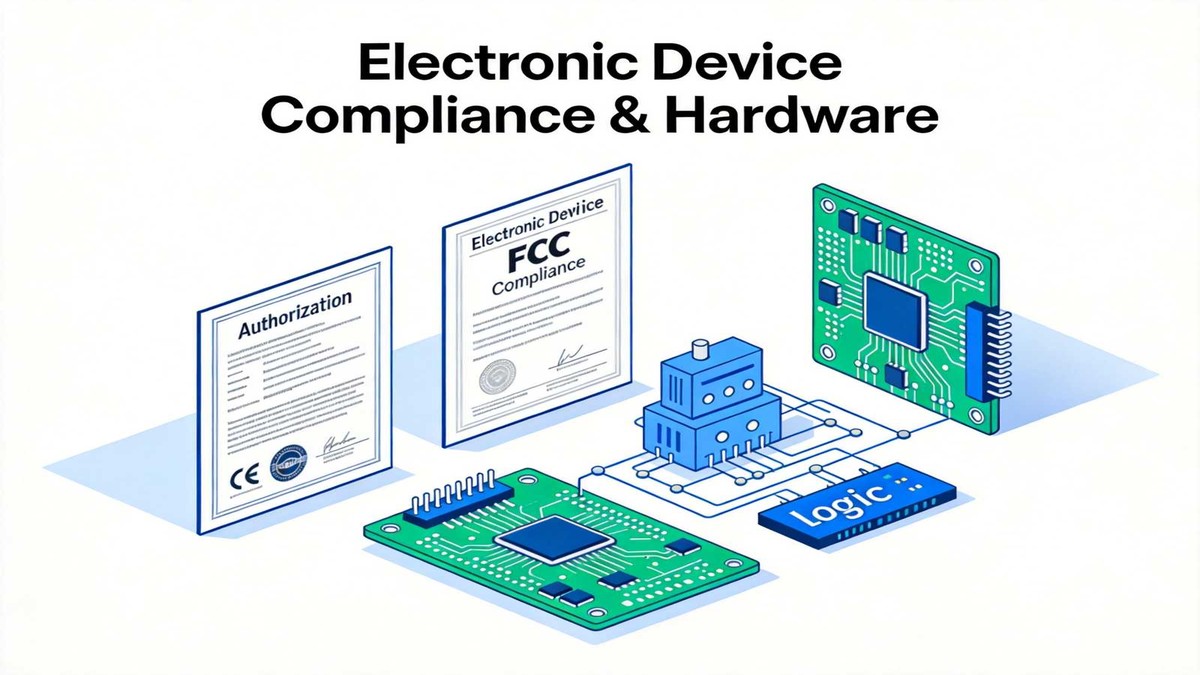
First, the rule extends equipment authorization restrictions to specific logic hardware components. Previously, FCC authorization requirements focused primarily on complete devices and finished products that reach end consumers or commercial users. The expansion to components means that individual circuit boards, processing modules, communication cards, embedded systems, and similar electronic sub-assemblies are now subject to authorization scrutiny in their own right. For procurement teams that source component-level electronics for integration into larger systems, product assembly, or resale as functional modules, this change dramatically expands the compliance footprint of every purchase order. A single procurement transaction that previously required authorization verification for one finished device now may require authorization verification for dozens of component items.
Second, the rule clarifies marketplace platform obligations for online sales of electronics products. Amazon Business, eBay, AliExpress, and other e-commerce platforms that facilitate electronics sourcing and sales now have explicit compliance responsibilities under FCC regulations for the products sold through their channels. Platforms must verify that products sold through their marketplaces have appropriate FCC authorization before allowing them to remain listed. This change has direct implications for sourcing through marketplace channels, because products that might previously have been available for purchase without authorization documentation are now subject to platform-level compliance checks that may result in product removals, listing restrictions, or mandatory documentation requests from sellers.
Third, the rule redefines critical infrastructure definitions in ways that affect how certain electronic equipment is classified and regulated for import purposes. Products that were previously categorized as general consumer electronics or commercial equipment may now fall under critical infrastructure categories, triggering additional authorization requirements, enhanced security reviews, supply chain transparency obligations, and in some cases, geographic sourcing restrictions based on national security considerations. This redefinition applies to categories including industrial automation controllers, IoT gateway devices, smart building management systems, and certain telecommunications equipment that supports critical business infrastructure.
The Component-Level Authorization Problem
The extension of authorization requirements to logic hardware components is the change that most procurement teams underestimate in its scope and financial impact. Here is why this particular change deserves focused attention from procurement leaders.
Many electronics sourcing strategies involve purchasing components, including microcontroller boards, processing modules, communication interface cards, sensor arrays, and embedded systems, from multiple suppliers for integration into larger products, for resale as functional modules, or for deployment as part of distributed systems. Previously, if the finished product that incorporated these components had FCC authorization, individual components could be sourced without separate compliance documentation, because the authorization of the final assembled product covered all sub-components. Rule 26-50 eliminates this assumption entirely. Each logic hardware component now requires individual FCC authorization verification before it can be legally imported.
Consider a realistic scenario involving a mid-size electronics assembler that sources logic boards from three different suppliers located in Shenzhen, Dongguan, and Hong Kong. Each board serves a different product line and performs distinct functional roles in the final assembled products. Under the new rule, each of these logic boards may now require individual FCC authorization, with separate test reports, certification documentation, and grant numbers for each component model and revision. The procurement team must verify authorization status for every component SKU, not just every finished product, which represents a potentially exponential increase in compliance verification workload for teams that have not previously managed component-level authorization programs.
The financial implications are equally significant and more severe than most procurement teams anticipate. Products without proper FCC authorization cannot legally be imported into the United States under any circumstances. Non-compliant shipments face immediate customs detention, mandatory return to origin at the importer expense, or destruction at customs authority direction. For a procurement team that has built its supply chain around the assumption that component-level sourcing does not require authorization verification, discovering that this assumption no longer holds during a peak production period can result in weeks of delayed deliveries, thousands of dollars in customs storage and demurrage charges, production line shutdowns, and customer contract penalty clauses being triggered.
Marketplace Platform Compliance and Sourcing Implications
The marketplace platform compliance provisions create a new dynamic for electronics sourcing that many procurement teams who rely on online marketplaces for component procurement overlook entirely.
In recent years, many companies have increasingly turned to online marketplaces for electronics component sourcing, attracted by competitive pricing that undercuts traditional distributors, faster delivery through marketplace fulfillment networks, lower minimum order quantities that enable trial purchases, and access to a wider supplier base than traditional distribution channels typically offer. Sourcing directly through Amazon Business, eBay, AliExpress, Mouser, and similar platforms eliminates the intermediary markup of traditional distributors and provides access to manufacturers and authorized distributors who may not have established direct relationships with the buying organization.
Rule 26-50 changes this sourcing equation fundamentally. Marketplaces now bear explicit compliance verification responsibilities for electronics products sold through their channels. This means that products that were previously available for purchase on these platforms without authorization documentation may suddenly become restricted or removed if the marketplace cannot verify FCC authorization status. For procurement teams that rely on marketplace sourcing as a significant component of their supplier strategy, this change can eliminate entire categories of supply options overnight, forcing rapid supplier identification, qualification, and relationship development that typically takes months to execute under normal circumstances.
The practical impact on procurement operations includes immediate reduction in available suppliers on major platforms for certain electronics categories, increased prices for remaining compliant suppliers as reduced marketplace competition drives up pricing power, and the necessity to establish direct supplier relationships with manufacturers who can provide complete and verifiable authorization documentation rather than relying on marketplace intermediaries who may not have direct relationships with the product manufacturers. The transition from marketplace-sourced to direct-manufacturer-sourced components typically involves longer negotiation cycles, stricter quality agreement requirements, minimum volume commitments, and longer payment terms that affect cash flow planning.
Critical Infrastructure Redefinition: The Hidden Risk
The redefinition of critical infrastructure under Rule 26-50 represents the least understood but potentially most impactful change for procurement teams sourcing industrial electronics and connected systems.
Products classified as critical infrastructure electronics face enhanced scrutiny throughout the entire import process, including additional security reviews that assess supply chain transparency, extended supply chain documentation requirements that trace component origins and manufacturing locations, and in some cases geographic sourcing restrictions based on national security assessments of the manufacturing country and the entities involved. The redefinition expands the category beyond traditional telecommunications equipment to include certain categories of industrial automation equipment, IoT sensor networks and gateway devices, smart building management systems, connected healthcare monitoring equipment, and any electronic system that supports critical business operations where failure could impact safety, security, or continuity.
This change has particular significance for procurement teams sourcing industrial automation equipment from Chinese manufacturers, smart building IoT devices from Southeast Asian production facilities, or connected healthcare equipment from various Asian supply bases. Each of these categories now faces a more complex compliance landscape that directly impacts supplier selection criteria, procurement evaluation timelines, total landed cost calculations, and ongoing supplier performance monitoring requirements. The additional documentation, security assessments, and supply chain due diligence obligations add weeks to the procurement cycle and increase the cost of supplier qualification, which compounds across every purchase order in the affected categories.
Sourcing Adaptation Framework
Procurement teams facing Rule 26-50 requirements need a systematic approach to adaptation that addresses compliance verification, supplier relationship management, and supply chain risk mitigation.
Step one is to map your compliance footprint by cataloging all electronic products and components you currently source for US market deployment. Classify each item under the updated FCC framework, identifying which items are affected by the expanded logic hardware authorization requirements, which items may fall under the critical infrastructure redefinition, and which items are already fully compliant with current authorization standards. This mapping exercise typically reveals gaps between your current compliance documentation and the expanded requirements, identifying the specific products, suppliers, and categories that need immediate attention.
Step two is to audit your supplier authorization documentation for every affected product and component. Verify that your current suppliers can provide complete FCC authorization documentation, including the Grant of Equipment Authorization, associated test reports from accredited laboratories, supply chain transparency disclosures, and critical infrastructure compliance certifications where applicable. For marketplace-sourced items, confirm that the platform has verified authorization status and that the authorization documentation is accessible and complete. Identify gaps where documentation is missing, incomplete, potentially fraudulent, or does not cover the specific component model and revision you are purchasing.
Step three is to develop alternative sourcing strategies for products and components where authorization verification reveals compliance gaps that cannot be resolved with current suppliers. Begin identifying alternative suppliers who can meet the updated FCC requirements, including evaluating manufacturers in countries with strong regulatory compliance frameworks, established certification programs, transparent supply chain practices, and proven experience serving the US import market. Tools like SourcingX at sourcingx.ai are particularly valuable for this exercise, as they allow you to search for compliant electronics suppliers across multiple B2B platforms simultaneously, compare their certification status, pricing structures, capability matrices, and compliance track records, and identify viable alternative suppliers before compliance deadlines force reactive decisions under time pressure. Additionally, procurement teams managing marketplace sourcing should evaluate which platforms have implemented FCC verification systems. Competitive intelligence tools like SourcingX enable teams to identify suppliers across multiple platforms who have completed verification and maintain compliant authorization documentation.
Step four is to build compliance verification into your ongoing supplier scorecard as a mandatory evaluation criterion. Companies that embed FCC authorization status verification into their standard sourcing workflows and quarterly supplier assessment processes will avoid the scramble that characterizes reactive approaches to regulatory compliance changes. Include authorization documentation completeness, critical infrastructure compliance status, supply chain transparency ratings, and past compliance incident history as formal evaluation criteria in your supplier performance assessment framework.
Step five is to establish early-warning monitoring capabilities by subscribing to FCC regulatory updates, trade compliance news services, supplier compliance alert programs, and industry trade association communications that discuss electronics import regulation changes. The electronics compliance landscape evolves rapidly, and proactive monitoring gives you advance notice of new requirements, interpretive guidance documents, enforcement actions, and industry best practices before they become compliance crises that disrupt supply chain operations.
The Cost of Inaction
To understand the urgency of compliance adaptation, consider what happens when procurement teams fail to act in time. A procurement manager for a consumer electronics distributor discovers in April 2027, one month before the March deadline for entity-listed suppliers and two months before the general June deadline for others, that their primary logic board supplier cannot provide updated FCC authorization documentation that meets the Rule 26-50 requirements. The shipment is detained at US customs. The replacement supplier identified through an emergency sourcing search requires a 90-day production lead time, charges 35 percent above previous pricing, and has not yet completed the supplier qualification process. The distributor faces empty shelves, disappointed customers with delayed orders, and a board-level explanation for a supply chain failure that was entirely preventable with advance planning.
This scenario is not hypothetical. Companies across the electronics import industry are already experiencing compliance-related shipment delays as suppliers struggle to update their documentation, retest their products, and modify their manufacturing processes to meet the new Rule 26-50 requirements. Procurement teams that have not yet begun their compliance adaptation will join this list, and the cost of reactive supplier switching under time pressure will be substantially higher than the cost of proactive adaptation executed over a controlled timeline.
What To Monitor in the Coming Months
Three developments will shape the practical impact of Rule 26-50 on procurement operations in the months ahead.
First, the FCC will likely issue additional interpretive guidance documents that clarify which specific logic hardware components fall under the expanded authorization requirements. These guidance documents often resolve ambiguities that create practical confusion about the scope of the rule, define the boundary between component-level and product-level authorization, and provide implementation timelines for specific product categories. These documents should be monitored closely by compliance and procurement teams, because they often provide the practical details that determine whether a specific component requires individual authorization or is covered by a product-level grant.
Second, marketplace platforms are expected to implement increasingly rigorous verification systems for electronics products sold through their channels, including automated authorization database checks, mandatory seller certification requirements, and platform-level compliance enforcement actions against sellers who cannot provide adequate documentation. Companies that rely on marketplace sourcing for electronics components should anticipate reduced product availability, increased compliance documentation requirements from their marketplace suppliers, and potential temporary disruptions to their marketplace procurement channels as platforms implement verification systems.
Third, industry trade associations representing electronics manufacturers and importers may file petitions for rule modifications, extended transition periods, or clarifications of specific provisions that create unintended compliance burdens. While such petitions are unlikely to result in substantive changes to the core requirements of Rule 26-50, they could affect the specific compliance timeline, documentation requirements, or enforcement priorities for certain product categories, and monitoring these developments helps procurement teams anticipate regulatory changes before they become compliance deadlines.
Bottom Line
FCC Rule 26-50 is not a distant regulatory concern that procurement teams can address at their convenience. With compliance deadlines already set for March and June 2027, the adaptation window is narrow, the consequences of inaction are substantial, and the supply chain disruption costs of reactive compliance management far exceed the investment required for proactive adaptation. Procurement professionals who treat this rule change as an urgent supply chain management issue will protect their operations from customs detention, maintain supplier relationships that remain compliant under the new framework, and build procurement processes that anticipate regulatory evolution rather than reacting to enforcement actions with expensive emergency measures. Start your compliance mapping today, because the companies that act now will have the advantage of time to evaluate alternatives, negotiate new supplier relationships under normal market conditions, and build robust compliance frameworks that serve as competitive advantages in an increasingly regulated electronics import landscape.
FAQs
Q1: When exactly are my compliance deadlines? Equipment manufacturers and importers associated with entity-listed companies must complete compliance adjustments by March 2027. All other electronics equipment manufacturers, component suppliers, and marketplace platforms must complete compliance adjustments by June 2027. These are hard deadlines for completed compliance adjustments, not target dates, and failure to comply results in import restrictions and customs enforcement actions.
Q2: Which products are affected by the expanded logic hardware authorization requirements? The rule extends authorization restrictions to specific logic hardware components, including circuit boards, processing modules, embedded systems, communication interface cards, sensor arrays, and similar electronic components that perform logic functions. If you source any electronic components beyond complete finished devices, the expanded requirements affect your procurement operations.
Q3: Does this rule change affect my online marketplace purchases? Yes, marketplace platforms now have explicit FCC compliance verification obligations for electronics products sold through their channels. Products that previously could be purchased on these platforms without authorization documentation may become unavailable, restricted, or require additional compliance verification from the seller before purchase. Marketplace-based procurement for regulated electronics products becomes riskier under the new compliance regime.
Q4: How do I verify my supplier FCC authorization status? Request the FCC authorization certificate including the Grant of Equipment Authorization number and associated test reports from an accredited laboratory. Verify the certificate number on the FCC Equipment Authorization database. For component-level purchases, confirm that the specific component model and revision are covered by the authorization, because authorization grants are product-specific and do not automatically cover variant models or revised product versions.
Q5: Can I delay my compliance efforts until closer to the deadline? While you have until March or June 2027 to complete compliance adjustments, waiting until the last moment creates significant operational risk. Supplier transitions require time for qualification, authorization documentation verification takes time for each component, alternative sourcing identification requires market research and evaluation, and new supplier negotiations involve quality agreements and minimum volume discussions that cannot be rushed. Early action reduces the risk of supply disruption and gives you the opportunity to negotiate favorable terms with new suppliers under normal market conditions rather than under crisis conditions that favor the supplier pricing position.
Comments
0