The Gulf Coasts a New Trade Wave: Why the GCC Anti-Dumping Case on Chinese Paper Is a Warning Signal for Every Sourcing Category

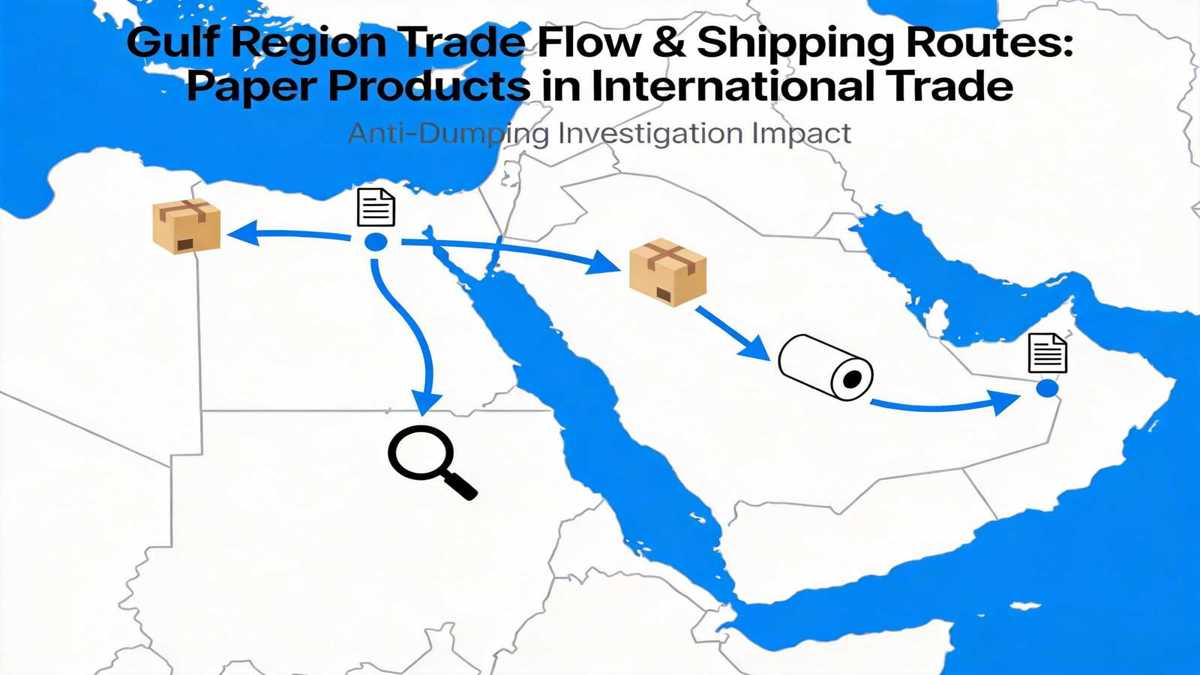
The Gulf Coasts a New Trade Wave: Why the GCC Anti-Dumping Case on Chinese Paper Is a Warning Signal for Every Sourcing Category
Category: Procurement Guides | Date: 2026-11-05
Executive Summary
On November 2, 2026, the Gulf Cooperation Council launched an anti-dumping investigation targeting uncoated paper from China, India, and Thailand. This is not just a paper industry story. It is a live case study in how trade remedies are spreading to new regions, new product categories, and new sourcing corridors. For procurement teams sourcing paper products or any other goods destined for Gulf markets, the implications for supplier diversification, pricing strategy, and risk assessment are immediate and material. The lesson extends far beyond paper to every category where China is a major exporter.
A Investigation That Should Make Every Procurement Team Pause
The GCC Technical Secretariat for Anti-International Trade Infringement Behaviors published an announcement on November 2, 2026, confirming the launch of an anti-dumping investigation into uncoated paper originating from China, India, and Thailand. The products under investigation fall under GCC unified tariff codes 480255 through 480257 -- essentially the standard uncoated printing and writing paper categories that every office, every publishing house, every educational institution, and every commercial printer in the Gulf region relies on daily.
The investigation is now active. That means provisional measures could be imposed before a final determination, and if dumping is confirmed, definitive anti-dumping duties could remain in place for five years -- affecting not just this investigation cycle but every subsequent sourcing decision for the duration. For any buyer who sources uncoated paper from these three countries for Gulf market delivery, this investigation creates a new cost variable that did not exist thirty days ago, and the uncertainty alone is enough to disrupt purchasing plans.
The Regional Pattern Behind One Case
A single anti-dumping investigation might seem like an industry-specific event happening in isolation. But when you place it in the broader regional and temporal context, a substantially different pattern emerges that every sourcing professional should pay careful attention to.
Just days before the GCC paper case, China Ministry of Commerce published a consultation draft on investigation and enforcement measures for dual-use item export controls. Around the same window, the European Union launched a safeguards investigation on certain new hybrid buses. South Africa imposed a provisional 21 percent tariff on office paper. Japan imposed five-year anti-dumping duties on Chinese cold-rolled stainless steel coils. The US International Trade Commission published three final determinations under section 337 involving vehicle components, fluoropolymer products, and children carrier products.
This is not coincidence. It is the sound of trade remedies multiplying across jurisdictions simultaneously. Companies that source from China -- and nearly every procurement team does, to some extent, in some product category or another -- are operating in an environment where anti-dumping cases, safeguards, export controls, and tariff actions are no longer occasional headlines that generate brief concern and then fade. They are a persistent and accelerating feature of the trading landscape.
The geographic scope has also broadened substantially. It is no longer just the United States and the European Union deploying trade measures. The Gulf Cooperation Council, South Asia, Southeast Asia, and increasingly African markets are all becoming active venues for trade remedy actions. This means that sourcing concentration in any single country carries risk not just from traditional markets but from an expanding circle of jurisdictions that are developing their own trade remedy capabilities and willingness to use them.
Why Paper? Why Now?
Anti-dumping investigations are always triggered by domestic industry complaints alleging that imported products are being sold below normal value and causing material injury to local or regional producers. The specifics of the GCC paper case will only become clear once the full petition is published and the investigating authority releases its preliminary findings. But we can infer some likely dynamics from the structure of the case itself.
The Gulf region paper market has grown significantly over the past decade, driven by population growth, expanding education sectors, increasing government documentation and administrative requirements, a growing commercial printing industry, and the general expansion of business operations across GCC member states. This market growth attracts Chinese manufacturers, who compete aggressively on price due to lower production costs, substantial scale economies in paper manufacturing, and government support for industrial export channels. When domestic Gulf or regional paper producers feel pressured by this competition -- and the filing of an anti-dumping complaint suggests they do -- they file complaints with regulatory authorities and demand investigation.
The three countries targeted -- China, India, and Thailand -- represent the three major paper-producing corridors serving the Gulf market. China dominates on volume and price, leveraging its massive industrial base. India competes on geographic proximity, lower freight costs, and competitive pricing. Thailand offers a middle ground with quality positioning and established relationships with Gulf buyers. Targeting all three simultaneously suggests the complaining industry sees competitive pressure across the entire price spectrum, not just from the cheapest suppliers, which is a strong indicator of the depth of the competitive challenge domestic producers face.
The Procurement Impact: What Changes Tomorrow
For a procurement team that sources uncoated paper for Gulf operations, here is what changes starting from the moment this investigation was announced.
Price certainty is gone. If definitive duties are imposed at a rate in the typical range of 15 to 25 percent for GCC anti-dumping cases, the landed cost of paper from the three targeted countries will jump significantly overnight. Buyers who have been budgeting on pre-investigation pricing and negotiating annual contracts based on current cost levels will face a material cost increase, likely within six to twelve months, with little ability to pass the full increase through to their own customers depending on market competitiveness.
Supplier diversification becomes urgent, not optional. The three targeted countries account for the vast majority of uncoated paper exports to the Gulf market. Buyers who relied on single-source or dual-source strategies from China, India, or Thailand now need to identify alternative suppliers -- potentially from the GCC region itself where local paper manufacturers exist, from Turkey which has a growing paper industry and cultural trade ties with the Gulf, from European producers who may command premium pricing but offer supply chain security, or from other Asian countries not under investigation such as Indonesia or Malaysia.
Contract renegotiations will be necessary for existing purchase agreements. Contracts signed before this investigation that did not include force majeure provisions or tariff-adjustment clauses may need amendment to address the new cost reality. Buyers and suppliers will need to negotiate how the cost of potential anti-dumping duties is shared, who bears the risk of supply disruption, and what timeline applies for transitioning to alternative suppliers.
A Broader Lesson: Building Sourcing Resilience in a Fragmenting World
The GCC paper case is one data point in a much larger story about the changing nature of global trade. Over the past eighteen months, we have seen trade remedies expand from traditional categories like steel, aluminum, and textiles to increasingly diverse products -- from vehicle components and fluoropolymers to stainless steel coils and office paper. The geographic scope has broadened correspondingly, with more jurisdictions developing the institutional capacity and political will to initiate trade remedy investigations.
For sourcing professionals, this environment demands a fundamental shift in how supplier selection and risk assessment are approached. The old model -- find the cheapest supplier in the lowest-cost country, lock in a long-term contract, manage the relationship, and hope for stability -- is simply insufficient in an environment where trade policy can change the cost structure of your supply chain overnight.
The new model must include multi-region sourcing strategies as a standard practice. Relying on a single country or narrow set of countries for any product category, no matter how competitively priced, is a growing risk. Even if a country is not currently under investigation, trade remedy actions can be initiated with relatively short notice and based on complaints that may reflect political dynamics rather than pure economic injury. Buyers should maintain a geographically diversified supplier pool for critical products, ensuring that no single country concentration exceeds a manageable threshold of total supply.
Real-time trade policy monitoring should become a standing procurement function, not an occasional activity triggered by a problem. Anti-dumping investigations do not announce themselves with enough lead time for buyers to react comfortably once they are publicly announced. Procurement teams that proactively monitor trade remedy actions in their target markets -- and integrate this intelligence into their sourcing decisions before investigations escalate to duty imposition -- will avoid the costly surprises that disrupt operations and inflate costs. This is precisely where AI-powered sourcing intelligence becomes valuable: scanning regulatory databases across multiple jurisdictions continuously, flagging relevant actions for the products and markets that matter to your business, and surfacing the procurement implications in a format that enables rapid decision-making.
Cost modeling must include trade remedy risk as a standard component. Traditional total landed cost calculations include product cost, freight, insurance, and standard tariffs -- and sometimes quotas or anti-dumping duties when they are already in place. They rarely include the probability-weighted cost of potential anti-dumping duties for investigations that are ongoing or imminent. As trade remedies become more common, this omission becomes more costly. Sourcing decisions that ignore trade remedy risk are effectively making decisions with incomplete information, and in a competitive procurement environment, incomplete information is a competitive disadvantage.
The Supplier Discovery Challenge at Speed
When anti-dumping duties hit, buyers need alternative suppliers fast -- often within weeks, not months. But finding qualified alternative suppliers is not as simple as searching a directory or sending inquiry emails to a shortlist of unknown vendors. The real challenge is identifying suppliers who meet your quality requirements, can deliver at your required volume consistently, have verified credentials and track records, operate from non-targeted countries, and can match or approximate the pricing of your current suppliers -- all within a compressed timeline that leaves little room for trial and error.
Structured supplier comparison tools can dramatically accelerate this discovery and evaluation process. Instead of spending weeks emailing potential suppliers, requesting samples, comparing spreadsheets, and navigating communication barriers, procurement teams can use platforms that aggregate supplier data across platforms and regions, compare products across multiple quality and specification dimensions, flag potential compliance and risk issues, and generate structured shortlists that can be acted on immediately. SourcingX provides exactly this kind of structured comparison capability, helping buyers rapidly evaluate and compare alternative suppliers across regions and platforms when their primary supply chain faces disruption or regulatory pressure.
The key insight that procurement leaders who anticipate these disruptions understand is that supplier discovery is no longer just a nice-to-have capability for normal sourcing cycles where you have time for methodical evaluation. It is a critical risk mitigation tool for periods of trade policy disruption when supply chain continuity depends on your ability to identify and onboard alternative suppliers at speed. Building these capabilities during calm periods -- when you are not under pressure -- means they are ready when you need them most.
Practical Steps for Paper Buyers Right Now
For procurement teams specifically affected by this investigation, here is a practical sequence of actions to take in the coming weeks.
Assess your exposure immediately. Review your current uncoated paper purchasing volumes, supplier base, and country of origin breakdown. Identify which of your current contracts and supply relationships are directly affected by this investigation and estimate the potential cost impact if duties are imposed at various rates.
Initiate alternative supplier identification. Begin outreach to paper manufacturers in non-targeted countries, with particular attention to Turkish, European, and Southeast Asian producers who serve the Gulf market. Request samples, pricing, and capacity information to build a pipeline of alternative supply options before duties are actually imposed.
Review existing contracts for tariff and force majeure clauses. Identify which of your current supply agreements include provisions for handling tariff changes or trade remedy actions, and which do not. For contracts without such provisions, begin discussions with your current suppliers about how potential duty costs will be allocated if duties are imposed.
Set up trade remedy monitoring. Establish a systematic process for monitoring trade remedy developments in the GCC and other target markets, including subscription to relevant regulatory alerts, periodic review of investigating authority publications, and integration of trade policy intelligence into your regular supply chain risk assessment reviews. For buyers who want a structured way to evaluate alternative suppliers across regions while monitoring these developments, SourcingX provides AI-driven supplier comparison capabilities that integrate risk assessment with supplier discovery, making it easier to pivot your supply chain when trade policies shift.
What to Watch Next
Several developments in the GCC paper anti-dumping case will shape its impact on procurement decisions over the coming months.
The timeline for provisional measures is the most immediate variable to watch. GCC anti-dumping investigations typically impose provisional duties within three to six months of launch, which means announcements could come as early as February or March 2027. Earlier imposition would give buyers less time to adjust.
The potential for additional countries to be added to the investigation scope is another factor to monitor. It is not uncommon in anti-dumping cases for the investigating authority to expand the scope to include additional producing countries if evidence emerges of dumping from other sources. If additional countries are added, the supplier diversification challenge intensifies substantially.
The eventual duty rates will determine the magnitude of cost impact. Historical GCC anti-dumping duty rates for paper-like products range from 10 to 35 percent, with the specific rate depending on the dumping margin calculated for each individual producer. Higher rates mean more urgent need for alternative suppliers and more significant restructuring of sourcing strategies.
Retaliatory measures from China could create secondary disruptions in other product categories. China has a established pattern of responding to trade remedy actions with its own investigations into imports from the complaining jurisdictions. While the direct impact on paper buyers may be limited, secondary disruptions in other categories could affect overall supply chain stability and cost management.
FAQs
Q1: How long will this anti-dumping investigation take from launch to final duty imposition?
GCC anti-dumping investigations typically take six to twelve months from launch to final determination. Provisional duties may be imposed within three to six months as an interim measure. If dumping is confirmed, definitive anti-dumping duties usually remain in place for five years, during which time any affected buyer will need to factor these duties into their landed cost calculations.
Q2: Will this investigation affect paper I source from outside China, India, and Thailand?
No. The investigation specifically targets products originating from China, India, and Thailand. Paper from other countries -- such as Turkey, Indonesia, Malaysia, or European producers -- should not be directly affected by these duties. However, market dynamics may indirectly impact pricing globally if significant supply shifts occur from targeted to non-targeted countries.
Q3: Can I switch to alternative suppliers during an active investigation?
Yes, you can switch suppliers at any time regardless of the investigation status. Anti-dumping duties apply based on the country of origin of the products being imported, not on the identity of the buyer or the timing of the purchase. Switching to suppliers from non-targeted countries is one of the most effective ways to mitigate the impact of the investigation before duties are even imposed.
Q4: Does this investigation cover all types of paper products?
No. The investigation specifically targets uncoated paper under GCC tariff codes 480255 to 480257, which primarily covers standard uncoated printing and writing paper used for offices, publishing, and general commercial printing. Other paper categories such as coated paper, tissue paper, packaging board, and industrial paperboard are not included in this investigation and would be subject to separate proceedings if complaints are filed against them.
Q5: How should I update my overall supplier risk assessment process in light of this and similar developments?
Review your entire supplier base for products sourced from countries that are active targets of trade remedy actions in your destination markets. Flag any products that fall within investigated tariff codes as high priority and begin identifying alternative suppliers from non-targeted countries for those products. Integrate systematic trade remedy monitoring into your regular supplier risk assessment process so that you are not caught by surprise when new investigations are launched. Build multi-region sourcing strategies as standard practice rather than reactive measures taken only after a disruption occurs.
Comments
0