Indonesia's Data Privacy Law Is Coming – And It Will Reshape How Global Buyers Source From Southeast Asia

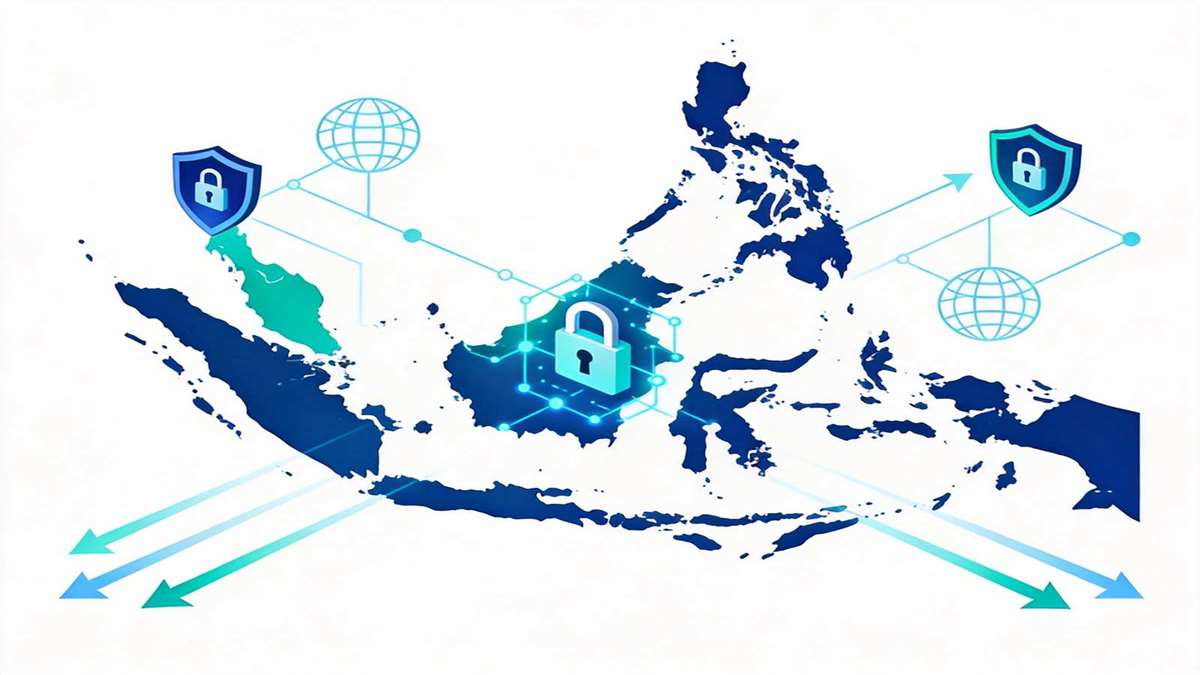
Indonesia's Data Privacy Law Is Coming — And It Will Reshape How Global Buyers Source From Southeast Asia
Category: Risk & Compliance | Date: 2026-10-21
Executive Summary
Indonesia is set to enforce its Personal Data Protection Law on January 16, 2027, introducing strict requirements for cross-border data transfers, privacy disclosures, and compliance documentation. For global B2B buyers sourcing from Southeast Asia, this is a supply chain data risk that disrupts supplier communications and procurement operations. The critical question is whether you are building data governance frameworks needed to source across Southeast Asia without compliance exposure.
The Regulation Behind the Headlines
On October 20, 2026, Indonesia published Government Regulation No. 33 of 2026, formally confirming that the long-awaited Personal Data Protection (PDP) Law will take effect on January 16, 2027. The regulation specifies legal foundations, privacy disclosure obligations, cross-border data transfer mechanisms, and a six-month transition period during which companies must finalize their compliance infrastructure.
This is not a symbolic regulation. Indonesia Southeast Asia's largest economy with over 275 million people has one of the most comprehensive data protection frameworks in the Asia-Pacific region outside of Japan and South Korea. For businesses that source products from Indonesian suppliers, maintain customer databases in the region, or operate procurement platforms that process personal data of Indonesian residents, the implications are immediate and material.
Why This Matters for Global B2B Buyers
Most procurement teams think of data privacy laws as a marketing and IT compliance issue. That assumption will become expensive quickly once this regulation takes effect.
Consider what happens in a typical B2B sourcing relationship: an international buyer exchanges contact information, company details, and product specifications with an Indonesian supplier through email, messaging platforms, or procurement portals. These exchanges involve personal data names, emails, phone numbers, job titles — that falls squarely under the new law's definition of personal data. If that data is transferred to a headquarters server in another country, it triggers cross-border data transfer obligations. If the supplier cannot demonstrate adequate privacy disclosures or compliance documentation, they may face enforcement action.
The ripple effect is clear. Supplier qualification processes must now include data compliance assessments. Procurement platforms that aggregate supplier information need to audit their data handling practices. And buyers who rely on third-party sourcing tools to collect and analyze supplier data across Southeast Asia need to verify that their tools comply with local regulations.
The Compliance Framework: What Companies Must Do
The regulation breaks down into three primary obligations that directly affect sourcing operations.
Privacy Disclosure Requirements. Organizations must provide clear, written privacy notices to individuals whose data is being processed. This means Indonesian suppliers you work with must have privacy policies in place and you should verify they exist as part of your supplier due diligence process. Suppliers who cannot demonstrate proper privacy disclosures represent a compliance risk to your entire supply chain.
Cross-Border Data Transfer Rules. Personal data can be transferred outside Indonesia only if the destination country ensures adequate data protection levels, or if the data subjects have given explicit consent, or if the transfer is necessary for contractual performance. For procurement teams, this means every data exchange with Indonesian partners needs a documented legal basis. You cannot simply assume that existing business relationships provide sufficient grounds for cross-border data flows.
Documentation and Accountability. Companies must maintain written records demonstrating compliance. The six-month transition period ending in July 2027 gives organizations time to establish data protection mechanisms, but it also means that any company not prepared by July 2027 will face enforcement upon the law's full implementation in January 2027.
The Risk for Unprepared Buyers
The companies that will struggle most are those that treat data compliance as a regional afterthought rather than a core sourcing competency. Here is what goes wrong.
First, supplier qualification processes that rely on informal communications WeChat messages, casual email chains, WhatsApp conversations become compliance liabilities when personal data is involved. Second, procurement teams that use multiple sourcing platforms without centralized data governance create fragmented compliance exposure across dozens of vendor relationships. Third, buyers who rely on third-party sourcing tools without verifying the tool provider's compliance posture assume risk they did not know they were taking.
This is precisely the kind of compliance blind spot that modern sourcing tools are designed to surface. SourcingX, for example, provides risk assessment capabilities that flag unverified compliance items before they become supply chain disruptions learn more at SourcingX.
The Regional Domino Effect
Indonesia's move does not exist in isolation. The region is clearly converging on a common regulatory philosophy: personal data belonging to residents must be protected regardless of where the processing entity is located. Malaysia has been tightening enforcement of its own PDP Act for several years. Thailand's Personal Data Protection Act went into effect in 2022 and is already being amended with stronger provisions. Vietnam's Decree 13 on personal data protection has created similar compliance obligations for businesses operating in Vietnamese markets.
The pattern is unmistakable. Southeast Asia is building a regional data governance architecture that parallels Europe's GDPR framework and buyers who source across these markets need to understand that compliance is no longer a country-by-country exercise. It is a regional imperative.
This convergence creates both complexity and opportunity. The complexity comes from having to navigate multiple frameworks with overlapping but not identical requirements. The opportunity comes from the fact that many of these frameworks share common principles consent, transparency, accountability, and data minimization which means that building a single robust data governance program can serve multiple markets simultaneously.
The Procurement Technology Angle
The data privacy revolution is also reshaping the technology stack that procurement teams rely on. Legacy procurement tools that were built before data privacy considerations became a business-critical concern are suddenly vulnerable. Systems that stored supplier contact information in unencrypted databases, that transferred data across borders without legal basis documentation, or that had no mechanism to delete data upon request are creating immediate compliance gaps.
This is creating demand for procurement technology platforms designed with privacy-by-design principles from the ground up. Platforms that encrypt data at rest and in transit, that maintain audit trails of every data access event, that provide mechanisms for data deletion requests, and that offer transparent data handling policies are no longer premium features they are baseline requirements.
The buyers who invest in privacy-first procurement technology today will have a two-to-three-year advantage over those who scramble to replace non-compliant systems after enforcement actions begin.
The Supplier Relationship Dimension
Data privacy compliance also changes the dynamics of buyer-supplier relationships in subtle but significant ways. Suppliers who demonstrate strong data governance practices are signaling something important to their buyers: they take their operational responsibilities seriously. This trust signal has real value in procurement negotiations, as buyers who trust their suppliers' operational competence are more willing to enter long-term contracts, share forecasting data, and invest in joint capacity planning.
Conversely, suppliers who cannot demonstrate data compliance are limiting their market access. Many international buyers particularly those headquartered in the EU, Japan, or South Korea will simply refuse to engage with suppliers who cannot meet basic data governance standards. This is not bureaucratic inertia; it is risk management. A buyer's compliance liability extends to its suppliers, and non-compliant suppliers represent a material risk to the buyer's own regulatory posture.
The companies that recognize this early and use data governance as a competitive differentiator in supplier selection will build stronger, more resilient, and more defensible supply chains than those that treat data compliance as a box-checking exercise.
Strategic Actions for Procurement Teams
The organizations that will thrive under this regulation are the ones that treat data compliance as a sourcing strategy, not a legal checkbox.
Conduct a data mapping exercise. Identify every point where your team collects, stores, or transfers personal data from Indonesian suppliers and customers. Map the data flow from initial contact through contract execution to ongoing communication. This inventory is the foundation of everything else.
Build compliance into supplier qualification. Add data privacy compliance as a criterion in your supplier evaluation framework. Ask suppliers for their privacy policies, document their cross-border data transfer mechanisms, and maintain records of consent where required. This is not about creating bureaucracy it is about building supply chain resilience.
Audit your sourcing tool stack. If you use multiple platforms to discover suppliers, compare pricing, or manage vendor relationships, verify that each platform complies with Indonesian data protection requirements. Third-party tools that process personal data without proper compliance mechanisms expose your entire procurement operation. SourcingX integrates compliance-aware supplier discovery and risk assessment learn more at SourcingX.
Invest in integrated sourcing intelligence. Fragmented tools create fragmented compliance risk. Centralized platforms that provide supplier discovery, comparison, and risk assessment in a single workflow reduce compliance exposure by consolidating data handling under unified governance policies. SourcingX integrates supplier search, market analysis, and risk grading into a unified workflow that helps buyers make compliance-aware sourcing decisions.
Looking Ahead
The enforcement of Indonesia's PDP Law is a milestone for data governance in Southeast Asia, and it will likely accelerate similar regulations across the region. Malaysia, Thailand, and Vietnam are all advancing their own data protection frameworks. Buyers who build robust data compliance capabilities now while sourcing across Southeast Asia's most important economy will be better positioned than those who wait for a regional regulatory crisis to force action.
The companies that succeed will be the ones that view data privacy not as a compliance burden, but as a competitive advantage in supplier trust and supply chain transparency.
FAQs
Q: When does Indonesia's data privacy law take effect?
A: The Personal Data Protection Law takes effect on January 16, 2027, with a six-month transition period starting from the regulation's publication.
Q: Does this law affect buyers who are not based in Indonesia?
A: Yes. If your business processes personal data of Indonesian residents including supplier contact information, customer data, or employee records the law applies regardless of your company's location.
Q: What happens if my Indonesian supplier cannot demonstrate compliance?
A: Non-compliant suppliers may face enforcement action, which could disrupt your supply chain. You should include data compliance verification in your supplier qualification process.
Q: How long is the transition period?
A: Companies have six months from the regulation's publication to establish their data protection mechanisms, ending in July 2027.
Q: Should I update my supplier qualification checklist?
A: Absolutely. Add data privacy compliance as a standard evaluation criterion, including requests for privacy policies, data transfer documentation, and compliance records.
Q: What penalties apply for non-compliance?
A: The regulation specifies graduated enforcement measures ranging from fines and operational restrictions to criminal liability for severe violations. The severity of penalties is calibrated to the scale of the violation and the volume of personal data involved, with the most serious offenses carrying penalties that can reach significant percentages of annual revenue.
Comments
0