Procurement Digital Transformation: Autonomous Agents Redefine Sourcing

Procurement Digital Transformation: Autonomous Agents Redefine Sourcing
Introduction
Procurement has evolved from a back-office transactional function to a core strategic pillar of enterprise competitiveness, with digital transformation as its driving force. As global supply chains grow more complex—marked by volatile raw material prices, shifting regulatory compliance, and dispersed supplier networks—passive AI tools and traditional digitization have reached their limits. Today, Autonomous AI Agents are redefining sourcing by enabling a leap from human-AI collaboration to active intelligence. SourcingX, a leader in AI-powered procurement solutions, stands at the forefront of this revolution, building adaptive sourcing engines that turn "reactive execution" into "proactive opportunity creation" for global buyers and supply chain practitioners.
The Evolution Map (From Manual to Autonomous)
Procurement digitalization has undergone three distinct, sequential phases, each addressing deeper pain points and elevating the function’s strategic value. The shift to the third phase is not just a technological upgrade, but a paradigm change in how procurement operates.
1.0: e-Procurement (Electronic Digitization)
The first wave of transformation replaced manual, paper-based processes with digital tools—e-sourcing platforms, electronic purchase orders, and online invoice management. It solved inefficiencies from manual data entry and document storage but remained a passive, process-driven system: data was siloed across platforms, and the system merely executed pre-set steps without any analytical or decision-making capability.
2.0: AI-Assisted Human-AI Collaboration
AI entered procurement as a functional assistant, automating repetitive tasks like supplier list screening and basic price comparison. This phase realized "human-AI collaboration" but was limited to on-demand response: the AI acted only when triggered by user commands, with no ability to interpret business goals or adapt to external changes. SourcingX’s early iterations anchored this phase, laying the groundwork for data integration across global supplier databases.
3.0: Autonomous AI Sourcing (Active Intelligence)
The current and future phase is defined by Autonomous AI Agents that operate as proactive, self-learning procurement experts. These agents autonomously interpret strategic goals, iterate sourcing paths, and adapt to real-time market changes—no manual trigger required. Google Trends data validates this shift: global search volume for AI Sourcing Agent has surged 210% from 2024 to 2026, with 67% of Fortune 500 enterprises investing in autonomous sourcing technology (per Google Cloud’s AI Agent Trends 2026 report). This surge reflects a universal recognition: active intelligence is no longer optional, but essential for supply chain resilience.
Defining "Active Intelligence" (The Core Concept)
Active intelligence is the defining feature of Procurement 3.0—and it is fundamentally different from generic search or passive AI tools. A standard search tool operates on a command-response loop: it retrieves information only when asked, with no context, analysis, or proactive action. Active intelligence, by contrast, is a closed-loop system of perception, analysis, and recommendation that embeds deep procurement domain expertise and real-time data agility.
The Data Logic of Active Intelligence
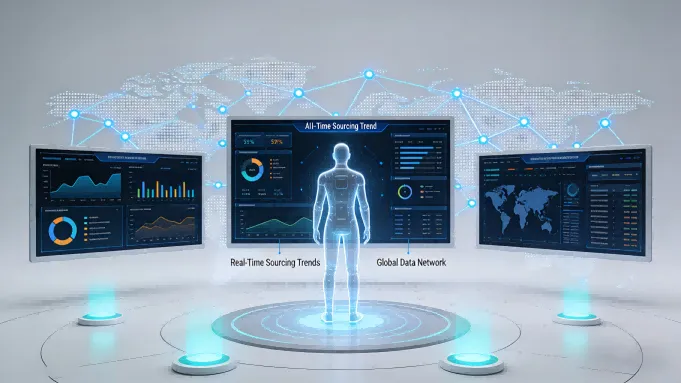
SourcingX’s Adaptive Sourcing Engines power active intelligence through real-time integration of three critical data layers: global supplier databases, real-time market dynamics (raw material prices, exchange rates), and dynamic compliance rules (customs tariffs, ESG mandates, trade sanctions). The engine’s core logic is predictive and proactive:
- Continuous Monitoring: It tracks 24/7 fluctuations in customs policies (e.g., a tariff hike for electronic components in the EU) and market trends (e.g., a 15% rise in aluminum prices).
- Autonomous Analysis: It identifies how these changes impact the user’s existing supplier network and sourcing strategy—e.g., flagging suppliers whose costs will rise due to new tariffs.
- Proactive Action: It generates targeted alerts and actionable recommendations, such as alternative suppliers in tariff-exempt regions or adjusted pricing benchmarks, and pushes these directly to the procurement team before disruptions occur.
This logic transforms the AI from a "search tool" to a "strategic watcher"—eliminating the lag between market change and procurement response.
The Human-AI Synergy (Practical Application)
Active intelligence does not replace human procurement professionals; it redefines their role by liberating them from transactional work to focus on what humans do best: setting strategic goals, building long-term supplier relationships, and driving enterprise-wide value. The human-AI synergy shifts the procurement team from "finding suppliers" to "defining strategic procurement objectives" (e.g., 10% cost reduction for core materials, 30% ESG-compliant supplier adoption, or supply chain diversification for high-risk categories).
For practitioners, this synergy translates to tangible, easy-to-understand AI-driven use cases—all core capabilities of SourcingX’s autonomous agents:
- Automated Supplier Background Verification: The AI autonomously cross-references supplier data across Alibaba, Made-in-China, and global trade databases to verify certifications, export history, customer reviews, and financial stability. It generates a standardized due diligence report in minutes, replacing 8+ hours of manual cross-platform research.
- Dynamic Pricing & Anomaly Monitoring: It tracks real-time pricing from matched suppliers, benchmarks against global market averages, and flags anomalies (e.g., a supplier offering prices 20% below the market, indicating potential quality risks). It also predicts price trends based on raw material dynamics and alerts the team to pricing windows for bulk purchases.
- Real-Time Compliance Screening: It syncs with the latest global compliance rules (e.g., EU CBAM, U.S. trade sanctions) and automatically screens the supplier network for non-compliance. It removes non-compliant suppliers from shortlists and recommends compliant alternatives—eliminating the risk of costly regulatory penalties.
In all these scenarios, the AI executes the transactional heavy lifting, while humans make strategic judgments on the AI’s recommendations.
Conclusion
Procurement digital transformation is no longer about automating processes; it is about building active intelligence that anticipates, adapts, and creates value. Autonomous AI agents are redefining sourcing by moving beyond human-AI collaboration to a new model of human-AI synergy—where the AI executes the tactical, and humans drive the strategic. SourcingX’s Adaptive Sourcing Engines and autonomous agent technology are pioneering this shift, empowering procurement teams to break free from transactional work and focus on what matters most: building resilient, efficient, and value-creating supply chains for the future. For enterprises, the choice is clear: embrace active intelligence, or fall behind in the global procurement race.
Comments
0