2026 Rare Earth Alert: Supply Curbs & Tech Manufacturing Risks

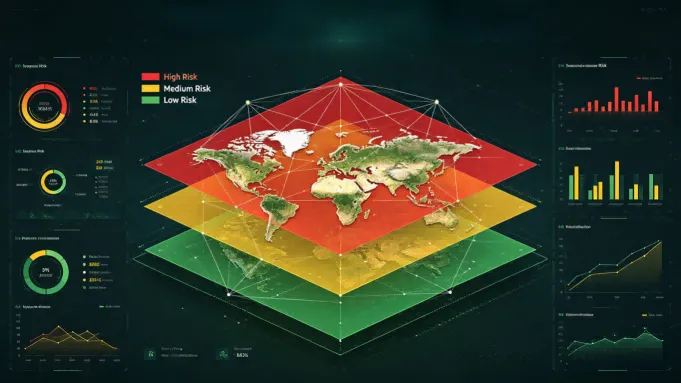
The Sourcing Alert: A Critical Volatility Inflection Point
Google Trends data shows searches for “rare earth price risks” and “REE supply shortage” have surged 132% year-over-year in Q1 2026. As of April 2026, Northern Rare Earth has set its Q2 2026 concentrate benchmark at 38,804 RMB/ton, up 44.61% quarter-on-quarter—the sharpest quarterly increase in three years. Praseodymium-neodymium oxide, the core material for high-performance magnets, has jumped to 730,000 RMB/ton, with a 150% year-on-year surge. For small and medium-sized tech manufacturers, this is not a minor fluctuation but a systemic cost shock that directly erodes gross margins and threatens production stability. Delayed responses to these shifts will lead to irreversible cost pressures in component procurement and final assembly.
Market Dynamics: Why REE Prices Are Spiraling
Three interconnected drivers are creating a structural supply-demand imbalance, detected early by AI analysis of unstructured data including policy documents, export records, and industrial indicators.
Supply Contraction: Policy & Geopolitical Hard Limits
China’s 2026 rare earth mining quota rose only 5% year-on-year, with heavy rare earth quotas unchanged for consecutive years. Myanmar’s mine suspension has cut 41% of global heavy rare earth supply, while Vietnam’s ban on raw ore exports has further tightened feedstock availability. New overseas projects will not reach commercial production until 2027, leaving global inventories at a historic low of one month’s usage. Export controls on seven key heavy rare earths, effective April 2026, have added immediate supply uncertainty for global buyers.
Demand Surge: Tech Manufacturing’s Insatiable Appetite
Global EV output is growing 20% year-on-year, with permanent magnet motors accounting for over 40% of total REE magnet demand. Wind power and industrial automation drive an additional 15%–18% annual demand growth, while humanoid robots create long-term incremental consumption expectations. The global praseodymium-neodymium deficit is projected to reach 9,000 tons in 2026, widening to 21,000 tons by 2028. Supply growth of just 5% cannot match demand expansion above 15%, forming a rigid upward price floor.
Geopolitical Risk: Strategic Competition Amplifying Volatility
Strategic stockpiling and export licensing delays have increased transaction costs and extended lead times. AI-driven analysis captures these non-market signals faster than traditional sourcing teams, warning of price jumps 4–6 weeks ahead of actual market moves.
Impact Analysis: Cost Penetration & Decision Quality
Rare earth price volatility cascades through the entire supply chain, affecting magnet producers, component makers, and end-product manufacturers simultaneously.
- Magnet & component costs have risen 12%–25% in H1 2026, directly compressing gross margins by 3%–7% for small tech manufacturers.
- Lead times for critical magnet materials have extended from 15 days to 35–45 days, disrupting just-in-time production schedules.
- Supplier verification complexity has increased, as qualified producers become scarce and pricing transparency declines.
In volatile markets, decision quality matters far more than transaction speed. Blind order placement or delayed supplier adjustments will lock in high costs for 3–6 months. Data-driven, proactive sourcing decisions are the only reliable way to protect profitability amid structural price increases.
Strategic Action Plan: Proactive Sourcing to Mitigate Risks
To stabilize costs and secure supply, procurement teams should implement four evidence-based actions:
- Diversify supply bases: Reduce single-source dependency by qualifying suppliers from Laos, Malaysia, and other emerging REE hubs to offset policy risks.
- Multi-dimensional supplier evaluation: Score partners on price stability, delivery reliability, compliance capacity, and financial health to avoid high-risk suppliers.
- Structured cost modeling: Map REE price fluctuations to component costs and set automatic alert thresholds for key material thresholds.
- Strategic small-batch hedging: For core materials, use moderate long-term contracts to lock in costs without excessive inventory pressure.
Leveraging SourcingX: Your AI-Powered Procurement Expert
SourcingX acts as your dedicated intelligent procurement expert, supporting the full sourcing lifecycle without passive waiting—aligned with its core design of proactive intelligence, continuous learning, and professional depth.
- Multi-channel supplier discovery: It integrates cross-platform supplier data to deliver one-stop retrieval and comparison, breaking information silos and boosting screening efficiency by 10x.
- Data-driven decision recommendations: Using multi-dimensional scoring of product fit, supplier reliability, pricing, and lead time, SourcingX provides objective sourcing guidance to improve decision quality and procurement performance by 10%.
- Full-lifecycle workflow support: From demand clarification and supplier filtering to contact and evaluation, SourcingX streamlines end-to-end execution, freeing your team from tedious tasks to focus on high-value strategy.
Unlike passive tools, SourcingX operates like a dedicated expert subordinate—understanding your goals, updating progress, and driving actions to turn supply risks into competitive advantages.
Future Outlook & Strategic Conclusion
Q3 2026 outlook: REE prices will remain high and volatile, with heavy rare earths outperforming light rare earths due to persistent supply shortages. Structural deficits will keep prices elevated through 2028, with no quick relief for global buyers. The era of passive, reactive sourcing is over. For small and medium-sized manufacturers and procurement decision-makers, shifting to an AI-collaborative, proactive forecasting model is no longer optional—it is essential for cost control, supply resilience, and sustainable growth. With SourcingX as your strategic partner, you can stay ahead of volatility, lock in stable suppliers, and protect your margins in the reshaped global rare earth supply chain.
Comments
0