Shanghai's 33% High-Tech Export Surge: A Blueprint for Sourcing the Next Wave of Chinese Innovation

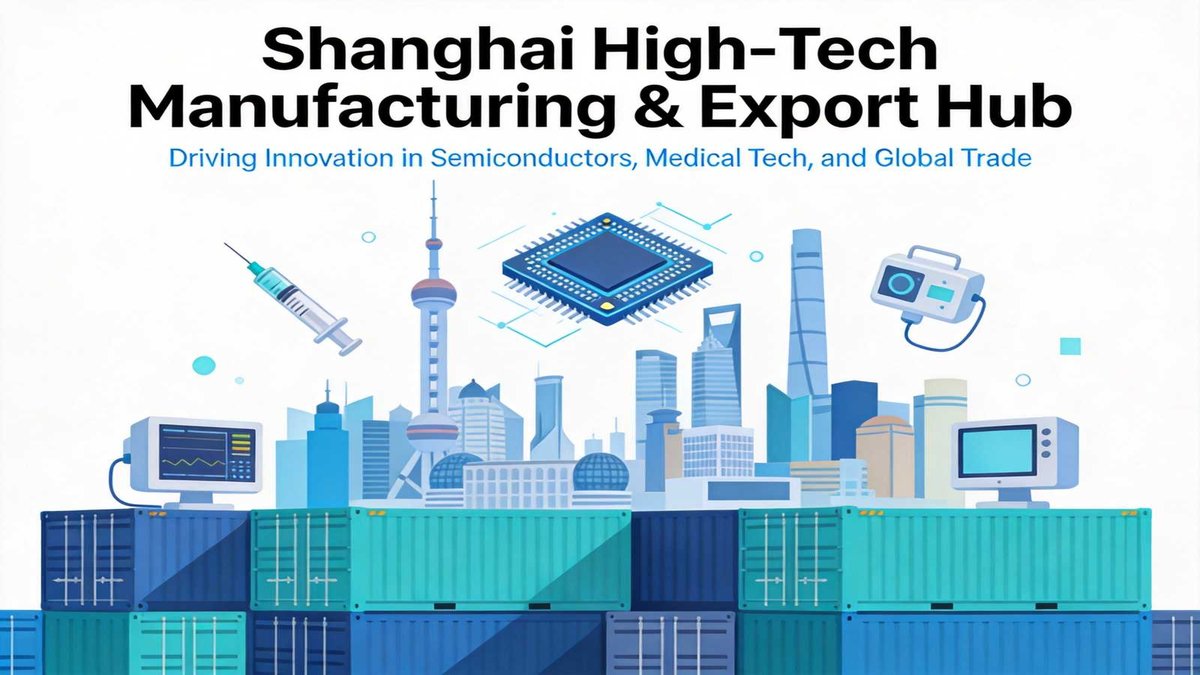
Shanghai's 33% High-Tech Export Surge: A Blueprint for Sourcing the Next Wave of Chinese Innovation
Category: Procurement Guides | Date: 2026-10-23
Executive Summary
Shanghai high-tech product exports grew 33.0 percent year-over-year in the first three quarters of 2026, reaching 28.7 percent of total goods exports and driving overall export growth of 17.9 percent. This is a leading indicator of Chinese manufacturing innovation trajectory and reveals where procurement professionals should look for the next generation of competitive high-tech supply sources.
A City That Defies Conventional Wisdom
Shanghai export data for the first three quarters of 2026 tells a story that challenges conventional assumptions about Chinese manufacturing trajectory and reveals a sector that is upgrading in value even as global observers focus on geopolitical tensions and supply chain diversification away from China. The headline number, 33.0 percent year-over-year growth in high-tech product exports, is the kind of figure that demands explanation because it does not fit the narrative of Chinese manufacturing in decline or China export composition stagnating in low-value categories while high-tech production remains flat.
To put this number in meaningful perspective, consider the composition and scale. High-tech products accounting for 28.7 percent of Shanghai total goods exports means that nearly one-third of every dollar of Shanghai exports represents products in advanced manufacturing categories including semiconductors and electronic components, medical devices and laboratory equipment, aerospace components and systems, advanced materials and specialized chemicals, high-performance electronics and IoT devices, and precision instruments and automation equipment. This is not commodity manufacturing where labor arbitrage drives competitive advantage. This is precision manufacturing at the cutting edge of global technology, requiring deep technical capability, rigorous quality standards, sophisticated supply chain management, and close integration with research institutions and innovation ecosystems.
The total export figure of 3.94 trillion yuan for the first three quarters, representing 17.9 percent year-over-year growth, further reinforces the picture of a manufacturing ecosystem that is not only growing in volume but upgrading in value composition. An economy of this scale adding nearly 18 percent growth while simultaneously shifting its export composition toward higher-value products is the signature of a manufacturing sector in fundamental transformation, where the competitive advantage is shifting from cost-based to technology-based, from scale-based to capability-based, and from commodity-based to innovation-based.
The Hidden Geography of Chinese Innovation Clusters
Shanghai does not exist in isolation in the Chinese manufacturing ecosystem. Its high-tech export surge is part of a broader pattern of Chinese manufacturing upgrading that spans multiple cities, industrial clusters, and regional specializations. Understanding this geographic differentiation is essential for procurement professionals seeking to identify the most dynamic sourcing destinations within China for their specific product categories.
Shenzhen continues to dominate consumer electronics and telecommunications equipment manufacturing, maintaining its position as China innovation capital for products that reach consumers directly, including smartphones, wearables, smart home devices, and portable electronics. Shenzhen's ecosystem combines design houses, component suppliers, contract manufacturers, and rapid prototyping facilities that enable product development cycles measured in weeks rather than months.
Dongguan and the broader Pearl River Delta region serves as the manufacturing execution engine for the Greater Bay Area, translating Shenzhen design innovation into scalable production at competitive cost with precision manufacturing capabilities that handle everything from injection molding to surface-mount technology assembly to final product testing and packaging.
Guangzhou and the Greater Bay Area combine manufacturing with logistics infrastructure, creating integrated supply chains that can move products from factory to port to international destination in hours rather than days, with direct access to the Port of Nansha and extensive express logistics networks that support time-sensitive supply chain requirements.
But Shanghai contribution is distinct and deserves separate evaluation. The city strengths lie in precision manufacturing, medical device production, aerospace components, advanced materials science, and high-performance electronics assembly, categories that require deep technical capability built over decades of research investment, rigorous quality standards enforced by proximity to international regulatory bodies, and close integration with top-tier research universities and national laboratories that provide a continuous pipeline of technical talent, patent development, and technology transfer that sustains manufacturing innovation beyond what pure market forces can generate. Shanghai manufacturing ecosystem benefits from this research infrastructure, which creates a concentration of advanced manufacturing capability that is difficult to replicate in other Chinese cities that lack comparable research capacity.
For procurement professionals, this geographic differentiation matters enormously because sourcing high-tech products from China is not a monolithic activity. It requires understanding which city or industrial cluster specializes in which product categories, aligning your sourcing strategy with the locations that match your product requirements, and building supplier relationships with manufacturers whose capabilities are reinforced by the local innovation ecosystem. Sourcing medical devices from Shanghai makes sense because of the city medical device cluster and regulatory environment. Sourcing consumer electronics from Shenzhen makes sense because of the design-to-production pipeline. Sourcing industrial automation equipment from the Yangtze River Delta region, including Shanghai and neighboring Jiangsu province, makes sense because of the concentration of precision manufacturing capability and automation technology development.
The High-Tech Category Breakdown and Sourcing Opportunities
While the Shanghai statistics aggregate high-tech exports into a single category for statistical purposes, the underlying composition reveals important sourcing opportunities across multiple product segments that procurement teams should evaluate for their specific category requirements.
Semiconductors and electronic components manufacturing continues to expand rapidly in China, driven by government investment in semiconductor independence, surging domestic demand from consumer electronics and automotive industries, and the need for supply chain resilience that reduces dependency on Taiwanese and Korean supply sources. Shanghai is a major center for semiconductor equipment manufacturing and advanced packaging technologies, making it a strategic sourcing destination for electronic component buyers seeking to diversify beyond traditional Taiwanese, Korean, and Japanese supply sources while maintaining quality standards and supply reliability that meet international requirements.
Medical devices and laboratory equipment manufacturing has matured significantly in China's medical device sector over the past several years, with companies producing everything from diagnostic imaging equipment and ultrasound systems to surgical instruments, implantable devices, laboratory consumables, and point-of-care testing devices. Shanghai medical device sector benefits from strong regulatory oversight that aligns with NMPA (National Medical Products Administration) requirements, quality standards that meet international certifications including ISO 13485, and proximity to major hospitals and research institutions that drive product development aligned with clinical needs. This makes Shanghai an increasingly viable sourcing destination for healthcare procurement teams evaluating alternative medical device suppliers.
Aerospace and defense component manufacturing has grown substantially in China as the aerospace sector expands both for commercial aircraft production and defense applications. Shanghai hosts several major aerospace manufacturing facilities, research institutions, and component suppliers that produce everything from structural components and avionics systems to interior systems and ground support equipment, creating a concentration of advanced manufacturing capability in a category that requires the highest quality standards, most rigorous supplier qualification processes, and most extensive documentation requirements.
Advanced materials and chemical products manufacturing represents another significant Shanghai strength, with companies producing carbon fiber composites used in aerospace and automotive applications, specialized alloys for precision manufacturing, functional polymers for electronics and medical device applications, specialty chemicals for semiconductor manufacturing, and nanomaterials for next-generation battery and energy storage systems. Shanghai chemical industry combined with its research infrastructure positions the city as a key sourcing destination for materials that require both chemical processing capability and precision engineering that define high-performance material specifications.
High-performance electronics and IoT device manufacturing benefits from the convergence of semiconductor manufacturing capability, software development talent, and precision electronics assembly infrastructure in the Shanghai region, creating a vibrant ecosystem for high-performance electronics production that includes industrial IoT sensors, smart building management controllers, connected healthcare monitoring devices, and automation system components that meet the requirements of global procurement buyers seeking innovative electronic products at competitive prices.
The Quality and Compliance Landscape for High-Tech Sourcing
One of the most significant developments in China high-tech manufacturing upgrade is the improvement in quality standards and compliance capabilities, particularly among Shanghai-based manufacturers that serve both domestic and international markets and are therefore subject to the most rigorous quality oversight.
Shanghai high-tech exporters are increasingly operating under international quality management systems, regulatory frameworks, and compliance certifications that make them viable supply sources for global buyers who have traditionally viewed Chinese manufacturing as a cost advantage but questioned quality consistency and regulatory compliance. The key quality certifications to evaluate when sourcing high-tech products from Shanghai-based manufacturers include ISO 9001 for quality management systems that applies across all manufacturing categories, ISO 13485 for medical device quality management systems required for healthcare product sourcing, IATF 16949 for automotive quality management systems required for automotive component sourcing, and industry-specific certifications including FCC and CE marking for electronics products sold in US and European markets, FDA registration for medical devices intended for the US market, aviation authority approvals from CAAC or international equivalents for aerospace components, and ISO 14001 for environmental management systems increasingly required by procurement buyers as part of ESG sourcing requirements.
Shanghai-based manufacturers are generally more advanced in their compliance capabilities than manufacturers in other Chinese regions, largely due to the city proximity to international regulatory bodies and certification organizations, stronger local government enforcement of quality standards that creates regulatory pressure for manufacturers to maintain compliance, and the concentration of multinational corporate supply chain relationships that drive compliance expectations upward because multinational buyers require documentation, audits, and quality management systems that exceed minimum regulatory requirements.
For procurement professionals, this means that sourcing high-tech products from Shanghai is increasingly feasible from a compliance perspective, and the question is no longer whether Shanghai manufacturers can meet international quality standards but which manufacturers meet your specific compliance requirements, at what cost, and with what delivery reliability. The evaluation process should include certification verification through accredited certification bodies, facility audits conducted by qualified auditors, quality system documentation review, and track record assessment of past compliance performance including audit findings, corrective action implementation, and regulatory incident history.
The Procurement Playbook for High-Tech Sourcing
Based on the Shanghai data and the broader pattern of Chinese high-tech manufacturing evolution, here is a practical procurement playbook that teams can implement to source the next wave of Chinese innovation effectively and with appropriate risk management.
Step one is to identify your high-tech sourcing categories by mapping your current procurement categories against the high-tech product segments identified in this analysis. Which of your existing sourcing relationships involve products that fall into the high-tech categories of semiconductors and electronic components, medical devices and laboratory equipment, aerospace components, advanced materials, or high-performance electronics and IoT devices? This mapping exercise reveals your current starting point, identifies your largest high-tech sourcing volumes, and highlights opportunities for supply chain enhancement through Shanghai-based sourcing that you may not have previously considered.
Step two is to evaluate current supplier capabilities across each high-tech category you have identified. Assess your current suppliers capabilities, compliance status, technological sophistication, R&D investment levels, and innovation pipeline for products in high-tech categories. Are your current suppliers based in innovation hubs that match your product requirements and the geographic specializations described above? Are they investing in R&D and continuous improvement that sustains long-term competitive advantage? Do they hold the certifications and regulatory approvals required for your market, and has that documentation been verified through independent audit or certification body review?
Step three is to research emerging suppliers in innovation clusters using competitive intelligence platforms that aggregate supplier data across multiple B2B platforms and marketplaces. SourcingX enables you to search for suppliers across the key Chinese innovation clusters identified above, including Shanghai, Shenzhen, Dongguan, and Guangzhou, and evaluate their capabilities relative to your specific requirements with structured comparison and risk assessment. Pay particular attention to suppliers that hold relevant international certifications for your product category, have demonstrated export experience to your target markets, show evidence of ongoing R&D investment through patent filings and technology development announcements, and have positive supplier evaluation ratings from existing buyer relationships.
Step four is to conduct thorough capability verification for promising new suppliers through a structured supplier qualification process that includes facility audits conducted by qualified auditors with relevant industry experience, quality system assessments that verify compliance with your required certifications, production capacity evaluations that confirm the supplier can meet your volume requirements with appropriate lead times, and compliance documentation reviews that verify all required regulatory approvals, testing reports, and quality management documentation are complete and current. For high-tech products, this verification is not optional and represents the foundation of supply chain risk management, because the cost of sourcing from an unqualified supplier in high-tech categories can include product recalls, regulatory penalties, customer contract breaches, and reputational damage that far exceeds any cost savings from the lower supplier pricing.
Step five is to build phased sourcing relationships with newly qualified suppliers that start with smaller volume orders allowing performance validation, expand to moderate volumes as supply performance is confirmed through quality metrics and delivery reliability tracking, and ultimately reach full-volume relationships for suppliers that consistently meet or exceed expectations across all evaluation criteria. This approach manages supply chain risk while allowing you to develop deep supply relationships with the most capable manufacturers who demonstrate the technical capability, quality commitment, and operational excellence that define successful high-tech sourcing partnerships.
The Competitive Advantage of Early Sourcing Relationships
The companies that establish sourcing relationships with China emerging high-tech manufacturers today will benefit from three competitive advantages that compound over time and create increasing barriers to entry for competitors who delayed their sourcing strategy development.
First is the early pricing advantage, because new suppliers in emerging high-tech categories typically offer competitive pricing to attract their first international buyers, establish reference customer relationships, and generate the case studies and testimonials that support their market development efforts. As these suppliers scale, gain market share, strengthen their market position, and develop established reputations in their product categories, pricing tends to increase as their market value appreciates and their capacity utilization approaches maximum levels. Early sourcing relationships lock in favorable pricing terms before the supplier market value appreciates to levels that eliminate the cost advantage that initially motivated the sourcing relationship.
Second is the priority allocation advantage during periods of supply constraint, because high-capacity manufacturers serving multiple international buyers prioritize their most strategic relationships when allocation decisions must be made. Early relationship-building positions you as a strategic buyer with a proven track record, deep product knowledge, and collaborative problem-solving approach, ensuring priority allocation during periods of supply constraint when capacity is limited and allocation decisions determine which buyers receive inventory and which face shortages.
Third is the co-development advantage, because manufacturers that develop close relationships with their international buyers often engage in co-development activities including customizing products to meet specific buyer requirements, developing new product variants that address emerging market needs, jointly investing in technology development that creates differentiated products, and sharing market intelligence that informs product roadmap decisions. Early sourcing relationships create the foundation for these co-development collaborations by establishing trust, communication channels, and mutual understanding of product requirements that make collaborative development feasible and mutually beneficial.
Looking Ahead: The 2027 Sourcing Landscape
As we look toward 2027, the trajectory of Chinese high-tech manufacturing sourcing suggests several developments that procurement teams should anticipate in their strategic planning processes.
Continued composition upgrade is the most certain trend, as China export composition will continue to shift toward high-tech categories with the high-tech share of total exports likely exceeding 30 percent within the next two to three years, driven by government policy support for advanced manufacturing, increasing domestic R&D investment, growing international demand for Chinese technology products, and the maturation of Chinese manufacturing capability in categories where it previously competed primarily on cost rather than technology leadership. Procurement teams that align their sourcing strategies with this trend will have access to increasingly innovative and competitively priced high-tech products that were previously unavailable or available only at premium prices from Western or Japanese suppliers.
Increased competition among Chinese suppliers will intensify as more Chinese manufacturers enter high-tech categories, benefiting buyers through improved quality standards, lower prices driven by competitive pressure, and enhanced service levels including better delivery performance, more responsive communication, and more flexible payment terms. However, this competition also creates selection complexity that requires sophisticated supplier evaluation frameworks, because the presence of many suppliers in a category does not guarantee that many of them meet your quality and compliance requirements, and the cost of evaluating and qualifying suppliers increases with the number of potential suppliers you need to assess.
Geographic diversification within China will continue as other Chinese cities and regions develop their own high-tech manufacturing capabilities beyond Shanghai and Shenzhen, creating additional sourcing options that reduce geographic concentration risk and provide alternative supply sources in case of regional disruptions. Procurement teams should monitor this geographic diversification trend and incorporate new sourcing destinations into their supplier evaluation processes as they emerge, because early identification of new manufacturing hubs can provide sourcing advantages before the destinations become widely known and supplier pricing increases to reflect their growing market value.
Bottom Line
Shanghai 33.0 percent high-tech export growth is not just a statistical footnote in trade data reports. It is a signal about where global manufacturing innovation is heading, where sourcing advantages will be created over the next decade, and where procurement professionals should be looking for the next generation of competitive supply sources that combine innovation, quality, and pricing advantages in categories that traditional sourcing relationships may not adequately serve. The companies that proactively build sourcing relationships with China emerging high-tech manufacturers will capture pricing advantages that compound over time, priority allocation benefits that protect supply continuity during capacity constraints, and co-development opportunities that create differentiated product offerings that competitors cannot easily replicate. The window for early mover advantage is open now, and procurement teams that act decisively will build supply chain capabilities that define competitive advantage for years to come.
Resources
If you are actively sourcing high-tech products from China and want to identify which suppliers in Shanghai and other innovation clusters match your category requirements, SourcingX provides multi-platform supplier comparison, risk assessment, and evidence-based due diligence that helps procurement teams build qualified shortlists in minutes rather than weeks.
FAQs
Q1: What qualifies as a high-tech product for export statistics purposes? High-tech products include semiconductors and electronic components, medical devices and laboratory equipment, aerospace and defense components, advanced materials and specialized chemicals, high-performance electronics and IoT devices, precision instruments and automation equipment, and other products classified under the national high-tech industry catalog defined by China National Bureau of Statistics. The specific classification criteria align with international high-tech product classifications used by organizations including the OECD and the World Trade Organization.
Q2: Can international buyers reliably source high-tech products from Shanghai manufacturers? Yes, Shanghai-based manufacturers are among the most compliance-advanced in China manufacturing ecosystem, holding relevant international certifications including ISO 9001, ISO 13485, IATF 16949, FCC, CE, FDA registration where applicable, and meeting regulatory requirements for most major export markets. However, thorough supplier verification through facility audits, quality system assessments, and compliance documentation review remains essential for any sourcing relationship, particularly for high-tech categories where quality failures carry significant consequences.
Q3: How do pricing levels for Chinese high-tech products compare with Western alternatives? Chinese high-tech products typically offer 20 to 40 percent cost advantages over Western-sourced alternatives in comparable quality tiers, because of lower labor costs, integrated supply chains, economies of scale, and government investment in manufacturing infrastructure. This cost advantage narrows for the highest-performance categories where R&D and technology development costs are the dominant cost component, but remains significant for precision manufacturing, component production, and assembly categories where Chinese manufacturers have achieved world-class capability.
Q4: What certifications should I require from high-tech suppliers? Requirements vary by product category. Common certifications include ISO 9001 for general quality management, ISO 13485 for medical devices, IATF 16949 for automotive components, FCC and CE marking for electronics products, FDA registration for medical devices and food-contact products, aviation authority approvals for aerospace components, and ISO 14001 for environmental management increasingly required as part of ESG sourcing requirements. Require suppliers to provide certification documentation and verify certificates through the relevant regulatory authority databases and accredited certification bodies.
Q5: How do I evaluate the R&D capability of a Chinese high-tech supplier? Evaluate R&D capability through multiple quantifiable indicators including percentage of annual revenue invested in R&D (typically 3 to 10 percent for high-tech manufacturers), number of patents filed and granted in your product category, size and qualification level of the engineering team including credentials and relevant industry experience, collaboration relationships with research institutions and universities, investment in testing and production equipment that demonstrates commitment to capability development, and product innovation pipeline that shows continuous development of new products and technology improvements. SourcingX can help identify suppliers with demonstrated R&D investment and technical capability by providing comparative data across multiple manufacturers in your target category, with built-in risk grading and evidence-based due diligence that reduces the cost of supplier evaluation.
Comments
0