Supplier Diversification Explained: AI Sourcing Tips for Beginners

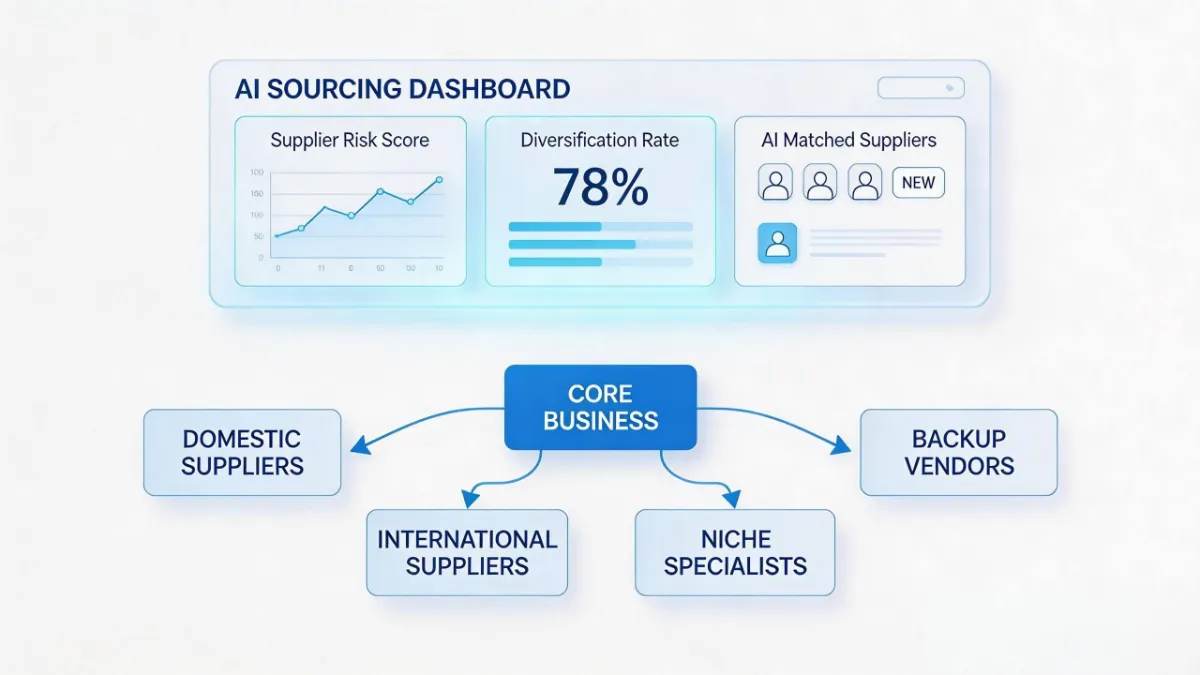
As a small business owner or new buyer venturing into cross-border trade, you’ve likely faced this frustration: spending weeks manually searching for suppliers, only to rely on one or two options—leaving your business vulnerable to delays, price hikes, or sudden supply chain disruptions. You’ve heard “supplier diversification” thrown around, but how do you actually implement it without drowning in endless research? And how can AI turn this overwhelming task into something manageable, even efficient?
The answer is simpler than you think: AI-powered sourcing isn’t just a “nice-to-have” for large corporations—it’s a game-changer for beginners, cutting your supplier research time by 90% and turning supplier diversification from a risky chore into a strategic advantage. Let’s break this down, step by step, with practical tips you can use today.
What Is Supplier Diversification, Exactly? (A Beginner-Friendly Breakdown)
Let’s start with a metaphor you’ll relate to: Think of your supply chain as a garden. If you only plant one type of flower (relying on a single supplier), a single storm (a factory shutdown, geopolitical tension, or quality issue) can wipe out your entire garden. Supplier diversification is like planting a mix of flowers, shrubs, and trees—each with different strengths, so your garden (and business) stays resilient, no matter what comes its way.
Technically, supplier diversification is the practice of expanding your pool of suppliers to include multiple vendors (from different regions, sizes, or specialties) for the same or similar products/services. But it’s not just about “having more options”—it’s about building a balanced, risk-mitigated supply chain that aligns with your business goals.
The Evolution: From Manual Spreadsheets to AI Agents
Supplier diversification isn’t new—but how we implement it has changed drastically:
- Traditional Era (Pre-2020): Buyers used Excel spreadsheets to track 2-3 suppliers, spending 60% of their time on manual searches and verification. Diversification was rare—seen as “too time-consuming” for small teams.
- Digital Transition (2020-2023): Basic sourcing tools emerged, but they still required manual input. Diversification became a priority post-pandemic, but many beginners struggled to scale it.
- AI Agent Era (2024-Present): Tools like SourcingX have redefined intelligent sourcing. This AI procurement expert automates multi-channel supplier data retrieval and comparison, helping you locate, screen, and shortlist qualified suppliers in minutes—making large-scale supplier diversification fully accessible for new teams.
This evolution isn’t just about technology—it’s about shifting your mindset from “reactive problem-solving” to “proactive risk management.”
Why Supplier Diversification Matters (For You, Not Just Big Companies)
You might be thinking: “I’m a small business—do I really need to diversify?” The short answer: Yes. Here’s why it solves your biggest cross-border pain points:
1. Solves Information Fragmentation
Traditional sourcing leaves you jumping between Google, trade platforms, and email to find suppliers—leading to incomplete data and missed opportunities. AI sourcing tools aggregate data from hundreds of sources into one dashboard, so you can compare suppliers side-by-side without the guesswork.
2. Eliminates “Verification Fatigue”
Verifying a supplier’s credibility (checking certifications, past performance, or geopolitical risks) used to take days. AI agents now automate this process: they scan supplier credentials, monitor real-time risk signals, and even flag red flags before you sign a contract.
3. Cuts Redundant Processes
Manual supplier onboarding (collecting quotes, negotiating terms, updating spreadsheets) eats up hours of your time. AI streamlines this: it can auto-generate quote requests, compare pricing and lead times, and even draft initial contracts—freeing you to focus on strategy, not admin.
4. Protects Against Disruptions
The biggest risk of relying on 1-2 suppliers? A single issue (e.g., a factory fire, tariff changes, or a pandemic) can shut down your operations. Diversification spreads this risk—if one supplier fails, you have backups ready.
The New Paradigm: AI as Your “Sourcing Mentor,” Not Just a Tool
Here’s the biggest myth about AI in sourcing: It’s not here to replace you—it’s here to act as your “intelligent personal coach.” As a beginner, you don’t need to become a sourcing expert overnight—AI handles the tedious work, while you make the strategic calls.
How AI Acts as Your Sourcing Mentor:
- It teaches you what to look for: AI flags key supplier metrics so you learn to spot high-quality partners.
- It suggests strategies, not just options: Instead of just giving you a list of suppliers, AI recommends diversification moves tailored to your business.
- It adapts to your goals: Whether you’re focused on cost, speed, or sustainability, AI adjusts its recommendations—helping you balance tradeoffs.
SourcingX elevates this collaboration further: it acts as your dedicated AI procurement specialist, delivering data-driven sourcing recommendations based on product matching, supplier reliability and cost. It also learns from your sourcing behavior over time, continuously refining suggestions to match your unique preferences.
This “human-in-the-loop” approach is key for beginners: AI takes the guesswork out of diversification, while you build the expertise to make better decisions over time.
5 Beginner Mistakes to Avoid (Pro Tips for AI-Driven Diversification)
Even with AI, beginners often stumble into common pitfalls. Here are the top 5 mistakes—and how to fix them with data-driven tips:
Mistake 1: Blindly Adding Suppliers (Quantity ≠ Quality)
Many new buyers think “diversification” means adding as many suppliers as possible. This leads to scattered focus and more admin work.
Fix: Use AI to prioritize quality over quantity. Look for suppliers that align with your core needs. Aim for a “70-20-10” mix: 70% core suppliers, 20% backup suppliers, 10% innovative suppliers.
Mistake 2: Chasing the Lowest Price (Ignoring Total Cost of Ownership)
It’s tempting to pick the cheapest supplier—but hidden costs (shipping, delays, quality issues) often make them more expensive. 85% of new buyers fall into this “price trap”.
Fix: Use AI to calculate Total Cost of Ownership (TCO), which includes shipping, tariffs, quality control, and risk.
Mistake 3: Forgetting to Monitor Suppliers (Diversification Isn’t “Set It and Forget It”)
Adding suppliers isn’t enough—you need to track their performance over time. A supplier that’s reliable today might face issues tomorrow.
Fix: Turn to SourcingX for timely market intelligence and sourcing trend references. These informative insights keep you aware of external risks, helping you adjust your supplier diversification strategy in a proactive and well-informed way.
Mistake 4: Ignoring Regional Diversification
Sticking to suppliers in one country exposes you to geopolitical risks, tariffs, or shipping delays.
Fix: Use AI to explore regional options, such as nearshore suppliers to reduce lead times or region-specific vendors to avoid tariff barriers.
Mistake 5: Overcomplicating the Process (You Don’t Need Perfect Diversification Day 1)
Beginners often get overwhelmed trying to build a “perfect” supplier network. This leads to paralysis.
Fix: Start small. Use AI to add 1-2 backup suppliers for your most critical product first. Once you’re comfortable, expand to other products.
Conclusion: Your Next Step to AI-Powered Diversification
Supplier diversification isn’t just for big corporations—it’s your secret weapon as a small business or new buyer to stay competitive, resilient, and efficient in cross-border trade. And AI isn’t just a tool—it’s your partner, turning the overwhelming task of finding and managing suppliers into something simple, scalable, and even enjoyable.
Here’s your call to action:
- Pick one core product you source today.
- Use an intelligent AI sourcing tool to find 2-3 backup suppliers.
- Let AI verify credentials and calculate real costs—so you can complete your first diversification move in hours, not weeks.
You don’t need to be a sourcing expert to succeed—you just need the right tools and mindset. With AI-powered support, supplier diversification becomes less about “managing risk” and more about “seizing opportunities” to grow your business.
Comments
0