Find 50tph 8040 Reverse Osmosis System for Industry, Household, and Environmental Protection
Explore 30 listings for the 50tph 8040 Reverse Osmosis System designed for industrial, household, and environmental protection applications. Buyers can compare models like SMN-1500 and SWRO based on voltage, salt rejection rates, and packing options.
Key considerations
Products List


Water Machine Reverse Osmosis System
$1000.00 - $5000.00
MOQ: 1 Sets
Qingdao EVU Environmental And Engineering Equipment Co., Ltd.

Drinking Water Reverse Osmosis System 200lph
$2380.00 - $6350.00
MOQ: 1 Sets
Qingdao EVU Environmental And Engineering Equipment Co., Ltd.

Reverse Osmosis System Price/ Water Treatment
$14750.00 - $14850.00
MOQ: 1 Sets
Qingdao EVU Environmental And Engineering Equipment Co., Ltd.


Industrial Reverse Osmosis Water Purification System 8040
$230.00 - $250.00
MOQ: 1 Pieces
Geteng (Zhejiang) Environmental Protection Equipment Co., LTD


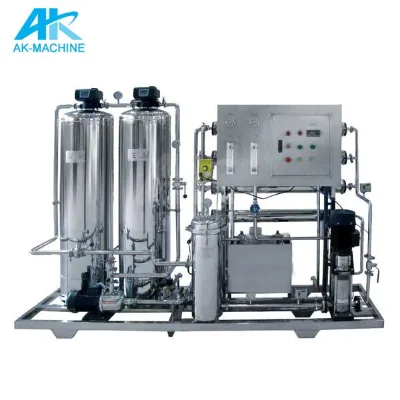


High-Efficiency Reverse Osmosis System for Industrial Water Purification
$13800.00 - $13900.00
MOQ: 1 Pieces

Comprehensive Sourcing Guide
Strategic Sourcing Guide for 50tph 8040 Reverse Osmosis Systems
Procuring a 50tph (tonnes per hour) 8040 reverse osmosis (RO) system represents a significant capital investment for industrial water treatment operations. The "8040" designation refers to the standard membrane element dimensions, typically 8 inches in diameter and 40 inches in length, which dictates the physical footprint and module configuration of the system. At a capacity of 50 tonnes per hour, the system is designed for substantial industrial throughput, requiring rigorous evaluation of technical specifications, supply chain reliability, and compliance standards. This guide synthesizes available product data and industry knowledge to assist procurement professionals in navigating the complexities of sourcing high-capacity RO solutions without relying on unverified market claims.
Technical Architecture and Performance Specifications
The core of any 50tph RO system lies in its membrane configuration and hydraulic design. Based on observed product attributes, these systems frequently utilize a "Plate and Frame" style or multi-stage pressure vessel arrangements to achieve the required flow rates. The motive force is consistently identified as "Pressure," necessitating high-pressure pumps capable of overcoming osmotic pressure, particularly when treating feed water with high Total Dissolved Solids (TDS).
For industrial applications, the input water quality is a critical variable. Data indicates that systems are often configured to handle raw water sources such as tap water, ground water, borehole water, and river water. A specific observed configuration supports feed water with TDS levels ranging from 10,000 to 40,000 ppm. This high-salinity requirement implies the need for robust pre-treatment stages to protect the membranes from fouling. The target output quality for these systems is typically defined as water with a TDS of less than 500 ppm, ensuring suitability for various industrial processes.
The rejection rate is a primary performance metric. Verified product attributes cite a salt rejection rate of 99.5% for specific models, while others indicate rates of 98.0%. Buyers must verify the specific rejection rate for the 50tph configuration, as this directly impacts the purity of the final product water. The control system is predominantly automated via PLC (Programmable Logic Controller), ensuring consistent operation and monitoring of pressure, flow, and quality parameters. The operating environment is generally specified for temperatures between 2°C and 45°C, with feed water temperatures ranging from 5°C to 35°C.
Compliance, Certification, and Regulatory Standards
Navigating the certification landscape is essential for international procurement. The most frequently observed certifications for these systems include CE and RoHS. The CE mark indicates conformity with health, safety, and environmental protection standards for products sold within the European Economic Area. RoHS compliance ensures that the system does not contain specific hazardous materials, which is crucial for environmental protection applications.
Some product listings include complex certification strings such as "CE, ISO, Salt Rejection Rate: 99.5%." While ISO 9001 is a common background standard for quality management, buyers should not assume its inclusion without explicit verification from the supplier. Similarly, while "ISOSalt Rejection Rate" appears in some data points, this phrasing suggests a specific performance claim rather than a standalone certification body. Buyers must request valid, up-to-date certification documents from the manufacturer to confirm that the specific 50tph unit meets the regulatory requirements of the destination country.
Standard dimensions and packaging are also part of the compliance and logistical framework. Observed product standards include specific dimensions such as 5.4m x 1.6m x 2.0m or 6000mm x 4000mm x 2000mm, depending on the model. Packaging varies from "Wooden Case" and "Wooden Box" to "Containerized" shipping in 40-foot containers. These specifications are vital for calculating freight costs and ensuring the equipment fits within the intended facility space.
Cost Drivers and Pricing Dynamics
The price range for reverse osmosis systems is vast, with observed listings spanning from $40 to $98,000,000. This extreme variance reflects differences in capacity, automation levels, membrane quality, and the extent of pre- and post-treatment integration. For a 50tph system, the cost will likely be at the higher end of the spectrum due to the volume of membranes, high-pressure pumps, and PLC control systems required.
Several factors drive the cost of a 50tph 8040 system. First, the feed water quality dictates the complexity of the pre-treatment system. Treating water with 10,000-40,000 ppm TDS requires more aggressive filtration and potentially multiple RO stages, increasing capital expenditure. Second, the material of construction, such as stainless steel versus carbon steel, significantly impacts price. Third, the level of automation, specifically the PLC system, adds to the cost but offers long-term operational efficiency.
Minimum Order Quantity (MOQ) is another consideration. Observed MOQs range from 1 to 200 units. For a custom 50tph industrial system, the MOQ is typically 1 unit, as these are often engineered-to-order solutions. However, buyers should verify if the supplier requires a minimum volume for spare parts or membrane replacements. The "Optional" parameters, such as 50gpd, 75gpd, or 100gpd capacities, are more relevant to household units; for a 50tph system, the capacity is fixed by the process design, but modular scalability may be an option.
Typical Applications and Operational Context
The application scope for 50tph RO systems is primarily industrial, though some configurations are noted for environmental protection and household use. The "Industry" application is the most common, where the system serves as a critical component in manufacturing processes requiring high-purity water. The "Environmental Protection" usage suggests applications in wastewater treatment or water recycling facilities.
Specific use cases include producing fresh water from saline sources, which aligns with the "Function: Producing Fresh Water" attribute. The system's ability to handle diverse raw water sources, including tap, borehole, and river water, makes it versatile for various geographic locations. The disinfection method, identified as Chlorine Dioxide in some models, is a key consideration for maintaining water quality post-filtration.
The following table summarizes the key technical attributes observed in high-capacity RO systems:
| Attribute Category | Observed Specifications | Verification Requirement |
|---|---|---|
| Type | Reverse Osmosis | Confirm membrane brand and model |
| Motive Force | Pressure | Verify pump head and power rating |
| Style | Plate and Frame | Check vessel configuration |
| Input TDS | 10,000-40,000 ppm | Test actual feed water quality |
| Output TDS | < 500 ppm | Confirm final water analysis |
| Rejection Rate | 98.0% - 99.5% | Request third-party test data |
| Control System | PLC Automatic | Verify software version and interface |
| Voltage | 380V | Match with local power grid |
| Origin | China, Shanghai | Confirm shipping logistics |
Supplier Evaluation and Quality Assurance
Evaluating suppliers for a 50tph system requires a focus on technical capability and track record. The "Brand" attribute "Hidrotek" appears in the data, but buyers should not limit their search to a single name. Instead, the evaluation should focus on the supplier's ability to deliver custom solutions, as "Customization" is listed as an available attribute. The "Standard" attribute often lists "Customized," indicating that many systems are tailored to specific site conditions.
Quality control is paramount. Buyers should verify the "prod_packing" method, which ranges from standard cartons to wooden cases and containerized shipping. Proper packaging is essential to prevent damage during transit, especially for large industrial units. The "prod_standard" dimensions must be cross-referenced with the facility's layout to ensure installation feasibility.
When assessing quality, look for evidence of rigorous testing. While specific test results are not provided in the general data, the presence of certifications like CE and RoHS suggests a baseline of quality assurance. Buyers should request detailed factory acceptance test (FAT) protocols and site acceptance test (SAT) procedures. The "Capacity" attribute, listed as 50 Gallon in some contexts, highlights the need to distinguish between small-scale and large-scale units; a 50tph system is vastly different from a 50-gallon unit, and confusion here can lead to procurement errors.
Long-Term Procurement and Lifecycle Management
Long-term success with a 50tph RO system depends on maintenance, spare parts availability, and operational efficiency. The "Efficient Filtration" attribute points to the system's ability to maintain performance over time, but this requires regular membrane cleaning and replacement. The "Optional" parameters for smaller units (50gpd/75gpd/100gpd) do not apply to the 50tph scale, but the concept of modular scalability does.
Lead times and logistics are critical components of the procurement strategy. The "Location" attribute indicates origins in China and Shanghai, which are major manufacturing hubs. Buyers must account for shipping times, customs clearance, and installation requirements. The "Standard" of a 40-foot container suggests that the system may be shipped in large modules, requiring specialized lifting equipment for installation.
To ensure long-term viability, buyers should negotiate service level agreements (SLAs) that cover membrane replacement, PLC software updates, and technical support. The "Disinfection Method" of Chlorine Dioxide requires specific handling and storage protocols, which should be included in the operational training. Finally, the "Application" scope should be reviewed periodically to ensure the system continues to meet the evolving needs of the facility, particularly if the raw water quality changes over time.
In conclusion, sourcing a 50tph 8040 Reverse Osmosis System requires a meticulous approach that balances technical specifications, regulatory compliance, and cost considerations. By focusing on verified attributes such as TDS rejection rates, voltage requirements, and certification status, buyers can mitigate risks and ensure the acquisition of a reliable, high-performance water treatment solution. The complexity of these systems demands a partnership with suppliers who can provide transparent, data-driven support throughout the procurement and operational lifecycle.
FAQs
What is the typical salt rejection rate for this system?
The system typically achieves a salt rejection rate of 99.5 percent, though some models specify 98.0 percent. This performance ensures the output water TDS remains below 500 ppm when treating feed water with high salinity levels.
Which certifications are standard for these industrial units?
Standard certifications include CE and RoHS marks for health and environmental safety compliance. Some listings also reference specific performance claims alongside these marks, but buyers must verify valid documentation for the specific unit.
Can the system handle raw water with high TDS levels?
Yes, the system is designed to process raw water with Total Dissolved Solids ranging from 10,000 to 40,000 ppm. It utilizes pressure-driven filtration to reduce this input to less than 500 ppm in the final output.
How is the system controlled during operation?
The system operates using a fully automatic PLC control system to manage pressure and flow parameters. This automation ensures consistent performance and monitoring of the reverse osmosis process without manual intervention.
What voltage is required for the motor and pumps?
The system requires a 380V power supply to operate the high-pressure pumps and control systems. This voltage rating is standard for industrial applications and must match the local facility power grid.
Is customization available for the system design?
Customization is available to tailor the system to specific site conditions and water quality requirements. Buyers can request adjustments to dimensions, packing, and functional modules to fit their unique operational needs.
What packaging methods are used for shipping?
Packaging options include wooden cases, wooden boxes, or containerized shipping in 40-foot containers. The specific method depends on the model and ensures the equipment arrives safely for industrial installation.