Source Airtight Spice Storage Jar for Home, Restaurant, and Kitchen
Find 30 airtight spice storage jar options from China suppliers. Compare glass and plastic models with screw caps, custom sizes, and LFGB/FDA certifications for home, restaurant, and kitchen use; compare the available evidence and request quotations based on your requirements.
Key considerations
Products List




Comprehensive Sourcing Guide
Airtight Spice Storage Jar Sourcing Guide
Procuring airtight spice storage jars requires distinguishing between glass and plastic variants based on specific application needs. The market offers melt glass bottles with screw caps suitable for home and restaurant environments, alongside plastic shakers designed for manual milling of salt, pepper, and chili. Buyers must verify if the product is intended for dry storage of jams, honey, or pickles, as the sealing mechanism and material durability vary significantly between these use cases.
Selection also depends on the required customization level and packaging format. While some models feature special shapes requiring new mold openings, others are available in standard square or round configurations with customizable colors. The supply chain often provides options for carton or pallet wrapping, ensuring that the chosen vessel protects the contents during transit while meeting the specific aesthetic and functional demands of the end-user market.
Product Scope and Observed Listing Signals
The observed product range spans from 50ml to 5000ml capacities, covering small condiment containers to large bulk storage solutions. Listings indicate a price range between 0.02 and 2.99 USD, with minimum order quantities varying widely from 2 units to 20,000 units depending on the supplier and customization requirements. This variance suggests that buyers can source either small trial batches or large-scale inventory, provided they align their order volume with the specific supplier's production capabilities.
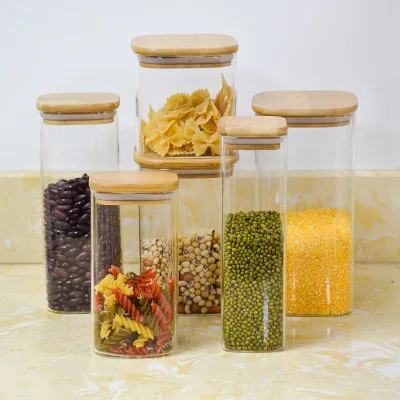
Visual and functional attributes observed include transparent glass, square or round shapes, and features like recyclability and eco-friendliness. Some products are explicitly marketed as stocked items with easy operation, while others require custom mold development for special shapes. Buyers should note that while many items are designed for home use, specific models are tailored for commercial kitchens, necessitating a clear definition of the target application before initiating the sourcing process.
Technical Specifications to Verify
Material composition is a primary verification point, as the supply includes both glass and plastic options with distinct performance characteristics. Glass models are often described as melt glass with screw cap sealing, offering transparency and a premium feel, whereas plastic variants may feature manual milling styles for direct spice grinding. Buyers must confirm the specific material grade to ensure it meets the intended storage duration and chemical resistance requirements for the specific spices or liquids being stored.
Dimensional and capacity standards must be cross-referenced against the actual product data to avoid fulfillment errors. Specifications list sizes such as 112x112x106mm for 500ml glass bottles and 77x143mm for 450ml plastic shakers, with weights ranging from 44.5g to 0.5kg. It is critical to verify the exact model number, such as CWG, TLP, or H60-048, as these identifiers correspond to specific volume standards and physical dimensions that dictate compatibility with existing dispensing systems or shelving.
Compliance and Safety Documentation
Safety certifications are essential for food-contact applications, with observed listings including LFGB, FDA, RoHS, and REACH compliance. These documents verify that the materials used in the jars are safe for storing edible items like salt, pepper, and honey without leaching harmful substances. Buyers should request current certification reports to ensure the specific batch of products meets the regulatory standards of their target export markets, particularly for food storage and liquid applications.
Environmental and sustainability claims require validation against the provided product attributes. Many listings highlight features such as being recyclable, degradable, and eco-friendly, which are crucial for brands targeting environmentally conscious consumers. However, these claims should be supported by the supplier's documentation regarding the material lifecycle and disposal methods, ensuring that the "sustainable" label aligns with actual industry standards and does not constitute greenwashing.
Cost Drivers and Commercial Terms
Pricing and order volume are heavily influenced by customization and packaging requirements. While base prices are low, the cost increases significantly when special shapes or custom colors are requested, as these often necessitate opening new molds. Additionally, the choice between simple carton packaging and more elaborate display boxes or color boxes will impact the final unit cost and the overall logistics expense for the buyer.
Minimum order quantities (MOQ) present a significant variable in commercial negotiations, ranging from as low as 2 units to 20,000 units. Suppliers may offer different pricing tiers based on whether the order is for stocked items or custom-molded products. Buyers must carefully calculate the total landed cost, including the MOQ threshold, to determine the most economical order size that balances inventory risk with unit price efficiency.
Supplier Qualification and Quality Control
Supplier location and origin play a vital role in logistics planning and lead time estimation. The majority of observed products originate from China, with specific mentions of Shandong as a production hub. Buyers should verify the specific factory location to assess shipping times and potential tariffs, ensuring that the supply chain can meet their delivery schedules without unexpected delays or increased freight costs.
Quality control processes must be established to verify the consistency of sealing types and structural integrity. Since products feature screw caps and various sealing mechanisms, buyers should request samples to test the airtightness and durability of the closure. Furthermore, verifying the consistency of the molding process for special shapes ensures that the final products meet the specified dimensions and weight tolerances required for automated filling lines or retail display.
Long-Term Procurement Checks
Sustainability and material longevity are key factors for maintaining a competitive edge in the spice storage market. Buyers should regularly audit suppliers to confirm that their recyclable and degradable claims remain valid as material sourcing strategies evolve. Establishing a long-term relationship with a supplier who can consistently deliver eco-friendly products helps in building a brand reputation focused on environmental responsibility and product safety.
Future-proofing the supply chain involves monitoring changes in product models and standards. As the market shifts towards new capacities or shapes, such as the transition from 500ml to 700ml or 5000ml options, buyers must stay informed about new model numbers like SN-74 or H60-048W. Proactive communication with suppliers regarding upcoming standard updates ensures that the procurement strategy remains aligned with evolving consumer preferences and regulatory requirements.
FAQs
What certifications are available for airtight spice storage jars?
Certified options typically include LFGB, FDA, RoHS, REACH, and ISO standards. These ensure the glass or plastic materials meet strict food safety requirements. Transparent jars are common, and custom colors are accepted. Buyers should verify specific certification documents with suppliers to confirm compliance for their target markets and regulatory needs.
Can I customize the size and shape of these jars?
Yes, customization is available for both size and shape. For special shapes or sizes, new molds must be opened. Standard capacities range from 50ml to 5000ml, including specific models like 200ml-5000ml or 50ml-100ml. Customized colors are also accepted, allowing brands to tailor the packaging to their specific identity and functional requirements.
What is the typical MOQ for ordering these storage jars?
The minimum order quantity varies significantly by supplier and product type. Observed MOQs range from 2 pieces to 20,000 pieces. Specific items may have an MOQ of 500 pieces. Buyers should check the specific product page for exact MOQ requirements, as smaller quantities might be available for stock items while larger runs apply to custom orders.
Which materials are used for airtight spice storage jars?
Jars are primarily made from glass or plastic. Glass options include melt glass with screw cap sealing, often featuring round or square shapes. Plastic variants are also available, such as manual salt and pepper shakers. Both materials offer recyclable and eco-friendly features, ensuring durability and suitability for home or restaurant kitchen storage applications.
How are these jars packaged for shipping?
Packaging methods include carton, pallet wrap, corrugated carton, color box, and display box. Standard packing often involves cartons or pallets to ensure safety during transit. Specific models may use caton, color box, or display box options. Proper packaging protects the glass or plastic jars from damage, ensuring they arrive in perfect condition for storage or retail display.
What are the common applications for these storage containers?
These jars are used for food storage, liquids, jam, honey, pickles, and milling spices. They are suitable for home, restaurant, and kitchen use. Specific models are designed for salt, pepper, and chili storage. The airtight seal helps preserve freshness, making them ideal for storing various dry goods and liquids in commercial or residential settings effectively.