Source Cold Welding Epoxy Putty for Construction, Packaging, and Transportation
Compare 30 listings for Cold Welding Epoxy Putty from verified Chinese manufacturers. Buyers can evaluate specifications, certifications, and pricing for applications in construction, packaging, and transportation.
Key considerations
Products List


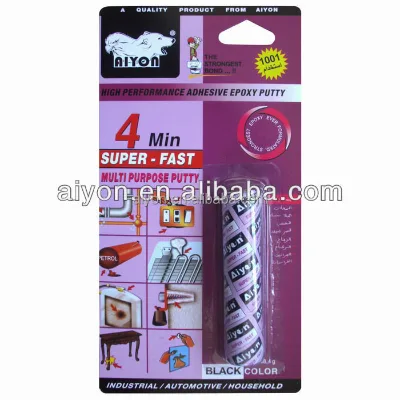
Epoxy Putty for Metals, Steel, Aluminium, Bronze, Iron Casts COLD WELD 40g
$0.51 - $2.03
MOQ: 1 Minimum


Steel Iron Aluminum Cooper Crack Repair Cold Welding Metal Repair Putty
$8.00 - $11.99
MOQ: 100 Pieces


Comprehensive Sourcing Guide
Strategic Sourcing Guide for Cold Welding Epoxy Putty
Procuring Cold Welding Epoxy Putty requires a disciplined approach that balances technical performance with supply chain reliability. This material is distinct from liquid epoxies, offering a two-part, moldable consistency that cures at room temperature to create a high-strength, structural bond. For buyers in construction, manufacturing, and industrial maintenance sectors, the selection process involves verifying specific chemical compositions, ensuring compliance with international standards, and evaluating supplier capabilities against rigorous quality benchmarks. The following guide outlines the critical factors for sourcing this essential industrial adhesive.
Technical Specifications and Material Composition
The core of any successful procurement strategy for Cold Welding Epoxy Putty lies in understanding the specific technical attributes of the product. Based on available market data, the primary raw material for these formulations is typically epoxy resin, often combined with a curing agent to facilitate the cross-linking process. The product appearance is generally observed as a liquid or semi-liquid mixture prior to curing, though the putty form implies a thixotropic nature that allows it to be shaped and applied without dripping.
Key technical parameters that must be verified include the bonding function, which for high-grade products is classified as a structural adhesive. This indicates the material is capable of bearing significant loads and stress, making it suitable for metal-to-metal repairs, gap filling, and sealing. The curing mechanism is predominantly room temperature curing, eliminating the need for external heat sources or specialized equipment during application. This feature is critical for field repairs and on-site construction work where controlled environments are unavailable.
The chemical composition often includes natural polymers or organic materials as base agents, with specific promoters acting as curing agents. Buyers should note that the formula is a mixture, and the specific CAS number (such as 7085-85-0 found in related listings) serves as a unique identifier for the chemical substance, aiding in regulatory compliance checks. The shelf life is a critical variable; observed data indicates ranges from one year to 36 months depending on the specific formulation and packaging. A longer shelf life suggests better stability of the resin components, reducing the risk of premature curing in storage.
Compliance, Certification, and Safety Standards
In the global B2B market, certification is not merely a formality but a prerequisite for market access and liability protection. When sourcing Cold Welding Epoxy Putty, buyers must demand documentation that confirms adherence to recognized international standards. The supply chain data highlights several recurring certifications, including ISO, RoHS, GS, and ISOCCC. These certifications indicate that the manufacturer has met specific criteria regarding quality management systems, restriction of hazardous substances, and safety standards.
Specifically, RoHS compliance ensures the product does not contain restricted hazardous materials, which is vital for electronics and consumer-facing applications. The GS mark (Geprüfte Sicherheit) is a German safety certification that implies rigorous testing for product safety. Furthermore, the presence of ISO standards suggests a commitment to consistent manufacturing processes. Buyers should verify that the specific batch or product model carries these certifications, as they are not universal across all suppliers.
Standardization is another area requiring careful attention. Product standards vary, with observed specifications including 57g/PC or custom weights, and packaging standards such as 20 Kg/Bucket. The absence of a universal global standard for the physical dimensions of the putty means that buyers must clearly define their requirements in the purchase order. Additionally, the product origin, frequently cited as China (Jiangsu or Shandong provinces), necessitates an understanding of the export regulations and quality control protocols specific to those regions. Verifying that the supplier maintains these certifications for every production run is essential to avoid regulatory hurdles at the destination port.
Cost Drivers and Pricing Dynamics
The pricing of Cold Welding Epoxy Putty is influenced by a complex interplay of factors, including raw material costs, packaging specifications, and order volume. The observed price range in the market spans from $0.22 to $24.30 USD, a wide disparity that reflects differences in product quality, brand reputation, and packaging formats. Low-cost options often correspond to smaller unit sizes or generic formulations, while higher-priced items may include specialized additives, premium branding, or larger bulk packaging that offers economies of scale.
Minimum Order Quantity (MOQ) is a significant cost driver. The market data shows an MOQ range from 1 unit to 10,000 units. For small-scale procurement or prototyping, buyers can access low MOQs, but this often comes with a higher unit cost. Conversely, large industrial buyers can negotiate better rates by committing to high-volume orders, potentially leveraging the supplier's high monthly production capacity, which can reach 3 billion units for some manufacturers.
Packaging also impacts the final cost. Products are available in various formats, including cartons, buckets, and inner boxes with specific configurations like 24 pieces per inner box or 6 inner boxes per carton. Bulk packaging reduces the per-unit shipping cost but requires adequate storage space. Buyers must calculate the total landed cost, including freight, duties, and storage, rather than focusing solely on the unit price. Customization services, such as OEM and ODM support, may incur additional fees but can provide long-term value by tailoring the product to specific application needs.
Typical Applications and Usage Scenarios
Cold Welding Epoxy Putty is versatile, finding application across a diverse range of industries. The primary usage sectors include construction, packing, and transportation. In the construction industry, the material is utilized for structural repairs, sealing gaps in concrete, and bonding various substrates. Its ability to adhere to a wide array of materials, including ceramic, glass, textile, leather, wood, rubber, plastic, and paper, makes it an indispensable tool for multi-material repairs.
In the industrial sector, the putty is applied in factories, garages, parks, and hospitals. Its classification as a structural adhesive allows it to reinforce damaged machinery parts, seal leaks in piping systems, and restore worn surfaces. The product's waterproof nature is particularly valuable in environments exposed to moisture, ensuring that repairs remain durable and effective over time. The high strength and strong adhesion features make it suitable for load-bearing applications where traditional fasteners might fail.
The application method is typically manual, involving mixing the two components and applying the putty with a roller or by hand. This ease of operation is a key advantage for field technicians who require quick and effective solutions without specialized training. The color of the product, often observed as black or grey, can be a factor in aesthetic applications, though the primary function remains structural integrity. Whether used for woodworking, footwear and leather repair, or fiber and garment applications, the material's adaptability ensures it meets the needs of various professional sectors.
Supplier Evaluation and Production Capacity
Selecting a reliable supplier is paramount to ensuring consistent product quality and timely delivery. Buyers should evaluate potential partners based on their production capacity, customization capabilities, and track record. The market data indicates that some manufacturers possess a monthly production capacity of 3 billion units, suggesting a robust ability to handle large-scale orders without compromising on quality. This capacity is a strong indicator of a mature supply chain and efficient manufacturing processes.
Customization is a critical differentiator. Many suppliers offer OEM (Original Equipment Manufacturer) and ODM (Original Design Manufacturer) services, allowing buyers to brand the product or modify the formula to suit specific requirements. The availability of customized support, including tailored packaging and specific weight standards (e.g., 20g, 40g, 57g, 114g), demonstrates a supplier's flexibility. Buyers should verify that the supplier can accommodate these custom requests without significant lead time extensions.
Geographic location also plays a role in supplier evaluation. The majority of the observed supply originates from China, specifically the Jiangsu and Shandong provinces. These regions are known for their industrial clusters and manufacturing expertise. However, buyers must assess the logistical implications of sourcing from these locations, including shipping times and potential tariffs. A supplier with a proven track record in international logistics and a clear communication channel is essential for a smooth procurement process.
Quality Control and Long-Term Procurement Considerations
Maintaining product quality over time requires a robust quality control (QC) framework. Buyers should insist on detailed documentation regarding the testing of each batch, including verification of the curing method, adhesion strength, and shelf life. The observed shelf life of 36 months for some products and 1 year for others highlights the importance of verifying the production date upon receipt. Ensuring that the product is within its valid shelf life is crucial to prevent performance failures.
Long-term procurement strategies should focus on building a partnership with suppliers who demonstrate consistency and reliability. This includes regular audits of the manufacturing facility, review of certification renewals, and assessment of the supplier's ability to scale production as demand grows. The classification of the product as a room-curing adhesive with a specific formula (mixture) means that storage conditions are critical; buyers must ensure that their storage facilities maintain the necessary temperature and humidity levels to preserve the product's integrity.
Furthermore, the availability of after-sales support and technical assistance is a key consideration. Suppliers who provide guidance on application techniques, troubleshooting, and safety data sheets (SDS) add significant value to the procurement process. By prioritizing suppliers with strong QC protocols and a commitment to continuous improvement, buyers can mitigate risks and ensure a steady supply of high-performance Cold Welding Epoxy Putty for their operations.
Conclusion
Sourcing Cold Welding Epoxy Putty is a multifaceted process that demands a thorough understanding of technical specifications, regulatory compliance, and supplier capabilities. By focusing on the key attributes such as epoxy resin composition, structural bonding capabilities, and international certifications like ISO and RoHS, buyers can make informed decisions that align with their operational needs. The wide range of applications, from construction to industrial maintenance, underscores the versatility of this material, while the variability in pricing and MOQs requires careful cost-benefit analysis. Ultimately, a strategic approach that emphasizes quality control, supplier reliability, and long-term partnership will yield the best results in the procurement of this essential industrial adhesive.
FAQs
What certifications do Cold Welding Epoxy Putty products typically hold?
Products typically hold ISO, RoHS, GS, and ISOCCC certifications. These standards ensure compliance with quality management and safety requirements, which is essential for international trade and regulatory approval in various industries.
How is the shelf life of this adhesive determined?
Shelf life ranges from one year to 36 months depending on the specific formulation and packaging. Buyers must verify the production date upon receipt to ensure the product remains stable and effective for application.
Which customization options are available for bulk orders?
Suppliers offer OEM and ODM services with customizable packaging and weight standards. Options include specific weights like 20g, 40g, 57g, or 114g, allowing buyers to tailor products to their unique operational needs.
Can this material bond to multiple substrate types?
Yes, the adhesive bonds effectively to ceramic, glass, textile, leather, wood, rubber, plastic, and paper. Its high strength and strong adhesion make it suitable for diverse applications across construction, packing, and transportation sectors.
What is the typical monthly production capacity of suppliers?
Some manufacturers demonstrate a monthly production capacity of up to 3 billion units. This high capacity indicates robust supply chain capabilities to handle large-scale industrial orders without compromising on quality or delivery timelines.
How does the curing method affect application speed?
The product utilizes air drying and room temperature curing methods. This eliminates the need for external heat sources, allowing for quick application and immediate structural bonding in field repairs or on-site construction work.