Source Commercial Gas Deep Fryer for Chips Donuts and Chicken
Compare 30 commercial gas deep fryer models from verified suppliers. These units feature stainless steel construction, varying capacities, and options for chips, donuts, and chicken frying applications. Explore specifications including power sources, automatic grades, and safety features to find the right equipment for your food service needs.
Key considerations
Products List


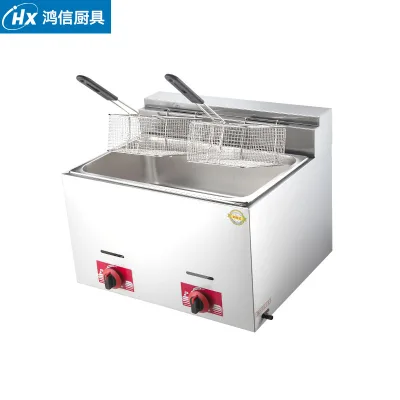
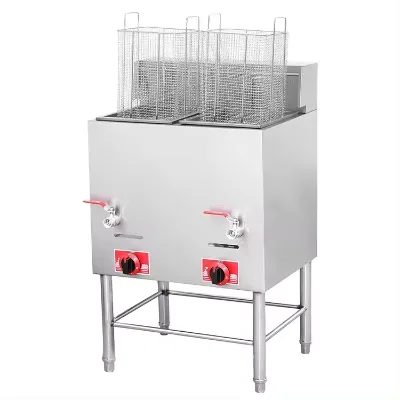
Best Quality Gas Deep Fryers Commercial Electric Chicken French Fries Fryer
$360.00 - $420.00
MOQ: 1 Pieces

Commercial Gas Deep Fryer Propane Deep Fryer Industrial Chicken Fryer Machine
$360.00 - $420.00
MOQ: 1 Pieces



Comprehensive Sourcing Guide
Commercial Gas Deep Frying Fryer Sourcing Guide
Commercial gas deep frying fryers are essential for high-volume food service operations requiring consistent thermal processing for items like chips, donuts, and chicken. These units typically utilize LPG or natural gas as a primary fuel source, offering rapid heating capabilities that are critical for maintaining product quality during peak service hours. Buyers must distinguish between semi-automatic and manual operation grades, as the level of automation directly impacts labor efficiency and operational consistency in busy kitchen environments.
When evaluating listings, procurement teams should note that observed models range from compact 22-liter capacities to larger 36-liter units, often featuring dual-basket configurations for simultaneous cooking cycles. The physical footprint varies significantly, with standard dimensions spanning from approximately 380mm in width to over 1700mm for specialized multi-unit setups. Understanding these spatial requirements is vital for kitchen layout planning, ensuring that the selected equipment fits within the designated workflow without obstructing staff movement or safety egress.
Product Scope and Observed Listing Signals
The market for commercial gas fryers presents a wide spectrum of configurations, ranging from free-standing units with high-temperature protection devices to specialized models designed for specific confectionery applications like candy and biscuit production. Buyers should carefully review product attributes to confirm whether the unit is customized or non-customized, as this distinction often influences lead times and the availability of specific features like stainless steel 304 construction versus standard stainless steel.
Listing signals indicate that power outputs can vary from 9kw to 18kw, with some high-performance models rated at 18900BTU/Hr to ensure rapid recovery times between frying batches. Packaging standards also differ, with options including wooden packages or cartons reinforced with plywood cases, which affects shipping costs and on-site handling requirements. Procurement teams must verify the exact capacity and basket count, as units with 24-26L or 26-36L capacities serve different volume needs compared to dual 13-14L configurations.
Technical Specifications to Verify
Technical due diligence requires a rigorous verification of the automatic grade and power source compatibility to ensure the unit integrates seamlessly with existing kitchen infrastructure. While many units are designed for gas operation, some listings indicate electric power sources or mixed capabilities, necessitating a clear confirmation of the fuel type and electrical requirements before finalizing a purchase order. The presence of specific features like fast heating elements and high-temperature protection devices should be cross-referenced against the operational demands of the intended food application.
Dimensional accuracy is another critical verification point, as the standard product specifications often list precise measurements such as W380D710H1050mm or larger variants like 170017001500mm. Buyers must ensure that the listed gross weight and net weight align with the structural integrity required for the installation site, particularly for heavy-duty models weighing up to 65kg. Additionally, the inclusion of a stir power rating, such as 1.1kw, indicates the presence of automated agitation systems that may be essential for uniform cooking in specific product lines.
Compliance and Safety Documentation
Safety compliance is paramount in commercial food equipment procurement, with CE certification appearing as a standard requirement for many units in the current market. However, buyers should also investigate the availability of additional certifications such as ISOSAUL, CSA, and MET, which may be necessary depending on local regulatory frameworks and insurance requirements for commercial kitchens. The presence of these certifications serves as a primary indicator that the manufacturer has subjected the equipment to rigorous safety testing protocols.
Documentation regarding the thermal processing capabilities and the inclusion of high-temperature protection devices must be reviewed to ensure they meet local fire safety codes. Buyers should request detailed safety manuals that explain the operation of gas sources, including LPG and natural gas compatibility, and verify that the equipment includes all necessary shut-off mechanisms. Ensuring that the product standard aligns with regional safety regulations is essential to avoid costly retrofits or operational shutdowns due to non-compliance.
Cost Drivers and Commercial Terms
The pricing structure for commercial gas deep fryers is influenced by several key factors, including the material grade, capacity, and the level of customization required. Observed price ranges in the market span from approximately 27 USD to 29,800 USD, reflecting the vast difference between basic manual units and complex, high-capacity automated systems. Buyers must analyze the cost per unit of capacity to determine the most economical option for their specific volume requirements, rather than focusing solely on the total list price.
Commercial terms such as Minimum Order Quantity (MOQ) and packaging specifications significantly impact the total cost of ownership. While some suppliers offer an MOQ of just one set, others may require a minimum of five sets, which can affect inventory planning and cash flow for smaller operations. The choice between wooden packages and carton with plywood cases also influences shipping logistics and potential damage risks, making it a critical component of the overall cost calculation during the negotiation phase.
Supplier Qualification and Quality Control
Supplier qualification should focus on verifying the origin of the equipment, with many listings indicating production in China, specifically in the Guangdong region. Buyers must assess the manufacturer's track record for producing stainless steel 304 units, as this material grade offers superior corrosion resistance and longevity compared to standard stainless steel. Requesting references from previous clients who have purchased similar models, such as the GF-2G or GF-3G series, can provide valuable insights into the supplier's reliability and after-sales support capabilities.
Quality control processes must be validated through a review of the manufacturing standards and the specific product models offered. Buyers should inquire about the testing procedures used to verify the heating speed and the functionality of safety devices before the equipment leaves the factory. Ensuring that the supplier adheres to strict quality control measures for dimensions and weight consistency is essential to prevent installation issues and to guarantee that the equipment performs as expected in a high-volume commercial environment.
Long-Term Procurement Checks
Long-term procurement success depends on establishing a clear maintenance strategy for the commercial gas deep fryer, including the availability of spare parts and technical support. Buyers should verify the supplier's commitment to providing documentation for the thermal processing unit and the specific stir power mechanisms to ensure that routine maintenance can be performed without significant downtime. A robust support network is crucial for addressing any operational issues that may arise during the extended lifecycle of the equipment.
Future scalability should also be considered when selecting a supplier, ensuring that the vendor can accommodate increased order volumes or additional unit purchases as the business grows. Buyers must confirm that the supplier can maintain consistent product standards across different production batches, particularly regarding the automatic grade and power source specifications. Establishing a long-term relationship with a qualified supplier helps mitigate risks associated with supply chain disruptions and ensures a steady supply of high-quality equipment for ongoing operations.
FAQs
What certifications do these commercial gas deep frying fryers have?
These units carry CE certification, while some models also include ISOSAUL, CSA, and MET approvals. Buyers should verify specific model requirements as certifications vary by product grade and intended application for chips or donuts.
Can I customize the capacity of the Commercial Gas Deep Frying Fryer?
Customization is available for specific models, allowing adjustments to capacity ranges like 22-24L or 26-36L. Buyers must confirm if the selected unit supports non-customized or customized configurations based on their production needs.
Which power source options are available for these deep fryers?
The equipment supports both gas and electric power sources. Gas models utilize LPG or natural gas, while electric variants offer 9kw or 18kw options depending on the specific model and its intended usage for chicken or chips.
How is the Commercial Gas Deep Frying Fryer packaged for shipping?
Packaging typically includes wooden packages or cartons with plywood cases to ensure safe transport. Specific package dimensions vary by model, such as 490*795*1150mm, ensuring the stainless steel unit arrives without damage during international shipping.
What is the minimum order quantity for these commercial gas deep frying fryers?
The minimum order quantity is generally 5 sets, though some listings show ranges from 1 to 100 units. Buyers should check specific supplier terms as MOQs may vary based on customization requests and model availability.
Which materials are used to construct these commercial gas deep frying fryers?
Units are primarily constructed from stainless steel, with some models using Stainless Steel 304 for durability. This material choice ensures resistance to high temperatures and corrosion during thermal processing of various food items like donuts.