Source Compact Automotive Car Fuse Holder for Cars, Vans, Boats
Find 30 options for the Compact Automotive Car Fuse Holder designed for cars, vans, and boats. Buyers can compare specifications including breaking capacity, fusing speed, and installation methods to select the right component for their electrical systems.
Key considerations
Products List


Comprehensive Sourcing Guide
Strategic Sourcing Guide for Compact Automotive Car Fuse Holders
Navigating the global market for compact automotive car fuse holders requires a disciplined approach that balances technical precision with supply chain reliability. For procurement professionals, the core challenge lies in identifying components that meet rigorous safety standards while fitting specific vehicle architectures. The available market data indicates a diverse range of products, from tablet-shaped current fuses to inline holders designed for Volkswagen applications. This guide synthesizes observed product attributes, compliance frameworks, and cost factors to provide a robust framework for sourcing decisions.
Technical Specifications and Form Factor Analysis
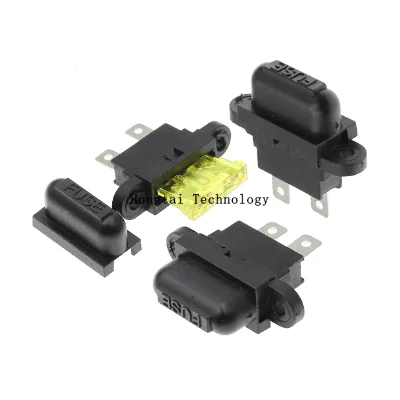
The first step in sourcing is defining the exact technical requirements of the fuse holder. The market data reveals a significant variation in form factors, which directly impacts compatibility with vehicle electrical systems. Buyers must distinguish between different structural types, such as the "Single Hole Terminals" and "Blade Fuse" configurations observed in current listings. The "Tablet" shape is noted for specific current fuse applications, while other variants feature a "U" shape, likely intended for specific housing or mounting constraints.
Dimensions are a critical differentiator. The data explicitly lists fuse holder sizes categorized as "S" (Small), "M" (Medium), and "L" (Large). Additionally, specific model numbers such as "FH128," "FH022," and "TR-BINFH013" appear in the supply pool, suggesting that standardization exists but varies by manufacturer. When evaluating a compact automotive fuse holder, the buyer must verify the "Fuse Holder Size" against the physical space available in the vehicle's fuse box or distribution panel.
The electrical characteristics are equally vital. The observed range for electric current spans from 0.1A to 20A, indicating that these components are suitable for low-to-medium current automotive circuits. The "Fusing Speed" is identified as "FF" (Fast-Acting), which is essential for protecting sensitive electronics from immediate surges. Furthermore, the "Breaking Capacity" is described as "High" in some contexts, while other entries refer to "Low Voltage Circuit Breakers," necessitating a clear distinction between the fuse element and the holder's structural rating. The "Arc-Extinguishing Medium" is listed as "Air," which is standard for conventional circuit breakers but requires verification for high-voltage or high-current automotive applications.
Compliance, Certification, and Safety Standards
In the automotive sector, compliance is not merely a preference but a regulatory necessity. The supply data highlights several key standards and certifications that buyers must verify. The "VDE" standard is explicitly mentioned, representing a rigorous German safety standard often adopted in European automotive supply chains. Additionally, "IEC" (International Electrotechnical Commission) safety standards are cited, providing a global baseline for electrical safety.
Material certifications are also prominent. The data references "CE" and "RoHS" compliance, which are critical for selling into the European Union and other markets with strict environmental and safety regulations. "BS" (British Standards) certifications appear in the list, indicating compatibility with UK-specific requirements. However, buyers should treat these as observed attributes of specific listings rather than universal guarantees for all products in the category.
When evaluating a supplier, the procurement team must request documentation proving adherence to these standards. The "prod_standard" field lists "maxi/standard/mini/low profile," which refers to the physical dimensions of the fuse blade rather than a safety certification, but it implies adherence to industry norms for fuse sizing. The "Character" of the product is noted as "Environmental Protection," suggesting the materials used may be free from hazardous substances, aligning with RoHS requirements.
Cost Drivers and Pricing Dynamics
Understanding the cost structure of automotive fuse holders is essential for budget management. The observed price range in the market is notably broad, spanning from $0.01 to $5.00 USD. This wide variance suggests that price is heavily influenced by factors such as material composition, production volume, and specific customization requirements.
The "Material" composition is a primary cost driver. Listings indicate the use of "PVC," "PA" (Polyamide), and "Brass." Brass components, often used for terminals, generally command a higher price than plastic alternatives due to material costs and conductivity. The "Plate" attribute is listed as "Ni" (Nickel), which is a common plating for corrosion resistance and conductivity. The choice between these materials will directly impact the unit cost.
Production volume also plays a significant role. The "MOQ" (Minimum Order Quantity) ranges from 1 to 2000 units. Buyers ordering small quantities may face higher per-unit costs, while those committing to larger volumes can leverage economies of scale. The "prod_packing" specifications, such as "100PCS/Bag" or "2500PCS/Carton," further influence logistics costs and handling efficiency.
Typical Applications and Usage Scenarios
The versatility of compact automotive fuse holders is evident in the diverse applications listed. The primary usage is clearly defined as "Automotive," with specific mentions of "Car," "Van," and "Boat." This indicates that these components are designed to withstand the vibration, temperature fluctuations, and moisture exposure typical of mobile environments.
Specific vehicle compatibility is a key consideration. The data explicitly mentions "Volkswagen" as a compatible car make, suggesting that some holders are engineered to fit OEM specifications for this manufacturer. The "Application" is described as "Conduct Electricity," a fundamental function that must be maintained under all operating conditions. The "Installation" method is noted as "Insert," which implies a straightforward integration into existing wiring harnesses or fuse boxes.
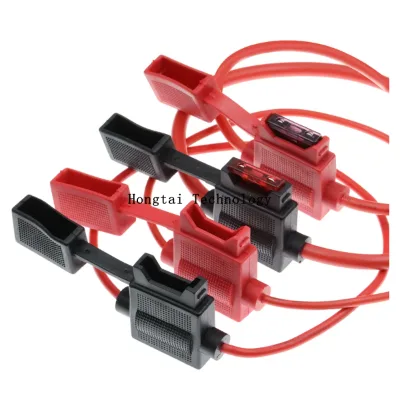
The "Fuse Holder Installing Method" varies, with options including "in-Line Fuse Holder" and "Meter Panel Mounting Fuse Holder." This distinction is crucial for system design. In-line holders are typically used for protecting specific circuits within a wire run, while panel mounting types are integrated into the main distribution box. The "Operation" is listed as "Electric Type," confirming their role in active electrical systems rather than passive protection.
Supplier Evaluation and Production Capabilities
Selecting the right supplier requires a deep dive into their production capabilities and geographic origins. The data indicates that the "prod_origin" is primarily "Jiangsu China" or generally "China." This region is a known hub for electrical component manufacturing, offering a dense ecosystem of suppliers. However, buyers must verify the specific factory location to ensure logistical feasibility and to assess the supplier's proximity to ports for export.
The "Production Process" is identified as "Injection Molding," which is the standard method for manufacturing plastic fuse holder bodies. This process allows for high precision and consistency in the "Shape" and "Interface Type" of the product. The "Interface Type" is listed as "BNC" in some contexts, though this is more common in RF applications; in automotive fuse holders, it likely refers to a specific connector interface or is a data artifact that requires clarification.
Buyers should evaluate suppliers based on their ability to provide "Customization." The data confirms that customization is available, which is a significant advantage for OEMs requiring unique form factors or branding. The "Gender" of the component is listed as "Male," which is a standard designation for the plug side of a connector, but this must be matched correctly with the corresponding "Female" receptacle in the vehicle.
Quality Control and Long-Term Procurement Strategy
Ensuring long-term reliability requires a robust quality control strategy. The "Structure" of the component is described as "Conventional Circuit Breaker," which implies a proven design but necessitates regular testing for wear and tear. The "Speed" of the component is noted as "High-Speed Circuit Breaker," suggesting rapid response times that must be validated through testing.
For long-term procurement, buyers should focus on the consistency of the "prod_model" and "prod_standard." The presence of multiple model numbers (FH128, FH022, TR-BINFH013) indicates that suppliers may have different product lines. Standardizing on a specific model can simplify inventory management and reduce the risk of compatibility issues.
The "Fusing Device" is described as "Pop-up Solid," which is a specific mechanism for indicating a blown fuse. This feature is critical for maintenance and troubleshooting. Buyers must verify that this mechanism functions reliably over the product's lifespan and does not degrade due to environmental factors.
Comparative Analysis of Product Attributes
To facilitate decision-making, the following table summarizes key attributes observed in the market for compact automotive car fuse holders. This comparison highlights the diversity of options available and the specific parameters buyers should prioritize.
| Attribute Category | Observed Options | Key Consideration for Buyers |
|---|---|---|
| Product Type | Current Fuse, Blade Fuse, Single Hole Terminals | Match the fuse type to the vehicle's electrical architecture. |
| Shape | Tablet, U, Conventional | Ensure physical fit within the designated fuse box space. |
| Size | S, M, L, Big | Verify dimensions against the specific mounting location. |
| Current Rating | 0.1A - 20A | Select a rating that protects the circuit without nuisance blowing. |
| Material | PVC, PA, Brass, Plastic | Balance cost, durability, and electrical conductivity. |
| Certification | VDE, IEC, CE, RoHS, BS | Confirm compliance with target market regulations. |
| Origin | Jiangsu China, China | Assess logistics, lead times, and supply chain stability. |
| Installation | Insert, In-Line, Meter Panel Mounting | Choose the method that fits the assembly process. |
Conclusion
Sourcing compact automotive car fuse holders is a complex task that demands a thorough understanding of technical specifications, regulatory compliance, and supplier capabilities. The market offers a wide array of options, from tablet-shaped current fuses to specialized holders for Volkswagen vehicles. By carefully evaluating the "Fuse Holder Size," "Material," and "Certification" status, buyers can ensure they select components that meet the rigorous demands of the automotive industry.
The observed price range of $0.01 to $5.00 and MOQs from 1 to 2000 units provide flexibility for both prototyping and mass production. However, the variability in attributes such as "Fusing Speed" and "Breaking Capacity" requires diligent verification. Buyers must not assume that all listed products satisfy every attribute; instead, they should treat the data as a menu of options to be validated against specific project requirements.
Ultimately, successful procurement relies on a disciplined approach to supplier evaluation and quality control. By focusing on the "Production Process," "Standard" compliance, and "Customization" availability, buyers can build a resilient supply chain that delivers high-quality fuse holders for the automotive sector. The integration of these factors ensures that the final product not only functions effectively but also adheres to the safety and environmental standards required by modern vehicle manufacturers.
FAQs
What certifications are available for compact automotive car fuse holders?
Available certifications include VDE, IEC, CE, RoHS, and BS standards. These ensure compliance with safety and environmental regulations for automotive applications, though specific listings may vary by manufacturer origin.
Which fuse holder sizes are commonly available in the market?
Common sizes include Small, Medium, Large, and Big variants. Specific models like FH128 and FH022 correspond to these dimensions, allowing selection based on physical space in vehicle fuse boxes.
Can buyers customize compact automotive car fuse holders?
Yes, customization is available for specific product requirements. Buyers can request unique form factors or branding, which is particularly useful for OEMs needing components tailored to specific vehicle architectures like Volkswagen.
What is the typical price range for these fuse holders?
The observed price range spans from 0.01 to 5 USD per unit. This variance depends on material composition, such as PVC or Brass, and order volume, with Minimum Order Quantities ranging from 1 to 2000 units.
Where are these products typically manufactured?
Products are primarily manufactured in Jiangsu, China. This region serves as a hub for electrical components, offering injection molding processes for plastic bodies and brass terminals for reliable conductivity.
What current ratings do these fuse holders support?
The electric current ratings range from 0.1A to 20A. This range supports low-to-medium current automotive circuits, with fast-acting fusing speeds suitable for protecting sensitive electronics from immediate surges.