Source Countersink Drills for Metal, Wood, and Plastic Drilling
Find 30 verified Countersink drill bits from Chinese manufacturers offering HSS materials and custom sizes. Compare specifications including hardness, length, and packaging options to select the right tool for metal drilling and other industrial applications.
Key considerations
Products List


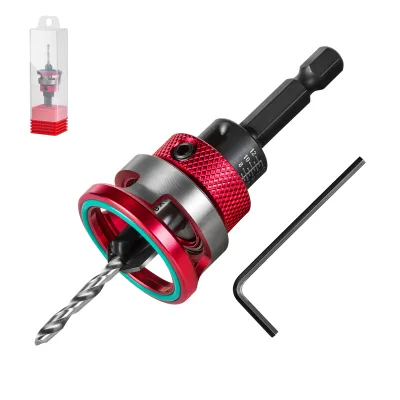


Countersunk Hole Magnetic Neodymium Countersink Bore Ring NdFeB Magnets
$0.21 - $0.25
MOQ: 1000 Pieces


Comprehensive Sourcing Guide
Strategic Sourcing Guide for Countersink Drill Bits
The global procurement landscape for industrial cutting tools requires a disciplined approach to ensure operational continuity and cost efficiency. When sourcing Countersink drill bits, buyers must navigate a complex matrix of material properties, dimensional standards, and manufacturing capabilities. This guide provides a structured framework for evaluating suppliers and selecting products that align with specific engineering requirements. The focus remains on evidence-based criteria derived from observable product attributes and established industry practices, ensuring that procurement decisions are grounded in verifiable data rather than marketing assertions.
Technical Specifications and Material Composition
The foundation of a successful Countersink procurement strategy lies in a rigorous understanding of technical specifications. The material composition is the primary determinant of tool life and performance under load. Available materials for these tools typically include High Speed Steel (HSS) variants such as M2 and M35 Cobalt, as well as specific grades like HSS 4241. The hardness of the tool is a critical metric, with observed ranges often falling between 62 and 66 HRC. This hardness level is achieved through specific heat treatment processes, including hardening and tempering, which are essential for maintaining the cutting edge during metal drilling operations.
Dimensional accuracy is equally vital. Countersink tools are available in a wide spectrum of sizes, ranging from metric diameters of 2.0 mm up to 40 mm, and inch-based sizes extending from 1/8 inch to 3 inches. The physical length of the tool also varies; some specifications indicate a total length of 110 mm, while others may list a single package length of 12 mm depending on the specific model and intended application. The shank geometry is predominantly round, designed to fit standard chucks and drilling machines securely. Buyers must verify that the specific model number, such as GCS0012-PRO or 380-3001, corresponds to the exact dimensional requirements of their machinery and the material being processed.
Compliance with International Standards
Adherence to international standards ensures that the purchased tools meet recognized quality and safety benchmarks. The supply chain for these tools frequently references multiple standardization bodies, including API, AISI, JIS, and DIN. Specific product models may conform to DIN 334, which governs the geometry and dimensions of Countersink tools. It is crucial for buyers to confirm that the supplier can provide documentation verifying compliance with the specific standard required for their application.
While some background information may mention ISO 13485, this standard is not universally applicable to all general-purpose metal drilling tools and should be verified on a case-by-case basis. Instead, buyers should prioritize the explicit standards listed in the product specifications, such as the 64 HRC hardness standard or the specific DIN references. The ability of a supplier to demonstrate compliance with these standards is a key indicator of their manufacturing maturity and quality control systems.
Cost Drivers and Pricing Variables
The pricing of Countersink drill bits is influenced by several distinct factors, creating a wide observed range from $0.10 to $100 USD per unit. The primary cost driver is the material grade; tools made from M35 Cobalt or specialized HSS alloys command higher prices than standard HSS versions due to their enhanced heat resistance and durability. The size of the tool also significantly impacts cost, with larger diameters requiring more raw material and longer machining times.
Packaging requirements represent another variable cost. Suppliers offer various packaging options, including plastic tubes, wooden cases, blister cards, and cartons. The choice of packaging can affect the final unit price, particularly for bulk orders where protective packaging is necessary to prevent damage during transit. Additionally, the level of customization plays a role; tools that require OEM or ODM support, such as custom branding or specific geometric modifications, will incur higher costs compared to standard off-the-shelf items. The minimum order quantity (MOQ) also influences the effective unit price, with ranges observed from 1 unit up to 4000 units, allowing buyers to scale their procurement based on inventory needs.
Typical Applications and Usage Scenarios
Countersink drill bits are designed for specialized tasks beyond simple hole creation. The primary application is metal drilling, where the tool creates a conical recess to allow screw heads to sit flush with the surface. However, specific models are also engineered for well drilling, indicating their utility in more demanding or specialized extraction scenarios. The versatility of these tools is further enhanced by their availability in both metric and inch models, catering to diverse international manufacturing standards.
The finish of the tool is a critical factor in its application. A black oxide finish is commonly observed, providing corrosion resistance and reducing friction during the drilling process. In contrast, some high-precision applications may require a fine polish finish to ensure smooth operation and reduce material buildup. The selection of the appropriate tool depends heavily on the specific material being worked on and the desired finish of the final product. Buyers should match the tool's hardness and finish to the specific demands of their production line to maximize efficiency and tool life.
Supplier Evaluation and Manufacturing Capabilities
Evaluating a supplier requires a deep dive into their manufacturing capabilities and origin. The geographic origin of these tools is often traced to manufacturing hubs in China, specifically regions like Zhenjiang, Jiangsu, and Zhejiang. These locations are known for their concentration of precision tooling manufacturers. When assessing a potential supplier, buyers should verify the "place of origin" and "prod_origin" details to ensure alignment with their supply chain risk management strategies.
A key differentiator among suppliers is the level of customization support offered. Many manufacturers provide OEM and ODM services, allowing for tailored solutions that meet specific client requirements. The availability of customization, whether in the form of custom branding, specific model numbers, or unique packaging, is a strong indicator of a supplier's flexibility. Buyers should also check the warranty terms, with some suppliers offering coverage up to 3 years, which reflects their confidence in the product's durability. The brand name, such as GEINXURN, may also serve as a marker of quality, though the specific reputation of the brand should be verified through independent industry channels.
Quality Control and Inspection Protocols
Quality control is paramount in the procurement of cutting tools, as defects can lead to significant production downtime. The manufacturing process involves rigorous heat treatment, including hardening and tempering, to achieve the required hardness levels. Buyers must ensure that the supplier has robust quality assurance protocols in place to verify that the final product meets the specified hardness range of 62-66 HRC.
Inspection should also cover the physical dimensions and finish. The single package size, often around 13x5x4 cm, and the gross weight, typically 0.096 kg, are standard metrics that can be used to verify the integrity of the shipment. Buyers should request test results or certification of the heat treatment process to confirm that the tool has been properly treated. The "Hollow" attribute observed in some models suggests specific design features that may require additional inspection to ensure structural integrity. A comprehensive quality control plan should include checks for surface finish, dimensional accuracy, and material consistency before the tools are released for shipment.
Long-Term Procurement Considerations
Sourcing Countersink drill bits is not merely a transactional activity but a strategic decision that impacts long-term operational efficiency. The availability of spare parts and the consistency of the supply chain are critical factors. Buyers should consider the lead times and the ability of the supplier to maintain consistent quality over time. The observed MOQ range of 1 to 4000 units offers flexibility, allowing buyers to adjust their inventory levels based on demand fluctuations without committing to excessive stock.
Furthermore, the market popularity of certain models, such as those labeled as "Popular" in the market, can indicate a higher level of industry acceptance and support. However, buyers should remain cautious of relying solely on market trends and instead focus on the technical specifications that align with their specific needs. The warranty period, potentially up to 3 years, provides a safety net for long-term procurement, ensuring that the supplier stands behind their product. By establishing a relationship with a supplier that offers customization, adheres to international standards, and maintains high quality control, buyers can secure a reliable supply of Countersink drill bits that supports their production goals for years to come.
Comparative Analysis of Product Attributes
To facilitate decision-making, the following table summarizes key attributes observed in the market for Countersink drill bits. This comparison highlights the variability in specifications and helps buyers identify the most suitable options for their specific requirements.
| Attribute Category | Observed Values | Verification Requirement |
|---|---|---|
| Material | High Speed Steel, HSS 4241, M2, M35 Cobalt | Confirm grade suitability for target material |
| Hardness | 62-66 HRC, 64 HRC (Standard) | Verify heat treatment certification |
| Size Range | 2.0 mm to 40mm; 1/8" to 3" | Match to specific hole diameter needs |
| Standards | API, AISI, JIS, DIN, DIN 334 | Ensure compliance with project specs |
| Finish | Black Oxide, Fine Polish | Select based on friction/corrosion needs |
| Packaging | Plastic Tube, Wood Case, Blister, Carton | Assess protection needs for logistics |
| Origin | Zhenjiang Jiangsu, Zhejiang, China | Verify supply chain stability |
| Customization | OEM, ODM, Customized, Non-Customized | Define scope of branding/modifications |
This structured approach to sourcing ensures that buyers can make informed decisions based on concrete data. By focusing on technical specifications, compliance, and supplier capabilities, organizations can mitigate risks and optimize their procurement of Countersink drill bits for metal drilling and other industrial applications.
FAQs
What materials are used for Countersink drill bits?
Countersink drill bits are typically made from High Speed Steel variants including M2, M35 Cobalt, and HSS 4241. These materials provide the necessary hardness and heat resistance for effective metal drilling operations.
Which standards do these Countersink tools comply with?
These tools comply with multiple international standards including API, AISI, JIS, and DIN. Specific models may also adhere to DIN 334 for geometry and dimensional accuracy.
How is the hardness of the drill bits measured?
The hardness of the drill bits is measured in Rockwell C scale, typically ranging from 62 to 66 HRC. This hardness is achieved through heat treatment processes like hardening and tempering.
Can I get custom packaging for these drill bits?
Yes, custom packaging options are available including plastic tubes, wooden cases, blister cards, and cartons. Buyers can select packaging that best protects the tools during transit.
What is the size range for metric Countersink bits?
Metric Countersink bits are available in sizes ranging from 2.0 mm up to 40 mm. This wide range allows for versatility in various drilling applications.
Where are these Countersink drill bits manufactured?
These drill bits are manufactured in China, specifically in regions like Zhenjiang, Jiangsu, and Zhejiang. These locations are known for their concentration of precision tooling manufacturers.