Source Deep Dish Forged Beadlock Wheels for off-road, racing, and towing
Explore 30 listings for Deep Dish Forged Beadlock Wheels suitable for off-road, racing, and towing applications. Buyers can compare specifications like PCD, width, and material to find suitable options for various vehicle upgrades.
Key considerations
Products List

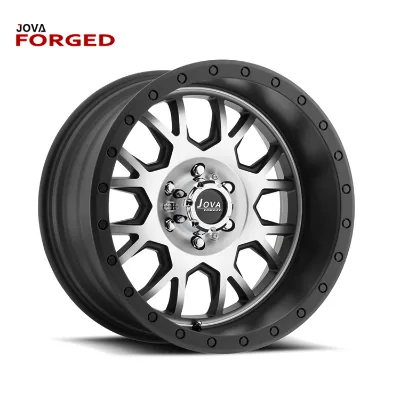


Forged off Road Beadlock Wheels 5X112 Aluminum Alloy Forged Rims 20 22 Inch Wheels
$135.00 - $139.00
MOQ: 50 Pieces


Durable Forged 4X4 Beadlock Good Quality Wheels with 6X5.5 Bolt Pattern
$135.00 - $139.00
MOQ: 50 Pieces


1617181920 Inch Car Inner Beadlock Forged Rim Wheel with Unique Color Options
$187.00 - $192.00
MOQ: 4 Pieces

Beadlock Forged Alloy Offroad Car Wheel - Custom Colors and PCD Options
$300.00 - $350.00
MOQ: 4 Pieces


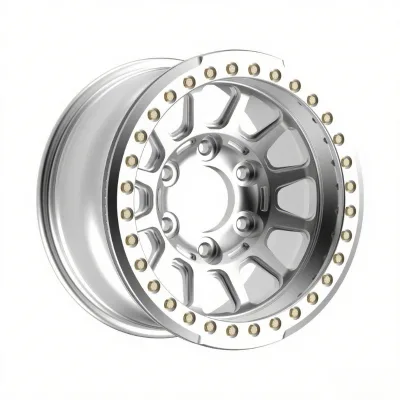


Comprehensive Sourcing Guide
Strategic Sourcing Guide for Deep Dish Forged Beadlock Wheels
The procurement of Deep Dish Forged Beadlock Wheels represents a specialized segment within the automotive aftermarket and heavy-duty equipment sectors. These components are engineered to provide enhanced structural integrity, reduced unsprung weight, and the ability to run lower tire pressures for off-road traction without the risk of tire bead separation. Sourcing these high-performance parts requires a rigorous approach that balances technical specifications with compliance verification. Buyers must navigate a complex landscape of material science, manufacturing tolerances, and regulatory standards to ensure the acquired wheels meet the demands of their specific applications, whether for high-end off-roading, commercial retrofitting, or heavy machinery.
Technical Specifications and Material Engineering
The foundation of a reliable deep dish forged beadlock wheel lies in its material composition and manufacturing process. Based on observed market data, the primary material for high-performance variants is aluminum, specifically processed through forging techniques. This distinguishes them from cast or stamped alternatives, offering superior strength-to-weight ratios. The forging process, often involving pressure casting or specific molding styles, ensures a dense grain structure that can withstand the extreme stresses of beadlock applications. Buyers should verify that the supplier explicitly states "forged alloy rim" or "forged" as the wheel construction method, as this is critical for safety and durability.
Dimensions are equally critical in this category. The wheel hub diameter typically ranges between 21 and 24 inches, catering to larger vehicle platforms. The overall diameter of the finished product is commonly observed in the 18 to 22-inch range, with specific models supporting 20-inch configurations. The width of the rim is a variable specification, often available in 7, 8, or 9 inches, with options for custom widths to suit specific tire profiles. The "deep dish" aesthetic is achieved through specific offset (ET) values, which can range from 0mm to 50mm, with custom options extending up to 100mm. This offset determines how the wheel sits relative to the vehicle's suspension, influencing clearance and track width.
The PCD (Pitch Circle Diameter) is another vital technical parameter. The market supports a wide array of bolt patterns, including 98mm, 100mm, 108mm, 112mm, 114.3mm, 115mm, 120.65mm, 120mm, 127mm, 130mm, 139.7mm, 143.1mm, and 165.1mm, alongside custom configurations. The number of holes is typically 4, 5, 6, or 8, depending on the vehicle make. Buyers must cross-reference these specifications with their vehicle's requirements, as mismatches here render the wheel unusable. Additionally, the finishing process, such as bright polishing or specific surface treatments, affects both the aesthetic appeal and corrosion resistance.
Compliance and Certification Verification
In the automotive wheel industry, certification is not merely a marketing badge but a prerequisite for liability and safety. When sourcing forged beadlock wheels, buyers must demand evidence of recognized international certifications. Observed data indicates that reputable suppliers often hold ISO 9001 for quality management, CE for European conformity, and TUV for German safety standards. Specific industry certifications such as VIA (Vietnam/International), DOT (Department of Transportation), and SFI (SFI Foundation) are also critical indicators of a product's ability to meet rigorous safety benchmarks.
The presence of multiple certifications, such as a combination of ISO, TUV, VIA, and DOT, suggests a robust quality assurance system. However, buyers should treat these as observations of specific product lines rather than universal guarantees for every item in a catalog. It is essential to verify that the certification applies to the specific model number, such as HRZ-010 or JV-T18041203, and the specific material grade being purchased. Furthermore, compliance with regional standards like GB (Guobiao) for Chinese manufacturing or RoHS for hazardous substance restrictions must be confirmed. The absence of these certifications should be a red flag, as forged wheels are subjected to high stress and failure can result in catastrophic vehicle damage.
Cost Drivers and Pricing Dynamics
The pricing of Deep Dish Forged Beadlock Wheels is influenced by several distinct factors, resulting in a wide observed range from $38 to $10,000 USD per unit. This variance is not arbitrary but reflects differences in material quality, manufacturing complexity, and customization levels. The primary cost driver is the forging process itself, which is more energy-intensive and requires more expensive tooling than casting. The use of high-grade aluminum alloys further elevates the base cost.
Customization is a significant multiplier in pricing. While standard models may be available at lower price points, wheels with custom PCD, custom ET, custom widths, or specialized finishes like integrated aluminum plates or original nameplates will command a premium. The single gross weight of the product, observed at approximately 13.000 kg for certain packages, also impacts logistics costs, which are often factored into the final price. Buyers should be aware that the Minimum Order Quantity (MOQ) can range from 1 to 50 pieces, with specific listings noting an MOQ of 20 pieces. This variability allows for flexibility in procurement but may affect the unit price; larger orders typically yield better economies of scale.
Typical Applications and Usage Scenarios
Deep Dish Forged Beadlock Wheels are designed for high-performance applications where standard wheels would fail. The primary application is for retrofitting and upgrading vehicles that require enhanced off-road capabilities. These wheels are suitable for a wide range of car makes, including commercial vehicles and any kind of car that can accommodate the specific bolt pattern and offset. The ability to run lower tire pressures makes them ideal for desert racing, rock crawling, and mud terrain driving, where the beadlock mechanism prevents the tire from unseating from the rim under extreme stress.
Beyond recreational off-roading, these wheels find utility in commercial and industrial sectors. The "Application" field often lists "Machinery Parts," indicating their use in heavy equipment that requires robust wheel assemblies. The forged construction provides the necessary durability for machinery operating in harsh environments. The "Purpose" is explicitly noted as "for retrofit/upgrade," suggesting that these wheels are often purchased to replace factory-standard wheels on existing fleets or personal vehicles to improve performance. The versatility of the product, with options for 4WD systems and various wheel accessories like wheel covers, makes them adaptable to diverse vehicle configurations.
Supplier Evaluation and Operational Metrics
Evaluating a supplier for forged beadlock wheels requires a focus on operational transparency and geographic origin. The observed data points to origins in Ningbo and Guangdong, China, which are established manufacturing hubs for automotive components. Buyers should verify the specific "Place of Origin" for each order, as manufacturing capabilities can vary between regions. The packaging standards, such as "Cartonbox" or "Box" with dimensions like 606035 cm or 60X60X40 cm, are indicators of the supplier's attention to detail in logistics.
The "Single package size" and "Single gross weight" are critical for calculating shipping costs and storage requirements. A supplier that provides precise packaging dimensions and weight data demonstrates a mature logistics operation. Additionally, the availability of customization, including brand names like "JOVA" or fully custom branding, indicates a supplier capable of handling bespoke orders. Buyers should also look for evidence of a warranty, with observed terms offering up to 5 years, which signals confidence in the product's longevity. The "Condition" of the product should always be verified as "New," and the "Craft" should be explicitly identified as "forged alloy rim" to ensure the buyer receives the intended high-strength component.
Quality Control and Long-Term Procurement
Maintaining quality in the supply chain for forged wheels involves strict adherence to tolerances and testing protocols. The "Forging Tolerance" is a critical metric, with observed standards of +/-0.1mm. This level of precision is necessary to ensure that the wheel balances correctly and fits the vehicle hub without vibration or stress concentrations. The "Heat Treatment" process, specifically quenching, is another quality control step that enhances the mechanical properties of the aluminum. Buyers should request documentation confirming that the heat treatment and surface treatment processes, such as polishing, have been performed according to the specified standards.
Long-term procurement considerations include the consistency of the product and the availability of spare parts or replacements. The "Warranty" of 5 years is a significant factor in the total cost of ownership, providing a safety net against manufacturing defects. However, buyers must ensure that the warranty terms are clearly defined and enforceable. The "Standard" of the product, whether it adheres to GB or other international norms, should be consistent across batches. Finally, the "Keyword" association with "forged 20 inch beadlock wheels" suggests a specific market niche; buyers should ensure that the supplier has a proven track record in this specific niche rather than a generalist approach that might compromise on the specialized features of beadlock technology.
| Feature Category | Observed Specification Range | Verification Requirement |
|---|---|---|
| Material | Aluminum, Steel | Confirm "Forged Alloy" for high performance |
| Diameter | 18", 19", 20", 21", 22" | Match vehicle tire size requirements |
| PCD | 98mm to 165.1mm (Custom) | Verify exact bolt pattern for vehicle |
| Offset (ET) | 0mm to 50mm (Custom) | Ensure clearance for suspension components |
| Certification | ISO, TUV, VIA, DOT, CE | Request valid certificates for specific model |
| MOQ | 1 to 50 pieces (20 typical) | Confirm order quantity flexibility |
| Warranty | 5 years | Review terms and conditions for coverage |
| Origin | Ningbo, Guangdong, China | Verify specific factory location |
In conclusion, sourcing Deep Dish Forged Beadlock Wheels demands a meticulous review of technical data, certification validity, and supplier capabilities. By focusing on the specific attributes of forging, material grade, and dimensional precision, buyers can secure components that meet the rigorous demands of high-performance and industrial applications. The wide range of customization options allows for tailored solutions, but this flexibility must be managed through strict quality control and clear contractual agreements to ensure long-term reliability and safety.
FAQs
What certifications do Deep Dish Forged Beadlock Wheels typically have?
These wheels typically hold ISO, TUV, VIA, DOT, and CE certifications. Specific models may also include SFI and RoHS compliance. Buyers must verify that the certificate applies to the specific model number and material grade before purchase.
Which materials are used for forging these wheels?
The primary material is aluminum, specifically processed as forged alloy rims. Some listings also indicate steel construction. The forging process ensures a dense grain structure for superior strength compared to cast alternatives.
How large are the hub diameters for these wheels?
The wheel hub diameter typically ranges between 21 and 24 inches. Finished product diameters are commonly observed in the 18 to 22-inch range. Buyers should match these dimensions to their vehicle tire size requirements.
Can I customize the offset and bolt patterns for these wheels?
Yes, customization is available for offset and bolt patterns. Offset values range from 0mm to 50mm with custom options up to 100mm. PCD options include 98mm to 165.1mm and custom configurations to fit specific vehicles.
What is the minimum order quantity for these wheels?
The minimum order quantity ranges from 1 to 50 pieces, with 20 pieces being a common requirement. Larger orders typically yield better economies of scale. Buyers should confirm the specific MOQ for their chosen model.
Where are these wheels manufactured?
These wheels are manufactured in Ningbo and Guangdong, China. Buyers should verify the specific place of origin for each order as capabilities vary. Packaging dimensions and weights are provided to assist with logistics planning.
What warranty is provided for these forged wheels?
A warranty of up to 5 years is often provided for these wheels. This term signals confidence in the product's longevity and manufacturing quality. Buyers must ensure that warranty terms are clearly defined and enforceable for their specific order.