Source Modern Dressing Table for Bedroom, Hotel, and Living Room
Explore 30 customizable wooden Dressing Table options designed for home bedrooms, hotel suites, and living spaces. Compare models like HJ-DT007 and HJ-DT047, noting dimensions, lighting features, and OEM/ODM service availability from Shouguang manufacturers.
Key considerations
Products List


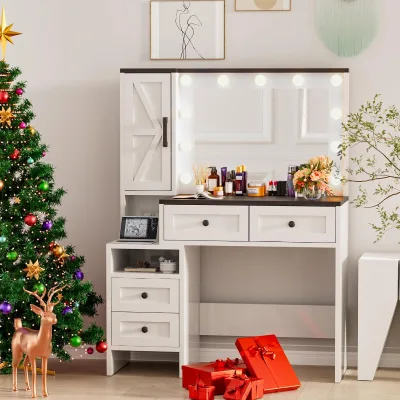
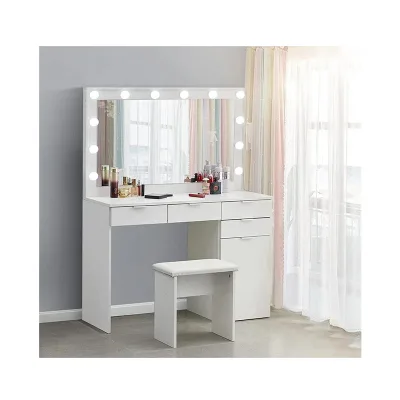

Dressing Table Modern Dresser Wooden Dressing Table with Mirror Makeup Mirror Dressing Table
$500.00 - $1500.00
MOQ: 1 Pieces

Antique Design Wooden White Dressing Table Furniture with Mirror Dresser Table
$500.00 - $3000.00
MOQ: 1 Pieces
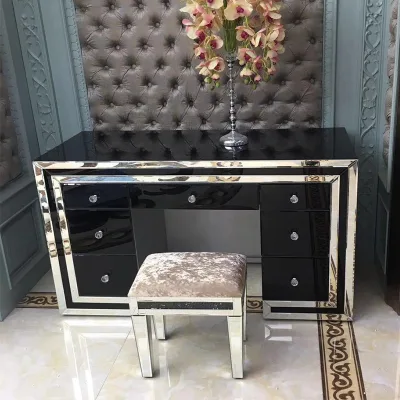
Unique Design Black Mirrored Dressing Table
$62.04 - $103.41
MOQ: 20 Minimum
Dongguan Liaobu Guanding Furniture Craft Products Factory (individual Business)


Hot Sale Low-Priced Dressing Table with Drawers Dressing Table Dresser
$65.00 - $75.00
MOQ: 100 Pieces


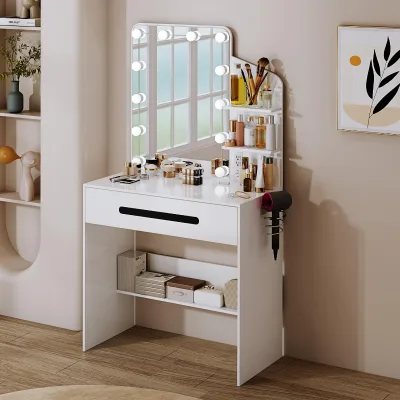
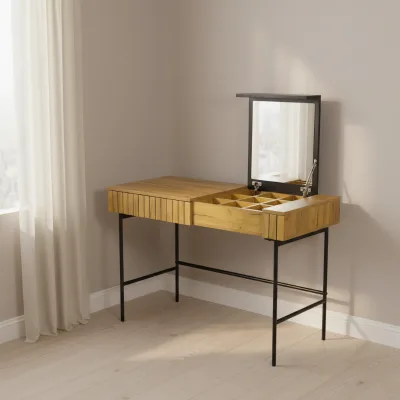


Simple All Solid Wood Dressing Table with Mirror and Chair for Bedroom
$140.00 - $180.00
MOQ: 10 Pieces

Bedroom Small Dresser Table Minimalist Dressing Table Integrated Storage Cabinet
$70.00 - $90.00
MOQ: 50 Pieces

Comprehensive Sourcing Guide
Dressing Table Sourcing Guide
Sourcing dressing tables requires a careful balance between aesthetic alignment and functional durability, particularly when navigating the diverse landscape of modern home furniture. The current market offers a wide array of options, ranging from compact units suitable for small apartments to larger, feature-rich pieces designed for master bedrooms. Buyers must recognize that while the core function remains consistent—providing a dedicated space for grooming and storage—the execution varies significantly based on material choice, structural design, and intended use environment. Understanding these variations is the first step in building a procurement strategy that minimizes risk and maximizes value.
This guide focuses on evidence-based procurement practices for wooden dressing tables, drawing from observed market signals and standard industry knowledge. It addresses the critical decision points involved in selecting suppliers, verifying technical specifications, and ensuring compliance with safety standards. By adhering to a disciplined approach to verification and quality control, buyers can mitigate common pitfalls such as material misrepresentation, dimensional inaccuracies, and logistical failures. The following sections provide a structured framework for evaluating potential suppliers and products, ensuring that every procurement decision is grounded in verifiable data rather than marketing claims.
Product Scope and Observed Listing Signals
The observed product landscape for dressing tables reveals a strong preference for modern styling and panel-based construction, with a significant portion of listings indicating customization capabilities. Buyers will frequently encounter products described as "Modern" in style, often utilizing wooden materials that may or may not be solid wood, as indicated by varying attributes such as "Solid Wood: No" or specific wood types like Pine. This distinction is critical, as it directly impacts the unit's weight, durability, and cost structure. The presence of customization options, including tailored dimensions and colors, suggests that many suppliers operate under ODM/OEM service models, allowing buyers to adapt standard designs to specific brand identities or spatial requirements.
Lighting integration is another notable signal in the current market, with several listings explicitly noting "with Light: Yes." This feature adds value by enhancing functionality for grooming tasks but introduces additional complexity regarding electrical components and safety certifications. Furthermore, the observed production origins are predominantly centered in regions like Shouguang, Weifang, Shandong, China, a hub known for its wood processing industry. Buyers should be aware that while this region offers competitive pricing and extensive supply chains, it also requires rigorous due diligence to ensure consistent quality control across different manufacturers. The variety in packaging, from cartons to flat packages, further indicates that logistics planning must be tailored to each specific supplier's capabilities.
Technical Specifications to Verify
Dimensional accuracy is paramount when sourcing dressing tables, as discrepancies can lead to installation failures or spatial mismatches in the end-user's environment. Observed specifications vary widely, with some units measuring approximately 1500mm in length, while others are defined in imperial units such as 15.74 inches in depth. Buyers must verify that the provided dimensions account for all components, including drawers, mirrors, and any integrated lighting fixtures. It is essential to request detailed technical drawings that specify not only the overall external dimensions but also the internal clearances for storage compartments. This level of detail ensures that the product will fit the intended space and that the storage capacity meets the user's needs.
Weight and material composition are equally critical technical factors that influence both shipping costs and product longevity. Listings indicate weights ranging from 26 kg to 49 kg, which can significantly impact freight charges and handling requirements. Buyers should verify the material grade, distinguishing between solid wood, engineered wood, or composite panels, as these materials have different structural integrity and moisture resistance properties. For instance, pine wood offers a distinct aesthetic and cost advantage but may require additional treatment to prevent warping. Additionally, the inclusion of assembly instructions inside the package is a positive indicator of user experience, but buyers should confirm the clarity and completeness of these instructions to reduce post-sale support burdens.
Compliance and Safety Documentation
Safety compliance is non-negotiable for furniture products, especially those involving electrical components like integrated lighting. Buyers must ensure that all suppliers provide relevant certifications, such as ISO standards, which indicate a commitment to quality management systems. However, certifications alone are not sufficient; buyers should request specific test reports for electrical safety, particularly if the Dressing Table includes built-in lights. These reports should verify that the electrical components meet the safety standards of the destination market, such as UL in the United States or CE in Europe. Without these specific test results, buyers risk exposing themselves and their customers to potential safety hazards and regulatory penalties.
Structural stability and material safety are also key areas of compliance that require verification. Buyers should inquire about formaldehyde emissions and other volatile organic compounds (VOCs) to ensure that the wooden components meet environmental and health standards. This is particularly important for products intended for residential use, where prolonged exposure to indoor air quality issues can have significant health implications. Additionally, buyers should verify that the product design includes safety features such as anti-tip mechanisms, especially for taller units that may pose a tipping hazard. Requesting documentation that confirms adherence to these safety protocols is essential for maintaining brand reputation and ensuring customer safety.
Cost Drivers and Commercial Terms
The cost of dressing tables is influenced by several factors, including material selection, customization level, and packaging efficiency. Observed price ranges in the market vary significantly, reflecting differences in quality, design complexity, and supplier scale. Buyers should analyze the cost breakdown to understand how much of the price is attributed to raw materials versus labor and overhead. Customization options, such as tailored dimensions or specific wood types, often incur additional costs due to the disruption of standard production lines. Understanding these cost drivers allows buyers to negotiate more effectively and identify areas where cost savings can be achieved without compromising quality.
Commercial terms, including minimum order quantities (MOQ) and payment methods, play a crucial role in the overall procurement strategy. Observed MOQs range from 1 to 200 units, with some suppliers requiring a minimum of 100 units for standard orders. Buyers should assess whether their volume requirements align with the supplier's MOQ to avoid excessive inventory costs or production delays. Payment terms, such as T/T (Telegraphic Transfer), are common in international trade, but buyers should negotiate favorable terms to manage cash flow and mitigate risk. Additionally, the packaging method, whether carton, box, or flat package, affects shipping efficiency and potential damage during transit, which should be factored into the total landed cost calculation.
Supplier Qualification and Quality Control
Supplier qualification is the foundation of a successful sourcing relationship, requiring a thorough assessment of the supplier's capabilities and track record. Buyers should verify the supplier's production capacity, quality control processes, and ability to meet customization requests. Given that many suppliers offer ODM/OEM services, it is essential to confirm their experience in handling similar projects and their ability to maintain consistency across batches. Requesting references or case studies from previous clients can provide valuable insights into the supplier's reliability and performance. Additionally, buyers should assess the supplier's responsiveness and communication skills, as these factors are critical for resolving issues quickly and efficiently.
Quality control measures must be implemented at every stage of the production process to ensure that the final product meets the specified standards. Buyers should establish clear quality criteria and inspection protocols, including pre-production samples, in-process inspections, and final random inspections. These inspections should cover all aspects of the product, from material quality and dimensional accuracy to finish and functionality. For products with integrated lighting, electrical testing should be conducted to ensure safety and performance. By implementing a robust quality control system, buyers can minimize the risk of defects and ensure that the products delivered meet their expectations and customer requirements.
Long-Term Procurement Checks
Long-term procurement success depends on continuous monitoring and evaluation of supplier performance and product quality. Buyers should establish key performance indicators (KPIs) to track metrics such as on-time delivery, defect rates, and customer satisfaction. Regular reviews of these metrics allow buyers to identify trends and address issues proactively. Additionally, buyers should maintain open communication with suppliers to discuss potential improvements and innovations. This collaborative approach fosters a strong partnership and ensures that both parties are aligned on quality and service expectations. By continuously evaluating and improving the procurement process, buyers can sustain a competitive advantage and deliver high-quality products to their customers.
Adaptability to market changes and evolving customer preferences is another critical aspect of long-term procurement strategy. Buyers should stay informed about industry trends, such as new materials, design styles, and technological advancements, to ensure that their product offerings remain relevant. This may involve exploring new suppliers or diversifying the product portfolio to meet changing demands. Additionally, buyers should consider the environmental impact of their sourcing decisions and explore sustainable options, such as eco-friendly materials and energy-efficient lighting. By prioritizing sustainability and innovation, buyers can enhance their brand reputation and appeal to environmentally conscious consumers, ensuring long-term growth and success in the market.
FAQs
Can I order a customized modern Dressing Table?
Yes, customization is available for modern wooden dressing tables. You can request specific dimensions, colors, and styles to match your living room or bedroom needs. The product models support custom sizes and finishes to suit your unique requirements.
What is the minimum order quantity for these tables?
The minimum order quantity is 100 units for most models. Some listings indicate an MOQ of 1 unit, but the standard requirement is 100. Buyers should verify the specific MOQ for their selected model before placing an order.
Which certifications do these wooden dressing tables have?
The products carry ISO certification and are listed as new condition items. They are manufactured in China with specific standards like 1500*500*800mm or 15.74D*31.49W*53.34H in. Buyers can expect compliance with standard industry quality benchmarks.
How are these dressing tables packed for shipping?
Packing methods vary by model and include boxes, cartons, or flat packages. Some items are shipped in mail packages while others use standard cartons. The packaging is designed to protect the wooden furniture during transit from Shouguang, Weifang, Shandong.
What payment terms are accepted for these orders?
The accepted payment term is TT, which stands for Telegraphic Transfer. This is the standard method for transactions involving these wooden furniture items. Buyers should confirm the specific payment schedule with the supplier before finalizing the purchase.
Are these dressing tables made of solid wood?
Most listed models are made of wood but are not solid wood. Some specific items are described as solid wood, while others use panel styles. Buyers should check the material specification for each model, such as HJ-DT007 or HJ-DT047, to confirm.
Can I find dressing tables with built-in lighting?
Yes, certain models come with built-in lighting features. These modern dressing tables are designed for use in living rooms and bedrooms. The lighting adds functionality and aesthetic appeal to the wooden furniture pieces available from Chinese manufacturers.