Source Electric Guitar for Bands, Studios, and Schools
Explore 30 Electric Guitar options with varying body materials like plywood, basswood, and mahogany. Buyers can compare specifications including size, pickup types, and customization availability to find the right instrument for their needs.
Key considerations
Products List




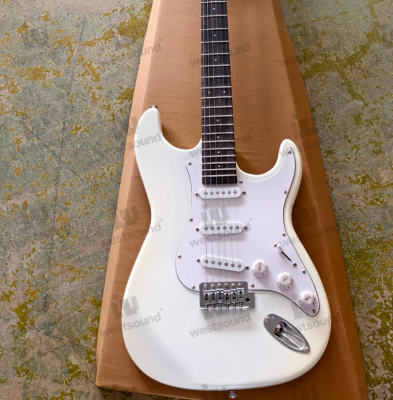
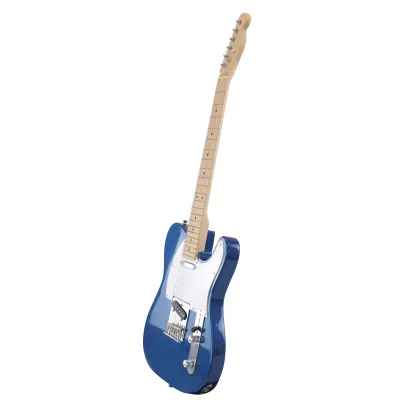


Comprehensive Sourcing Guide
Strategic Sourcing Guide for Electric Guitar Procurement
The global market for electric guitars presents a complex landscape for B2B buyers, ranging from mass-market entry-level instruments to high-end custom builds. For procurement professionals, navigating this sector requires a disciplined approach that distinguishes between observed product attributes and generalized market claims. The available data indicates a diverse inventory originating primarily from manufacturing hubs in China, specifically Guangzhou, with a wide variance in materials, specifications, and customization capabilities. This guide outlines the critical factors for sourcing electric guitars, focusing on technical verification, supply chain logistics, and quality assurance protocols based on observed market realities.
Technical Specifications and Material Verification
The foundation of any Electric Guitar procurement strategy lies in the precise verification of technical specifications. The observed product data reveals a significant divergence in body construction materials, which directly influences the instrument's tonal characteristics and durability. Buyers must explicitly confirm the body material for each SKU, as the market offers options ranging from Plywood and Basswood to Mahogany. While Mahogany is often associated with rich, warm tones and heavy sustain, Basswood provides a balanced frequency response suitable for various genres, and Plywood is frequently utilized for cost-effective structural integrity.
The fingerboard material is another critical specification that affects playability and aesthetics. The data highlights Rosewood and Maple as the primary options. Maple fingerboards typically offer a brighter attack and faster response, whereas Rosewood provides a warmer, smoother feel. Procurement teams must ensure that the specified fingerboard material matches the intended market segment, as these attributes are not interchangeable without impacting the final product's perceived value.
Furthermore, the physical dimensions of the instrument are standardized yet varied. Observed sizes include 36-inch, 38-inch, 40-inch, and 41-inch models, alongside specific metric measurements such as 864mm and 648cm. It is imperative for buyers to cross-reference these dimensions with the target demographic's ergonomic needs. For instance, a 36-inch model may be marketed as a compact or travel option, while 40 to 41-inch instruments represent the standard full-size Electric Guitar profile. The data also notes specific model codes such as GA-H11-EQ, G-B3-4, and SM-4160EQ, which serve as unique identifiers for verifying production batches and ensuring consistency across orders.
Electronic Components and Customization Capabilities
The electronic architecture of an Electric Guitar is a primary differentiator in the B2B market. The observed listings indicate a clear distinction between passive and active systems, with Passive Pickup configurations being a documented standard for several models. Additionally, the availability of EQ (Equalizer) and Pick-up installation as requested suggests a high degree of flexibility in the manufacturing process. Buyers should verify whether the "EQ/Pick up Installed as Request" attribute applies to all units or is a specific feature of custom orders, as this impacts the production workflow and lead time.
Customization is a dominant theme in the current supply data. The market explicitly supports OEM (Original Equipment Manufacturer) and ODM (Original Design Manufacturer) services, with "Custom Design: Yes" and "Customization: Available" appearing as standard attributes. This allows retailers and distributors to brand instruments under their own labels, such as the observed "Smiger Guitar" or "Afanti/OEM" branding. However, buyers must also note instances where products are listed as "Non-Customized," indicating a dichotomy between ready-to-ship stock and bespoke production lines.
The ability to customize extends to the number of strings and string types. While the data specifies "4 String Electric Bass Guitar" and "Steel String" types, the flexibility to alter these configurations is a key value proposition. Procurement teams should establish clear communication channels to define the exact specifications for custom runs, ensuring that the final product aligns with the "Customized" or "Non-Customized" status agreed upon in the contract.
Cost Drivers and Pricing Dynamics
Understanding the cost structure of electric guitars is essential for maintaining healthy profit margins. The observed price range in the market spans from $28 to $279 USD, a variance that reflects differences in material quality, electronic complexity, and brand positioning. The lower end of this spectrum likely corresponds to instruments utilizing Plywood bodies and standard passive pickups, while the higher end may involve Mahogany construction, premium finishes, and advanced electronic setups.
Minimum Order Quantity (MOQ) is another significant cost driver. The data shows an MOQ range from 1 to 120 units. Some suppliers offer a low barrier to entry with an MOQ of 4 pieces, often accompanied by "Quicker Delivery Time," which is beneficial for sample orders or small retailers testing new markets. Conversely, larger orders may require an MOQ of up to 120 units to achieve optimal unit pricing. Buyers must calculate the total landed cost, including the MOQ requirement, shipping, and potential tariffs, to determine the most efficient order volume.
Payment terms also play a role in the financial dynamics of the transaction. The observed data mentions specific methods such as PayPal and Western Union for sample orders. For larger commercial transactions, buyers should negotiate terms that mitigate risk, potentially moving away from immediate payment methods for samples to more secure trade assurance mechanisms as the order volume scales.
Compliance, Certification, and Standards
In the B2B sector, compliance and certification are non-negotiable elements of a robust sourcing strategy. The supply data references specific standards, including "SGS" and dimensional standards like "40, 41inch" and "110x50x15". While the presence of "SGS" suggests that some suppliers may undergo third-party quality or safety inspections, buyers must not assume this certification applies to every product in the catalog without explicit verification.
Buyers should request current certification documents for every batch of instruments, particularly regarding material safety and electrical compliance. The "prod_standard" field often lists dimensions or model numbers rather than safety certifications, so reliance on these fields alone is insufficient. It is the buyer's responsibility to verify that the manufacturing process adheres to international safety standards, such as those regarding lead content in finishes or electrical safety for built-in electronics.
Additionally, the "prod_packing" specifications, such as "Carton Box" or "6PCS/Carton," must be evaluated for compliance with shipping regulations. Proper packaging is critical to prevent damage during transit, especially for fragile instruments with delicate finishes like the "Glossy" finish observed in the data. Buyers should ensure that the packaging meets the requirements of the destination country's import regulations and that the carton strength is sufficient for the weight and fragility of the contents.
Supplier Evaluation and Origin Verification
The geographic origin of the product is a critical factor in supplier evaluation. The data consistently points to "Guangzhou, China" and "China" as the primary production locations. Guangzhou is a well-established hub for musical instrument manufacturing, offering a mature supply chain and a high density of specialized factories. However, buyers must conduct due diligence to verify the specific factory's capabilities and reputation.
Supplier evaluation should extend beyond the listed attributes to include a review of their production capacity, quality control processes, and after-sales support. The observation of "Custom Design: Yes" implies that the supplier has an in-house design team or the capacity to work closely with external designers. Buyers should assess the supplier's ability to manage the complexities of OEM and ODM projects, including the timeline for prototyping and the flexibility to accommodate design changes.
Furthermore, the "prod_origin" field should be cross-referenced with the supplier's business license and export records. While the data indicates a Chinese origin, buyers must ensure that the supplier is authorized to export to their target markets and that they comply with all relevant trade laws. The presence of specific brand names like "Smiger Guitar" and "Afanti/OEM" suggests that some suppliers operate as both manufacturers and brand owners, which can complicate the relationship if the buyer intends to establish their own brand identity.
Quality Control and Long-Term Procurement Considerations
Implementing a rigorous quality control (QC) protocol is essential for mitigating the risks associated with sourcing electric guitars. The observed attributes, such as "Body Structure: Solid" and "Finish: Glossy," provide a baseline for inspection. However, visual inspection alone is insufficient. Buyers should establish a QC checklist that includes structural integrity checks, electronic functionality tests, and finish quality assessments.
Long-term procurement considerations involve building a sustainable relationship with suppliers that can adapt to market fluctuations. The data indicates a willingness to customize, which is a positive sign for long-term partnerships. However, buyers must also consider the scalability of the supplier's operations. If a buyer plans to scale from an MOQ of 4 to 120 units, the supplier must demonstrate the capacity to maintain quality standards while increasing production volume.
Additionally, the "Lead Time" and "Delivery Time" are critical factors in supply chain management. While the data mentions "Quicker Delivery Time" for low MOQs, it does not provide specific lead times for larger orders. Buyers should negotiate clear delivery schedules and include penalties for delays in their contracts. The "prod_packing" standard of "Carton" or "6PCS/Carton" should be standardized to ensure consistency in logistics and inventory management.
Comparative Analysis of Product Attributes
To facilitate decision-making, the following table summarizes the key attributes observed in the market, highlighting the variability that buyers must navigate.
| Attribute Category | Observed Variations | Procurement Verification Point |
|---|---|---|
| Body Material | Plywood, Basswood, Mahogany | Verify material grade and density for tonal consistency. |
| Fingerboard | Rosewood, Maple | Confirm wood species and finish treatment. |
| Size/Standard | 36", 38", 40", 41", 864mm, 648cm | Match dimensions to target demographic and shipping constraints. |
| Electronics | Passive Pickup, EQ/Pick-up Installed | Test functionality and verify wiring diagrams for custom orders. |
| Customization | OEM/ODM Available, Non-Customized Options | Define scope of work and branding requirements clearly. |
| MOQ | 1 to 120 Units | Align order volume with cash flow and storage capacity. |
| Origin | Guangzhou, China | Verify export licenses and compliance with destination laws. |
| Packing | Carton Box, 6PCS/Carton | Ensure packaging meets shipping and damage prevention standards. |
Conclusion
Sourcing electric guitars requires a meticulous approach that balances technical specifications, cost efficiency, and quality assurance. The observed market data reveals a dynamic environment where customization, material diversity, and flexible MOQs are common. Buyers must leverage this information to build a robust procurement strategy that prioritizes verification of all product attributes, from body material to electronic components. By maintaining a disciplined focus on compliance, supplier evaluation, and quality control, buyers can navigate the complexities of the Electric Guitar market and establish successful, long-term supply chain relationships. The key to success lies in treating product attributes as observations to be verified rather than assumptions to be accepted, ensuring that every instrument meets the rigorous standards expected in the B2B sector.
FAQs
What body materials are available for electric guitars?
Electric guitars are available with body materials including Plywood, Basswood, and Mahogany. Buyers must verify the specific material for each SKU as it influences tonal characteristics and durability.
Which fingerboard materials can be sourced for these instruments?
Sourced instruments typically feature Rosewood or Maple fingerboards. Procurement teams should confirm the specific wood species to ensure it matches the intended market segment and playability requirements.
Can I find electric guitars with custom designs and OEM services?
Yes, OEM and ODM services are available with custom design options. Buyers must clarify if the order is customized or non-customized to align with production workflows and branding needs.
What is the minimum order quantity for Electric Guitar samples?
Minimum order quantities range from 1 to 120 units depending on the supplier. Some vendors offer low barriers like 4 pieces with quicker delivery times for sample orders.
How are electric guitars packaged for international shipping?
Products are typically packed in Carton Boxes or 6 pieces per carton. Buyers should ensure packaging meets destination import regulations to prevent damage during transit.
Which electronic configurations are standard for these electric guitars?
Standard configurations include Passive Pickups and EQ systems installed as requested. Buyers should verify wiring diagrams and test functionality for custom electronic setups.