Source fireproof all-packaged electrical distribution box for power plants, industrial sites, and commercial buildings
Find and compare 30 fireproof all-packaged electrical distribution box options from verified Chinese suppliers. Buyers can evaluate models like SXJK-436323 and CFXY12 based on voltage, IP rating, and customization needs for power plants and industrial applications.
Key considerations
Products List
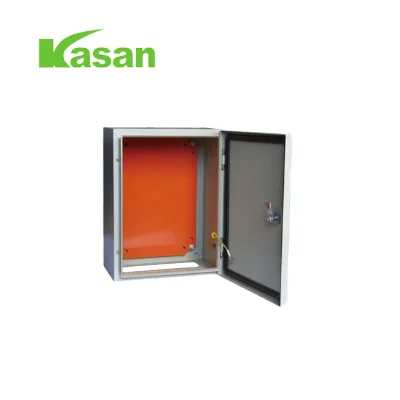

Premium Waterproof Distribution Cabinet with Buckle Type Electrical Box
$200.00 - $500.00
MOQ: 200 Pieces

Tailored Waterproof Distribution Cabinet with Buckle Type Electrical Box
$200.00 - $500.00
MOQ: 200 Pieces

Heavy-Duty Waterproof Electrical Box with Buckle Type Distribution Cabinet
$200.00 - $500.00
MOQ: 200 Pieces

Custom Waterproof Distribution Box with Buckle Type Electrical Cabinet
$200.00 - $500.00
MOQ: 200 Pieces

Buckle Type Waterproof Electrical Box for Secure Power Distribution Cabinet
$200.00 - $500.00
MOQ: 200 Pieces

Buckle Type Waterproof Electrical Box for Reliable Power Distribution Cabinet
$200.00 - $500.00
MOQ: 200 Pieces


Heavy-Duty Outdoor Waterproof Electrical Distribution Box for All Weather
$500.00 - $1000.00
MOQ: 1 Pieces

Durable Outdoor Weatherproof Electrical Distribution Box for All Environments
$10.00 - $50.00
MOQ: 50 Pieces


Waterproof/Fireproof/Dustproof Stainless Steel Electrical Boxes and Enclosures
$23.00 - $26.00
MOQ: 300 Pieces


Comprehensive Sourcing Guide
Strategic Sourcing Guide for Fireproof All-Packaged Electrical Distribution Boxes
Procuring fireproof all-packaged electrical distribution boxes requires a disciplined approach that balances technical performance, regulatory compliance, and supply chain reliability. The term "all-packaged type" indicates a specific manufacturing configuration where the unit is delivered as a complete, pre-assembled system, minimizing on-site labor and reducing the risk of installation errors. For buyers in the industrial and commercial sectors, understanding the intersection of fire resistance, structural integrity, and certification standards is critical. This guide synthesizes available product attributes and industry knowledge to provide a robust framework for evaluating potential suppliers and specifications.
Technical Specifications and Structural Integrity
The foundation of a reliable distribution box lies in its physical construction and material composition. When sourcing fireproof units, the primary focus must be on the shell material and the structural design. Available market data indicates that shell materials for these units often include stainless steel, steel plate, galvanized steel, and metal sheets. Stainless steel is frequently selected for its superior corrosion resistance and inherent fire stability, while galvanized steel offers a cost-effective alternative with adequate protection for many environments. The surface treatment process is equally vital; epoxy polyester coating and thermosetting powder coating are standard finishes that enhance durability and provide an additional layer of protection against environmental stressors.
The structural configuration of the box dictates its application suitability. The "all-packaged type" designation suggests a fully enclosed design, often contrasting with "partly-welded types" where components are assembled on-site. For fireproof applications, the structure must maintain integrity under thermal stress. Buyers should verify that the unit features a protection structure designed to contain internal faults and prevent external ignition sources from entering the enclosure. The IP rating is a crucial metric for environmental protection; observed data points to IP ratings associated with ABS materials and waterproof/dustproof functions. While specific numerical IP ratings (e.g., IP65) vary by model, the functional requirement remains consistent: the box must be waterproof and dustproof to ensure operational continuity in harsh conditions.
Dimensions and sizing are highly variable depending on the intended load and internal component layout. Observed specifications include a wide range of dimensions, such as 430630230mm, 530730250mm, and 430530200mm for distribution metering boxes, alongside smaller junction box sizes like 20012075mm. The "all-packaged" nature implies that the internal layout is pre-configured. Buyers must ensure that the selected model, such as those designated with codes like SXJK-436323 or CF1/CF2 series, aligns with the specific electrical load requirements. The operation voltage is another key specification; while some units are rated for low voltage, others in the distribution category may support high voltage applications. It is essential to match the voltage rating of the box to the system it serves to prevent insulation failure.
Compliance and Certification Verification
In the electrical distribution sector, certification is not merely a formality but a prerequisite for safety and legal compliance. The presence of specific certifications on product listings provides a baseline for quality assurance. Data indicates that ISO9001 is a recurring certification standard, often appearing in conjunction with other marks. For instance, some units carry both CCC (China Compulsory Certification) and ISO9001, while others may list VDE (German Institute for Standardization) alongside ISO9001. These certifications validate that the manufacturer adheres to specific quality management systems and safety standards.
When evaluating fireproof distribution boxes, buyers must look for evidence of fire resistance testing. While the provided data does not explicitly list fire rating numbers (such as UL94 or specific fire duration hours), the "fireproof" keyword implies that the materials and design have undergone rigorous thermal testing. The "all-packaged type" classification often correlates with specific welding or assembly forms, such as "All-packaged Type" versus "Partly-welded Type." Buyers should verify that the certification documents explicitly cover the fire-resistant properties of the final assembled unit, not just the raw materials.
The standardization of the product is another critical compliance factor. Observed standards include specific dimensional formats (e.g., 430630230mm) and material standards like copper for internal components. Additionally, broader environmental and quality standards such as ISO14001 may be present, indicating the manufacturer's commitment to environmental management. Buyers should request a certificate of conformity that references the specific product model and confirms that the fireproof attributes meet the relevant national or international codes for the destination market.
Cost Drivers and Pricing Dynamics
The pricing of electrical distribution boxes is influenced by a complex interplay of material costs, manufacturing complexity, and certification overheads. The observed price range in the market spans from $0.50 to $9,744, reflecting the vast diversity in product scale and capability. Small, non-fireproof junction boxes may fall at the lower end of this spectrum, while large, high-voltage, fire-rated distribution systems with custom configurations will command premium prices.
Material selection is a primary cost driver. Units constructed from stainless steel or those featuring specialized fire-retardant coatings will inherently cost more than those made from standard steel plates or ABS plastic. The "all-packaged" nature of the product also adds value, as it includes pre-assembly labor, internal wiring, and testing, which reduces the buyer's installation costs but increases the unit price. Customization is another significant factor; the availability of customization options allows buyers to tailor the box to specific needs, but this flexibility often incurs additional charges compared to standard off-the-shelf models.
Minimum Order Quantity (MOQ) requirements also impact the effective cost per unit. The observed MOQ range extends from 1 to 10,000 units. For buyers with small-scale projects, suppliers with low MOQs are essential, though they may charge a higher unit price to cover setup costs. Conversely, large-scale procurement can leverage economies of scale to reduce the per-unit cost, provided the buyer can meet the higher MOQ thresholds. Buyers should analyze the total cost of ownership, including shipping, installation, and maintenance, rather than focusing solely on the sticker price.
Typical Applications and Operational Environments
The versatility of fireproof all-packaged electrical distribution boxes allows them to serve a wide array of industrial and commercial applications. The "Application Range" data highlights power plants as a primary use case, where reliability and safety are paramount. In power generation facilities, distribution boxes must withstand high ambient temperatures, vibration, and potential electrical surges. The fireproof attribute is particularly critical here to prevent the spread of fire in the event of an internal electrical fault.
Beyond power plants, these units are suitable for various industrial settings, including manufacturing facilities, data centers, and commercial buildings. The "Waterproof Junction Box" and "Distribution Metering Box" classifications suggest applications in environments exposed to moisture, dust, or corrosive elements. The IP rating and dustproof functions ensure that the internal components remain protected from environmental contaminants. For example, in outdoor installations or humid environments, the combination of waterproofing and fire resistance provides a dual layer of safety.
The "Fixed Board" structure mentioned in the data indicates that these units are designed for permanent installation rather than temporary or mobile setups. This is typical for main distribution panels in buildings where the electrical infrastructure is a long-term asset. The customization options allow for adaptation to specific site requirements, such as unique mounting configurations or specialized internal layouts for different types of circuit breakers and meters.
Supplier Evaluation and Origin Considerations
Evaluating suppliers requires a careful review of their geographic origin and manufacturing capabilities. The data indicates that products originate from various locations in China, including Zhejiang and Shanghai. These regions are known for their robust manufacturing ecosystems and specialized electrical component industries. However, the specific origin should not be the sole determinant of quality; rather, it serves as a starting point for verifying the supplier's track record.
Buyers should prioritize suppliers who demonstrate transparency in their manufacturing processes. The distinction between "All-packaged Type" and "Partly-welded Type" suggests different levels of factory completion. Suppliers offering "All-packaged" units typically have more advanced assembly lines and quality control measures in place. When evaluating a supplier, request detailed information about their production capacity, quality control protocols, and the specific certifications they hold for the models being offered.
The presence of certifications like CCC, ISO9001, and VDE is a strong indicator of a supplier's commitment to quality. However, buyers must verify that these certifications are current and applicable to the specific product model. It is also advisable to check for any history of product recalls or safety incidents associated with the supplier. A reputable supplier will provide comprehensive documentation, including test reports and material safety data sheets, to support their claims.
Quality Control and Long-Term Procurement
Ensuring the long-term reliability of fireproof distribution boxes requires a proactive approach to quality control. The warranty period, often cited as "One Year" in the market, is a baseline indicator of the manufacturer's confidence in their product. However, buyers should look beyond the warranty and assess the durability of the materials and the robustness of the design. The "Epoxy Polyester Coating" and "Thermosetting Powder Coating" processes are key indicators of long-term corrosion resistance, which is essential for maintaining the fireproof integrity of the box over time.
During the procurement process, buyers should implement a rigorous inspection regime. This includes verifying the dimensions, material thickness, and coating quality upon delivery. For large orders, conducting a pre-shipment inspection or engaging a third-party quality assurance firm can mitigate the risk of receiving non-compliant units. The "All-packaged" nature of the product means that any defects in the internal assembly will be difficult to rectify on-site, making pre-delivery verification crucial.
Long-term procurement considerations also involve the availability of spare parts and technical support. As the electrical infrastructure ages, the need for maintenance or replacement of components may arise. Suppliers who offer a comprehensive support network and maintain a stock of compatible parts will be more valuable partners. Additionally, buyers should consider the scalability of their procurement strategy. As operational needs evolve, the ability to source additional units with consistent specifications and quality is essential for maintaining system integrity.
Conclusion
Sourcing fireproof all-packaged electrical distribution boxes is a multifaceted process that demands attention to technical specifications, regulatory compliance, and supplier reliability. By focusing on the core attributes of material quality, certification validity, and structural design, buyers can secure products that meet the rigorous demands of modern electrical infrastructure. The wide range of available models, from small junction boxes to large distribution metering units, offers flexibility for various applications, but the key to success lies in rigorous due diligence. Buyers must verify that the "all-packaged" units they select are not only compliant with current standards but also capable of withstanding the specific environmental and operational challenges of their intended use. Through careful evaluation and strategic partnership with qualified suppliers, organizations can ensure the safety, efficiency, and longevity of their electrical distribution systems.
FAQs
What certifications do fireproof all-packaged electrical distribution boxes typically hold?
These boxes commonly hold ISO9001 certification, often paired with CCC or VDE marks. Some units are specified as All-packaged Type while others are Partly-welded Type, ensuring compliance with quality management systems for industrial safety.
Which shell materials are used for fireproof all-packaged electrical distribution boxes?
Manufacturers typically use stainless steel, steel plate, galvanized steel, or metal sheets for the shell. These materials are often finished with epoxy polyester coating or thermosetting powder coating to enhance durability and fire resistance.
How are dimensions specified for fireproof all-packaged electrical distribution boxes?
Dimensions vary by model, with common sizes including 430*630*230mm and 530*730*250mm for distribution metering boxes. Smaller waterproof junction boxes may measure 200*120*75mm, depending on the specific application requirements.
Can fireproof all-packaged electrical distribution boxes be customized?
Yes, customization is available for these units to meet specific project needs. Buyers can request tailored specifications while maintaining the All-packaged Type structure, ensuring the final product fits unique operational environments.
What is the warranty period for fireproof all-packaged electrical distribution boxes?
The standard warranty period for these boxes is one year. This coverage applies to the structural integrity and material quality, ensuring reliability for applications in power plants and other industrial settings.
Which IP ratings apply to fireproof all-packaged electrical distribution boxes?
These boxes feature IP ratings associated with ABS materials and provide waterproof and dustproof functions. The structure is designed to protect internal components from environmental stressors while maintaining fire resistance capabilities.
Where are fireproof all-packaged electrical distribution boxes manufactured?
These products originate from manufacturing hubs in China, specifically Zhejiang and Shanghai. Suppliers in these regions produce units ranging from low voltage to high voltage applications with various certification standards.