Source Fireproof Soundproof Fixed Awning Window for Villas, Apartments, and Offices
Explore 30 listings of fireproof soundproof fixed awning windows designed for residential and commercial applications. Buyers can compare features like heat insulation, insect-proofing, and aluminum alloy frames to find suitable options for villas, apartments, and office buildings.
Key considerations
Products List

Aluminum Windproof Soundproof Window and Door Aluminum Fixed Window
$120.00 - $180.00
MOQ: 1 Square Meters

Waterproof Soundproof Wind Resistance Cheap Aluminum Casement Window Awning Window
$75.00 - $130.00
MOQ: 2 Square Meters

Soundproof Hurricane Impact Windows New Design and Double Tempered Glass Aluminium Awning Window
$30.00 - $150.00
MOQ: 10 Square Meters


Efficient Aluminium Awning Sliding Windows with Exceptional Soundproofing Quality
$99.00 - $129.00
MOQ: 2 Square Meters


Elegant Aluminium Awning Window with Thermal Break and Fireproof Properties
$169.00 - $199.00
MOQ: 20 Pieces


Premium Thermal Break Aluminium Awning Window with Fireproof Features
$169.00 - $199.00
MOQ: 20 Pieces

Fireproof Aluminum Soundproof Casement Window with Powder Coated Finish
$100.00 - $120.00
MOQ: 2 Square Meters


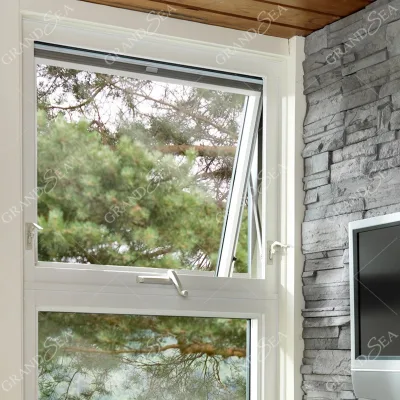


Thermal Break Soundproof Aluminium Window with Australian Standard Awning Windows
$110.00 - $130.00
MOQ: 1 Square Meters


Quiet Awning Windows for Bedrooms with Soundproof Glass & Foam Seals
$22.00 - $55.00
MOQ: 2 Square Meters

Weatherproof Awning Windows for Coastal Areas with Impact Resistant Glass & Secure Locks
$20.00 - $55.00
MOQ: 2 Square Meters


Customized Open Outward Awning Windows UPVC Double Glazed Glass Soundproof Casement Window
$20.00 - $200.00
MOQ: 1 Square Meters


Comprehensive Sourcing Guide
Strategic Sourcing Guide for Fireproof Soundproof Fixed Awning Windows
Understanding the Technical Architecture of Fixed and Awning Systems
When sourcing windows described as "fireproof soundproof fixed awning," buyers must first navigate a critical technical distinction within the product category. The term "fixed" implies a window that does not open, serving primarily as a barrier for insulation, security, and aesthetics. Conversely, an "awning" window is defined by a specific opening mechanism where the sash is hinged at the top and opens outward from the bottom. In the current market data, these two distinct operational styles are often found within the same supplier catalog, indicating that a single vendor may offer both configurations.
The core structural component for these units is typically an aluminum alloy frame. Market observations confirm that frame materials are predominantly aluminum alloy, chosen for their durability and resistance to corrosion. The profile thickness is a vital specification; data indicates that high-performance models often feature an aluminum thickness of 2.0 mm, while other premium variants may reach 2.2 mm. This thickness directly influences the window's ability to withstand wind pressure and maintain structural integrity during fire events. The surface finishing is equally critical, with common treatments including powder coating, PVDF (Polyvinylidene Fluoride), anodizing, and electrophoresis. These processes not only enhance the aesthetic appeal but also provide a robust defense against environmental degradation.
For the glazing component, the standard specification for high-performance units involves double tempered glass. A typical configuration observed in the market is a 5+27A+5 mm assembly, where the "A" denotes an air gap or inert gas fill between two 5 mm glass panes. This configuration is essential for achieving the "soundproof" and "heat insulation" functions. The glass itself must be tempered to meet safety standards, ensuring that if breakage occurs, it shatters into small, granular pieces rather than sharp shards. While the term "fireproof" is often used in marketing, the actual fire rating depends on the specific glass type and the integrity of the frame seal, which buyers must verify against local building codes rather than relying solely on general product descriptions.
Compliance Verification and Certification Standards
Navigating the regulatory landscape is the most critical step in sourcing fire-rated and soundproof windows. Buyers must distinguish between general quality certifications and specific fire-resistance ratings. The supplied data highlights several recognized standards, including NFRC (National Fenestration Rating Council), AS2047 (Australian Standard for external windows and doors), and CE approval. These certifications indicate that the product has undergone testing for thermal performance, air infiltration, and structural strength.
However, the specific claim of "fireproof" requires a deeper level of verification. While the provided context mentions standards like EN 13501-2 and EN 16034, these are noted as low-confidence background information and should not be assumed to apply to every listed product without explicit confirmation. A product labeled with an "A" security rating offers a baseline for resistance against forced entry, but fire resistance is a separate performance metric. Buyers should explicitly request the fire-resistance rating certificate (e.g., EI30, EI60) from the supplier, which details the duration the window can withstand fire exposure while maintaining its integrity and insulation properties.
The certification process often involves third-party testing. The data mentions certificates such as "Nfrc As2047 Certificate," which validates the product's compliance with Australian standards for external windows. For international buyers, the CE mark indicates conformity with European health, safety, and environmental protection standards. It is imperative to verify that the specific model number, such as "Casement Window" or "KDS-W-A-A-700," is covered under the valid certificate. A generic certificate for a supplier's brand does not automatically cover all their product variations. Buyers must ensure the test report corresponds to the exact glass thickness, frame profile, and hardware configuration they intend to purchase.
Cost Drivers and Pricing Structure Analysis
The price range for aluminum windows in the current market spans from $10 to $2,450 USD per unit or batch, reflecting a vast disparity in product complexity, size, and customization levels. The primary cost drivers for fireproof and soundproof windows include the thickness of the aluminum profile, the type of glass assembly, and the level of surface treatment. A window with a 2.2 mm profile and double tempered glass with a 27A air gap will command a significantly higher price than a standard 2.0 mm unit with single glazing.
Customization is a major factor in pricing. The data indicates that size, color, and surface finishing are all customizable. Custom sizes require non-standard extrusion runs or cutting processes, which increase production costs. Similarly, specialized surface treatments like PVDF coating are more expensive than standard powder coating due to the material cost and the complexity of the application process. The "Monthly Production Capability" of 4000 tons suggests that large-scale suppliers can offer economies of scale, but custom orders may still incur premium charges.
The Minimum Order Quantity (MOQ) also influences the effective unit cost. The observed MOQ range is 1 to 100 units. For a single-unit procurement, the price per square meter will be at the higher end of the spectrum. Conversely, bulk orders approaching the 100-unit threshold can significantly reduce the per-unit cost. Buyers should also consider the packaging costs, which vary from simple box cases to complex wooden crate packing with EPE foam and air bubble protection. While this adds to the initial cost, it is essential for preventing damage during international shipping, particularly for fragile glass components.
Typical Applications and Functional Requirements
The functional requirements of fireproof soundproof fixed awning windows make them suitable for a diverse range of applications, from residential villas to high-rise apartment buildings. The data explicitly lists applications in villas, apartments, and residential buildings. The "Modern" and "Classic" style options allow these windows to blend seamlessly with various architectural designs. The "Invisible" function mentioned in the data suggests a design aesthetic where the frame is minimized, providing a clean look that maximizes the view.
In terms of performance, these windows are designed to offer multiple layers of protection. The "Heat Insulation" and "Soundproof" attributes are crucial for urban environments where noise pollution and temperature fluctuations are common. The "Anti-Theft" and "Security Rating: A" features provide peace of mind for homeowners in areas with higher crime rates. The "Airproof" and "Dust-proof" capabilities ensure that the interior environment remains clean and energy-efficient, reducing the load on HVAC systems.
The "Opening Pattern" varies, with options including horizontal, swing, and sliding mechanisms. While the core keyword includes "fixed" and "awning," the market data shows that suppliers often provide a full suite of opening patterns. For a building requiring fire-rated windows, the opening mechanism must be carefully selected to ensure it does not compromise the fire barrier. In some cases, fixed windows are preferred for fire zones because they eliminate the potential failure points associated with moving parts. However, awning windows can also be fire-rated if the hardware and frame are specifically tested and certified for fire resistance.
Supplier Evaluation and Manufacturing Capabilities
Evaluating a supplier requires a thorough assessment of their manufacturing location, production capacity, and quality control processes. The data indicates that the factory location is primarily in Foshan, China, a hub known for its aluminum window and door industry. Other locations mentioned include Guangdong Province and general references to China. Buyers should verify the specific address and visit the facility if possible to assess the production lines and quality control infrastructure.
The "Service After Production" offering, such as installation guidance, is a critical differentiator. Installing fire-rated windows requires precision to maintain the integrity of the fire barrier. Suppliers that provide detailed installation manuals or on-site technical support add significant value to the procurement process. The "Brand" names observed, such as Prima and Tengyu, indicate established market players, but buyers should not rely solely on brand reputation. Instead, they should request references from previous projects of similar scale and complexity.
Production capability is another key metric. A monthly production capacity of 4000 tons suggests a large-scale operation capable of handling significant orders. However, buyers must ensure that this capacity is not solely dedicated to standard products and that the supplier can accommodate custom orders without compromising lead times. The "Lead Time" is not explicitly provided in the data, so buyers must negotiate this term carefully, especially for custom-sized or specialized glass units.
Quality Control and Long-Term Procurement Considerations
Quality control is paramount when sourcing windows that must meet fire and soundproofing standards. The data mentions various surface treatments and material specifications, but the consistency of these attributes across a large order must be verified. Buyers should request a Quality Assurance Plan (QAP) from the supplier, which outlines the inspection points during the manufacturing process. This should include checks on aluminum thickness, glass tempering, and the integrity of the seals.
The "prod_packing" details, such as "EPE Foam Packing Inside, Wood Crate Packing Outsid," highlight the importance of protective packaging. Proper packaging prevents scratches on the aluminum frame and cracks in the glass during transit. For long-term procurement, buyers should consider the durability of the materials. Aluminum alloy frames with powder coating or PVDF finishes are designed to last for decades, but the hardware (hinges, locks) is often the first point of failure. Buyers should inquire about the warranty period for both the frame and the hardware.
Long-term considerations also include the availability of replacement parts. If a window is damaged or requires maintenance years after installation, the ability to source compatible parts is essential. Suppliers that offer "Customization" services are often more flexible in providing replacement components, but this should be confirmed in the contract. Additionally, buyers should consider the environmental impact of the materials. Aluminum is highly recyclable, and many suppliers are adopting sustainable practices in their manufacturing processes.
Final Procurement Strategy and Risk Mitigation
To conclude, sourcing fireproof soundproof fixed awning windows requires a balanced approach between technical verification, supplier evaluation, and cost management. Buyers should prioritize suppliers who can provide clear, verifiable documentation for fire ratings and sound insulation performance. The use of standard tables to compare specifications, such as frame thickness, glass type, and certification status, can streamline the decision-making process.
| Feature | Standard Observation | Verification Requirement |
|---|---|---|
| Frame Material | Aluminum Alloy | Verify alloy grade and thickness (2.0mm vs 2.2mm) |
| Glass Type | Double Tempered (5+27A+5) | Request fire-resistance rating certificate |
| Surface Finish | Powder Coated / PVDF | Check color fastness and corrosion resistance data |
| Certifications | NFRC, AS2047, CE | Confirm certificate validity for specific model |
| Packaging | Wooden Crate + EPE Foam | Inspect packaging integrity upon delivery |
By adhering to these guidelines and maintaining a rigorous verification process, buyers can mitigate the risks associated with procurement and ensure that the installed windows meet the required safety and performance standards. The market offers a wide range of options, but the key to success lies in detailed due diligence and clear communication with the supplier regarding specific project requirements.
FAQs
What certifications do these windows meet?
These windows meet NFRC, AS2047, and CE approval standards. Buyers must verify that the specific model number, such as Casement Window, is covered under the valid certificate rather than relying on a generic brand certificate.
How thick is the aluminum frame profile?
The aluminum profile thickness is typically 2.0 mm or 2.2 mm. This thickness directly influences the window's ability to withstand wind pressure and maintain structural integrity during fire events.
Can the window size be customized?
Yes, the size is fully customized to fit specific requirements. Custom sizes require non-standard extrusion runs or cutting processes, which may increase production costs and affect the lead time.
Where are the factories located?
The factories are located in Foshan, China, and Guangdong Province. Buyers should verify the specific address and visit the facility to assess the production lines and quality control infrastructure.
What glass configuration is standard?
The standard configuration is double tempered glass, often 5+27A+5 mm. This assembly is essential for achieving the soundproof and heat insulation functions required for high-performance units.
What is the minimum order quantity?
The minimum order quantity ranges from 1 to 100 units. For single-unit procurement, the price per square meter will be higher, while bulk orders can significantly reduce the per-unit cost.
How are the windows packed for shipping?
Packaging includes EPE foam inside and wooden crates outside. This protective packaging prevents scratches on the aluminum frame and cracks in the glass during international transit.