Source Golf Ball for Racing, Entertainment, and Gift Purposes
Compare 30 Golf Ball listings from China with varying materials like urethane and surlyn. Buyers can evaluate customization options, MOQs, and specifications for racing, entertainment, and gift applications.
Key considerations
Products List


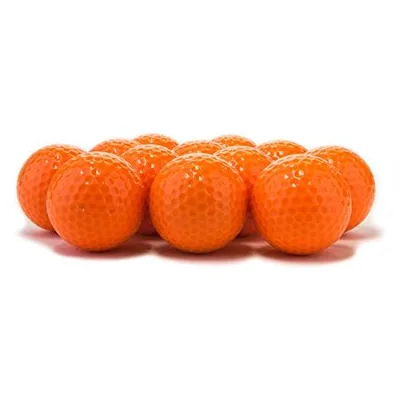


Professional Soft Golf Ball Colorful Golf Ball Custom Golf Ball Packaging
$3.58 - $3.80
MOQ: 100 Pieces


Manufacturer Colorful Plated Golf Ball Present Good Quality Gift Golf Ball
$0.62 - $0.67
MOQ: 1200 Pieces

Pink Plated Color Golf Ball Good Quality for Promotional Gift Golf Ball
$0.62 - $0.67
MOQ: 1200 Pieces


Comprehensive Sourcing Guide
Golf Ball Sourcing Guide
Sourcing golf balls requires a nuanced understanding of the distinct performance tiers available in the global market, ranging from high-end competition-grade spheres to durable practice aids. The supply chain is characterized by a wide variance in material composition, layer construction, and intended usage, necessitating that buyers clearly define their target segment before engaging with suppliers. Whether the objective is to procure premium tour-level balls for professional tournaments or cost-effective practice balls for driving ranges and retail gift sets, the procurement strategy must align with the specific technical and commercial realities of the product category.
Buyers must navigate a landscape where customization plays a pivotal role in value creation, particularly for corporate gifting and promotional campaigns. The ability to imprint custom logos and select specific packaging configurations allows brands to leverage golf balls as high-visibility marketing tools. However, this customization introduces complexity into the supply chain, requiring careful management of minimum order quantities (MOQs) and sample approval processes. Understanding these dynamics is essential for establishing a procurement framework that balances brand visibility with operational efficiency and cost control.
Product Scope and Observed Listing Signals
The current market offers a diverse array of Golf Ball types, primarily categorized by their construction and material composition. High-performance options often feature urethane covers, which provide superior spin control and feel, catering to serious players and professional racing contexts. In contrast, more durable alternatives utilize Surlyn or hybrid materials like Surlyn combined with foam, designed for longevity and consistent performance in entertainment or practice settings. Some listings also indicate rubber and foam constructions, specifically tailored for children or practice drills, highlighting the broad spectrum of applications within this category.
Visual and physical attributes observed in listings provide critical signals for buyer verification. Common specifications include a standard diameter ranging from approximately 42.6mm to 42.8mm for competition balls, while practice variants may exhibit larger dimensions, such as around 60mm. Weight is another key differentiator, with standard balls typically weighing between 45.6g and 45.9g, whereas practice balls can be significantly lighter, around 8.7g. Color options are predominantly white, though custom colors are available, and dimple counts, such as 332, are specified to influence aerodynamic performance. These physical parameters serve as baseline indicators for quality and intended use.
Technical Specifications to Verify
Verifying material composition is the first critical step in technical validation, as it directly impacts performance and durability. Buyers should confirm whether the balls feature urethane covers for premium feel or Surlyn covers for cut resistance, and whether multi-layer constructions, such as three-layer designs, are employed for enhanced distance and control. For practice balls, the presence of foam cores or rubber blends must be verified to ensure they meet elasticity requirements, often cited as above 80%, which is crucial for realistic flight simulation during training sessions.
Dimensional and structural specifications must be cross-referenced with international standards to ensure compliance and consistency. The diameter should be verified to fall within the acceptable range of 42.6mm to 42.8mm for standard play, while weight must be confirmed to align with the 45.6g to 45.9g range for regulation balls. Additionally, hardness ratings, observed in the 80-90 range for certain models, should be checked to ensure they match the desired feel and compression characteristics. Dimple patterns, such as the 332-dimple configuration, should also be inspected to verify aerodynamic efficiency and flight stability.
Compliance and Safety Documentation
Safety documentation is paramount, particularly for products intended for children or recreational use. Buyers must ensure that practice balls, especially those made from rubber and foam, comply with relevant toy safety standards to prevent choking hazards or exposure to harmful substances. While specific certification statuses are not universally listed, suppliers should be required to provide test reports or declarations of conformity that verify the absence of toxic materials and the structural integrity of the balls under normal use conditions.
Environmental and material safety standards also apply to the manufacturing processes and packaging materials used. Buyers should inquire about the sustainability of the packaging, which often includes cartons and custom boxes, and verify that inks used for custom logos are non-toxic and compliant with regional regulations. Ensuring that all materials, from the core to the cover and packaging, meet safety requirements is essential for mitigating liability and maintaining brand reputation, especially when selling to retail consumers or gifting to corporate clients.
Cost Drivers and Commercial Terms
Minimum order quantities (MOQs) are a significant driver of initial procurement costs, with observed ranges spanning from 100 to 10,000 pieces depending on the product type and customization level. Standard competition balls often carry higher MOQs, such as 3,000 pieces, due to the complexity of multi-layer construction and quality control requirements. In contrast, practice balls or simpler designs may have lower MOQs, starting at 100 pieces, allowing for more flexible entry into the market or smaller promotional campaigns.
Packaging and customization options also influence the total cost structure. Custom packaging, available in various configurations such as 1, 2, 3, 4, 6, 12, 16, 18, 24, or 27 pieces per box, adds to the unit cost but enhances brand value. Buyers should evaluate the trade-off between higher per-unit costs for customized packaging and the potential for increased sales or brand loyalty. Additionally, sample times, typically ranging from 5 to 7 working days, should be factored into the procurement timeline to ensure that product approvals do not delay market launch or promotional events.
Supplier Qualification and Quality Control
Supplier qualification should begin with a thorough review of manufacturing capabilities and quality assurance processes. Buyers should verify that suppliers have established protocols for maintaining consistency in material composition, weight, and diameter across production batches. Given the observed origins in regions like Fujian, Anhui, and Xia Men, China, buyers should assess the supplier's experience in exporting to their target markets and their ability to navigate international trade regulations and logistics.
Quality control measures must be explicitly defined and agreed upon before production begins. This includes establishing clear acceptance criteria for visual defects, such as scratches or discoloration, and performance metrics, such as elasticity and flight distance. Buyers should request sample approvals and, if necessary, conduct third-party inspections to verify that the final products meet the specified standards. Regular communication with suppliers regarding production progress and any potential deviations is essential to ensure timely delivery and maintain quality standards.
Long-Term Procurement Checks
Establishing long-term relationships with suppliers requires ongoing monitoring of product performance and market feedback. Buyers should implement a system for collecting and analyzing customer feedback on ball durability, feel, and performance to identify areas for improvement or potential product line expansions. This feedback loop is crucial for adapting to changing consumer preferences and maintaining a competitive edge in the Golf Ball market.
Continuous evaluation of supplier reliability and cost efficiency is also necessary for sustainable procurement. Buyers should periodically review supplier performance metrics, including on-time delivery rates, defect rates, and responsiveness to issues. Additionally, staying informed about industry trends, such as new material innovations or regulatory changes, will enable buyers to proactively adjust their sourcing strategies and ensure that their product offerings remain relevant and compliant in the long term.
FAQs
What materials are used for golf balls?
Golf balls are primarily constructed from Urethane, Surlyn, or a combination of Rubber and Foam. Urethane models offer high elasticity and durability, while foam-based practice balls provide cost-effective training solutions. Material selection depends on whether the product is intended for professional racing, entertainment, or children's practice.
Can I customize the logo and packaging?
Yes, customization is available for both logos and packaging. Buyers can request custom logos on the ball surface and choose from various packing options like bulk, color boxes, or cartons. Standard packing often includes 10 pieces per box with 10 boxes per carton, but custom piece counts per box are also supported.
What is the minimum order quantity for golf balls?
The minimum order quantity varies by product model, typically ranging from 1000 to 3000 pieces. Specific models like the YP102621 require 1000 PCS, while others like GB041 or WR-250704-1 may require 3000 PCS. Buyers should verify the exact MOQ for their selected model before placing an order.
How long does it take to get a sample?
The sample time is generally 5-7 working days. This timeframe allows for the preparation of customized or standard samples based on buyer requirements. Once the sample is ready, it can be shipped to verify quality, elasticity, and customization details before proceeding with bulk production orders.
What are the standard specifications for golf balls?
Standard golf balls typically have a diameter of 42.6-42.8mm and a weight around 45.6-45.9g. Some practice balls may have a diameter of around 60mm and weigh 8.7g. The hardness usually ranges from 80 to 90, and dimple counts can reach 332 for enhanced aerodynamic performance.
Where are these golf balls manufactured?
These golf balls are manufactured in China, with specific origins including Xia Men, Fujian, and Anhui. The production facilities are equipped to handle various customization requests and large-volume orders, ensuring consistent quality and timely delivery for international buyers seeking reliable sourcing partners.