Find High Salt Resistant CMC for drilling, construction, and ceramics
Source 30 verified listings for High Salt Resistant CMC suitable for drilling fluids, construction additives, and ceramic substrates. Buyers can compare specifications like density, moisture, and purity across multiple suppliers offering customization and one-year after-sales service.
Key considerations
Products List






Comprehensive Sourcing Guide
Strategic Sourcing Guide for High Salt Resistant CMC Procurement
Procuring Carboxymethyl Cellulose (CMC) with specific high salt resistance capabilities requires a rigorous approach to technical verification and supplier evaluation. In the B2B market, the term "high salt resistant" often refers to the degree of substitution and the specific chemical structure that prevents precipitation in high-ionic-strength environments. Buyers must navigate a complex landscape where product attributes vary significantly between manufacturers. This guide synthesizes available product data and industry standards to provide a framework for sourcing reliable CMC solutions, focusing on the critical intersection of chemical composition, application requirements, and supply chain integrity.
Technical Specifications and Chemical Composition
The foundational requirement for identifying high salt-resistant CMC lies in understanding its chemical parameters, specifically the Degree of Substitution (DS). The Degree of Substitution indicates the average number of carboxymethyl groups attached to each glucose unit in the cellulose chain. A higher DS generally correlates with improved solubility and stability in saline conditions. Based on observed product data, a critical range for this attribute is a Degree of Substitution between 0.65 and 0.90. Products falling within this spectrum are more likely to maintain viscosity and stability when introduced to brines or high-salt environments.
Furthermore, the purity of the raw material is a decisive factor. High-grade CMC intended for demanding applications typically exhibits a Purity level of ≥99.5%. Impurities such as unreacted cellulose or inorganic salts can compromise the product's performance in saline solutions. Buyers should also verify the Moisture content, which is often specified as ≤8.0% in high-quality grades. Excessive moisture can lead to clumping and inconsistent dissolution rates, which is particularly detrimental in automated mixing processes common in the drilling fluid and chemical industries.
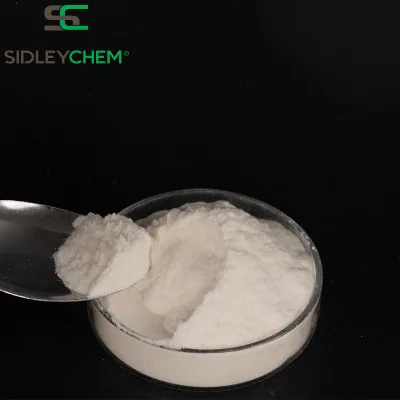
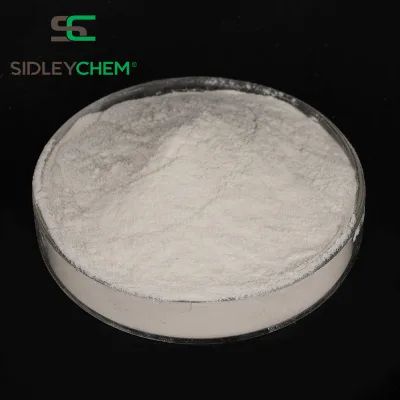
The physical form of the product is another essential specification. While CMC is often encountered as a white powder, some formulations may present as a water emulsion or film-forming matter depending on the intended application. The observed data indicates a Density of approximately 1.6 g/cm³ for certain grades, a figure that influences bulk shipping calculations and storage requirements. When evaluating technical data sheets, procurement specialists must ensure that the "Kind" of the product aligns with the specific application, such as drilling fluids or additives for waste oil and crude oil, rather than generic construction grades.
Compliance, Certification, and Quality Standards
Navigating the compliance landscape for CMC involves verifying that the supplier adheres to recognized quality management systems and product standards. While general industry knowledge often cites ISO 9001:2015 as a benchmark, specific product listings may highlight distinct certifications. In the observed market data, SGS certification is explicitly mentioned as a quality assurance marker. This third-party verification provides a layer of confidence regarding the product's adherence to declared specifications, particularly for heavy metal content and purity.
When assessing compliance, buyers must scrutinize the "Standard" attribute listed by the supplier. Data indicates that products are categorized under standards such as "high purity," "water retention agent," or "construction grade." For high salt resistance applications, the "high purity" standard is the most relevant, as it implies stricter controls on impurities that could interfere with ionic interactions. Additionally, the "prod_standard" field may reference specific chemical benchmarks, such as "Fixed Carbon98%" for related carbon-based additives, though for CMC, the focus remains on the organic material composition and substitution levels.
Certification checks should also extend to the raw materials. The "Main Raw Material" is identified as Cotton in some listings, which is a premium source for cellulose. Sourcing CMC derived from cotton rather than wood pulp can result in a more consistent molecular structure, enhancing salt resistance. Buyers should request documentation confirming the origin of the raw material and the manufacturing process, ensuring that the "Method" of production, such as spray drying, aligns with the desired product morphology and particle size distribution.
Cost Drivers and Pricing Dynamics
The pricing of high salt-resistant CMC is influenced by several variable factors, including the Degree of Substitution, purity levels, and packaging specifications. The observed price range in the market spans from 1 to 3800 USD, a wide variance that reflects differences in grade, volume, and specific chemical properties. High DS values and ultra-high purity grades command a premium due to the more complex synthesis processes required to achieve these specifications.
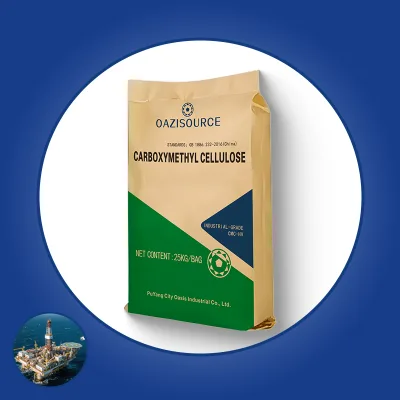
Packaging is a significant cost driver in the procurement equation. Standard packaging often involves 25 kg bags, but the internal construction varies. Some products are packed in "25 Kg Bags" generally, while others specify "25kg/Plastic Bag Inside by PE Bag" or "25kg PP Bag." The use of Polyethylene (PE) or Polypropylene (PP) liners provides moisture protection, which is critical for maintaining the quality of hygroscopic materials like CMC. The cost difference between standard woven bags and multi-layered moisture-proof packaging can impact the total landed cost, especially for buyers in humid climates.
Minimum Order Quantities (MOQ) also play a role in cost efficiency. The observed MOQ range spans from 1 to 1000 units, allowing for flexibility in procurement strategies. Small buyers may incur higher per-unit costs due to lower volume discounts, while large industrial buyers can leverage higher MOQs to negotiate better pricing. Buyers must balance the cost per kilogram against the storage capacity and cash flow requirements, ensuring that the chosen order quantity aligns with production schedules and inventory management capabilities.
Typical Applications and Performance Requirements
The versatility of CMC makes it suitable for a diverse array of industrial applications, with high salt resistance being a critical requirement in specific sectors. One primary application area is the drilling fluid industry, where CMC serves as a viscosity builder and fluid loss control agent. In this context, the product must remain stable in the presence of high concentrations of salts found in formation waters. The observed data confirms that CMC is utilized as a "Drilling Fluid" and an additive for "Waste Oil And Crude Oil."
Another significant application is in the metallurgical and chemical industries. Here, CMC functions as a binder, thickener, or stabilizer in various processes. The "Application" field in the product data explicitly lists "Metallurgical Industry, Chemical Industry," highlighting its broad utility. In these environments, the product's ability to maintain its structural integrity under varying pH levels (observed range 5-8) and high ionic strength is paramount.
The "Type" of CMC, such as HV (High Viscosity) and LV (Low Viscosity), also dictates its application suitability. High viscosity grades are often preferred for fluid loss control in drilling, while low viscosity grades may be used in applications requiring rapid dissolution. Buyers must match the specific viscosity grade to their process requirements to ensure optimal performance. Additionally, the "Formation Mechanism" being of the "Conversion Type" suggests that the product may undergo specific chemical changes upon application, which must be accounted for in process design.
Supplier Evaluation and Quality Control
Evaluating suppliers for high salt-resistant CMC requires a multi-faceted approach that goes beyond price comparison. Buyers should prioritize suppliers who provide transparent technical data sheets that detail the Degree of Substitution, Purity, and Moisture content. The presence of "SGS" certification is a strong indicator of a supplier's commitment to quality, but it should be complemented by a review of the supplier's "After-sales Service" offerings. Data indicates that some suppliers offer "One Year" service guarantees or "Top Grade" support, which can be crucial for resolving technical issues during implementation.
Quality control protocols should be a central part of the supplier evaluation. Buyers must verify that the supplier conducts rigorous testing for heavy metals, such as Lead (Pb), which is specified as ≤2ppm in high-grade products. The "Composition" being listed as "Organic Material" confirms the absence of inorganic fillers that could compromise salt resistance. Furthermore, the "Appearance" as a "Powder" or "Water Emulsion" should be consistent with the product description to ensure the buyer receives the correct form for their application.
When assessing suppliers, buyers should also consider the "prod_packing" consistency. Variations in packaging, such as the use of different bag types (e.g., 25kg PP Bag vs. 25 Kg Bags), can indicate different production lines or quality tiers. Consistency in packaging is a proxy for consistency in the manufacturing process. Additionally, the "Standard" of "25± 0.25kg / package" highlights the importance of weight accuracy, which affects inventory management and cost calculations.
Long-Term Procurement Considerations
Sourcing high salt-resistant CMC is not merely a transactional activity but a strategic partnership that impacts long-term operational efficiency. Buyers should consider the "prod_origin," which is listed as "China" in the observed data. Understanding the geographic origin helps in assessing logistics lead times, potential tariffs, and supply chain resilience. While the specific lead times are not provided in the data, buyers should establish clear expectations regarding delivery schedules to avoid production disruptions.
The "Level" of the product, described as "Primer" in some contexts, suggests that the CMC may be used as a foundational component in a larger formulation. This necessitates a deep understanding of how the CMC interacts with other components in the final product. Buyers should request compatibility data to ensure that the CMC does not negatively interact with other additives used in their processes.
Finally, long-term procurement strategies should include regular quality audits and performance reviews. The "After-sales Service" commitment, whether it is "One Year" or "Top Grade," should be leveraged to maintain a continuous feedback loop with the supplier. This ensures that any deviations in product quality, such as changes in the "Fixed Carbon" content or "Volatile Matter" levels, are addressed promptly. By maintaining a proactive approach to supplier management, buyers can secure a reliable supply of high salt-resistant CMC that meets their evolving technical and operational needs.
Comparative Analysis of Product Attributes
To facilitate decision-making, the following table summarizes key attributes observed in the market data for CMC and related products. This comparison highlights the variations in specifications that buyers must consider when selecting a supplier.
| Attribute | High-Grade CMC (Target) | General Construction Grade | Drilling Fluid Additive |
|---|---|---|---|
| Degree of Substitution | 0.65 - 0.90 | Variable | High (Optimized for Salinity) |
| Purity | ≥99.5% | Variable | High |
| Moisture Content | ≤8.0% | Variable | Low |
| Main Raw Material | Cotton | Wood Pulp or Cotton | Cotton |
| Packaging | 25kg PP Bag / PE Liner | 25 Kg Bags | 25kg Plastic Bag Inside |
| Certification | SGS | Variable | SGS / ISO |
| Application | Metallurgical, Chemical, Drilling | Construction | Waste Oil, Crude Oil |
| Standard | High Purity | Construction Grade | High Purity |
This comparison underscores the importance of selecting a product that aligns with the specific technical demands of the application. While general construction grades may suffice for basic thickening, high salt-resistant applications require the specific attributes found in the "High-Grade CMC" column. Buyers should use this framework to filter suppliers and ensure that the selected product meets the rigorous standards required for their specific industrial processes.
FAQs
What degree of substitution ensures high salt resistance?
A degree of substitution between 0.65 and 0.90 ensures high salt resistance. This range allows the product to maintain viscosity and stability when introduced to brines or high-salt environments without precipitating.
Can High Salt Resistant CMC be used in drilling fluids?
Yes, High Salt Resistant CMC is suitable for drilling fluids. It serves as a viscosity builder and fluid loss control agent that remains stable in the presence of high concentrations of salts found in formation waters.
Which certification verifies the quality of High Salt Resistant CMC?
SGS certification verifies the quality of High Salt Resistant CMC. This third-party confirmation provides confidence regarding the product's adherence to declared specifications, particularly for heavy metal content and purity levels.
How is High Salt Resistant CMC typically packaged?
High Salt Resistant CMC is typically packaged in 25 kg bags. Some options include a plastic bag inside a PE bag or a 25 kg PP bag to ensure moisture protection for the hygroscopic material.
What is the maximum moisture content for high purity grades?
The maximum moisture content for high purity grades is 8.0 percent. Excessive moisture can lead to clumping and inconsistent dissolution rates, which is particularly detrimental in automated mixing processes common in the drilling fluid industry.
Where are High Salt Resistant CMC products primarily sourced from?
High Salt Resistant CMC products are primarily sourced from China. Understanding this geographic origin helps in assessing logistics lead times, potential tariffs, and supply chain resilience for international buyers.
What is the typical density of High Salt Resistant CMC powder?
The typical density of High Salt Resistant CMC powder is 1.6 grams per cubic centimeter. This figure influences bulk shipping calculations and storage requirements for industrial buyers planning their logistics.