Source High Strength Steel Common Nails for Building Construction
Compare 30 listings of High Strength Steel Common Nails from Tianjin China. Buyers can review specifications like head type, shank style, and surface treatment for building and construction projects.
Key considerations
Products List




Comprehensive Sourcing Guide
Strategic Sourcing Guide for High Strength Steel Common Nails
Procuring High Strength Steel Common Nails requires a disciplined approach that balances technical specifications with supply chain reliability. These fasteners are fundamental to structural integrity in construction and woodworking, yet the market offers a wide variance in material grades, surface treatments, and manufacturing standards. Buyers must navigate a complex landscape where "high strength" is a performance characteristic rather than a universal label. This guide outlines the critical factors for sourcing these components, focusing on verified attributes, compliance verification, and risk mitigation strategies based on current market data.
Technical Specifications and Material Composition
The foundation of any successful procurement for common nails lies in the precise definition of material and physical dimensions. The core material for these fasteners is predominantly steel, with specific references to iron in certain product listings. However, for high-strength applications, the grade of the steel is the primary determinant of performance. Buyers should verify that the supplier provides a grade specification that aligns with high-strength requirements, often denoted as "High Strength" in product attributes. The manufacturing technique is equally critical; cold drawing is a standard process observed in the market that enhances the tensile strength of the wire before it is formed into nails.
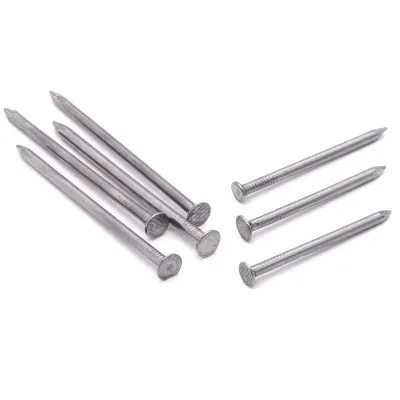
Dimensions vary significantly based on the application. The observed market data indicates a wide range of lengths, from 2 inches to 6 inches, with specific model references including 2.5-inch and 3/8-inch to 6-inch variants. The diameter of the nail head typically ranges from 2mm to 12mm, while the shank diameter can vary from 1.2mm to 10mm depending on the specific model. The shank itself may be smooth or feature a twist design, with the latter offering improved holding power in wooden substrates. The point geometry is another vital specification; while a sharp point is standard, some high-performance variants feature a "Harp Diamond" or "Sharp Diamond" point to facilitate easier penetration. The head style is generally flat or countersunk, though some listings mention a checked head or flat head configuration.
| Specification Category | Observed Market Range | Critical Verification Point |
|---|---|---|
| Material | Steel, Iron | Confirm "High Strength" grade certification |
| Length | 2" to 6" (19-300mm) | Match specific project requirements |
| Head Diameter | 2mm - 12mm | Ensure compatibility with driving tools |
| Shank Type | Smooth or Twist | Verify holding power needs |
| Point Style | Sharp, Harp Diamond | Check penetration efficiency |
| Surface Finish | Polished, Galvanized | Select based on corrosion environment |
Compliance and Certification Verification
When sourcing industrial fasteners, compliance with international standards is non-negotiable for ensuring safety and interoperability. The market data explicitly lists several recognized standards that manufacturers may adhere to, including ISO, GB, DIN, ANSI, and JIS. These standards cover dimensions, mechanical properties, and testing methods. For instance, the product standard may be defined by the American National Standards Institute (ANSI) or the British Standard Wire Gauge (BWG4-BWG20), which dictates the wire thickness.
Buyers must exercise caution regarding certification claims. While background information often mentions ISO 9001, ROHS, REACH, and CE, these should not be assumed to be present on every listed product without explicit verification from the supplier. The procurement process must include a request for current test reports or certificates of conformity that specifically reference the standards applicable to the ordered batch. The HS code for these products is generally 73170000, which is useful for customs clearance but does not substitute for technical compliance. It is essential to confirm that the "High Strength" designation is backed by mechanical test data, such as tensile strength and hardness tests, rather than being a marketing term.
Cost Drivers and Pricing Dynamics
The pricing structure for High Strength Steel Common Nails is influenced by several variable factors, including raw material costs, surface treatment complexity, and order volume. The observed price range in the market is extensive, spanning from $0.05 to $950, though this likely reflects a mix of single-unit samples and bulk pallet orders rather than a linear unit price. The Minimum Order Quantity (MOQ) also plays a significant role in unit cost; while some suppliers list an MOQ as low as 1 unit, others require substantial bulk orders, such as 10 tons, to access competitive pricing tiers.
Surface treatment is a major cost driver. Nails that are polished, electrically galvanized, or hot-dip galvanized will command different price points due to the additional processing steps and material costs involved. Hot-dip galvanizing, for instance, provides superior corrosion resistance but is more expensive than electric galvanization. Additionally, customization services, such as specific packaging or non-standard dimensions, will increase the unit cost. Buyers should anticipate that the "High Strength" grade may carry a premium over standard carbon steel nails. It is crucial to request a detailed breakdown of costs that separates the base material price from processing, packaging, and logistics fees to avoid hidden charges.
Typical Applications and Usage Scenarios
Understanding the intended application is vital for selecting the correct nail specifications. The primary application for these fasteners is building and construction, specifically for fastening wooden products. The "High Strength" attribute suggests suitability for structural applications where the fastener must withstand significant shear and tensile loads. Common uses include framing, decking, and general carpentry where the integrity of the joint is paramount.
The surface finish must be matched to the environmental conditions of the application. For indoor construction, polished or standard galvanized nails may suffice. However, for outdoor structures or environments with high humidity, hot-dip galvanized nails are necessary to prevent rust and maintain structural integrity over time. The head type also dictates usage; flat heads are ideal for general fastening where the nail head remains visible, while countersunk heads are required when the nail head must be flush with the surface for finishing. The "Sharp Diamond" point is particularly advantageous in dense hardwoods, reducing the risk of splitting the wood during installation.
Supplier Evaluation and Origin Analysis
Evaluating potential suppliers requires a focus on their manufacturing capabilities and geographic location. The majority of high-strength steel nails in the market originate from China, with specific hubs like Tianjin identified as key production centers. This location advantage often translates to competitive pricing and a robust supply chain for raw steel. However, buyers must verify the supplier's production capacity to ensure they can meet demand during peak seasons. Some manufacturers report an annual production capacity of 5,000 tons, which serves as a benchmark for assessing scalability.
When evaluating a supplier, look for evidence of customization capabilities. The market data indicates that customization is available, allowing buyers to tailor nail specifications to unique project needs. This includes custom packaging, such as 20-25kg cartons or woven bags, and specific length or diameter requirements. The delivery lead time is another critical factor; typical lead times range from 15 to 20 days, but this can vary based on order volume and customization. Buyers should confirm the supplier's ability to handle shipping via sea freight, which is the standard method for transporting bulk quantities of heavy steel products.
Quality Control and Inspection Protocols
Implementing a rigorous quality control (QC) protocol is essential to mitigate the risks associated with purchasing industrial fasteners. Given the variance in observed product attributes, buyers cannot assume that all listed products meet the same quality threshold. Inspection should begin with the raw material verification, ensuring the steel grade matches the "High Strength" specification. Dimensional accuracy is another key area; the head diameter, shank length, and point geometry must fall within the specified tolerances, such as the 2mm-12mm head diameter range.
Surface quality inspection is equally important. Buyers should verify the uniformity of the galvanization or polishing process. Inconsistent coating can lead to premature corrosion, compromising the fastener's lifespan. For high-strength applications, mechanical testing is mandatory. This includes verifying tensile strength, hardness, and ductility through third-party laboratory testing or on-site inspections. The supplier should provide a Certificate of Analysis (CoA) for each batch, detailing the chemical composition and mechanical properties. Additionally, visual inspection for defects such as burrs, cracks, or improper head formation should be conducted before shipment.
Long-Term Procurement Considerations
Sourcing High Strength Steel Common Nails is not merely a transactional activity but a strategic partnership that impacts long-term project success. Buyers should consider the total cost of ownership, which includes not only the purchase price but also the cost of potential failures due to substandard fasteners. A failure in a structural joint can lead to costly repairs, safety hazards, and reputational damage. Therefore, establishing a relationship with a supplier who demonstrates consistent quality and adherence to standards is more valuable than securing the lowest initial price.
Packaging and logistics also play a role in long-term procurement. The standard packaging of 20-25kg per carton or bag must be durable enough to prevent damage during transit. Customized packaging options can improve efficiency on the construction site, reducing waste and handling time. Furthermore, buyers should consider the supplier's ability to provide consistent supply over time. Fluctuations in raw material prices or production capacity can disrupt supply chains, so suppliers with a proven track record of stability and a capacity to scale are preferred. Finally, maintaining open communication regarding any changes in standards or regulations ensures that the procured fasteners remain compliant with evolving industry requirements.
FAQs
What material grades are used for High Strength Steel Common Nails?
The core material is predominantly steel, with specific references to iron in certain listings. Buyers must verify that the supplier provides a grade specification explicitly denoted as High Strength to ensure performance in structural applications.
Which surface treatments are available for corrosion resistance?
Available finishes include Polished, Electric Galvanised, and Hot Dipped Galvanized options. The choice depends on the environmental conditions, with hot-dip galvanizing offering superior protection for outdoor or high-humidity construction projects.
Can suppliers customize the dimensions and packaging of these nails?
Yes, customization is available for specific dimensions and packaging requirements. Buyers can request custom lengths, head diameters, and packaging options such as 20-25kg cartons or woven bags to suit unique project needs.
What standards do these fasteners typically comply with?
Products commonly adhere to ISO, GB, DIN, ANSI, and JIS standards. Specific product standards may also reference BWG4-BWG20 for wire thickness or custom requirements, ensuring interoperability and safety in construction applications.
How long is the typical delivery lead time for orders?
The standard delivery lead time ranges from 15 to 20 days. This duration may vary based on order volume, customization requirements, and shipping logistics, with sea freight being the standard method for bulk transportation.
What is the minimum order quantity for purchasing these nails?
MOQs vary significantly, ranging from 1 unit for samples to 10 tons for bulk pricing tiers. Buyers should confirm the specific MOQ with the supplier to access competitive pricing and ensure supply chain reliability.
Where are these high strength steel nails primarily manufactured?
The majority of these fasteners originate from China, with specific production hubs like Tianjin identified. This location offers competitive pricing and a robust supply chain for raw steel materials used in manufacturing.