Source Horizontal Tinny Shafts for drive systems, flexible couplings, and precision machinery
Compare 30 verified options for Horizontal Tinny Shafts with diameters ranging from 0.25mm to 60mm. Buyers can evaluate features like wear resistance, flexibility, and material standards including high carbon steel wire for industrial applications.
Key considerations
Products List




Comprehensive Sourcing Guide
Strategic Sourcing Guide for Horizontal Tinny Shafts
Understanding Technical Specifications and Dimensional Variability
When sourcing Horizontal Tinny Shafts, buyers must first navigate the complex landscape of dimensional specifications and material compositions. The term "tinny" in this context often refers to shafts with small diameters, yet the available market data reveals a significant variance in size capabilities. Procurement teams should not assume a single standard size exists; rather, the supply base offers a broad spectrum ranging from micro-dimensions of 0.25mm up to larger industrial sizes of 60mm. Specific product listings indicate models capable of handling diameters as small as 1mm and extending to 60mm, while other configurations support a range starting at 2mm. This variability suggests that the "horizontal tinny shaft" category encompasses both precision micro-components and robust drive shafts, requiring buyers to define their exact tolerance needs before engaging with suppliers.
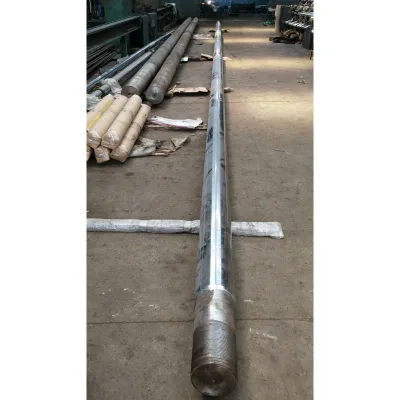
The geometric characteristics of these shafts are equally critical. The axis shape is consistently described as a straight shaft, and the appearance is round, which is standard for drive applications. However, the surface finish and dimensional accuracy are paramount for high-performance applications. Verified specifications indicate that journal diameter dimensional accuracy can reach IT6-IT7 levels, with surface roughness values ranging from 0.63 to 0.16μm. These figures represent high-precision manufacturing capabilities that are essential for minimizing friction and wear in rotating assemblies. Buyers must verify if a specific supplier can consistently maintain these tolerances, as the "tinny" nature of the shafts makes them susceptible to deformation if the stiffness and flexibility balance is not correctly engineered. The product attributes highlight a "Flexible Shaft" design with "High Flexible" characteristics, suggesting that the material and geometry are optimized to transmit torque while accommodating slight misalignments.
Material Composition and Manufacturing Standards
The longevity and reliability of Horizontal Tinny Shafts are directly tied to the raw materials and manufacturing standards employed. The supply data points to the use of high-carbon steel wire, specifically grades 70# to 75#, as a primary material for flexible shaft components. This material choice is indicative of a focus on durability and wear resistance, which are listed as key attributes of the products. The high carbon content provides the necessary tensile strength to handle drive shaft loads without permanent deformation, while the wire construction allows for the required flexibility. In other instances, the body material is specified as 45# Steel, a medium-carbon steel often used for structural components requiring a balance of strength and machinability. Additionally, some listings mention Stainless Steel textures, suggesting that corrosion resistance may be a requirement for specific environmental conditions.
Manufacturing processes also play a vital role in the final product quality. Surface treatments such as passivation are noted, which is a chemical process used to remove free iron from the surface of stainless steel or other alloys to prevent rust and corrosion. This step is crucial for shafts that may operate in humid or chemically active environments. The standard production origin is reported from regions in China, specifically Shandong and Xiamen, which are known industrial hubs for steel processing and mechanical component manufacturing. Buyers should verify that the supplier adheres to the specific standard of 70#~75# high carbon steel wire or the equivalent 45# steel specifications for their application. It is also important to note that the connection types vary, with options including flange connections and assembly types, which must align with the existing machinery interface.
Compliance, Certification, and Quality Assurance Protocols
In the absence of explicit certification listings in the provided data, buyers must exercise due diligence regarding compliance and quality assurance. While specific third-party certifications are not explicitly detailed in the source facts, the presence of "Video outgoing-inspection" services indicates a commitment to transparency and quality verification. This feature allows buyers to witness the final inspection process remotely, ensuring that the shafts meet the required dimensional and visual standards before shipment. The "Warranty: 1 Year" attribute further suggests that suppliers stand behind the durability of their products, offering a recourse for premature failure.
Buyers should establish clear quality control criteria based on the observed performance attributes. The products are described as "Wear Resistant" and possessing a "Long Lifetime," which are critical for reducing maintenance costs in industrial settings. To validate these claims, procurement teams should request detailed test reports or sample inspections that verify the surface roughness and dimensional accuracy against the IT6-IT7 standards mentioned. The "Safety Design" features, described as "Easy Working" and "Easy Operating," imply that the shafts are engineered to minimize operational hazards, but this should be confirmed through a review of the safety documentation provided by the manufacturer. Furthermore, the "High Performance" and "High Efficiency" attributes suggest that the shafts are designed to optimize energy transmission, a factor that should be quantified through performance testing in the buyer's specific application environment.
Cost Drivers and Pricing Dynamics
The pricing structure for Horizontal Tinny Shafts is influenced by several dynamic factors, including material costs, manufacturing complexity, and order volume. The observed price range in the market spans from $0.01 to $9,999, reflecting the diversity of the product category from simple, small-diameter components to complex, high-torque drive assemblies. The Minimum Order Quantity (MOQ) also varies significantly, ranging from 1 unit to 2,000 units. This wide MOQ range offers flexibility for both prototyping and large-scale production runs. Buyers sourcing small quantities may face higher unit costs due to setup fees, while those ordering in bulk can leverage economies of scale to reduce the per-unit price.
Material selection is a primary cost driver. High-carbon steel wire (70#~75#) and stainless steel variants typically command higher prices than standard carbon steel due to their superior mechanical properties and corrosion resistance. The precision required to achieve surface roughness of 0.16μm and dimensional accuracy of IT6 also adds to the manufacturing cost, as it necessitates advanced machining equipment and rigorous quality control processes. Additionally, customizations are available, which can impact the final price. The "Custom: Yes" attribute indicates that buyers can request specific modifications, such as unique diameters, connection types, or surface treatments, but these bespoke requirements will likely increase the lead time and unit cost. Buyers should balance their technical requirements against their budget constraints, ensuring that they do not over-specify the shafts beyond what is necessary for their application.
Typical Applications and Operational Context
Horizontal Tinny Shafts are versatile components used across a wide range of industrial applications. The primary function identified is as a "Drive Shaft," designed to transmit power and motion between different parts of a machine. The "Direction of Twist" attribute, which includes both Levorotation and Dextrorotation, highlights the shafts' ability to operate in various rotational directions, making them suitable for bidirectional drive systems. The "Stiffness & Flexibility" balance allows these shafts to be used in applications where slight misalignment is inevitable, such as in robotics, medical devices, and precision machinery.
The "Environmentl Design" attribute suggests that these shafts are also engineered for specific environmental conditions, potentially including high-efficiency operations that minimize energy loss. The "Easy Operating" safety design makes them suitable for applications where frequent maintenance or adjustment is required. The "Cardan Shaft" designation further points to their use in universal joint applications, where torque needs to be transmitted at varying angles. Given the small diameter options (down to 0.25mm), these shafts are ideal for micro-mechanical systems, while the larger diameter options (up to 60mm) cater to heavy-duty industrial machinery. Buyers should evaluate their specific operational requirements, including load capacity, rotational speed, and environmental exposure, to select the most appropriate shaft configuration.
Supplier Evaluation and Long-Term Procurement Strategy
Selecting the right supplier for Horizontal Tinny Shafts requires a comprehensive evaluation of their capabilities, reliability, and logistical support. The "Flexible" attribute of the suppliers, as indicated by the "Flexible" product attribute, suggests that they are willing to adapt to buyer needs, whether in terms of customization, packaging, or delivery. The "Pallet" and "Wooden Box" packaging options, along with "General Export Package" availability, indicate that suppliers are equipped to handle international shipping requirements. The "Delivery Way: by Air/Sea" option provides flexibility in logistics, allowing buyers to choose between speed and cost based on their urgency.
For long-term procurement, buyers should prioritize suppliers who offer consistent quality and reliable lead times. The "Warranty: 1 Year" and "Video outgoing-inspection" features are strong indicators of a supplier's confidence in their product quality. Buyers should also consider the "Place of Origin" and "prod_origin" details, ensuring that the manufacturing location aligns with their supply chain strategy. The "Compatible Brand: Other" attribute suggests that these shafts are often designed to be interchangeable with existing systems, which is beneficial for maintenance and replacement scenarios. To ensure a sustainable supply chain, buyers should establish clear communication channels, define quality acceptance criteria, and maintain a relationship with suppliers who can provide technical support and timely responses to inquiries.
Comparative Analysis of Shaft Configurations
To assist in decision-making, the following table summarizes key attributes observed in the market for Horizontal Tinny Shafts. This comparison helps buyers identify the most suitable configuration based on their specific needs.
| Attribute | Specification A (Precision Micro) | Specification B (Heavy Duty) | Specification C (Flexible Drive) |
|---|---|---|---|
| Diameter Range | 0.25mm ~ 1mm | 2mm ~ 60mm | 1mm ~ 60mm |
| Material | High Carbon Steel Wire (70#~75#) | 45# Steel | High Carbon Steel Wire |
| Surface Roughness | 0.16μm - 0.63μm | Standard | 0.16μm - 0.63μm |
| Dimensional Accuracy | IT6-IT7 | Standard | IT6-IT7 |
| Connection Type | Assemble | Flange | Assemble |
| Key Feature | High Precision | High Load Capacity | High Flexibility |
| Packaging | Pallet | Wooden Box | General Export Package |
| Origin | Shandong, China | Xia Men, China | China |
This table illustrates the diversity within the category. Buyers must carefully match their application requirements to the correct specification. For instance, applications requiring extreme precision and small diameters should focus on the micro-specifications, while heavy-load applications should prioritize the high-carbon steel options with robust connection types. The flexibility of the supply chain, indicated by the various packaging and delivery options, allows buyers to tailor their procurement strategy to their specific logistical and operational needs. By understanding these distinctions, buyers can make informed decisions that optimize performance and cost-effectiveness in their horizontal tinny shaft procurement.
FAQs
What materials are used for Horizontal Tinny Shafts?
High carbon steel wire grades 70# to 75# are commonly used for flexible shafts. Some models utilize 45# steel for body construction, while others feature stainless steel textures for corrosion resistance in specific environments.
Can these shafts be customized for specific needs?
Yes, customization is available for buyers requiring specific modifications. Suppliers offer flexible options for unique diameters, connection types, and surface treatments to match exact application requirements without compromising performance.
What is the dimensional accuracy of these shafts?
Journal diameter dimensional accuracy can reach IT6 to IT7 levels for high precision. Surface roughness values typically range from 0.63 to 0.16 micrometers to ensure smooth operation and minimize friction in rotating assemblies.
How are these shafts packaged for international shipping?
Products are typically packed on pallets or in wooden boxes for protection. General export packages are also available to meet specific customer requirements and ensure safe delivery via air or sea freight methods.
What warranty is provided for these drive shafts?
A one-year warranty is standard for these durable and wear-resistant shafts. This coverage ensures buyers have recourse for premature failures while the video outgoing inspection service verifies quality before shipment.
Which rotation directions do these flexible shafts support?
The shafts support both levorotation and dextrorotation for bidirectional drive systems. This flexibility allows them to transmit torque effectively in various rotational directions suitable for complex machinery and robotics applications.
What is the typical delivery method for these products?
Delivery is available by air or sea depending on urgency and cost. Suppliers in Shandong and Xiamen, China, utilize these transport modes to ensure timely arrival of goods to global destinations.