Source Horse Stable for Farms, Clubs, and Racecourses
Compare 30 Horse Stable options from Chinese manufacturers featuring iron and steel construction with powder coating or galvanization. Buyers can evaluate models like HS001 and WSN-V-6 for farms, equestrian clubs, and breeding facilities with customizable dimensions and swing or sliding doors.
Key considerations
Products List


Horse Stall Portable Horse Barns for Sale Prefabricated Horse Racing Stables
$499.00 - $879.00
MOQ: 2 Pieces


Farm Riding Horse Stable Modular Horse Barns Portable Metal Horse Stalls
$499.00 - $879.00
MOQ: 2 Pieces


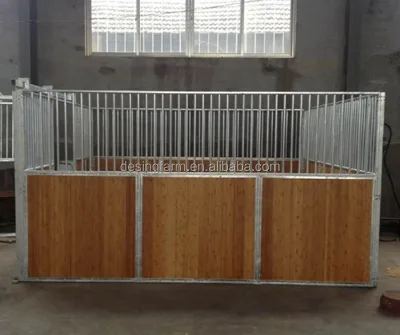


Professional Customized Sliding Horse Stalls Portable Horse Stable for Sale
$1205.75 - $1569.58
MOQ: 1 Sets

Comprehensive Sourcing Guide
Horse Stable Sourcing Guide
Sourcing horse stables requires a careful balance between structural integrity, animal welfare standards, and logistical feasibility. The market offers a diverse range of configurations, from traditional wooden designs to modern modular steel systems, each catering to specific operational needs such as breeding farms, equestrian clubs, or racecourses. Buyers must navigate a landscape where product attributes vary significantly, including material composition, door mechanisms, and surface treatments, to ensure the selected solution aligns with both budgetary constraints and long-term durability requirements.
This guide synthesizes observed market signals and technical specifications to help procurement professionals make informed decisions. By focusing on verifiable data points such as material types, standard dimensions, and customization options, buyers can mitigate risks associated with mismatched specifications or unreliable supply chains. The following sections provide a structured approach to evaluating suppliers, verifying technical claims, and establishing commercial terms that protect the buyer’s interests throughout the procurement lifecycle.
Product Scope and Observed Listing Signals
The current market for horse stables presents a wide array of product types, primarily categorized by their intended application and construction material. Observed listings indicate a strong presence of iron and steel-based structures, with specific models like HS001, WSN-V-6, and XMS1018 representing different design philosophies. These products are often marketed for use in farms, equestrian clubs, and breeding facilities, highlighting the versatility of modern stable designs. The presence of customized options suggests that buyers are not limited to off-the-shelf solutions but can tailor dimensions and features to fit specific site constraints or aesthetic preferences.
Price points and minimum order quantities (MOQs) vary considerably, reflecting the complexity of the manufacturing process and the level of customization involved. Listings show a price range from approximately $2 to over $1,500, with MOQs starting as low as one piece for some items and extending up to 300 pieces for others. This disparity indicates that buyers can source individual components or complete stable units depending on their scale of operation. It is crucial to distinguish between basic structural elements and fully assembled units, as the latter often include additional features such as specialized flooring, ventilation systems, or automated feeding mechanisms that significantly impact the final cost.
Technical Specifications to Verify
Material selection is a critical factor in determining the longevity and maintenance requirements of a Horse Stable. Common materials observed in the market include iron, low-carbon steel, and hot-dipped galvanized steel, often combined with HDPE boards or wooden fillings such as bamboo or pine. The choice of material directly influences the structure’s resistance to corrosion, impact, and weathering. Buyers should verify the specific grade of steel and the thickness of the galvanized coating to ensure adequate protection against the elements, particularly in humid or coastal environments where rust prevention is paramount.
Dimensional standards and assembly methods also play a vital role in the functionality of the stable. Standard sizes such as 2.9m x 2.2m or 2.2m x 3.6m are frequently cited, but customized lengths are widely available to accommodate unique facility layouts. The connection style, whether through clamps, pins, and chains, or full welding, affects both the structural stability and the ease of installation. Buyers must confirm whether the design allows for modular expansion or if it is a fixed structure, as this will impact future scalability and potential relocation costs. Additionally, the type of door, whether swing or sliding, should be evaluated based on space availability and ease of access for both horses and handlers.
Compliance and Safety Documentation
While specific certification statuses may vary by supplier, buyers should prioritize structures that adhere to recognized safety and quality standards. The presence of CE certification, where applicable, can serve as an indicator of compliance with European health, safety, and environmental protection standards. However, buyers should not rely solely on this mark and should request detailed documentation regarding the structural integrity of the stable, including load-bearing capacities and wind resistance ratings. Verifying that the manufacturer has undergone rigorous quality control processes is essential to ensure that the product meets the necessary safety benchmarks for animal housing.
Safety features within the stable design are equally important to prevent injuries to both horses and personnel. Buyers should inspect the surface treatments, such as powder coating or galvanization, to ensure that there are no sharp edges or protrusions that could harm the animals. The use of smooth, non-toxic materials for any wooden or plastic components is also critical to prevent ingestion of harmful substances. Additionally, the stability of the structure under load should be verified, particularly for multi-level or large-span designs, to ensure that the stable can withstand the dynamic forces exerted by horses during movement or feeding.
Cost Drivers and Commercial Terms
Several factors influence the final cost of a Horse Stable, with material quality, customization level, and manufacturing process being the primary drivers. Structures made from hot-dipped galvanized steel or those featuring complex welding techniques, such as 360-degree full welding, tend to be more expensive due to the higher labor and material costs involved. Customization options, including specific dimensions, door types, and surface finishes, also add to the overall price. Buyers should request detailed breakdowns of costs to understand where the majority of the expenditure lies and to identify potential areas for cost optimization without compromising quality.
Lead times and delivery terms are significant considerations in the procurement process, as delays can impact project timelines and operational readiness. Observed delivery times range from 40 to 50 days, which buyers must factor into their planning. It is essential to clarify whether this lead time includes manufacturing, quality inspection, and shipping, or if it refers solely to production. Additionally, buyers should negotiate clear terms regarding packaging, such as palletized or bulk shipping, to minimize the risk of damage during transit. Understanding the payment terms and warranty policies is also crucial to mitigate financial risks and ensure long-term support from the supplier.
Supplier Qualification and Quality Control
Evaluating supplier qualifications is a critical step in ensuring the reliability of the procurement process. Buyers should verify the manufacturer’s experience in producing horse stables, particularly in the specific region of origin, such as Hebei, China, which is known for its manufacturing capabilities in this sector. Requesting references from previous clients, especially those in similar industries like equestrian clubs or breeding farms, can provide valuable insights into the supplier’s performance and after-sales support. Additionally, buyers should assess the supplier’s production capacity and quality control systems to ensure they can meet the required volume and quality standards consistently.
Quality control measures should be implemented throughout the manufacturing process to identify and rectify defects early. Buyers should request detailed inspection reports, including visual checks, dimensional measurements, and material tests, to verify that the product meets the agreed-upon specifications. Implementing a pre-shipment inspection is also recommended to ensure that the goods are free from damage and correctly packaged for transport. Establishing a clear communication channel with the supplier for addressing any issues that arise during production or delivery is essential for maintaining a productive relationship and ensuring timely resolution of problems.
Long-Term Procurement Checks
Establishing a framework for long-term procurement checks is vital for maintaining the quality and reliability of the Horse Stable supply chain. Regular audits of the supplier’s production facilities and quality control processes can help identify potential issues before they impact the final product. Buyers should also monitor the supplier’s performance metrics, such as on-time delivery rates and defect rates, to assess their reliability over time. Building a relationship based on transparency and mutual benefit can lead to better pricing, improved service, and greater flexibility in handling custom orders.
Continuous improvement and feedback loops are essential for optimizing the procurement process. Buyers should provide constructive feedback to suppliers regarding any issues encountered during installation or use, enabling them to make necessary adjustments to their products or processes. Additionally, staying informed about industry trends and technological advancements in stable construction can help buyers make more informed decisions in the future. By maintaining a proactive approach to supplier management and quality assurance, buyers can ensure that their horse stables remain safe, durable, and cost-effective over the long term.
FAQs
What materials are used for Horse Stable frames?
Frames are constructed from iron, low carbon steel, or hot dipped galvanized steel. Some models also incorporate HDPE boards for panels to ensure durability and safety for the animals inside the facility.
Can I customize the dimensions of the Horse Stable?
Yes, customization is available for length and standard dimensions. Specific models offer sizes like 2.9m by 2.2m or 2200mm by 3600mm, allowing you to tailor the structure to your specific farm requirements.
What is the minimum order quantity for these stables?
The minimum order quantity varies by product model, ranging from 2 pieces to 12 sets. Buyers should check specific model details to confirm the exact MOQ required for their purchase order.
How long does delivery take for horse stables?
The standard delivery time is between 40 to 50 days. This lead time applies to the manufacturing and shipping process from the origin location in Hebei, China, to the final destination.
Which surface treatments are applied to the metal frames?
Frames undergo powder coating or hot dipped galvanization for protection. These finishing processes ensure the structures are resistant to corrosion and suitable for long-term use in various farm environments.
What types of doors are included in the stable design?
The stables feature swing doors or sliding doors depending on the model. These door types are designed to provide easy access for horses and handlers while maintaining secure containment within the stall.