Source Hot-Dip Galvanized Welded Gabion Box for Civil Engineering
Compare 30 listings of hot-dip galvanized welded gabion box options for civil engineering, road building, and military applications. Buyers can review specifications like mesh size, wire gauge, and basket dimensions to find the right solution.
Key considerations
Products List


$15.00 - $30.00
MOQ: 50 Sets


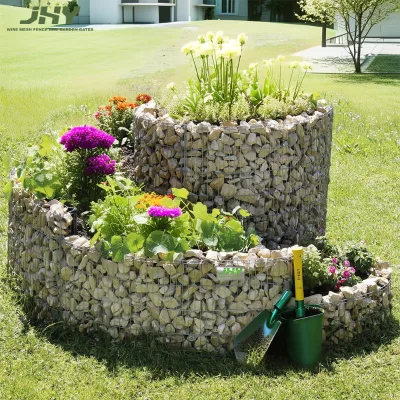


Welded Gabion Box with Hot DIP Galvanized Steel for Long Lasting Durability
$15.00 - $20.00
MOQ: 100 Pieces


Comprehensive Sourcing Guide
Strategic Sourcing Guide for Hot-Dip Galvanized Welded Gabion Boxes
Understanding Core Technical Specifications and Material Composition
When sourcing hot-dip galvanized welded gabion boxes, the primary focus must be on the precise intersection of material composition, wire gauge, and structural dimensions. The market offers a diverse range of configurations, but the fundamental requirement for a functional gabion box is a robust wire structure capable of withstanding significant hydrostatic pressure and soil loads. Based on available product data, the primary material used for these units is typically Galvanized Iron Wire, Galvanized Steel Wire, or Low-Carbon Iron Wire. In specific high-strength applications, the material may be identified as Q195 steel, which provides a baseline for tensile strength and ductility.
The manufacturing process is equally critical. The prevailing technique for these units is welding, which creates a rigid grid structure superior to woven alternatives in terms of dimensional stability. The surface treatment is consistently described as Hot Dipped Galvanized, a process that significantly enhances corrosion resistance compared to standard electro-galvanization. This coating is essential for longevity, particularly in civil engineering projects where the boxes are exposed to moisture, soil chemicals, or marine environments.
Dimensions vary widely depending on the specific application, ranging from small modular units to large containment structures. Observed specifications include standard basket sizes such as 120x60x30cm, 60x30x30cm, and 60x60x30cm. Larger configurations are also available, including 180x60x120cm units. For applications requiring specific mesh apertures, common sizes include 60x80mm, 50x100mm, and 50x50mm. The wire diameter is a critical variable, with observed ranges typically falling between 4.0mm and 5.0mm, and specific instances citing a 4mm diameter. Buyers must verify that the wire gauge and mesh size align with the structural load requirements of their specific project, as these parameters directly influence the box's ability to retain fill material without deformation.
Compliance, Certification, and Standard Verification
Navigating the compliance landscape for gabion boxes requires a clear distinction between observed certifications and general industry standards. In the current market data, a specific certification observed is the CE mark, indicating conformity with health, safety, and environmental protection standards for products sold within the European Economic Area. However, buyers should not assume that all listed products carry this certification without explicit verification from the supplier.
Regarding technical standards, the product data indicates that standards can be "Customized" or specific to the model number, such as JS or HP-GB010. While general industry knowledge often references standards like ASTM A975 or EN 10223-3, these should not be asserted as universal facts for every product in the catalog without direct confirmation from the manufacturer. Instead, procurement teams should treat these as benchmarks to verify. When evaluating a supplier, the buyer must request documentation proving that the specific batch of gabion boxes meets the required standard for the project's jurisdiction.
The origin of the products is another compliance factor. The data confirms that these products are manufactured in China, with specific mentions of Hebei as a production hub. While this is a known manufacturing center for wire mesh products, the buyer must ensure that the specific factory has the necessary quality management systems in place. The "Standard" attribute in the product data often lists specific dimensions (e.g., 1x1x1m, 2x1x1m) rather than a regulatory code, suggesting that dimensional tolerance is a key part of the product standard. Buyers should explicitly request tolerance data for length, width, and height to ensure the boxes fit the design specifications of the retaining wall or erosion control structure.
Cost Drivers and Pricing Dynamics
The pricing of hot-dip galvanized welded gabion boxes is influenced by a complex interplay of material costs, manufacturing complexity, and logistical factors. The observed price range in the market spans from $1.65 to $38.00 USD per unit. This wide variance is not arbitrary but is driven by several tangible factors. The most significant cost driver is the wire diameter and the total weight of the steel used. A box with a 5.0mm wire gauge will inherently cost more than one with a 4.0mm gauge due to the increased raw material consumption.
Secondly, the dimensions of the box play a crucial role. A 180x60x120cm unit requires significantly more wire and surface treatment than a 60x30x30cm unit, directly impacting the unit price. The surface treatment process, specifically the hot-dip galvanizing, also adds to the cost. Thicker zinc coatings, which are often required for aggressive environments, increase the manufacturing time and chemical usage, thereby raising the price.
Packaging and shipping logistics are additional cost components. The data shows various packaging methods, including "Carton," "Pallet," "Shrink Per Set," and "Each Set a Carton." Units packed on pallets are generally more expensive to ship due to the volume they occupy, but they offer better protection during transit. Conversely, units packed in cartons may be more compact but require careful handling to prevent damage to the galvanized coating.
The Minimum Order Quantity (MOQ) also affects the effective unit cost. The observed MOQ range is between 1 and 500 units. Buyers purchasing small quantities, such as 1 to 10 units, may face higher per-unit costs compared to those ordering in bulk. However, the flexibility of low MOQs allows for smaller projects or sampling without a massive financial commitment. Buyers should calculate the total landed cost, including freight and insurance, rather than focusing solely on the FOB price, as shipping costs for heavy steel products can be substantial.
Typical Applications and Usage Scenarios
Hot-dip galvanized welded gabion boxes are versatile structural elements used across multiple sectors. The primary application identified is Civil Engineering, where they serve as retaining walls, slope stabilization structures, and erosion control barriers. The welded construction provides the necessary rigidity to hold back soil and manage water flow effectively.
Road Building is another significant application area. In this context, gabion boxes are often used for roadside embankments, bridge abutments, and culvert protection. The ability of the boxes to flex slightly under load without failing makes them ideal for areas prone to ground settlement or seismic activity. The data also highlights "Military Applications" as a usage category, suggesting their utility in rapid fortification, blast mitigation, and temporary infrastructure in conflict zones.
Beyond these, the boxes are utilized in Construction Wire Mesh applications, where they provide structural reinforcement in various building projects. The specific mesh size and wire gauge determine the suitability for different fill materials. For instance, larger apertures like 60x80mm are suitable for larger rocks, while smaller apertures like 50x50mm are better for finer aggregates. The choice of application dictates the required specifications; a military application might demand higher wire gauges and more robust packaging, while a civil engineering project might prioritize specific dimensional tolerances for aesthetic alignment.
Supplier Evaluation and Customization Capabilities
Evaluating a supplier for gabion boxes requires a deep dive into their customization capabilities and production flexibility. The product data explicitly states that "Customization" is available, which is a critical factor for buyers with non-standard project requirements. This can include custom dimensions, specific wire gauges, or unique mesh patterns. Buyers should verify the supplier's ability to produce custom models, such as the JS-FWGabion009 or HP-GB010, and ensure they have the machinery to handle bespoke orders without compromising quality.
The "Mark" or brand name, such as "Hopesun," is listed in the data, but buyers should not rely on brand recognition alone. Instead, they should assess the supplier's technical capacity to meet the specific "prod_standard" requirements. The data indicates that standards can be customized, meaning the supplier should be able to adapt to the buyer's specific engineering drawings.
Packaging options are another indicator of supplier professionalism. The availability of options like "Shrink Per Set," "on Pallets," and "Each Set a Carton" suggests that the supplier understands the need for different logistics solutions. A supplier that offers flexible packaging is more likely to be reliable in handling complex shipping requirements. Additionally, the "Spacer" attribute, which is listed as "Available to Choose," indicates that the supplier can provide internal dividers to maintain the box shape during filling, a feature that is essential for maintaining structural integrity in large-scale projects.
Quality Control and Long-Term Procurement Considerations
Ensuring the long-term performance of gabion boxes requires rigorous quality control measures. The hot-dip galvanizing process is the most critical aspect of quality. Buyers must verify the thickness of the zinc coating, as this determines the corrosion resistance life of the product. While specific test results are not provided in the general data, buyers should request mill test certificates or third-party inspection reports that confirm the zinc coating weight and adhesion.
The welding quality is another area of focus. The "Welded" technique must result in strong, consistent joints that do not fail under the pressure of the fill material. Buyers should inspect samples for any signs of welding defects, such as cracks or incomplete fusion. The "Wire Gauge" consistency is also vital; variations in wire thickness can lead to weak points in the structure.
For long-term procurement, buyers should consider the "prod_packing" and "prod_origin" factors. Products originating from Hebei, China, are common, but the specific factory's track record is what matters. Buyers should establish a relationship with suppliers who offer consistent quality over time, rather than switching vendors for every project. The availability of "Customized" standards suggests that suppliers are willing to work with buyers on long-term contracts to ensure that future orders match the specifications of initial successful projects.
Finally, the "Usage" category, which includes "Road Building" and "Civil Engineering," implies that the boxes will be subjected to harsh conditions. Buyers should plan for regular maintenance and inspection schedules. The durability of the galvanized coating and the structural integrity of the welds will determine the frequency of these inspections. By selecting a supplier with a proven track record in customization and quality control, buyers can ensure that their gabion box installations remain stable and effective for decades.
Summary of Key Product Attributes
To facilitate quick reference during the sourcing process, the following table summarizes the key attributes observed in the market data for hot-dip galvanized welded gabion boxes.
| Attribute Category | Observed Values / Options | Notes for Verification |
|---|---|---|
| Material | Galvanized Iron Wire, Galvanized Steel Wire, Low-Carbon Iron Wire, Q195 | Verify tensile strength and chemical composition. |
| Technics | Welded | Ensure weld points are secure and uniform. |
| Surface Treatment | Galvanized, Hot Dipped Galvanized | Check zinc coating thickness for corrosion resistance. |
| Mesh Size | 50x50mm, 50x100mm, 60x80mm | Match to fill material size requirements. |
| Wire Diameter | 4.0-5.0mm, 4mm | Confirm gauge consistency across the batch. |
| Basket Size | 60x30x30cm, 120x60x30cm, 180x60x120cm, 100x50x30cm | Verify dimensional tolerances against design specs. |
| Packaging | Carton, Pallet, Shrink Per Set, Each Set a Carton | Select based on shipping volume and protection needs. |
| Origin | China, Hebei, China | Confirm factory location and quality management systems. |
| Certification | CE | Verify specific batch certification status. |
| Customization | Available | Confirm ability to meet non-standard dimensions or specs. |
| Usage | Civil Engineering, Road Building, Military Applications | Ensure suitability for the specific project environment. |
This guide provides a structured approach to sourcing hot-dip galvanized welded gabion boxes, emphasizing the importance of verifying technical specifications, understanding cost drivers, and evaluating supplier capabilities to ensure a successful procurement outcome.
FAQs
What materials are used for hot-dip galvanized welded gabion boxes?
These boxes are typically made from Galvanized Iron Wire, Galvanized Steel Wire, or Low-Carbon Iron Wire. Some high-strength models utilize Q195 steel to ensure durability and tensile strength for civil engineering applications.
Which customization options are available for gabion box specifications?
Customization is available for dimensions, wire gauges, and mesh patterns. Buyers can request specific sizes like 1x1x1m or 2x1x1m, and choose wire diameters ranging from 4.0mm to 5.0mm to match project load requirements.
How are hot-dip galvanized welded gabion boxes packaged for shipping?
Packaging options include carton boxes, pallets, and shrink-wrapped sets. Specific configurations vary by model, with some units shipped as each set in a carton or multiple sets arranged securely on pallets for protection.
What certifications do hot-dip galvanized welded gabion boxes carry?
Some products carry the CE certification, indicating conformity with European safety standards. However, standards can also be customized, so buyers must verify specific batch documentation rather than assuming universal compliance with all industry codes.
Can hot-dip galvanized welded gabion boxes be used for military applications?
Yes, these boxes are suitable for military applications, road building, and civil engineering. Their welded structure provides the rigidity needed for rapid fortification, slope stabilization, and erosion control in diverse operational environments.
What is the typical price range for hot-dip galvanized welded gabion boxes?
The observed price range spans from 1.65 to 38 USD per unit. Costs vary significantly based on wire diameter, total dimensions, and the specific surface treatment thickness required for the intended service life.