Source Kitchen Timer for Industrial, Household, and Cooking Uses
Source a Kitchen Timer from 30 available options, including digital countdown models and dial timers. Compare features like LCD displays, battery power, and timing ranges to find the right solution for industrial or household applications; compare the available evidence and request quotations based on your requirements.
Key considerations
Products List





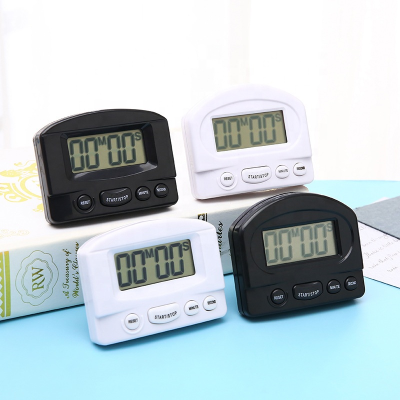


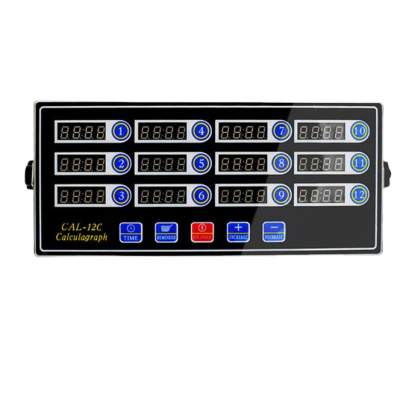
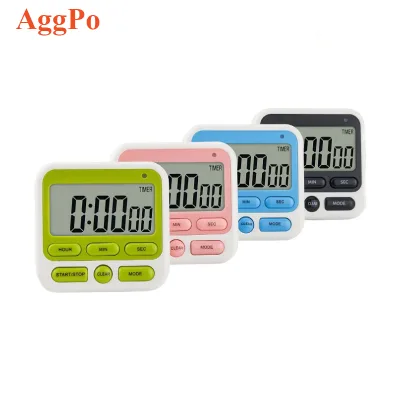
Comprehensive Sourcing Guide
Kitchen Timer Sourcing Guide
Buyers evaluating kitchen timers must first distinguish between digital countdown models and dial-based mechanical units, as the supplied data reveals a split in functionality and target usage. The observed product range includes electronic synchronous counters designed for industrial and household environments, alongside specific models tailored for home kitchen use with features like stopwatch capabilities and fixed time limits. Understanding this distinction is critical before initiating a procurement cycle, as the internal mechanism dictates the appropriate application context and user interface requirements.
The market signals indicate a diverse array of power sources and display technologies, ranging from LCD screens powered by LR44 or AAA batteries to units with resistance-based materials. Procurement teams should note that while some listings specify a timing range of up to 99 minutes and 59 seconds, others are constrained to a maximum of 30 minutes or one hour. This variance in timing capacity directly influences the suitability of the product for different culinary tasks, requiring buyers to align their specific operational needs with the precise technical constraints of the available inventory.
Product Scope and Observed Listing Signals
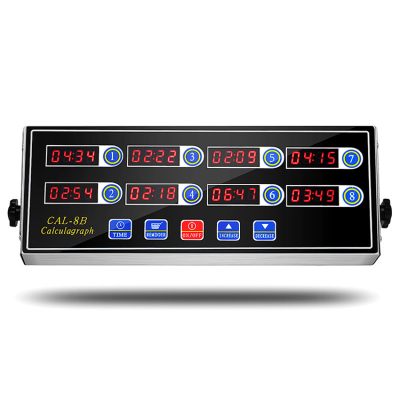
The observed product scope encompasses a wide spectrum of kitchen timers, from compact digital units with single package sizes of 12.2x11x2.4 cm to larger industrial-grade modules with dimensions reaching 530x230x290 mm. Buyers must carefully review the listed appearance and style attributes, as the data shows options ranging from common designs to fashionable, eco-friendly units that may include customized logo services. This variation suggests that sourcing strategies must account for both functional utility and aesthetic branding requirements depending on the end-user market segment.
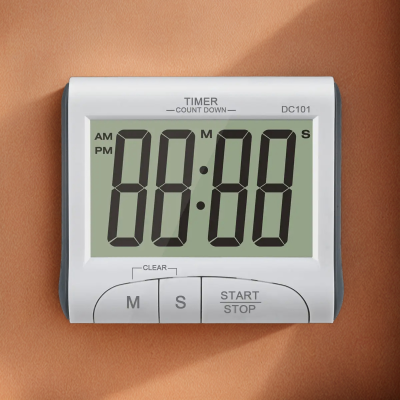
Listing signals further reveal significant differences in packaging and origin, with most products originating from Guangdong, China, and utilizing carton or box packaging for shipment. The presence of specific model numbers like DT-21 and DC101 alongside varying gross weights indicates that buyers cannot assume uniformity across different SKUs. It is essential to verify the exact physical dimensions and weight specifications for each item to ensure compatibility with existing storage solutions and to accurately calculate shipping costs and logistics planning.
Technical Specifications to Verify
Technical verification must begin with the timing mechanism, as the data confirms the existence of both synchronous counter types and dial timer variants. Buyers should explicitly confirm whether the unit operates as a subtract counter or a standard timer, and verify the carry mode to ensure it matches the intended operational flow. The accuracy specification of 1°C suggests a potential temperature sensitivity or a specific calibration standard that requires validation, especially for applications where precise timing is critical for food safety or process control.
Power consumption and display technology are equally critical verification points, with observed listings specifying 1.5V LR44 or AAA battery types and LCD display formats. Procurement teams must ensure that the selected model supports the required timer functions, such as countdown, stopwatch, or set time reminders, and confirm the maximum fixed time limits. Additionally, the control method, whether touch or manual, and the material composition, such as ABS or plastic, must be validated against durability requirements and user interface preferences to prevent operational failures.
Compliance and Safety Documentation
While the supplied facts do not explicitly list specific certification bodies, buyers must demand evidence of compliance with relevant safety standards for electronic kitchen appliances. The presence of a one-year warranty under normal conditions implies a baseline expectation of product reliability, but this should be backed by formal test reports regarding electrical safety and material toxicity. It is imperative to verify that the ABS or plastic materials used in construction meet food-contact safety regulations, particularly for devices intended for direct use in kitchen environments.
Documentation regarding the product origin and manufacturing standards is essential for risk mitigation, especially given that the data points to Guangdong as the primary place of origin. Buyers should request proof that the manufacturing process adheres to international quality management systems and that the products have undergone necessary stress testing for the specified timing ranges. Without clear documentation on how the 99-minute or 30-minute limits are achieved and maintained, the risk of premature failure or inaccurate timing remains a significant concern for commercial buyers.
Cost Drivers and Commercial Terms
Cost structures for kitchen timers are heavily influenced by the complexity of the electronic mechanism and the chosen display technology, with prices observed ranging from 0.4 to 35 USD. The variation in price likely correlates with features such as the LCD display, touch control methods, and the inclusion of custom logo services. Buyers must analyze the cost-per-unit against the specific functional requirements, as higher-priced models may offer superior accuracy or extended timing ranges that justify the investment for professional kitchen settings.
Commercial terms are further dictated by the observed Minimum Order Quantity (MOQ) ranges, which span from 1 to 5000 units, with specific listings indicating an MOQ of 200 pieces. This wide range allows for flexibility but requires careful negotiation to balance inventory costs with cash flow constraints. Procurement teams should also consider the selling units, which are listed as single items, and clarify whether bulk discounts apply for orders exceeding the standard MOQ to optimize the total cost of ownership.
Supplier Qualification and Quality Control
Supplier qualification should prioritize manufacturers who demonstrate a clear understanding of the diverse product attributes, such as the distinction between industrial and household usage models. The data indicates that some suppliers offer eco-friendly and stocked items, which suggests a capacity for rapid fulfillment and sustainable production practices. Buyers must verify the supplier's ability to maintain consistent quality across different model numbers, ensuring that the specified gross weights and dimensions remain stable across production batches.
Quality control protocols must include rigorous testing of the timing accuracy and battery life, given the specific power requirements and timing ranges observed in the market. Suppliers should provide detailed inspection reports that confirm the functionality of the countdown and stopwatch features, as well as the durability of the ABS or plastic casing. Establishing a clear communication channel for addressing defects and ensuring that the one-year warranty terms are honored is essential for maintaining a reliable supply chain and protecting the buyer's brand reputation.
Long-Term Procurement Checks
Long-term procurement success depends on the ability to monitor product performance over time, particularly regarding the accuracy of the timing mechanisms and the longevity of the battery life. Buyers should implement a system for tracking field performance data to identify any recurring issues with the synchronous counter or dial timer functions. Regular audits of the supplier's production lines can help ensure that the specified standards, such as the 66.7x63x15mm or 530x230x290mm dimensions, are consistently met without deviation.
Sustainability and supply chain resilience are also critical factors for long-term planning, especially given the reliance on specific battery types and electronic components. Buyers should assess the supplier's ability to adapt to changes in component availability and ensure that the eco-friendly attributes of the products are maintained throughout the product lifecycle. Establishing a strategic partnership with a qualified supplier who can provide consistent updates on product improvements and regulatory changes will secure a stable supply of high-quality kitchen timers for future needs.
FAQs
How long can a digital Kitchen Timer count down before it alarms?
The digital kitchen timers listed support a countdown range of up to 99 minutes and 59 seconds, with some compact dial models limited to 30 minutes or a fixed time of up to 1 hour. Choose a model based on your typical cooking durations, and confirm the timing range with the supplier before ordering.
What materials are commonly used for kitchen timers on this page?
Most kitchen timers listed are made of ABS plastic, which keeps the units lightweight and durable for daily kitchen use. The listed digital model DT-21 measures 66.7 by 63 by 15 millimeters and weighs about 64.5 grams. ABS housings are easy to clean and suitable for both home kitchens and light industrial environments.
Which power sources do these kitchen timers use?
The listed timers typically use small replaceable batteries, including AAA batteries and 1.5V LR44 button cells. Battery-powered timers need no wiring, so they can be placed anywhere on a countertop or attached with a magnet or stand if the design supports it. Confirm the exact battery type and whether batteries are included before placing an order.
Can I customize the logo and packaging when ordering kitchen timers in bulk?
Yes, logo customization is listed as an available option, with carton or box packing offered for bulk shipments. Custom branding usually applies to order quantities above the stated minimum, which is listed at 200 pieces for one model. Discuss logo placement, printing method, packing format, and any extra cost with the supplier before confirming your order.
What is the typical minimum order quantity for kitchen timers?
Minimum order quantities vary by model and listing, with the observed range spanning from 1 piece to 5,000 pieces, and one listed model stating an MOQ of 200 pieces. Lower MOQs are useful for testing the market, while higher volumes usually improve unit pricing. Always verify the MOQ for the specific model you want with the supplier.
How accurate and easy to read are the digital Kitchen Timer displays?
The listed timers use LCD digital displays with touch control on some models, making countdown and stopwatch settings quick to operate. One listing states an accuracy of 1 degree Celsius for a related digital display function. LCD screens provide clear readouts of remaining minutes and seconds, which helps in busy kitchen environments.
Where do the kitchen timers listed on this page come from?
The listed kitchen timers originate from Guangdong, China, a major electronics manufacturing region with many timer and small appliance factories. Sourcing from this region typically offers a wide choice of models, customization services, and export experience. Confirm shipment terms, warranty coverage, and lead times directly with each supplier during negotiation.
Do kitchen timers come with any warranty coverage?
One listed model offers a warranty of one year under normal use, which covers defects arising from regular household operation. Warranty terms differ by supplier and model, so check what is included, such as replacement or repair for faulty units. Keep records of your purchase and any quality issues to support warranty claims.