Source Luxury Leather Apple Watch Strap for Smart Watch, Sport Watch, and iWatch
Explore 30 listings for the Luxury Leather Apple Watch Strap tailored for smart watches, sport watches, and iWatch models. Buyers can compare customization options, material types like eco-friendly silicone and PU, and MOQ requirements ranging from 100 to 1000 pieces across various suppliers.
Key considerations
Products List


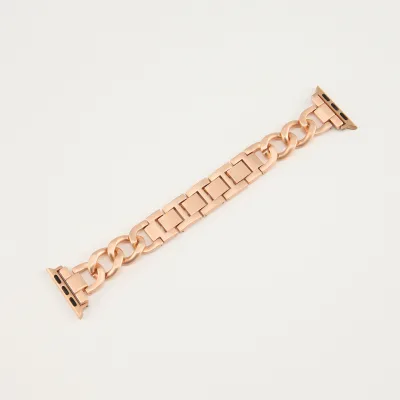
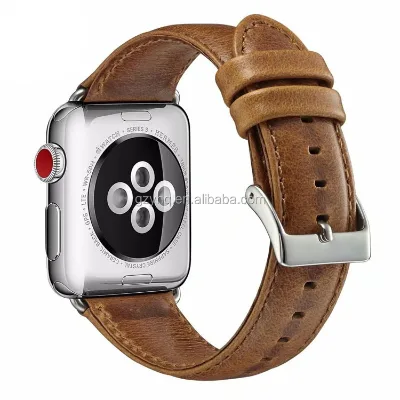
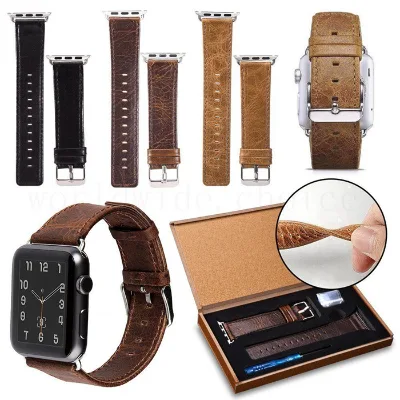
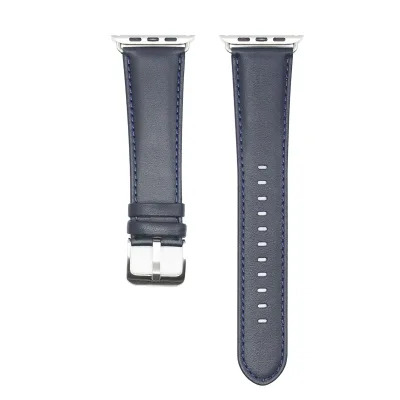

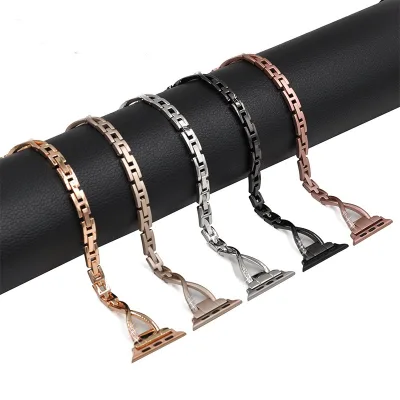
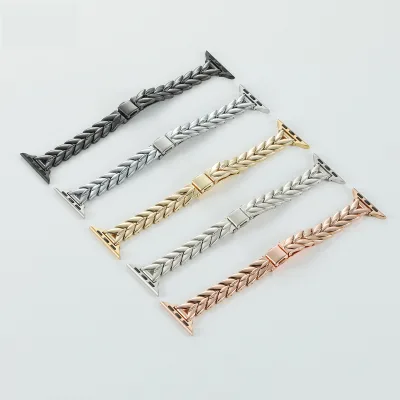
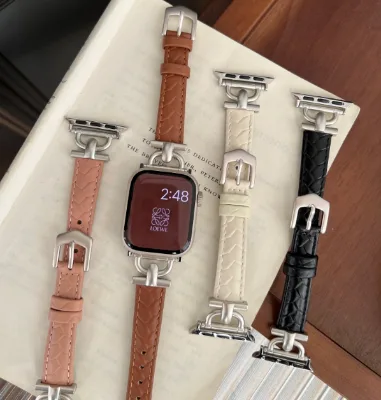
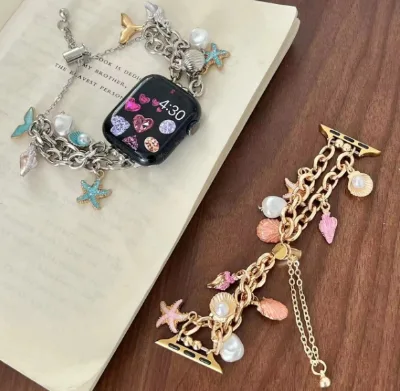
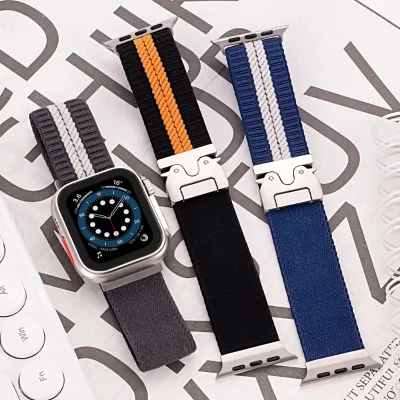
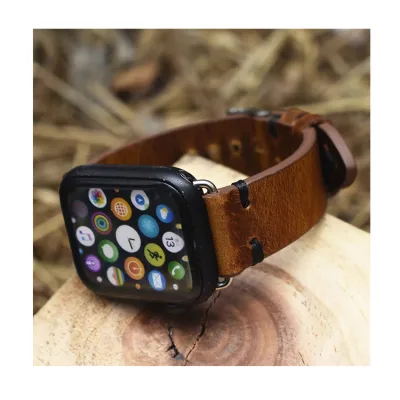


Quick Release Genuine Leather Apple Watch Band Watch Strap Woman Business
$4.28 - $4.80
MOQ: 10 Pieces


Apple Watch Magnetic Clasp Band iWatch Strap Stainless Steel Strap Business 49mm
$22.28 - $23.65
MOQ: 10 Pieces
Comprehensive Sourcing Guide
Strategic Sourcing Guide for Luxury Leather Apple Watch Straps
Understanding Product Attributes and Material Variations
When sourcing luxury leather Apple Watch straps, buyers must first navigate the complex landscape of material definitions and product classifications found in current market listings. The term "luxury" in this context often intersects with specific material compositions that range from genuine leather to high-grade synthetic alternatives designed to mimic premium aesthetics. Based on observed product data, the market presents a dichotomy between traditional leather offerings and modern eco-friendly alternatives. While some listings explicitly identify the material as "Leather" with a "Fashion" style, others specify "Eco-Friendly Silicone" or "Eco-Friendly PU" as the primary composition. This distinction is critical for procurement strategies, as the tactile experience, durability, and price point vary significantly between these categories.
The "Luxury" designation is frequently associated with specific design features such as a "Buckle" clasp type and a "Design" focus on leather watch bands. However, buyers must verify that the "Luxury" label is supported by the actual material quality rather than marketing terminology alone. The observed product attributes indicate that the target user is specifically "For Apple Watch," with compatibility spanning various case sizes including 38mm, 40mm, 41mm, 42mm, 44mm, and 45mm. This size variance requires precise specification management to ensure the strap fits the intended device generation. Furthermore, the "Band Width" specifications observed in the market data confirm that a single SKU may not suffice for all devices, necessitating a multi-SKU approach for a comprehensive product line.
Technical Specifications and Compatibility Requirements
Technical precision is paramount when sourcing watch straps for the Apple Watch ecosystem. The compatibility of the strap with the device is determined by the lug width and the specific model number of the watch. Market observations reveal a wide range of size specifications, including 38/40/42/44mm and 38/40/41/42/44/45mm. This indicates that suppliers often group multiple sizes under a single model number or offer distinct models for different generations of the Apple Watch. Buyers must ensure that the "Model Number" provided by the supplier aligns with the specific watch generation they intend to support. For instance, a model number like "BN538" or "AL-BD-11" may correspond to specific width requirements that differ from other listings.
The physical dimensions of the strap also influence the overall user experience. The "Single package size" varies considerably, ranging from compact 5x5x5 cm units to larger 20x13x3.5 cm packages, which impacts shipping costs and storage logistics. Additionally, the "Net Weight" of individual units is a key metric for freight calculation, with observed weights ranging from 26g to 50g per piece. The "Single gross weight" further complicates logistics planning, with values observed at 0.035 kg and 0.120 kg. These variations suggest that different suppliers or product lines utilize different packaging densities and material thicknesses. Buyers should request detailed dimension sheets for each SKU to ensure accurate freight estimation and warehouse planning.
Compliance Standards and Certification Verification
In the B2B procurement of wearable accessories, compliance with international safety and environmental standards is non-negotiable. The market data highlights a robust set of certifications that reputable suppliers should possess. Observed listings explicitly mention adherence to RoHS, REACH, LFGB, FDA, and SGS standards. These certifications cover a broad spectrum of safety requirements, including restrictions on hazardous substances (RoHS), chemical safety (REACH), food contact safety (LFGB and FDA), and general quality assurance (SGS). For luxury goods, the presence of these certifications serves as a proxy for material safety and manufacturing quality.
However, buyers must exercise caution when interpreting these claims. While the data lists these standards as "prod_prop.prod_standard," it is essential to verify that the specific batch of goods being ordered carries valid, up-to-date certificates. The presence of "Eco-Friendly" designations in the material description, such as "Eco-Friendly Silicone" or "Eco-Friendly PU," often correlates with these environmental certifications. Buyers should request copies of the test reports to confirm that the materials used in the "Luxury" leather or PU straps meet the specific regulatory requirements of their target export markets. Failure to verify these documents can lead to customs delays or product recalls, particularly in regions with strict chemical regulations.
Cost Drivers and Minimum Order Quantity Analysis
The pricing structure for luxury leather Apple Watch straps is heavily influenced by the Minimum Order Quantity (MOQ) and the level of customization required. Market observations indicate a significant disparity in MOQ requirements, ranging from 100 pieces to 1000 pieces per color. This variance directly impacts the unit cost and the financial risk for the buyer. Listings with an MOQ of 1000 pieces often offer lower per-unit costs but require a larger capital outlay and carry higher inventory risk. Conversely, suppliers accepting an MOQ of 100 pieces provide greater flexibility for testing the market but may command a higher price point due to the lower economies of scale.
Customization is another major cost driver. The ability to add a "Custom Logo" via "Printed or OEM" methods is widely available, but the cost implications depend on the MOQ threshold. Some suppliers accept color OEM requests only at an MOQ of 1000 pieces per color, while others accept this at 100 pieces. Buyers must calculate the total cost of ownership, including the setup costs for mold creation or printing plates, against the projected sales volume. The "Selling Units" are typically listed as "Single item," which simplifies the initial ordering process but requires careful aggregation of orders to meet the supplier's MOQ thresholds. Additionally, the "G.W. Per Carton" and "Carton Size" affect shipping costs, with larger cartons (e.g., 45x43x23 cm) potentially incurring higher freight charges than compact options (e.g., 35x35x25 cm).
Supplier Evaluation and Production Capabilities
Evaluating a supplier for luxury leather straps requires a deep dive into their production capabilities and logistical consistency. The "Place of Origin" is consistently listed as "China," with specific mentions of "Guangdong, China" as a manufacturing hub. This region is known for its mature supply chain for leather goods and electronics accessories. Buyers should verify the supplier's capacity to handle the "High-Quality" claims often associated with luxury items. This involves assessing their quality control processes, particularly regarding the "Feature" of breathability in the strap design, which is crucial for user comfort during extended wear.
The "Packing" details provide insight into the supplier's operational maturity. Standard practices include "1PCS/OPP Bag" with bulk cartons containing either 200 or 500 pieces. The "Packaging Details" often allow for "Standard Carton Box with retail package," with options for special packaging upon request. This flexibility is a positive indicator of a supplier's willingness to accommodate brand-specific requirements. However, buyers must ensure that the "Single package size" and "Single gross weight" are consistent across production runs to avoid discrepancies in shipping manifests. Furthermore, the "Brand Name" associated with the listing, such as "YHQ," should be checked to ensure it does not infringe on existing trademarks, especially when sourcing for private label opportunities.
Quality Control and Long-Term Procurement Strategy
Implementing a robust quality control (QC) strategy is essential for maintaining the "Luxury" status of the product. The "Quality" attribute is listed as "High-Quality," but this is a subjective claim that must be validated through objective testing. Buyers should establish clear acceptance criteria for the "Clasp Type," "Band Color," and "Design" consistency. For leather products, color fastness and material integrity are critical; for PU or silicone alternatives, flexibility and resistance to wear are key metrics. The "Feature" of breathability should be verified through physical testing to ensure it meets user expectations.
Long-term procurement considerations involve building a relationship with a supplier who can scale with demand. The "MOQ" flexibility observed in the market suggests that some suppliers can accommodate smaller initial orders while ramping up production for larger volumes. Buyers should negotiate terms that allow for incremental increases in order size without incurring prohibitive setup costs. Additionally, the "Logo" customization options should be standardized to ensure brand consistency across all batches. Regular audits of the supplier's production line and adherence to the "RoHS, REACH, LFGB, FDA, SGS" standards will help mitigate risks associated with product recalls or regulatory non-compliance. By focusing on these technical and operational details, buyers can secure a reliable supply chain for luxury leather Apple Watch straps that meets both quality and commercial objectives.
FAQs
What materials are used for luxury leather apple watch straps?
Straps are made from genuine leather, eco-friendly silicone, or eco-friendly PU. Buyers must verify the specific material listed for each model to ensure it matches their aesthetic and durability requirements before ordering.
Which sizes are compatible with the Luxury Leather Apple Watch Strap?
Compatible sizes include 38mm, 40mm, 41mm, 42mm, 44mm, and 45mm. The specific band width depends on the model number, so buyers must select the correct SKU to ensure a proper fit for their device.
Can I customize the logo on a Luxury Leather Apple Watch Strap?
Yes, printed or OEM logos are available for customization. This service typically requires meeting a minimum order quantity of 100 pieces or 1000 pieces per color depending on the specific supplier terms.
What certifications do Luxury Leather Apple Watch Strap suppliers hold?
Reputable suppliers hold RoHS, REACH, LFGB, FDA, and SGS certifications. These standards ensure the materials are safe for skin contact and comply with international environmental and chemical safety regulations.
How does the MOQ affect the price of a Luxury Leather Apple Watch Strap?
Minimum order quantities range from 100 to 1000 pieces per color. Higher MOQs often lower the unit cost, while lower MOQs provide flexibility for testing the market but may carry a higher price point.
Where are luxury leather apple watch straps manufactured?
These products originate from China, with specific manufacturing hubs in Guangdong. Buyers should verify the exact place of origin to understand shipping logistics and potential trade compliance requirements for their region.
What is the typical packaging for a Luxury Leather Apple Watch Strap?
Standard packaging includes one piece per OPP bag with bulk cartons holding 200 or 500 units. Special retail packaging is often available upon request, though it may require additional coordination with the sales team.