Source Modern Minimalist Glass Cup Holder for Home, Hotel, and Office
Explore 30 listings for the Modern Minimalist Glass Cup Holder suitable for home, hotel, and office environments. Buyers can compare specifications, materials, and customization options to find the right supplier.
Key considerations
Products List


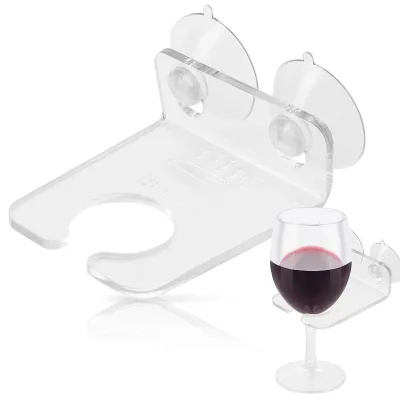


Right Single Chrome Plate Glass Cup Removable Wall Mounted Tumbler Holder
$4.00 - $5.00
MOQ: 1000 Pieces


Comprehensive Sourcing Guide
Strategic Sourcing Guide for Modern Minimalist Glass Cup Holders
Defining the Modern Minimalist Aesthetic in Glass Storage
The procurement of modern minimalist glass cup holders requires a precise understanding of how form, function, and material integrity intersect. In the context of B2B sourcing, "modern minimalist" is not merely a stylistic label but a specification for clean lines, transparency, and a lack of visual clutter. When evaluating potential inventory, buyers must distinguish between products that simply hold cups and those that embody the minimalist ethos through their structural design. The core material for this category is glass, specifically identified in available product data as "Melt Glass," which suggests a manufacturing process focused on clarity and structural homogeneity.
A critical observation in the current market is the divergence between glass-based holders and those made from alternative materials like stainless steel or acrylic. While the core keyword specifies glass, the supply chain often presents hybrid solutions or similar functional items with different material compositions. For instance, some listings describe "acrylic cup holders" with "Luxury Traditional Design" or "Stainless Steel" finishes. A buyer seeking a strictly modern minimalist glass product must filter out items with "Brown Box" packing, "Stainless Steel" surface finishing, or "Cover/Handle/Lanyard" styles, as these often denote a different design language or utility. The ideal modern minimalist glass holder should feature a "Transparent" color profile, a "Desktop" installation type, and a design that emphasizes the "Melt Glass" material without unnecessary ornamentation. The "MODERN" style designation found in product attributes aligns directly with this aesthetic, contrasting with "Luxury Traditional Design" options that may feature excessive detailing.
Technical Specifications and Material Integrity
When sourcing glass cup holders, technical specifications serve as the primary filter for quality and suitability. The material composition is paramount; the supply data confirms the availability of "Melt Glass" and "Glass" as primary materials, distinct from "acrylic" or "Stainless Steel" alternatives. Buyers must verify that the glass type matches the intended application, particularly regarding thickness and durability. The "Transparent" color attribute is standard for minimalist designs, allowing the glass to blend seamlessly into various interior settings, from residential kitchens to hotel lobbies.
Dimensional consistency is another critical technical factor. While specific dimensions vary by manufacturer, the supply data references a standard size of "415x210xH210mm" for certain glass units. This indicates that standardized sizing exists in the market, though "Customized" standards are also available. Procurement teams should verify the exact dimensions against their storage requirements, as the "number_of_shelves" attribute often indicates a single-tier design for minimalist units, though multi-tier options exist. The "Assembly" status is typically "Pre-Assembled," which reduces on-site labor costs and ensures structural integrity before delivery.
Installation requirements are equally specific. The "Desktop" orientation suggests that these units are designed for countertop use rather than wall-mounted applications. This is confirmed by the "Wall Sucked: No" attribute found in related product data. Buyers must ensure the base of the glass holder provides sufficient stability for the intended volume of cups, which can range from "300ml" to "1000ml" or larger sizes like "25oz" to "40oz." The "Surface Treatment" of "Polished" is a common finishing technique for glass, enhancing clarity and reducing the risk of chipping at the edges. However, buyers should request specific test data regarding edge strength and thermal shock resistance, as these are not explicitly detailed in the general product attributes.
Compliance, Certification, and Regulatory Standards
Navigating the regulatory landscape for glass cup holders involves verifying a robust suite of certifications that ensure safety and environmental compliance. The supply data indicates a wide range of available certifications, including "FDA," "CE / EU," "CIQ," "LFGB," "EEC," "RoHS," "REACH," and "ISO" standards. For a product intended for food and beverage contact, such as a cup holder, the presence of "FDA" and "LFGB" certifications is non-negotiable. These standards verify that the glass material and any adhesives or coatings used do not leach harmful substances into the cups or the environment.
Environmental compliance is increasingly critical in B2B procurement. Certifications like "RoHS" and "REACH" are essential for products entering the European Union and other regulated markets. These certifications confirm that the manufacturing process adheres to strict limits on hazardous substances. Additionally, the "ISO 90012015" and "ISO14001" certifications mentioned in the data point to a supplier's commitment to quality management systems and environmental management, respectively. While "FSC" and "BSCI" are noted as low-confidence background factors, buyers should prioritize the high-confidence certifications listed above when evaluating a supplier's compliance portfolio.
It is important to note that certification status is not universal across all listed products. A supplier may offer "Customized" standards, meaning that specific certifications might need to be requested or verified on a per-order basis. Buyers should not assume that every glass cup holder listed with a "Glass" material description automatically carries all the aforementioned certifications. Due diligence requires requesting current, valid certification documents for the specific model number, such as "T-0188" or "BR5589," to ensure regulatory alignment with the target market.
Cost Drivers and Pricing Dynamics
The pricing structure for modern minimalist glass cup holders is influenced by several variable factors, including material quality, customization levels, and order volume. The observed price range in the market spans from $0.01 to $25 USD, a broad spectrum that reflects the diversity of product tiers. At the lower end of this range, products may be basic, non-customized units with standard dimensions and minimal packaging. Conversely, the higher end of the price spectrum likely corresponds to items with "Customized Print Available," unique "Melt Glass" formulations, or specialized "Lost Wax Casting" techniques, although the latter is more commonly associated with metal finishes.
Volume is a significant driver of cost. The Minimum Order Quantity (MOQ) ranges from 1 to 50,000 units, offering flexibility for both small startups and large retailers. However, the unit price typically decreases as the order volume increases. Buyers must balance the cost per unit against the total capital outlay, considering that "Customized" designs often incur higher setup costs. The "Delivery Time" of "25-30 days After Deposit Confirmed" also impacts the overall cost of goods sold, as longer lead times may require higher inventory holding costs or affect cash flow.
Packaging costs are another hidden variable. While some products are shipped in "Brown Box" or "Carton" packaging, others utilize "Export Carton" standards. The choice of packaging affects the final landed cost, especially for international shipping. "Export Carton" packaging is generally more robust and may be required for certain markets, adding to the unit cost. Buyers should request a detailed breakdown of costs, including packaging, to understand the true value proposition of a supplier's offer.
Typical Applications and Market Segmentation
Modern minimalist glass cup holders serve a diverse range of applications, primarily within the "Home" and "Hotel" sectors. The "Application" attribute explicitly lists "Home and Hotel," indicating that these products are versatile enough for residential use and commercial hospitality environments. In residential settings, the "Desktop" installation and "MODERN" style make them ideal for kitchen counters, dining tables, or bathroom vanities where a clean aesthetic is desired. The "Recommended Use" as "Home Decor" further underscores their role in enhancing interior design rather than purely functional storage.
In the hospitality industry, the durability and aesthetic appeal of glass cup holders are crucial. Hotels often require products that are easy to clean, visually appealing, and capable of withstanding high-frequency use. The "Transparent" color and "Polished" surface treatment contribute to a sense of cleanliness and luxury, aligning with the expectations of high-end hotel guests. The "All Ages" attribute suggests that these products are safe and suitable for a broad demographic, which is essential for public spaces.
The "Customized" nature of these products allows for branding opportunities. Suppliers offering "OEM and ODM Services Available" enable hotels and retailers to imprint their logos or specific design elements onto the glass or packaging. This customization capability is a key differentiator for B2B buyers looking to create a unique brand identity. The "Printed" options, such as "Customized Print Available," provide additional avenues for differentiation in a competitive market.
Supplier Evaluation and Quality Control Protocols
Evaluating suppliers for glass cup holders requires a rigorous approach to quality control and operational reliability. The "Place of Origin" is frequently listed as "Guangdong, China," a major manufacturing hub known for its glass and metalworking capabilities. However, the location alone does not guarantee quality. Buyers must assess the supplier's production capacity, specifically their ability to handle "Customized" orders and maintain consistency across large batches.
Quality control protocols should focus on the integrity of the "Melt Glass" material. Buyers should request samples to inspect for bubbles, cracks, or uneven thickness, which can compromise the structural integrity of the holder. The "Polished" surface treatment should be examined for smoothness and the absence of sharp edges that could cause injury. Additionally, the "Assembly" process should be verified to ensure that pre-assembled units are secure and stable.
The "Delivery Time" of 25-30 days is a standard benchmark, but buyers should verify the supplier's ability to meet this timeline consistently. Delays in production or shipping can disrupt inventory planning and sales cycles. Suppliers with "ISO 90012015" certification are more likely to have robust quality management systems in place, reducing the risk of defects. Buyers should also inquire about the supplier's return policy and warranty terms for defective products, as glass is inherently fragile and prone to damage during transit.
Long-Term Procurement and Supply Chain Resilience
Long-term procurement of modern minimalist glass cup holders requires a strategic approach to supply chain resilience. The "Customized" nature of the products means that buyers should establish clear specifications and design guidelines early in the relationship to avoid costly revisions. Building a strong partnership with a supplier who offers "OEM and ODM Services" can facilitate continuous product improvement and adaptation to market trends.
Sustainability is an increasingly important consideration for long-term procurement. While "FSC" and "BSCI" are noted as low-confidence background factors, buyers should prioritize suppliers who demonstrate a commitment to environmental responsibility through their "RoHS," "REACH," and "ISO14001" certifications. These certifications indicate that the supplier is actively managing their environmental impact, which aligns with the growing demand for sustainable products in the B2B sector.
Finally, buyers should monitor market trends and pricing dynamics to ensure they are receiving competitive rates. The broad price range of $0.01 to $25 USD suggests that there is room for negotiation and optimization. By maintaining a diverse supplier base and regularly reviewing product specifications, buyers can mitigate risks and ensure a steady supply of high-quality modern minimalist glass cup holders for their customers.
FAQs
What certifications are available for glass cup holders?
Glass cup holders often carry FDA, CE, LFGB, and RoHS certifications to ensure safety. These standards verify that materials like melt glass do not leach harmful substances. Buyers should request specific documents for models like T-0188 to confirm compliance before ordering.
How long is the delivery time for custom orders?
Delivery typically takes 25 to 30 days after the deposit is confirmed. This timeline applies to customized units requiring specific printing or design changes. Suppliers in Guangdong, China, generally adhere to this schedule for pre-assembled glass units.
Which materials are used for modern minimalist cup holders?
Modern minimalist cup holders are primarily made from melt glass or stainless steel. Some variants use acrylic for desktop installation. The material choice affects the finish, with glass offering transparency and steel providing a polished silver or black look.
Can buyers request custom printing on glass holders?
Yes, customized print options are available for glass cup holders. Suppliers offer OEM and ODM services to add logos or specific designs. This customization allows hotels and retailers to create unique branding while maintaining the transparent or polished aesthetic.
What is the minimum order quantity for glass holders?
The minimum order quantity ranges from 1 to 50,000 units depending on the supplier. Lower MOQs suit small startups, while larger volumes secure better pricing. Buyers should verify the specific MOQ for their chosen model number and customization level.
Where are these cup holders manufactured?
Most modern minimalist glass cup holders originate from Guangdong, China. This region is a major hub for glass and metal manufacturing. Buyers should confirm the specific place of origin for each supplier to ensure logistical alignment with their import requirements.