Source Modern Waterproof Acrylic Serving Tray for Restaurants, Hotels, and Catering
Compare 30 listings for Modern Waterproof Acrylic Serving Tray options from verified Chinese manufacturers. Buyers can evaluate customized sizes, thicknesses, and eco-friendly features for food service applications.
Key considerations
Products List
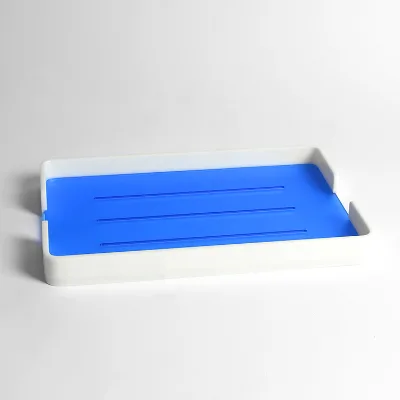
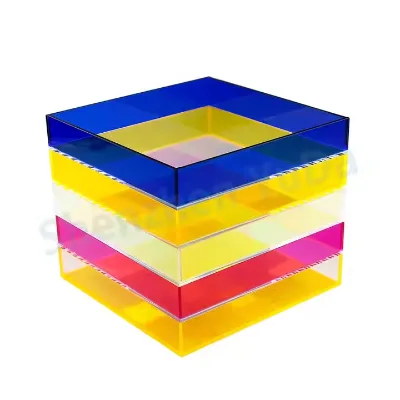
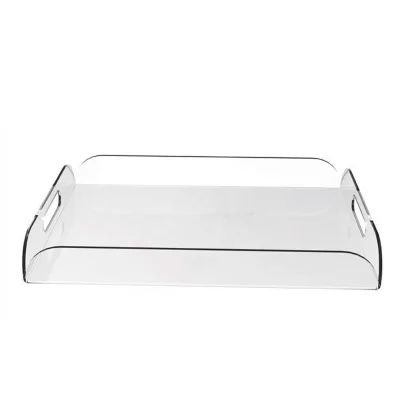


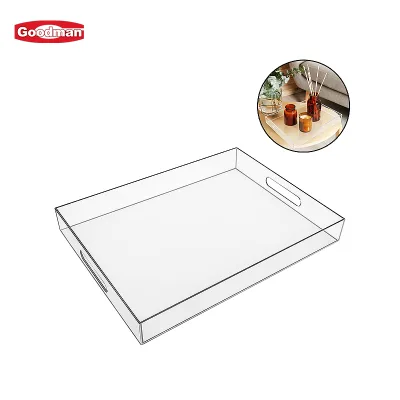
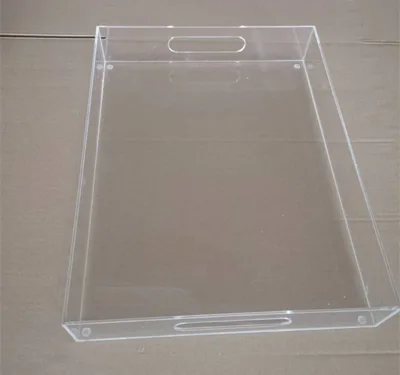
Gold Handle Custom Decorative Acrylic Tray for Hotel Storage Food Serving Use
$9.90 - $10.90
MOQ: 100 Pieces








Comprehensive Sourcing Guide
Sourcing Guide for Modern Waterproof Acrylic Serving Trays
The global demand for durable, aesthetically pleasing, and functional serving ware has elevated the profile of acrylic materials in the hospitality and retail sectors. When sourcing a Modern Waterproof Acrylic Serving Tray, buyers must navigate a landscape defined by specific material properties, manufacturing capabilities, and compliance requirements. This guide provides a structured approach to evaluating potential suppliers and products, ensuring that the final procurement aligns with operational needs and safety standards. The focus remains on the intersection of design, material integrity, and supply chain reliability, utilizing observed market data to inform decision-making without making unverified claims about specific vendors.
Understanding Material Composition and Physical Properties
The foundation of any successful procurement for acrylic serving trays lies in a clear understanding of the material itself. Acrylic, often referred to by trade names such as Lucite or PMMA, is a transparent thermoplastic that offers distinct advantages over glass and standard plastics. In the current market, the material is consistently identified as "Clear Acrylic" or simply "Acrylic," with specific references to "Plastic Type: Acrylic" and "Material: Acrylic" appearing frequently in product specifications. This material choice is critical for the "modern waterproof" requirement, as acrylic is inherently non-porous and resistant to water absorption, making it ideal for food contact environments.
Buyers should scrutinize the thickness specifications provided by suppliers, as this directly impacts durability and perceived value. Observed data indicates that standard thicknesses for these trays range from 2mm to 5mm, with options for customization available. Thicker variants, such as 3mm or 5mm, generally offer enhanced rigidity and a more premium feel, suitable for heavy-duty restaurant service. Conversely, 2mm options may be lighter and more cost-effective for events or temporary setups. The finish is another critical attribute; a "Polished" finish is standard for high-quality trays, ensuring smooth edges that prevent injury and facilitate easy cleaning. The surface should be free of scratches and cloudiness, which can degrade the "Clear" or "Customized Color" aesthetic over time.
Furthermore, the structural integrity of the tray is often enhanced by specific design features. While some listings mention "Foldable" characteristics, this is less common for rigid serving trays and may indicate a specific collapsible design for storage efficiency. More typically, the "Modern" style is achieved through clean lines, rounded corners, and the inclusion of handles, as noted in keywords like "acrylic tray with handles." The ability to customize the color to "Clear, black, white or Customized Color" allows for brand alignment, while the "Handmade" attribute suggests a level of artisanal finishing that can reduce the risk of manufacturing defects compared to purely mass-produced items.
Technical Specifications and Customization Capabilities
When defining the technical requirements for a Modern Waterproof Acrylic Serving Tray, buyers must look beyond generic descriptions to specific dimensional and functional parameters. The market offers a wide range of sizes, from compact units measuring approximately 8.25" x 11.5" x 1.5" to larger serving platters reaching 20" x 12". Specific metric dimensions, such as 40030060mm, are also prevalent, indicating that suppliers cater to both imperial and metric markets. The "Size: Custom sizes" attribute is a significant differentiator, allowing businesses to tailor trays to specific menu items, such as cheese boards, appetizer platters, or beverage stations.
Customization extends beyond dimensions to include branding and aesthetic details. Suppliers frequently offer the ability to incorporate logos, with the specification "Logo: Can be made as your request" indicating that screen printing, laser engraving, or decals are viable options. This is essential for corporate gifting or branded hospitality services. The "Customized Color" option allows for the creation of unique visual identities, moving beyond the standard clear or black options to match specific interior design themes. Additionally, the "Feature: Customized" attribute suggests that the entire product can be adapted to unique client needs, including specific handle shapes or edge profiles.
It is important to note that while "Foldable" is listed as a feature in some contexts, it is not a universal standard for all acrylic trays. Buyers must verify if a specific model is designed for collapsibility or if it is a rigid unit. Similarly, the "Type: Tray Set" designation implies that some suppliers offer coordinated sets, which can streamline procurement for full table settings. The "Selling Units: Single item" observation suggests that while sets exist, the primary transaction model is often per-unit, requiring careful calculation of total volume for large orders.
Compliance, Certification, and Food Safety Standards
For any product intended for food contact, compliance with safety standards is non-negotiable. The core keyword "Modern Waterproof Acrylic Serving Tray" implies a product that will regularly interact with food and beverages, necessitating rigorous verification of material safety. Observed data confirms that these products are explicitly designed for "Food Contact" and "Food" usage, with some listings specifying suitability for "Food, Egg." This distinction is vital, as not all plastics are rated for direct food contact, especially under varying temperature conditions.
Certification plays a pivotal role in validating these safety claims. The market data highlights "CE/EU" and "FDA" certifications as key indicators of compliance. The "CE/EU" mark suggests adherence to European safety, health, and environmental protection standards, which is crucial for suppliers exporting to the European market. The "FDA" certification indicates that the material meets the standards set by the U.S. Food and Drug Administration for food contact substances. Buyers should request current, valid certificates for these specific standards rather than relying on general claims. The presence of "Certification: CE/EU,FDA" in product listings serves as a strong signal of a supplier's commitment to regulatory compliance.
However, buyers must exercise caution regarding the interpretation of these certifications. The presence of a certification label does not automatically guarantee that every batch of product is tested; it often refers to the material grade or the manufacturing process. Therefore, procurement teams should verify that the specific product model, such as "ACT-01" or other model numbers, is covered under the certification scope. Additionally, while "Eco-Friendly" is a frequently cited feature, buyers should seek concrete evidence of this claim, such as recyclability data or specific environmental management certifications, rather than accepting it as a marketing term alone. The "prod_standard: customized" attribute suggests that some suppliers may operate without standard industry certifications, making the verification of material safety even more critical in those cases.
Cost Drivers and Pricing Dynamics
The pricing of acrylic serving trays is influenced by a complex interplay of factors, including material costs, customization levels, order volume, and manufacturing complexity. The observed price range in the market spans from $0.88 to $29.99 USD, a wide variance that reflects differences in size, thickness, and feature sets. Lower-priced items typically correspond to smaller dimensions, thinner materials (e.g., 2mm), and standard clear colors with minimal customization. In contrast, the upper end of the price spectrum is associated with larger trays, thicker acrylic (3mm-5mm), custom colors, and the inclusion of complex features like integrated handles or branded logos.
Minimum Order Quantity (MOQ) is another significant cost driver. The observed MOQ range is between 50 and 1200 units, with a common baseline of 100 pieces. Suppliers with lower MOQs, such as 50 or 100 units, may charge a higher unit price to cover setup costs for smaller production runs. Conversely, orders exceeding 1000 units often benefit from economies of scale, resulting in a lower per-unit cost. The "Selling Units: Single item" attribute indicates that pricing is typically calculated per piece, but bulk discounts are likely available for larger volumes.
Buyers should also consider the cost implications of customization. While "Customized Color" and "Logo" services add value, they often incur additional setup fees or higher unit costs due to the need for specialized tooling or manual labor. The "Handmade" attribute, while adding a premium feel, can also increase production time and cost compared to fully automated manufacturing processes. Furthermore, the "Packing: Safe Packing" and "prod_packing: Cartons" requirements add to the overall cost, as protective packaging is essential to prevent scratching and breakage during transit. When evaluating quotes, buyers must look beyond the base unit price to understand the total landed cost, including packaging, shipping, and any potential tariffs.
Supplier Evaluation and Operational Reliability
Selecting the right supplier requires a thorough evaluation of their operational capabilities, geographic location, and production consistency. The primary manufacturing hubs for these products are located in Guangdong and Zhejiang, China, regions known for their robust plastic manufacturing infrastructure. The "place of origin" data confirms that suppliers in these provinces are the dominant players, offering a mix of large-scale factories and specialized workshops. Buyers should verify the specific location of the supplier to assess logistics efficiency and potential shipping times.
Brand identity is another factor to consider, with names like "jinbaijiang," "4S-Yuda," "DH," and "D&D" appearing in the market. While these brands represent different entities, the presence of multiple brand names suggests a fragmented market with many potential partners. Buyers should not rely solely on brand recognition but rather on the supplier's ability to meet specific technical and compliance requirements. The "Brand: D&D" or "Brand: jinbaijiang" listings indicate that some suppliers operate under distinct brand identities, which can be beneficial for buyers seeking exclusive partnerships.
Reliability is often gauged by the supplier's response to customization requests and their adherence to lead times. The "Customization: Available" and "Logo: Can be made as your request" attributes suggest that many suppliers are flexible, but the actual execution depends on their internal workflow. Buyers should inquire about the supplier's capacity to handle "Custom sizes" and "Customized Color" orders without compromising quality. Additionally, the "Feature: Eco-Friendly" claim should be backed by the supplier's environmental policies, especially if the buyer has corporate sustainability goals.
Quality Control and Long-Term Procurement Strategy
Ensuring consistent quality in acrylic serving trays requires a robust quality control (QC) strategy. The "Finish: Polished" and "Material: Clear Acrylic" attributes highlight the importance of visual inspection. Buyers should implement a QC protocol that checks for surface defects, such as bubbles, scratches, or cloudiness, which can detract from the "Modern" aesthetic. The "Thickness: 2mm, 3mm, 5mm or customized" specification necessitates precise measurement tools to verify that the material meets the agreed-upon thickness, as variations can affect the tray's durability and load-bearing capacity.
Long-term procurement considerations involve building a relationship with a supplier who can scale with the buyer's needs. The "MOQ: 100 PCS" and "MOQ: 100pcs" data points suggest that suppliers are willing to start with moderate volumes, but buyers should plan for growth. A strategic approach involves negotiating tiered pricing based on volume increases and securing agreements on lead times for repeat orders. The "Disposable: Non-Disposable" attribute is a key differentiator; buyers should ensure that the product is designed for long-term use, as acrylic trays are intended to be durable and reusable, unlike single-use plastics.
Finally, buyers should maintain a focus on the "Eco-Friendly" aspect as a long-term value proposition. While the market data supports this claim, it is essential to verify the recyclability of the acrylic material and the supplier's waste management practices. By prioritizing suppliers who demonstrate a commitment to sustainability and quality, buyers can secure a reliable supply chain that supports their brand's reputation for excellence and environmental responsibility. The combination of technical precision, compliance verification, and strategic supplier selection forms the backbone of a successful sourcing strategy for modern waterproof acrylic serving trays.
Comparative Overview of Key Product Attributes
To assist in the final selection process, the following table summarizes the key attributes observed in the market, providing a quick reference for buyers to compare potential products.
| Attribute Category | Observed Specifications | Notes for Verification |
|---|---|---|
| Material | Acrylic, Clear Acrylic, Plastic | Verify "Food Contact" rating and thickness (2-5mm). |
| Dimensions | W 8.25" x L 11.5" x H 1.5" to 20" x 12" | Confirm "Custom sizes" availability and metric equivalents. |
| Certifications | CE/EU, FDA | Request valid certificates for specific model numbers. |
| Customization | Color, Logo, Size, Thickness | Check for setup fees and minimums for custom runs. |
| Features | Eco-Friendly, Handmade, Polished, Foldable* | Verify "Foldable" claim; check for "Non-Disposable" status. |
| MOQ | 50 - 1200 units (Common: 100) | Negotiate based on volume tiers and unit price. |
| Origin | Guangdong, Zhejiang, China | Assess logistics and lead times from these regions. |
| Usage | Restaurant, Food, Egg | Ensure suitability for intended food types and temperatures. |
*Note: "Foldable" is an observed feature but not universal; verify specific product design.
By adhering to these guidelines and leveraging the observed data, buyers can make informed decisions that balance cost, quality, and compliance, ensuring a successful procurement of modern waterproof acrylic serving trays.
FAQs
Can these acrylic trays be used for direct food contact?
Yes, the product is explicitly designed for food contact. Many listings confirm suitability for food and egg usage, ensuring safety for serving applications in restaurants and hospitality settings.
What thickness options are available for the acrylic trays?
Standard thicknesses range from 2mm to 5mm, with options for customization. Thicker variants like 3mm or 5mm offer enhanced rigidity, while 2mm provides a lighter option for specific needs.
Which certifications ensure the trays meet food safety standards?
The trays often carry CE/EU and FDA certifications to validate compliance. These marks indicate adherence to safety standards for food contact substances in both European and United States markets.
How can I customize the color and branding on the trays?
Customization is available for colors including clear, black, white, or specific requests. Suppliers also allow logo customization upon request, enabling brand alignment for corporate or hospitality use cases.
What is the typical minimum order quantity for these trays?
The minimum order quantity typically starts at 100 pieces, though some suppliers may accept orders as low as 50 units. Higher volumes often reduce the per-unit cost due to economies of scale.
Where are the manufacturers of these acrylic trays located?
Manufacturers are primarily located in Guangdong and Zhejiang, China. These regions are known for robust plastic manufacturing infrastructure and offer a mix of large-scale factories and specialized workshops.
Can the trays be customized to specific dimensions?
Yes, custom sizes are available to meet specific menu or design requirements. Buyers can request dimensions ranging from compact units to larger serving platters tailored to their operational needs.