Source Modern Wooden Hidden Interior Door for Homes, Offices, Hospitals
Compare 30 Modern Wooden Hidden Interior Door options featuring customizable sizes, various thicknesses, and diverse veneer materials. Buyers can evaluate specifications including blast resistance, fire ratings, and delivery times from verified suppliers in China.
Key considerations
Products List


Modern Design Soundproof Solid Wood Interior Door Secret Hidden Slab Doors
$99.90 - $129.90
MOQ: 1 Pieces

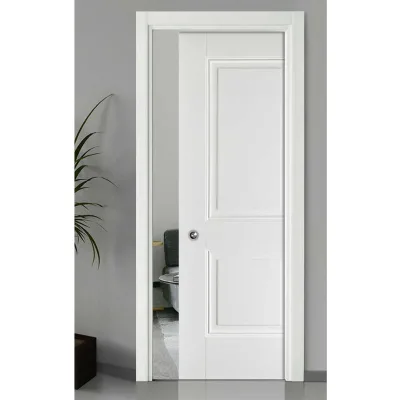

Customized Wood Interior Doors Modern Design Wooden Hidden Door Invisible Door
$170.00 - $180.00
MOQ: 10 Pieces


Modern Interior Frameless Invisible Door Wooden Hidden Room Doors for Houses
$18.50 - $48.50
MOQ: 10 Pieces

Modern Style Solid Hidden Doors Invisible Timber Door Wooden Doors for Interior
$18.50 - $48.50
MOQ: 10 Pieces

Modern Solid Wood Door with Hidden Frame Design Invisible Interior Door
$18.50 - $48.50
MOQ: 10 Pieces


Australian Standard Custom Paint Color Secret Door Invisible Interior Hidden Door
$190.44 - $210.63
MOQ: 2 Square Meters

China Top Factory Secret Room Hidden Doors in Wall Interior Hidden Frameless Door
$190.44 - $210.63
MOQ: 2 Square Meters

China Top Factory Simple Design Frameless Hidden Door Wood Interior Profile Invisible Door
$190.44 - $210.63
MOQ: 2 Square Meters
Comprehensive Sourcing Guide
Sourcing Guide for Modern Wooden Hidden Interior Doors
The global market for interior architectural elements has seen a significant shift toward minimalist aesthetics, where the "hidden" door concept has emerged as a premium solution for seamless wall integration. For procurement professionals targeting modern wooden hidden interior doors, the sourcing landscape is defined by a complex interplay of material engineering, structural integrity, and customization capabilities. This guide synthesizes available product data and industry standards to provide a disciplined framework for evaluating suppliers, verifying technical specifications, and managing the procurement lifecycle for these specialized fixtures.
Technical Specifications and Material Engineering
The core of a modern wooden hidden door lies in its internal construction and surface finishing. Unlike standard hollow-core doors, hidden doors require robust internal frameworks to support the weight of the door leaf and the mechanical stress of the hidden hinge system. Based on observed product attributes, the primary material composition typically involves a wooden inner frame, often utilizing pine or a combination of wood grafting techniques. The core material is frequently specified as MDF (Medium Density Fiberboard), with board thicknesses ranging from 6mm to 8mm, which provides a stable substrate for veneering.
The structural integrity of these units is further enhanced by specific wall thickness options, observed in the market as 10cm, 12cm, 16cm, and 20cm. This variation allows buyers to select a door profile that matches the specific depth of the wall cavity or partition system. The door leaf thickness itself is a critical dimension, with standard offerings including 35mm, 40mm, and 45mm options. Thicker leaves generally correlate with improved sound insulation and a more substantial feel, which is essential for high-end residential or commercial applications.
Surface finishing is equally critical for the "hidden" aesthetic. The doors are typically finished with a veneer material, which can range from PVC veneer to bark veneer, depending on the desired visual texture. The PVC film thickness is a specific quality indicator, with observed ranges between 0.14mm and 0.20mm. A thicker film generally suggests better durability and resistance to scratching or moisture ingress. The color finishing is often customizable, allowing the door to blend perfectly with the surrounding wall paint or paneling. The surface is described as "finished" and "easy to clean," indicating a protective coating that facilitates maintenance without compromising the visual appeal.
Compliance, Certification, and Standard Verification
When sourcing specialized doors, verifying compliance with international and regional standards is a non-negotiable step. While specific certification statuses should be confirmed directly with the supplier, the market data indicates that products often reference standards such as CE, ISO, and CQC. Buyers must treat these references as claims to be verified rather than automatic guarantees. The presence of CE marking suggests conformity with health, safety, and environmental protection standards for products sold within the European Economic Area, while ISO standards (potentially ISO9001 for quality management) indicate a structured approach to manufacturing processes.
The product standards observed in the supply chain include specific dimensional references, such as 200085040 and 900x2100x160mm, which serve as baseline models for customization. However, the "Customized" standard attribute suggests that the primary value proposition lies in the ability to deviate from these norms. Buyers should verify that the supplier's quality management system aligns with the specific requirements of their project, particularly regarding fire ratings, acoustic performance, and structural load-bearing capacity. The "High Cost Performance" attribute suggests that mature technology is being utilized, but this does not replace the need for independent third-party testing results for fire resistance or bullet resistance if the application demands it.
Cost Drivers and Pricing Dynamics
The pricing structure for modern wooden hidden doors is influenced by a multitude of factors, including material selection, customization complexity, and logistical requirements. The observed price range in the market spans from $18.50 to $500 USD per unit. This wide variance is not indicative of quality alone but reflects the spectrum from basic MDF-core units to high-specification doors with specialized veneers, reinforced frames, and complex hardware integration.
Several key cost drivers must be analyzed during the procurement process. First, the inner frame material significantly impacts cost; a "Mixed Inner Frame" combining stainless steel plates and wood offers superior durability and load-bearing capacity compared to a standard wooden frame, likely commanding a higher price point. Second, the thickness of the door leaf and the quality of the veneer (e.g., natural bark veneer vs. synthetic PVC) are primary determinants of the final unit cost. Third, the level of customization required, such as specific dimensions, unique color finishes, or specialized locking mechanisms, will increase the unit price.
The Minimum Order Quantity (MOQ) also plays a role in the effective cost. The observed MOQ range is 1 to 200 sets. For buyers with small-scale projects, an MOQ of 1 set offers flexibility but may result in a higher per-unit cost due to the setup expenses for custom manufacturing. Conversely, larger orders may benefit from economies of scale, though the lead time and production scheduling must be managed carefully. The "High Cost Performance" claim suggests that the technology used is mature, potentially stabilizing costs for standard configurations, but buyers should remain vigilant about hidden costs related to shipping, packaging, and potential import duties.
Typical Applications and Functional Requirements
Modern wooden hidden doors are designed for applications where visual continuity is paramount. The "Position" attribute confirms these are intended for interior use, making them suitable for residential living spaces, high-end hotels, corporate offices, and luxury retail environments. The functional capabilities of these doors extend beyond simple entry and exit. The observed product attributes list a wide array of specialized functions, including blast doors, bullet-resistant doors, fire doors, gas-tight doors, water-tight doors, and radiation shield doors.
This functional diversity indicates that the same basic construction principles can be adapted for high-security or safety-critical environments. For instance, a "Fire Door" application would require specific core materials and sealing mechanisms to prevent smoke and flame propagation. Similarly, "Gas Tight" or "Water Tight" doors imply the use of advanced sealing technologies, which aligns with the observed "Good Sealing" attribute described as "Dust and Insect Proof." The "Open Style" is predominantly "Swing," which is the standard mechanism for hidden doors, utilizing concealed hinges that allow the door to rotate without visible hardware.
The "Strong Load-Bearing Capacity" and "Long-Term Durability" attributes are particularly relevant for high-traffic areas or environments where the door must withstand frequent use. The "Inner Frame Layout" is described as a "High Density Grid," which suggests a structural design intended to distribute weight evenly and prevent warping over time. Buyers must match the specific functional requirements of their project with the supplier's technical capabilities, ensuring that the door can meet the necessary safety and performance standards for the intended environment.
Supplier Evaluation and Quality Control
Evaluating suppliers for hidden interior doors requires a rigorous approach to quality control and operational capability. The "Condition" of the products is consistently listed as "New," and the "Surface Finishing" is noted as "Finished," indicating that the units are ready for installation upon delivery. However, buyers must verify the "Production Standard" and "Product Model" consistency. The market data shows various models, such as VT, HNSJ-MM632, HD04-3, and IN032-brown, suggesting that different suppliers or product lines may have distinct manufacturing processes.
Quality control should focus on the "Sealing" integrity, the "Lock Hole Distance" (observed as 50mm, 58mm, or 85mm), and the "Accessory" quality, including handles and hinges. The "Easy Maintenance" attribute, linked to an "Easy to Clean Surface," is a practical consideration for long-term ownership. Buyers should request samples to verify the "Veneer Material" quality and the "Wood Material" consistency. The "Packing" method is also a critical quality indicator; options include "Sea" packing, "Customizable" packing, and "Plywood Crate." Plywood crates are generally preferred for heavy or delicate items to prevent damage during transit.
The "Delivery Detail" and "Leading Time" are also essential for supplier evaluation. Observed lead times range from 15 to 30 days after receiving a deposit, with specific mentions of "About 25 days/500 sets." This variability highlights the importance of clear communication regarding production schedules. Buyers should ensure that the supplier has a proven track record of meeting these timelines and that their "Strong Load-Bearing Capacity" claims are backed by structural testing or engineering data.
Long-Term Procurement and Logistics Considerations
Long-term procurement success for hidden interior doors depends on managing the supply chain from order placement to final installation. The "Delivery Time" is observed as 20 days for certain configurations, while others may take up to 30 days. Buyers must account for these lead times in their project schedules, especially for custom orders where "Customized Size" and "Customized Color" are required. The "MOQ" of 1 set allows for flexibility, but larger orders may require more advanced planning to ensure consistent quality across batches.
Logistics and packaging are critical for protecting the "Finished" surface and the "Wooden Inner Frame" during shipping. The "Sea" packing option suggests suitability for ocean freight, but buyers should verify the specific packaging standards to ensure the doors arrive without damage. The "Location" of the suppliers, primarily in China (including Chongqing and Guangdong), indicates a robust manufacturing hub, but buyers should consider the impact of shipping distances and potential tariffs on the total cost of ownership.
Finally, the "Customization" aspect is a double-edged sword. While it allows for perfect integration into the building design, it also introduces complexity in terms of quality control and replacement. Buyers should establish clear specifications for "Customized" attributes, including the "Wooden Inner Frame" type (Pine or Wood Grafting) and the "Veneer Material" (PVC or Bark). By maintaining a disciplined approach to specification and verification, buyers can ensure that the modern wooden hidden doors they procure meet both aesthetic and functional requirements for years to come.
Summary of Key Product Attributes
| Attribute Category | Observed Specifications |
|---|---|
| Material | Wooden Inner Frame (Pine, Wood Grafting), MDF Core, PVC/Bark Veneer |
| Dimensions | Leaf Thickness: 35-45mm; Wall Thickness: 10-20cm; Size: Customized |
| Function | Blast, Bullet Resistant, Fire, Gas/Water Tight, Radiation Shield |
| Finish | Surface Finished, Easy to Clean, Custom Color |
| Hardware | Handle/Hinges, Lock Hole Distance: 50/58/85mm |
| Logistics | Lead Time: 15-30 Days; MOQ: 1-200 Sets; Packing: Sea/Plywood Crate |
| Origin | China (Chongqing, Guangdong) |
FAQs
What materials are used for the inner frame of these doors?
The inner frame typically uses pine wood or a mix of stainless steel plates and wood. Some models feature wood grafting techniques to enhance structural integrity and load-bearing capacity for long-term durability.
How thick are the door leaves available in this category?
Standard door leaf thicknesses include 35mm, 40mm, and 45mm options. These dimensions provide stability for the MDF core and support various functional requirements like fire or bullet resistance.
Can the door size be customized to fit specific wall cavities?
Yes, the product specifications allow for customized sizes to match wall thicknesses of 10, 12, 16, or 20cm. Buyers can also request specific dimensions for the door leaf and frame layout.
What is the typical lead time for delivery after deposit?
Delivery usually takes 15 to 30 days after receiving the deposit, with some specific orders taking about 25 days for 500 sets. This timeline applies to standard and customized configurations.
Which sealing features protect against dust and insects?
The doors feature good sealing capabilities described as dust and insect proof. This is achieved through the finished surface and specific construction methods suitable for interior blast, fire, or gas-tight applications.
What is the minimum order quantity for purchasing these doors?
The minimum order quantity can be as low as 1 set, offering flexibility for small projects. However, some suppliers may require up to 200 sets depending on the specific model and customization level.
How are the doors packed for sea freight shipping?
Packing options include sea packing, customizable packaging, or plywood crates to ensure safety during transit. The plywood crate is often used for heavy or delicate items to prevent damage.