Source Pizza Cooking Vending Machine for Cafes, Events, and Retail
Explore 30 units of pizza cooking vending machines available for sourcing. Buyers can compare specifications like heating and cooling functions, payment systems, and customization options to find the right equipment for commercial food service applications.
Key considerations
Products List


Professional Pizza Vending Machine with Adjustable Temperature Control
$8000.00 - $8100.00
MOQ: 1 unit

Pizza Cooking Vending Machine Fast Food Vending Machine with High Quality
$7900.00 - $8500.00
MOQ: 1 Rolls


Pizza Vending Machine for Outdoor Activity Parks with Automatic Cooking Efficiency
$9588.00 - $10888.00
MOQ: 1 Pieces

Pizza Vending Machine for Theme Parks with Interactive Screen and Fast Cooking
$9998.00 - $10898.00
MOQ: 1 Pieces

Pizza Vending Machine with Automatic Heating and Power-off Protection
$9999.00 - $10899.00
MOQ: 1 Pieces

Pizza Vending Machine with Touch Screen and Quick Pizza Preparation
$9999.00 - $10899.00
MOQ: 1 Pieces

Customized Pizza Vending Machine with Touch Screen and Automatic Heating
$9799.00 - $10599.00
MOQ: 1 Pieces


Hot Selling 24 Hours Pizza Vending Machine Automatic Pizza Vending Machine
$8100.00 - $8200.00
MOQ: 1 Pieces

Automated Self Vending Machine Pizza Maker Pizza Vending Machine for Business
$8100.00 - $8200.00
MOQ: 1 Pieces

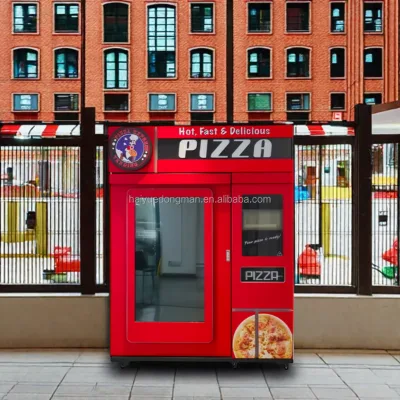


Pizza Vending Machine Hot Fresh Food Fully Automatic Digital Touch Screen
$2998.00 - $6998.00
MOQ: 1 pieces


Automatic Pizza Vending Machine for Sale Smart Pizza Vending Machine
$5188.00 - $7998.00
MOQ: 1 pieces


Comprehensive Sourcing Guide
Strategic Sourcing Guide for Pizza Cooking Vending Machines
Understanding the Technical Architecture and Core Capabilities
When evaluating pizza cooking vending machines for commercial deployment, buyers must first dissect the fundamental technical architecture that distinguishes these units from standard food dispensers. The core functionality relies on a dual-mode thermal system capable of both heating and cooling, ensuring that the product remains viable from storage through to the final cooking stage. The observed specifications indicate a robust power consumption profile, with units rated at approximately 6800W, necessitating a dedicated electrical infrastructure capable of handling high-load industrial appliances. Voltage compatibility is a critical first step in site selection, as the available units support a broad input range of 110 to 240 V, facilitating deployment across different regional power grids without immediate transformer intervention.
The cooking mechanism itself is engineered for speed and consistency. Data points suggest a cooking cycle of merely 2 to 3 minutes, a significant advantage for high-traffic locations where throughput is paramount. This rapid cycle is supported by precise temperature control systems, with cooling capabilities ranging from 4 to 25 degrees Celsius, allowing for flexible storage of ingredients in either fresh or frozen states. The preservation logic is vital; the machines are designed to maintain pizza quality within a specific thermal envelope, often cited as 1 to 6 degrees Celsius for fresh preservation or frozen states for extended shelf life. The physical dimensions of these units vary, with observed standards including a footprint of roughly 180 by 112 by 240 cm or alternative configurations like 1670 by 960 by 1950 mm, requiring careful spatial planning for installation.
Furthermore, the internal logic of these machines extends beyond simple thermal management. They feature advanced failure self-detection systems that monitor operational integrity in real-time, reducing downtime through proactive alerts. The integration of extended networking capabilities allows these units to communicate with central management systems, enabling remote diagnostics and inventory tracking. The user interface is typically a large touch screen, with specific models featuring 55-inch displays, providing an intuitive experience for the end-user while allowing operators to manage settings remotely. The payment systems are equally sophisticated, supporting a hybrid approach that includes coins, banknotes, credit cards, and increasingly, QR code scanning and card swiping, ensuring accessibility for a diverse customer base.
Compliance, Certification, and Regulatory Standards
Navigating the regulatory landscape is a non-negotiable aspect of sourcing industrial food vending equipment. Buyers must verify that the manufacturing origin and the specific unit model adhere to international safety and environmental standards. The supply chain data indicates that many of these units originate from manufacturing hubs in China, specifically Guangzhou and Guangdong, which are known for their industrial capacity. However, origin does not guarantee compliance; therefore, the presence of specific certifications must be confirmed for every procurement batch.
The most prominent certification observed in the market for these units is the CE mark, which signifies conformity with health, safety, and environmental protection standards for products sold within the European Economic Area. Additionally, RoHS (Restriction of Hazardous Substances) compliance is frequently cited, ensuring that the electronic components and materials used in the vending machine do not contain restricted hazardous substances like lead or mercury. For facilities requiring higher quality assurance, the ISO9001 standard is a relevant benchmark, indicating that the factory operates under a certified quality management system. Buyers should explicitly request current certification documentation for the specific model number, such as the WM660 or HL-PIZZA-D01, as compliance status can vary between production runs.
Beyond the electrical and environmental certifications, the material composition of the machine is a critical compliance factor. The exterior casing is typically constructed from galvanized sheet metal, chosen for its durability and resistance to corrosion in varying environmental conditions. This material choice supports the "Indoor" environmental condition rating observed in the product attributes, suggesting that while the units are robust, they are primarily intended for controlled indoor environments rather than harsh outdoor exposure. The packaging standards, often listed as "Wooden Case Packing" or "Plywood Safe Package," are also part of the compliance chain, ensuring that the units arrive at the destination without damage and meet international shipping regulations for heavy machinery.
Cost Drivers and Financial Considerations
The financial landscape of purchasing a Pizza Cooking Vending Machine is influenced by several distinct variables that extend beyond the base unit price. The observed price range for these units spans from approximately $2,998 to $10,899 USD. This significant variance is not arbitrary but is driven by the complexity of the features, the scale of the unit, and the level of customization required. A unit priced at the lower end of the spectrum may offer basic heating and cooling functions with standard payment integration, while a unit at the higher end likely includes advanced networking, larger touch screens, and extensive customization options.
Customization is a primary cost driver in this sector. The ability to apply custom graphics, logos, and even specific color wraps (such as white or custom wraps) adds value but also increases the manufacturing cost. Buyers seeking a branded experience for a specific location must factor in the cost of these aesthetic modifications. Additionally, the integration of advanced features like cloud-based management and automated inventory monitoring can influence the final price point. These features require more sophisticated software development and hardware integration, which are reflected in the cost structure.
The Minimum Order Quantity (MOQ) is another critical financial factor. In the current market, the MOQ is consistently observed at 1 unit, which lowers the barrier to entry for single-location deployments. This flexibility allows businesses to test the market with a single machine before committing to a larger fleet. However, buyers should be aware that while the MOQ is low, the lead time and logistics costs for a single unit may be proportionally higher than for bulk orders. The payment terms, which often include options for coins, banknotes, and credit cards, also impact the operational cash flow, as the machine must be compatible with the financial infrastructure of the host location.
Typical Applications and Operational Use Cases
The versatility of pizza cooking vending machines makes them suitable for a wide array of high-traffic environments where speed and convenience are essential. The primary application is in locations where traditional food service is impractical due to space constraints or staffing limitations. These include transportation hubs like airports and train stations, where travelers require quick, hot meals between connections. The compact design and automated nature of the machine allow it to fit into tight kiosks or dedicated vending areas without disrupting foot traffic.
Educational institutions, such as universities and large corporate campuses, represent another significant market segment. Students and employees often seek late-night dining options or quick lunches that do not require waiting in line. The ability of the machine to cook a pizza in 2 to 3 minutes aligns perfectly with the fast-paced lifestyle of these demographics. Furthermore, the capacity of these units, which can range from 60 to 80 pizzas, ensures that they can handle the volume of demand during peak hours without frequent restocking.
The "Food and Drinks" classification of these machines also suggests their potential use in entertainment venues, such as cinemas, stadiums, and gaming centers. In these settings, the appeal of a fresh, hot pizza can be a significant revenue driver. The machine's ability to support extended networking and cloud-based management allows operators to monitor stock levels and sales data in real-time, optimizing inventory replenishment schedules. The "Pizza for All Tastes" support feature indicates that the machines can accommodate a variety of toppings and styles, making them adaptable to the diverse preferences of different customer bases.
Supplier Evaluation and Selection Criteria
Selecting the right supplier for pizza cooking vending machines requires a rigorous evaluation process that goes beyond price comparisons. Buyers should prioritize suppliers who can demonstrate a track record of reliability and technical support. The origin of the product, specifically from regions like Guangzhou and Guangdong in China, suggests a mature manufacturing ecosystem, but it is crucial to verify the specific factory's capabilities. Buyers should request evidence of the factory's adherence to ISO9001 standards and confirm the validity of CE and RoHS certifications for the specific models they intend to purchase.
The level of customization offered by the supplier is another key evaluation metric. The ability to provide free logo customization, custom graphics, and tailored color schemes is a strong indicator of a supplier's flexibility and customer-centric approach. Buyers should assess the supplier's capacity to handle these customizations without compromising the structural integrity or safety of the machine. Additionally, the supplier's support for extended networking and cloud-based management integration is essential for modern operations. A supplier that offers robust technical documentation and remote support capabilities will be better equipped to handle any issues that arise during the machine's lifecycle.
Quality control is also a critical factor in supplier selection. Buyers should inquire about the supplier's testing procedures, particularly regarding the failure self-detection systems and the durability of the galvanized sheet metal construction. The supplier's ability to provide a warranty and after-sales service plan is equally important, as these machines are complex pieces of equipment that require maintenance over time. A supplier that offers comprehensive training and technical support will ensure that the machine operates efficiently and minimizes downtime.
Quality Control and Long-Term Procurement Considerations
Ensuring the long-term reliability of pizza cooking vending machines requires a proactive approach to quality control and maintenance. The initial inspection of the unit upon delivery should verify that all components, including the compressor (often Embraco brand), the touch screen, and the payment system, are functioning correctly. Buyers should test the cooling and heating cycles to ensure they meet the specified temperature ranges and cooking times. The "New" condition of the units should be confirmed, and any signs of wear or damage during shipping should be documented immediately.
Long-term procurement considerations involve planning for the lifecycle of the machine. The 6800W power requirement and the specific voltage needs must be maintained throughout the machine's operation to prevent electrical issues. Regular maintenance of the cooling system is essential to ensure that the pizza preservation temperature remains within the 1 to 6 degrees Celsius range, preventing spoilage and maintaining food safety. The automated inventory monitoring system should be regularly checked to ensure accurate tracking of stock levels and to prevent stockouts.
Buyers should also consider the scalability of their procurement strategy. While the MOQ is currently 1 unit, expanding the fleet of vending machines will require consistent quality across all units. Establishing a relationship with a supplier who can provide uniform specifications and support for multiple units will streamline operations. The ability to integrate multiple machines into a single cloud-based management system will allow for centralized monitoring and control, reducing the administrative burden on the operations team. Finally, buyers should stay informed about updates to safety standards and environmental regulations to ensure that their fleet remains compliant as the regulatory landscape evolves.
Comparative Analysis of Key Specifications
To assist buyers in making informed decisions, the following table summarizes the key technical and operational specifications observed across different models of pizza cooking vending machines. This comparison highlights the variations in dimensions, power, and features that may influence the selection process.
| Feature | Model WM660 | Model HL-HFJ-L01-D49 | Model HL-XYJ-L01-D01-55 | Model HL-PIZZA-D01 |
|---|---|---|---|---|
| Dimensions | 180112240 cm | W1670D960H1950 mm | N/A | 11980MM * 1700MM * 1100MM |
| Power | 6800W | N/A | N/A | N/A |
| Voltage | 110 - 240 V | N/A | N/A | N/A |
| Screen | Touch Screen | N/A | 55" Size Touch Screen | N/A |
| Cooling Range | 4-25°C | 4-10°C | N/A | N/A |
| Cooking Time | 2-3 Minutes | N/A | N/A | N/A |
| Payment | Coins, Banknotes, Credit Cards | Cash, Card Swiping, QR Code | N/A | N/A |
| Network | Extended Networking | 4G, WiFi | Wi-Fi, Ethernet, 4G LTE | N/A |
| Capacity | 60-80 Units | N/A | N/A | N/A |
| Certification | CE, RoHS | N/A | N/A | ISO9001 |
| Origin | China, Guangzhou | Guangdong, China | N/A | N/A |
This table illustrates that while core functionalities like heating, cooling, and payment integration are consistent, the physical dimensions and specific feature sets vary significantly. Buyers must align these specifications with their specific site requirements and operational goals to ensure optimal performance.
FAQs
What is the cooking time for a pizza in this machine?
The cooking time is 2 to 3 minutes. This rapid cycle supports high-traffic locations by ensuring quick throughput while maintaining consistent quality for fresh or frozen pizzas.
Which payment methods does the machine accept?
The machine accepts coins, banknotes, credit cards, and QR codes. Some models also support card swiping, ensuring accessibility for diverse customer bases in various commercial settings.
Can the machine operate in indoor environments only?
Yes, the machine is rated for indoor environmental conditions. While the galvanized sheet construction offers durability, the unit is primarily designed for controlled indoor spaces rather than harsh outdoor exposure.
What is the cooling temperature range for pizza storage?
The cooling temperature ranges from 4 to 25 degrees Celsius. This allows for flexible storage of ingredients in either fresh or frozen states to maintain pizza quality before cooking.
How much does the machine weigh?
The machine weighs 480 kilograms. This substantial weight requires careful spatial planning and a dedicated electrical infrastructure capable of handling the 6800W power consumption profile.
What certifications are available for these units?
Available certifications include CE and RoHS compliance. Buyers should verify these for specific models to ensure conformity with health, safety, and environmental protection standards for their target regions.
What is the minimum order quantity for purchase?
The minimum order quantity is 1 unit. This low barrier allows businesses to test the market with a single machine before committing to a larger fleet deployment.