Source Precision Finishing Sewing Machine Needle for garments, home textiles, and industrial use
Explore 30 listings for Precision Finishing Sewing Machine Needle options including computerized quilting machines and manual hand sewing needles. Buyers can compare specifications like voltage, speed, and thread types from verified manufacturers in China.
Key considerations
Products List


Sewing Quilt Machine Multineedle Quilting Machine Needle Quilting Machine
$4300.00 - $4500.00
MOQ: 1 Pieces






Comprehensive Sourcing Guide
Strategic Sourcing Guide for Precision Finishing Sewing Machine Needles
Technical Specifications and Model Compatibility
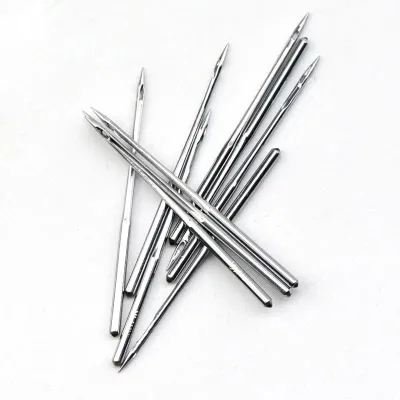
When sourcing precision finishing sewing machine needles, the primary objective is to align the component's physical attributes with the specific operational requirements of the sewing equipment. The market offers a diverse array of needle types, ranging from general-purpose hand sewing needles to specialized industrial components designed for high-speed automated quilting and knitting operations. A critical observation from current product listings indicates that "precision finishing" is not a monolithic category but rather a function served by various models, each with distinct specifications.
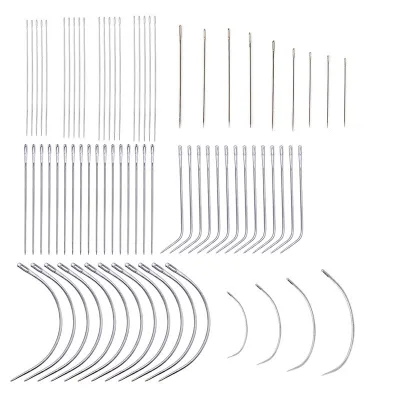
Buyers must first verify the needle type compatibility with their machinery. The available data highlights specific model series such as the SN-HM, SN-HMS, and SN-HMD for computerized quilting machines, alongside the SN-LA, SN-LAS4, and SN-LAS2 series. These models are often associated with specific machine configurations, such as "Head Move" styles and rotary shuttle mechanisms. For applications requiring manual operation or specific thread specifications, the "Hand sewing needle type" is noted as "Ordinary Hand Sewing Needle," while other industrial contexts utilize needles compatible with thread specifications like "40s."
The physical dimensions and material composition are equally vital. The supply chain data indicates that needles are frequently manufactured from "Steel," a standard material choice that balances durability with the precision required for fine stitching. However, the exact gauge and length are not universally standardized in the provided text; instead, buyers encounter specific model identifiers like "3-1/2, 1#, 6/0#, 5/0#, 1-5#" and functional designations such as "Tube Guide Needle" or "Crochet Machine Needle." This variation suggests that a "one-size-fits-all" approach is ineffective. Procurement teams must cross-reference the machine's manual with the supplier's model list to ensure the needle's shank, eye, and point geometry match the machine's feed mechanism.
Furthermore, the "Quilting Thickness" specification of 6cm observed in related machinery suggests that the needles used in these systems must withstand significant resistance without bending or breaking. This implies that for heavy-duty finishing tasks, the needle's tensile strength and point sharpness are paramount. The "Move Style" of "Head Move" in computerized systems further dictates that the needle must maintain stability during rapid, multi-directional movements, a requirement that influences the choice between standard and reinforced needle variants.
Compliance, Certification, and Safety Standards
In the global B2B procurement landscape, verifying compliance and certification is a non-negotiable step for ensuring the safety and legality of imported machinery parts. The supplied product data explicitly lists "CE" and "ISO" certifications as attributes associated with certain sewing machine products. While these certifications are often applied to the complete machine, they serve as a proxy for the quality management systems of the manufacturing facility. A supplier claiming CE certification implies adherence to European health, safety, and environmental protection standards, which is crucial for buyers targeting markets in Europe or regions that recognize CE marking.
However, buyers must exercise caution when interpreting these certifications in the context of individual components like needles. The presence of a "CE" mark on a product listing for a "Single Needle Quilting Machine" or a "Knitting Machine Needle" indicates that the manufacturer has undergone a conformity assessment. Yet, the specific scope of this certification regarding the needle's material purity or dimensional tolerance is not detailed in the general product facts. Therefore, procurement teams should request specific test reports or certificates of conformity that isolate the needle component from the broader machine assembly.
The "ISO" certification mentioned in the data points to adherence to international standards for quality management. This is particularly relevant for suppliers who have been in operation for extended periods, such as those noting "Manufacturer Since 2003." Longevity in the industry often correlates with a mature quality assurance process, but it does not automatically guarantee that every batch of needles meets the latest ISO standards. Buyers should verify that the specific batch of needles being ordered is covered under the current valid certification period.
Additionally, the "Warranty" of "1 Year" observed in some listings provides a layer of post-purchase protection, but it is essential to understand the terms of this warranty. Does it cover manufacturing defects in the needle material, or does it apply only to the machine's mechanical failure? For precision finishing needles, where breakage can lead to machine downtime and fabric damage, a clear warranty policy regarding component failure is a critical risk mitigation factor. Buyers should also confirm if the supplier's origin, listed as "China" or specifically "Zhejiang, China," aligns with any import regulations or trade agreements that might affect the admissibility of certified goods into their destination market.
Cost Drivers and Pricing Dynamics
Understanding the cost structure of precision finishing sewing machine needles is essential for developing a competitive procurement strategy. The observed price range in the market is exceptionally wide, spanning from $0.01 to $54,523.53. This vast disparity is not indicative of a single product category but rather reflects the inclusion of everything from individual replacement needles to complete computerized quilting machine systems. For a buyer specifically seeking "precision finishing sewing machine needles," the lower end of this spectrum likely represents individual components or small bulk packs, while the higher end encompasses entire automated systems or specialized industrial units.
Several factors drive the cost of these components. First, the "Customization" availability is a significant cost variable. Products marked as "Customized" or offering "Customzie" color options often command a premium due to the additional engineering and setup required to produce non-standard dimensions or finishes. Similarly, the "Supply Ability" varies drastically, from "50000 Bag/Bags Per Day" to "30 Carton/Cartons Per Day." High-volume suppliers with robust production lines can often offer lower unit costs due to economies of scale, whereas specialized, low-volume manufacturers may charge more for their niche precision products.
The "MOQ" (Minimum Order Quantity) is another critical cost driver. The observed MOQ range of 1 to 18,000 units suggests that buyers can source small quantities for prototyping or emergency replacements, but achieving the lowest unit price often requires committing to larger orders. For instance, a supplier with a "Supply Ability" of 50,000 bags per day might have a tiered pricing structure where the cost per unit drops significantly once the order exceeds a certain threshold, such as 1,000 or 5,000 units.
Packaging also influences the final landed cost. Listings indicate various packing standards, such as "Wooden Box," "36card/Box," or "100big Boxes." Bulk packaging reduces the per-unit shipping cost but may require more storage space and handling infrastructure. Conversely, smaller, retail-ready packaging like "25PCS/Box" is more convenient for small workshops but incurs higher logistics costs per needle. Buyers must calculate the total cost of ownership, including shipping, storage, and handling, rather than focusing solely on the unit price.
Typical Applications and Operational Context
Precision finishing sewing machine needles are integral to a wide range of textile applications, from light domestic sewing to heavy industrial quilting and knitting. The specific application dictates the required needle characteristics, including speed, material, and point type. The data highlights several distinct operational contexts. For example, the "Single Needle Quilting Machine" with a "Rotary Shuttle" style is designed for creating intricate patterns on thick materials, as evidenced by the "Quilting Thickness" specification of 6cm. In this context, the needle must be robust enough to penetrate multiple layers of fabric without deflecting, while maintaining the precision required for complex "380+" pattern options.
In contrast, other applications focus on high-speed, light-duty tasks. The "Tube Guide Needle" and "Crochet Machine Needle" suggest use in specialized machinery where the needle's primary function is to guide thread through tight spaces or create specific stitch types. The "Hand sewing" application, utilizing "Ordinary Hand Sewing Needle" types, represents a manual or semi-automated context where the operator controls the speed and pressure, requiring a needle that is easy to thread and handle.
The "Automation" level of the machine is another key determinant. While some systems are "Manual," others are "Computerized," such as the "Computerized Quilting Machine." Computerized systems operate at higher speeds, with observed specifications reaching "2200rpm." This high velocity places immense stress on the needle, requiring materials with high fatigue resistance and precise geometry to prevent breakage and ensure consistent stitch quality. The "Move Style" of "Head Move" in these systems further complicates the requirements, as the needle must remain stable while the machine head traverses the fabric.
Furthermore, the "Sewing Threads Type" being "Mixed" indicates that the needles must be versatile enough to handle different thread materials, from natural fibers to synthetic blends. This versatility is crucial for manufacturers who produce a variety of products and cannot afford to change needles frequently. The "Feature" of being "Small Size" in some models suggests applications where space is limited, such as in compact embroidery machines or portable sewing units.
Supplier Evaluation and Verification
Selecting the right supplier is as critical as selecting the right needle. The sourcing data provides several indicators of supplier reliability, including "Experience" (e.g., "Manufacturer Since 2003"), "Location" (e.g., "China," "Zhejiang"), and "Supply Ability." These factors should be used as a baseline for evaluation, but they must be supplemented with direct verification. A supplier claiming to be a manufacturer since 2003 likely has established processes, but buyers should verify this through business registration documents or third-party audits.
The "Location" of the supplier, particularly "Zhejiang, China," is significant as this region is a known hub for textile machinery and components. Proximity to a manufacturing cluster can facilitate faster communication and easier site visits, but it also means buyers should be aware of the specific logistics and potential supply chain disruptions in that region. The "Standard" dimensions listed, such as "300030001400MM" or "540036001650MM," provide insight into the scale of the supplier's facilities. Larger facilities often indicate the capacity to handle large orders and maintain consistent quality control.
Buyers should also scrutinize the "Product Name" and "Type" descriptions to ensure the supplier specializes in the specific needle type required. A supplier offering "Sewing Needle" as a generic category may not have the same level of expertise as one specializing in "Knitting Machine Needles" or "Needle Loom Spare Parts." The "Fuction" list, which includes items like "Transfer Needles" and "Tube Guide Needle," suggests a breadth of product knowledge. A supplier with a diverse portfolio is often better equipped to handle complex technical queries and provide tailored solutions.
Finally, the "Customization" capability is a key differentiator. Suppliers that offer "Customized" products demonstrate flexibility and a willingness to adapt to specific buyer needs. However, buyers should assess the supplier's ability to maintain quality during customization. Requesting samples of customized products before placing a large order is a prudent step to verify that the supplier can meet the required specifications without compromising on the precision of the needle.
Quality Control and Long-Term Procurement Considerations
Ensuring consistent quality in precision finishing sewing machine needles requires a robust quality control (QC) framework. The "Warranty" of "1 Year" mentioned in the data is a starting point, but it should be complemented by a detailed QC protocol. Buyers should verify the supplier's inspection processes, including checks for dimensional accuracy, material hardness, and surface finish. The "Material" being "Steel" is standard, but the grade of steel and the heat treatment process are critical factors that affect the needle's lifespan and performance.
Long-term procurement considerations involve building a sustainable relationship with the supplier. The "Supply Ability" of "50000 Bag/Bags Per Day" indicates that the supplier can handle large volumes, but buyers should also consider the "Lead Time" and "MOQ" constraints. A supplier with a high supply ability but a high MOQ might not be suitable for a buyer with fluctuating demand. Conversely, a supplier with a low MOQ but limited supply ability might struggle to meet peak production needs.
The "Product Packing" standards, such as "Wooden Box" or "100big Boxes," play a role in long-term logistics. Proper packaging ensures that the needles arrive in perfect condition, free from rust or damage. Buyers should specify packaging requirements that align with their storage capabilities and shipping methods. Additionally, the "Color" customization option, noted as "Customzie," can be used for inventory management, allowing for color-coded needles to distinguish between different types or batches.
Finally, buyers should monitor the "Pattern Quantity" and "Speed" capabilities of the needles in their specific applications. As production demands evolve, the need for higher precision or faster speeds may arise. A supplier that offers a range of models, from basic "Ordinary Hand Sewing Needle" types to advanced "Computerized Quilting Machine" needles, can support the buyer's growth and adaptation to new technologies. Regular communication and performance reviews with the supplier will help ensure that the procurement strategy remains aligned with the buyer's operational goals.
Comparative Analysis of Needle Specifications
To facilitate decision-making, the following table summarizes key specifications observed in the product data, highlighting the diversity of options available for precision finishing applications.
| Feature Category | Specification A (Quilting Focus) | Specification B (General/Hand) | Specification C (Specialized) |
|---|---|---|---|
| Product Model | SN-HM, SN-HMS, SN-HMD | 3-1/2, 1#, 6/0#, 5/0# | YY-N-G01, YY-N-O02 |
| Machine Type | Computerized Quilting Machine | Hand Sewing / Manual | Knitting / Transfer |
| Material | Steel | Steel | Steel |
| Speed | 2200rpm | N/A (Manual) | N/A (Machine Dependent) |
| Quilting Thickness | 6cm | N/A | N/A |
| Certification | CE, ISO | CE | CE |
| Customization | Available | Available | Available |
| Warranty | 1 Year | 1 Year | 1 Year |
| Origin | China (Zhejiang) | China (Zhejiang) | China (Zhejiang) |
This comparison underscores the importance of matching the needle's specific attributes to the intended application. While all listed products share common traits like steel construction and CE certification, their functional capabilities vary significantly. Buyers must carefully evaluate these differences to select the optimal component for their precision finishing needs.
FAQs
What certifications do precision finishing sewing machine needles have?
Some products in this category hold CE and ISO certifications. These marks indicate adherence to safety and quality management standards, though buyers should verify if the certification covers the specific needle component or the entire machine assembly.
Which materials are used for these sewing machine needles?
Steel is the standard material used for manufacturing these needles. This choice balances durability with the precision required for fine stitching in both manual and computerized quilting applications.
Can buyers request custom specifications for these needles?
Yes, customization is available for many products in this category. Buyers can often request specific dimensions or finishes, though this may affect the minimum order quantity and lead time.
What is the typical MOQ for ordering these needles?
The minimum order quantity ranges from 1 to 18,000 units depending on the supplier. Smaller orders are possible for prototyping, while larger volumes often secure better unit pricing.
How are these needles typically packed for shipment?
Packaging varies from small boxes containing 25 pieces to bulk wooden crates. Common options include 36 cards per box or 100 big boxes per container, depending on the supplier's standard.
Where are these sewing machine needles manufactured?
Most products originate from China, with a specific concentration in Zhejiang. This region is a known hub for textile machinery and components, facilitating specialized production.
What is the warranty period for these needle products?
A 1-year warranty is commonly offered for these products. This coverage typically applies to manufacturing defects, but buyers should confirm specific terms regarding component failure versus machine downtime.