Source Rubber Ring Making Machine for Tires, Seals, and Gaskets
Explore 30 listings for the Rubber Ring Making Machine, comparing vertical and horizontal models with PLC control systems. Buyers can evaluate specifications like voltage, pressure, and heating methods from suppliers in China.
Key considerations
Products List


Rubber O-Ring Making Machine, Rubber Products Making Press
$3000.00 - $10000.00
MOQ: 1 Sets
Qingdao Shun Cheong Rubber Machinery Manufacturing Co., Ltd.

Rubber Products Making Machine Rubber Vulcanizing Machine
$4700.00 - $48000.00
MOQ: 1 Sets
Qingdao Shun Cheong Rubber Machinery Manufacturing Co., Ltd.

Rubber Extruded Machine, Rubber Machinery, Rubber Profiles Making Machine
$50000.00 - $100000.00
MOQ: 1 Sets

$180000.00
MOQ: 1 Sets


Making Machine Making Machine Extruder Rubber Machine with Ce ISO9001
$1300.00 - $10000.00
MOQ: 1 Pieces


$28000.00 - $40700.00
MOQ: 1 set


Rubber Product Making Machine, Rubber Vulcanization Machine, Silicone Wristband Making Machine
$3588.00 - $38888.00
MOQ: 1 Pieces

Heat Exchanger Gasket Rubber Ring Production Vulcanization Machine
$35000.00 - $39999.00
MOQ: 1 Pieces


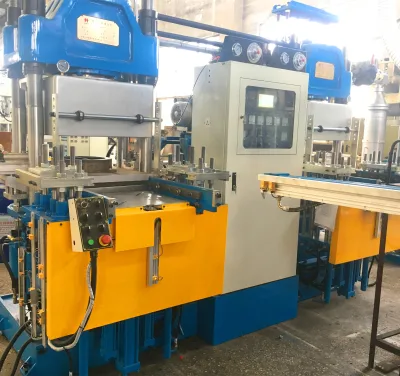

$29800.00 - $39800.00
MOQ: 1 Pieces

$10000.00 - $48000.00
MOQ: 1 Pieces

$15000.00 - $200000.00
MOQ: 1 Pieces

Vulcanizing Press Machine for Rubber O Ring /Rubber O Ring Molding Machine
$36000.00 - $46000.00
MOQ: 1 set
Comprehensive Sourcing Guide
Strategic Sourcing Guide for Rubber Ring Making Machinery
Selecting the appropriate machinery for rubber ring production requires a rigorous evaluation of technical capabilities, compliance frameworks, and supplier reliability. The market for rubber processing equipment, particularly within the tire and general rubber machinery sectors, presents a diverse array of options ranging from laminating machines to curing presses and extrusion lines. Buyers must navigate a landscape where product attributes vary significantly between models, such as the distinction between vertical and horizontal structures, or the variance in automatic grades from semiautomatic to fully automatic systems. This guide provides a structured approach to evaluating potential suppliers and machinery specifications based on verified industry data and standard procurement practices.
Technical Configuration and Operational Capabilities
The foundation of any successful procurement begins with a precise understanding of the machine's technical configuration. In the rubber processing sector, the "Type" of machinery is a primary differentiator. Buyers should verify whether the equipment is classified as General Rubber Machinery or specific Tire Machinery, as this dictates the operational environment and output quality. For instance, specific models are identified as Laminating Machines, while others serve as Flap Curing Presses or Rubber Extruders. The structural design is equally critical; observed data indicates the availability of both Vertical and Horizontal structures. The choice between these depends on the factory floor layout and the specific workflow requirements of the production line.
Power and voltage specifications are often the first points of friction in international procurement. While standard voltages include 220V, 380V, and 440V, the specific requirement is frequently customizable to the customer's needs. This flexibility is a standard feature in many modern units, yet buyers must confirm the exact voltage configuration before finalizing an order to avoid costly retrofitting. Similarly, the automatic grade of the machine is a key performance indicator. The market offers both Semiautomatic and Automatic grades. An Automatic grade typically implies a higher level of integration with control systems, such as PLC (Programmable Logic Controller) units, which are essential for maintaining consistency in complex processes like temperature control.
Temperature management is another critical technical parameter. High-precision heating is often a requirement for rubber curing and laminating. Data suggests that some advanced units offer a temperature range of 0-300 degrees with a tolerance of just 1 degree, ensuring uniform curing across the rubber ring. The heating method itself can vary, with Electric, Oil, and Steam options available. The selection of the heating mode should align with the facility's existing utility infrastructure and energy efficiency goals. Furthermore, the physical dimensions and weight of the machinery must be considered. Observed specifications include weights ranging from under 50 tons to specific gross weights like 6300kg, with daylight clearances varying from 250mm to larger dimensions depending on the model series, such as the XLB or XKB series.
Compliance, Certification, and Standard Verification
In the global B2B market, compliance is not merely a formality but a prerequisite for operational safety and market access. Buyers must rigorously verify that the machinery meets international and national standards. The most frequently cited certifications in the rubber machinery sector include ISO, CE, and SGS. Specific product standards often reference ISO 9001, with some units explicitly adhering to the ISO 9001:2008 standard. Additionally, the National Standard of the country of origin is a relevant benchmark for domestic compliance.
When evaluating a supplier, the presence of these certifications should be validated through official documentation rather than relying solely on marketing claims. The certification status should cover the entire manufacturing process, from raw material sourcing to final assembly. For example, a machine originating from China (Mainland) or specifically Qingdao, China, should carry the appropriate export certifications that allow it to operate legally in the destination country. The "ISO" identification attribute often appears in product listings, but buyers should distinguish between general identification and specific quality management system certifications like ISO 9001.
It is also important to note that while some standards like ISO 3601 are relevant to rubber ring dimensions and tolerances in general engineering, they may not always be explicitly listed on the machine's specification sheet. Buyers should verify if the machine's output capabilities align with ISO 3601 requirements for sealing rings if that is the specific application. The standard "National Standard" mentioned in some product data suggests that the machine meets the regulatory requirements of its manufacturing country, which is a baseline for quality but may need to be supplemented with international certifications for export markets.
Cost Drivers and Pricing Dynamics
Understanding the cost structure of rubber ring making machinery is essential for budgeting and ROI analysis. The observed price range in the market is exceptionally broad, spanning from $1 to $200,000 USD. This wide variance is driven by several factors, including the machine's size, automation level, and specific functional capabilities. A basic semiautomatic unit will naturally fall at the lower end of this spectrum, while a fully automatic, high-precision curing press with advanced PLC control and large dimensions will command a premium price.
The Minimum Order Quantity (MOQ) is another significant cost driver. In the current market data, the observed MOQ range is consistently 1 to 1, indicating that most suppliers are willing to sell single units. This flexibility is advantageous for small to medium-sized enterprises that do not require bulk purchasing to secure a deal. However, buyers should be aware that while the MOQ is low, the unit price may be higher compared to bulk orders if the supplier offers volume discounts.
Other cost factors include the customization level. While many products offer "Customization: Available," some are listed as "Non-Customized." Customization, such as specific voltage requirements, unique structural modifications, or tailored packing solutions, will inevitably increase the base cost. The packing method, whether a standard wooden case or a custom plywood crate, also impacts the final price due to material and labor costs. Additionally, the origin of the machine, such as Qingdao, China, influences logistics costs, which can be substantial for heavy machinery weighing up to 50 tons. Buyers should factor in shipping, insurance, and customs duties when calculating the total landed cost.
Typical Applications and Production Scenarios
Rubber ring making machinery serves a variety of industries, and understanding the specific application is crucial for selecting the right equipment. The "Type of General Rubber Machinery" and "Type of Tire Machinery" classifications provide insight into the intended use. For example, a Laminating Machine is typically used for bonding rubber layers, a process essential in tire manufacturing and conveyor belt production. Conversely, a Flap Curing Press is designed for the curing of rubber components, ensuring the material achieves the necessary physical properties.
The "Rubber Hose Extrusion Line" category, which may include Single Vacuum Extruders, is relevant for producing rubber hoses and profiles. These machines are often used in applications requiring precise diameter control, with specifications mentioning standard sizes like 75mm, 90mm, 120mm, and 150mm. The "Frame Form" of the machine, often described as a Column Structure, supports the high pressures required for curing and molding processes.
Applications also vary based on the "Using Life" of the equipment. Machines with an expected lifespan of 15 years or more are typically designed for high-volume, continuous production environments. These units are often found in large-scale tire manufacturing plants or rubber component suppliers. The "Advantage" attributes, such as "Precision Higher," "Service-Life Longer," and "Efficiency," highlight the benefits of investing in higher-grade machinery. For buyers focused on high-precision rubber rings, a machine with a PLC control system and high-temperature tolerance is essential to maintain consistent product quality.
Supplier Evaluation and Operational Reliability
Evaluating a supplier goes beyond checking their product catalog. Buyers must assess the supplier's ability to deliver on promises regarding customization, support, and after-sales service. The "Customization" attribute is a key indicator of a supplier's flexibility. Whether a product is listed as "Customized" or "Non-Customized," the supplier's willingness to accommodate specific client needs is a critical factor. Suppliers that offer "Customization: Available" are generally more adaptable to unique production requirements.
The "Condition" of the machinery is another vital consideration. Most listed products are "New," but buyers should verify the manufacturing date and any warranty terms associated with new equipment. The "Product Packing" is also a reflection of the supplier's attention to detail. Options range from "Wooden Case" to "Safety Wood or Plywood Crates Packing," with some suppliers offering packing "According to Your Needs." This level of detail suggests a commitment to protecting the machinery during transit, which is crucial for heavy and delicate equipment.
Location is a significant factor in supplier evaluation. The "Prod Origin" is frequently listed as "China (Mainland)" or specifically "Qingdao, China." While these locations are hubs for rubber machinery manufacturing, buyers should verify the specific factory location to assess logistics and potential communication barriers. A supplier with a physical presence in a major industrial zone may offer better support and faster response times. Additionally, the "Standard" of the product, such as adherence to ISO or CE, should be cross-referenced with the supplier's reputation and history in the industry.
Quality Control and Long-Term Procurement Strategy
Implementing a robust quality control (QC) strategy is essential for mitigating risks associated with machinery procurement. Buyers should insist on pre-shipment inspections that verify the machine's specifications against the agreed-upon standards. This includes checking the "Automatic Grade," "Voltage," and "Temperature" capabilities to ensure they match the purchase order. The "Total Pressure" and "Piston Diameter" are critical mechanical parameters that must be measured and verified to ensure the machine can handle the intended production load.
Long-term procurement considerations involve looking beyond the initial purchase price. The "Using Life" of the machine, often cited as 15 years or more, suggests a long-term investment. Buyers should evaluate the availability of spare parts and the supplier's support network. A machine with a "Service-Life Longer" advantage is only valuable if the supplier can provide maintenance and repairs when needed. The "Advantage" of "Efficiency" also implies lower operational costs over time, which should be factored into the total cost of ownership analysis.
Finally, buyers should consider the scalability of the machinery. As production needs grow, the ability to upgrade or expand the system is crucial. The "Customization" options available at the time of purchase can facilitate future expansions. By selecting a machine that is compatible with future upgrades, buyers can protect their investment and ensure long-term operational continuity. The combination of high-precision control, robust construction, and reliable supplier support forms the backbone of a successful long-term procurement strategy in the rubber machinery sector.
Comparative Analysis of Key Specifications
To assist buyers in making informed decisions, the following table summarizes the key technical and compliance attributes observed in the market. This comparison highlights the diversity of options available and the specific parameters that require verification.
| Attribute Category | Observed Options | Verification Requirement |
|---|---|---|
| Structure | Vertical, Horizontal | Confirm floor space and workflow compatibility. |
| Automatic Grade | Semiautomatic, Automatic | Assess labor requirements and production speed. |
| Control System | PLC | Verify compatibility with existing factory automation. |
| Voltage | 220V, 380V, 440V (Custom) | Match with local power grid infrastructure. |
| Temperature Range | 0-300°C, Tolerance 1°C | Ensure precision meets rubber curing requirements. |
| Certifications | ISO, CE, SGS, ISO 9001 | Request valid certificates for the specific model. |
| Origin | China (Mainland), Qingdao | Evaluate logistics and import regulations. |
| Packing | Wooden Case, Plywood Crate | Confirm protection level for long-distance shipping. |
| Weight | <50 Tons, 6300kg | Check foundation requirements and transport limits. |
| Model Series | XLB, XKB, Xlb-D | Match model number to specific production needs. |
This table serves as a checklist for buyers to ensure all critical parameters are addressed during the sourcing process. By systematically verifying each attribute, buyers can minimize the risk of procurement errors and ensure the selected machinery aligns with their operational goals. The diversity of options in the market allows for tailored solutions, but it also demands a disciplined approach to evaluation and selection.
FAQs
What certifications do rubber ring making machines typically have?
These machines typically hold ISO, CE, and SGS certifications. Specific models may also adhere to ISO 9001 or ISO 9001:2008 standards to ensure quality management compliance for international buyers.
Can the voltage be customized for different regions?
Yes, the voltage can be customized to 220V, 380V, or 440V as customers need. This flexibility allows the machinery to operate safely in various electrical environments without requiring retrofitting.
What is the expected service life of this machinery?
The machinery has an expected using life of at least 15 years. This long service life is supported by advantages such as higher precision, longer durability, and improved operational efficiency.
Which automatic grades are available for these machines?
Both semiautomatic and automatic grades are available in the market. Automatic models often feature PLC control systems for high-precision temperature management and consistent production output.
How is the machinery packed for international shipping?
The machinery is packed in wooden cases, plywood crates, or according to specific customer needs. Some suppliers offer safety wood or plywood crate packing to ensure secure transit of heavy units.
What is the minimum order quantity for these machines?
The minimum order quantity is one unit for most suppliers. This low MOQ allows buyers to purchase single machines without needing to commit to bulk orders for initial procurement.