Find Compare Source Servo Encoder Cable for Power Stations Industrial Automation
Explore 30 verified listings for Servo Encoder Cable designed for power stations, industrial automation, and motor control systems. Buyers can compare specifications including voltage ratings, conductor materials, and customization options from verified suppliers.
Key considerations
Products List


High Flex Shielded Mitsubishi Servo Encoder Cable for Servo Drive Connection
$2.00 - $10.00
MOQ: 10 Pieces


Original Standard Mitsubishi Servo Encoder Power Load-Side Lead-out Cable
$2.00 - $10.00
MOQ: 10 Pieces
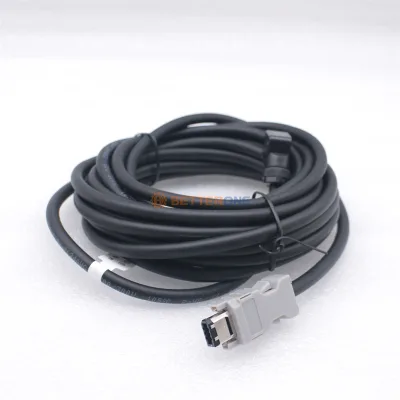


Shielded Copper Flexible Servo Sensor Servo Encoder Feedback Special Cable
$1.00 - $10.00
MOQ: 30000 Meters


Comprehensive Sourcing Guide
Strategic Sourcing Guide for Servo Encoder Cables
Understanding Technical Specifications and Performance Requirements
When sourcing servo encoder cables, the primary objective is to ensure reliable signal transmission in demanding industrial environments. These cables are not merely connectors; they are critical components that facilitate continuous data exchange between the servo motor and the controller. Based on observed market data, the core conductor material for these high-performance cables is consistently copper, specifically red copper wire, which offers superior conductivity and durability compared to alternative metals. The conductor type is typically flexible stranded, a design choice essential for applications involving moving parts where the cable undergoes constant bending and torsion.
The electrical characteristics of the cable are defined by specific voltage ratings and current capabilities. The observed rated voltage for these products spans 300/500V and 450/750V, covering both low and medium voltage requirements. This range ensures compatibility with various industrial control systems. The current type supported is both DC and AC, allowing for versatile integration into different automation architectures. A critical specification to verify is the nominal cross-section range, which typically falls between 0.75mm² and 10mm². Selecting the correct cross-sectional area is vital for minimizing signal attenuation and voltage drop, particularly in long-distance runs or high-frequency data transmission scenarios.
The physical structure of the cable also plays a significant role in its performance. The insulation material is predominantly PVC, providing a balance of flexibility and protection against environmental factors. The jacket material is similarly PVC, ensuring the cable can withstand mechanical stress. The cable cores can range from 2C to 12C, accommodating various signal and power requirements within a single assembly. For applications requiring extreme flexibility, such as those involving robot arms or CNC machines, the cable must be rated for specific flex cycles. Market observations indicate flex cycle ratings of 5 million, 10 million, or 20 million cycles, which are crucial for predicting the service life of the cable in dynamic motion applications.
Compliance and Certification Verification
In the industrial sector, compliance with international standards is non-negotiable for ensuring safety and interoperability. When evaluating potential suppliers, buyers must rigorously verify the certification status of the products. The supply chain data indicates that products often carry certifications such as CCC, CE, ISO, RoHS, and VDE. These certifications serve as evidence that the manufacturer adheres to specific safety, environmental, and quality benchmarks.
The RoHS (Restriction of Hazardous Substances) certification is particularly important for electronic components, ensuring that the cable does not contain lead, mercury, cadmium, or other restricted materials. Similarly, the CE mark indicates conformity with health, safety, and environmental protection standards for products sold within the European Economic Area. The VDE certification is a German standard that is highly respected globally for electrical safety, while ISO certification reflects a commitment to quality management systems. The CCC mark is essential for products intended for the Chinese market, ensuring they meet national safety requirements.
Buyers should not assume that every listed product possesses all these certifications. Instead, the procurement process must include a request for specific certification documents for the exact model number being considered. For instance, while some models like the SBE-E100023 series are noted with specific standards, others may have different compliance profiles. The presence of a certification should be verified against the specific batch or production run, as standards can vary by region and product line. Additionally, the product standard is explicitly listed as "Wire," but buyers should confirm if this aligns with specific industry standards like IEC or NEMA for the intended application, especially regarding the male and female end types. The observed end types include IEC for female connectors and NEMA for male connectors, which must match the existing infrastructure of the automation system.
Cost Drivers and Pricing Dynamics
The pricing of servo encoder cables is influenced by a complex interplay of factors, including material costs, manufacturing complexity, and order volume. The observed price range in the market spans from $0.13 to $45.00 USD. This wide disparity is not indicative of quality differences alone but reflects variations in cable length, core count, and customization levels. A cable priced at the lower end of the spectrum is likely a standard, non-customized length with fewer cores, while the higher end likely represents customized lengths, higher core counts, or specialized flex-rated cables.
The Minimum Order Quantity (MOQ) is a significant cost driver. The observed MOQ range is vast, from 1 unit to 30,000 units. For small-scale prototyping or maintenance replacements, suppliers offering an MOQ of 10 pieces or even 1 unit are essential. However, for large-scale production runs, negotiating a lower unit price by increasing the order volume to the thousands is a standard strategy. The lead time also impacts the total cost of ownership. A lead time of 5-10 days is observed for standard items, but customized orders may require longer production windows. Buyers must factor in the potential for expedited shipping costs if the lead time does not align with project schedules.
Customization is a major factor in pricing. The data confirms that customization is available for attributes such as length, color, and model specifications. While a standard 3m or 5m cable may be cost-effective, a "customized length" order will incur additional setup and production costs. Similarly, specific color requirements or specialized jacket materials can increase the unit price. The packing method, observed as "Cartons" or "Polybag with Cartons," also influences the final cost, as more robust packaging is required for international shipping to prevent damage during transit.
Typical Applications and Operational Environments
Servo encoder cables are designed for specific high-performance applications where signal integrity is paramount. The primary application areas identified include power stations and general industrial automation. In these environments, the cables must support functions such as automatic control, protection, monitoring, and measurement. The signal type is continuous, meaning the cable must handle constant data flow without interruption or degradation.
The installation type is a critical consideration. The cables are suitable for both fixed and moving installations. In fixed installations, the cable is laid in a static manner, reducing wear and tear. However, in moving installations, such as those found in robotics or CNC machines, the cable is subjected to continuous flexing. The observed flex cycle ratings of 5 million to 20 million cycles are specifically designed to withstand these dynamic conditions. This makes them ideal for applications involving robotic arms, automated guided vehicles (AGVs), and high-speed machining centers.
The compatibility with specific motor brands is another key application factor. The data notes compatibility with major brands such as Panasonic, Mitsubishi, Yaskawa, and Delta. This suggests that the cables are engineered to meet the connector standards and signal requirements of these industry leaders. The structure of the system is typically open-loop, which relies heavily on the accuracy of the encoder feedback. Any failure in the cable can lead to significant downtime or production errors. Therefore, the cable must be robust enough to handle the electromagnetic interference (EMI) often present in industrial settings, although specific shielding details should be verified with the supplier.
Supplier Evaluation and Quality Control
Selecting the right supplier is as important as selecting the right product. The supply chain data indicates that the place of origin is primarily Shanghai, China, with a broader origin in China. While this provides a vast pool of potential suppliers, it also necessitates rigorous due diligence. Buyers should evaluate suppliers based on their ability to provide consistent quality, adherence to lead times, and responsiveness to customization requests.
Quality control should be a central part of the evaluation process. Buyers must verify that the supplier has a documented quality management system, ideally supported by ISO certification. The product condition is listed as "New," but this should be confirmed through physical inspection or third-party testing reports. For critical applications, requesting sample units for testing is a prudent step. The test results should verify the flex cycle ratings, electrical resistance, and insulation integrity.
The supplier's ability to handle customization is another key metric. The data shows that attributes like length, color, and model numbers can be customized. A capable supplier will have the flexibility to produce non-standard lengths, such as those other than the standard 3m or 5m options, and will be able to accommodate specific color requirements. The packing method, whether polybag with cartons or standard cartons, should be discussed to ensure the product arrives in perfect condition. Additionally, the supplier should be able to provide clear documentation regarding the product standard, which is listed as "Wire," and ensure it meets the specific needs of the buyer's application.
Long-Term Procurement and Supply Chain Resilience
Long-term procurement strategies for servo encoder cables must account for supply chain resilience and the potential for future changes. The lead time of 5-10 days is a positive indicator for responsiveness, but buyers should plan for potential disruptions. Establishing a relationship with a supplier who can guarantee consistent quality and timely delivery is essential for maintaining production schedules.
The availability of different model numbers, such as SBE-E100023 through SBE-E100027 and AL-IACA-15 through AL-IACA-22, suggests a diverse product portfolio. This variety allows buyers to select the most appropriate cable for specific applications without being locked into a single product line. However, it also requires careful management to ensure that the correct model is ordered for each project. The "Customized" attribute for length and color offers flexibility, but buyers should maintain a clear record of specifications to avoid errors in future reorders.
Finally, the total cost of ownership should be considered beyond the initial purchase price. A cable with a higher flex cycle rating may have a higher upfront cost but will result in lower maintenance and replacement costs over time. Similarly, a cable with robust certifications like CE and RoHS may reduce the risk of compliance issues in international markets. By focusing on quality, compliance, and supplier reliability, buyers can ensure a stable and efficient supply of servo encoder cables for their industrial operations.
| Feature | Standard Observation | Verification Requirement |
|---|---|---|
| Conductor Material | Red Copper Wire | Verify purity and conductivity |
| Insulation/Jacket | PVC | Check thickness and flexibility |
| Rated Voltage | 300/500V, 450/750V | Confirm match with system voltage |
| Flex Cycles | 5M, 10M, 20M | Validate with test reports |
| Certifications | CCC, CE, ISO, RoHS, VDE | Request specific certificates |
| MOQ | 1 to 30,000 | Negotiate based on volume |
| Lead Time | 5-10 Days | Confirm for custom orders |
| Origin | Shanghai, China | Verify shipping and logistics |
FAQs
What certifications do servo encoder cables typically have?
Servo encoder cables typically hold CCC, CE, ISO, RoHS, and VDE certifications. These marks confirm compliance with safety and environmental standards, though buyers must verify specific documents for each model number before purchase.
Can I customize the length and color of these cables?
Yes, customization is available for length, color, and model specifications. Buyers can request non-standard lengths like 3m or 5m alternatives, and specific color options are workable depending on the supplier's production capacity.
What is the minimum order quantity for these cables?
The minimum order quantity ranges from 1 unit to 30,000 units depending on the supplier. Some vendors offer a low MOQ of 10 pieces for prototyping, while large production runs may require higher volume commitments.
How long is the lead time for standard orders?
The standard lead time for these cables is typically 5 to 10 days. Customized orders may require longer production windows, so buyers should confirm specific timelines based on their requested modifications and order volume.
Which conductor material is used in these cables?
These cables use red copper wire as the conductor material for superior conductivity. The conductor type is flexible stranded, making them suitable for moving installations where constant bending and torsion occur during operation.
What voltage ratings are supported by these cables?
The cables support rated voltages of 300/500V and 450/750V. This range covers both low and medium voltage requirements, ensuring compatibility with various industrial control systems and automation architectures.
Which motor brands are compatible with these cables?
These cables are compatible with major motor brands including Panasonic, Mitsubishi, Yaskawa, and Delta. They are engineered to meet the connector standards and signal requirements of these industry leaders for reliable signal transmission.