Source Soundproof Black Sliding Window with Magnetic Folding Screen for Homes, Offices, and Balconies
Compare 30 listings for the Soundproof Black Sliding Window with Magnetic Folding Screen from verified Chinese manufacturers. Buyers can evaluate aluminum profiles, glass types, and customization options for residential and commercial projects.
Key considerations
Products List

Sound Insulation Residential Window Sliding Aluminum Window with Mosquito Screen
$54.00 - $64.80
MOQ: 1 Square Meters

Soundproof Aluminum Folding Window with an Invisible Screen Window
$85.00 - $124.00
MOQ: 5 Square Meters

Soundproof Aluminum Windows Windproof and Folding Screen Sliding Window
$90.00 - $150.00
MOQ: 2 Square Meters

Aluminum Alloy Sliding Window with Double Glazed Glass for Noise Reduction
$150.00 - $160.00
MOQ: 20 Square Meters

Aluminum Sliding Window with Low-E Double Glazing and Hidden Screen
$150.00 - $160.00
MOQ: 20 Square Meters


Premium Soundproof Aluminium Folding Window with Double Tempered Glass
$80.00 - $100.00
MOQ: 2 Square Meters

Soundproof Aluminium Folding Window with Double Tempered Glass Technology
$80.00 - $100.00
MOQ: 2 Square Meters

Premium Soundproof Sliding Casement Window with Long-Lasting Finish
$99.00 - $269.00
MOQ: 2 Square Meters


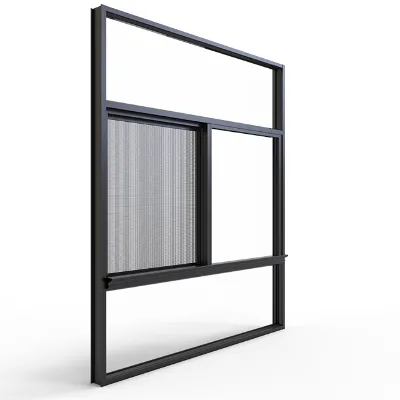


Modern Black aluminum Metal Grill Design Tempered Glass Sound Proof Folding Window
$108.00 - $148.00
MOQ: 2 Square Meters

Horizontal Opening Aluminum Alloy Sound Proof Tempered Glass Folding Window
$108.00 - $148.00
MOQ: 2 Square Meters

Exterior Aluminum Soundproof Sliding Window with Competitive Prices
$125.00 - $155.00
MOQ: 10 Square Meters

Soundproof Large Aluminum Folding Window Large Bi Fold Window for Sales
$110.00 - $125.00
MOQ: 10 Square Meters


$50.00 - $150.00
MOQ: 20 Square Meters

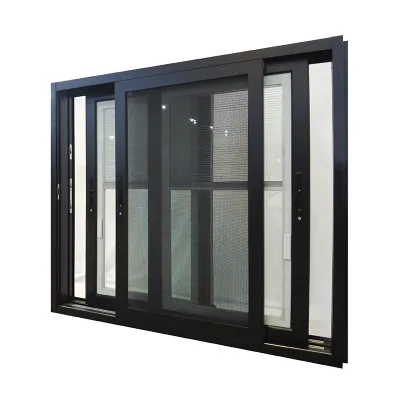
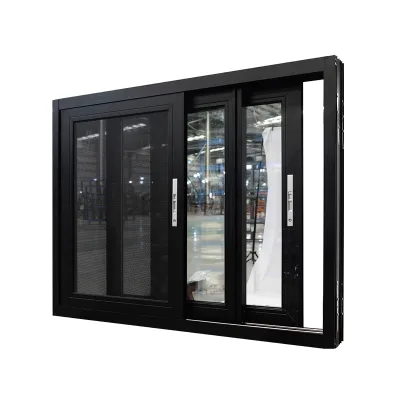

Proof Black Color Aluminium Folding Window Dark Color Aluminium Bi Fold Windows
$30.00 - $40.00
MOQ: 10 Square Meters
Comprehensive Sourcing Guide
Strategic Sourcing Guide for Soundproof Black Sliding Windows with Magnetic Folding Screens
Understanding the Product Architecture and Core Functionality
The procurement of soundproof black sliding windows with magnetic folding screens requires a precise understanding of the hybrid nature of the product. These units are not merely standard fenestration; they are engineered systems designed to balance acoustic isolation with flexible spatial management. The core functionality relies on a sliding mechanism that allows the window to move horizontally along a track, while the integrated magnetic folding screen provides a secondary layer of protection against insects and dust without obstructing the view when retracted.
Based on observed market data, the frame material for these units is predominantly Aluminum Alloy, specifically utilizing the 6063-T5 profile. This alloy is selected for its balance of strength, corrosion resistance, and malleability, allowing for the complex extrusions required for multi-track sliding systems. The profile thickness typically ranges from 1.4mm to 2.0mm, a critical specification that directly influences the structural rigidity and the window's ability to maintain a tight seal against wind and noise. The surface finishing is generally "Finished," which in the context of black aluminum profiles, often implies a powder-coated or anodized treatment that enhances durability and aesthetic consistency.
The opening pattern is consistently observed as Horizontal, facilitating the sliding motion. However, the market also presents variations where the opening style is described as Folding or Bifold, particularly in balcony or patio door configurations. This distinction is vital for buyers: a true sliding window moves on a track, whereas a folding window pivots on hinges. For the specific keyword of "sliding window," the horizontal track system is the primary requirement, but the inclusion of a "magnetic folding screen" suggests a hybrid approach where the screen itself folds accordion-style, often utilizing a magnetic seal to adhere to the frame when closed. This magnetic feature is essential for ensuring the screen stays in place during high winds, a common failure point in non-magnetic alternatives.
Technical Specifications and Performance Metrics
When evaluating technical specifications, the acoustic performance is the primary differentiator. The observed data indicates a Sound Insulation performance level of Level 4. In the context of fenestration, this suggests a high degree of noise reduction, suitable for urban environments or areas with significant ambient noise. The product is explicitly categorized as Soundproof, with additional attributes including Heat Insulation, Anti-Theft, Airproof, Dust-proof, and Insect-proof capabilities.
The glass type is a variable specification that buyers must define based on their specific thermal and acoustic needs. Available options include Single, Double, Tempering, Floating, Stained, and Low-E glass. For soundproofing applications, Double-Layer Tempered Transparent glass is often the preferred choice, as the air gap between the panes acts as a sound barrier. The sealing system is described as Soundproof, Waterproof, and Rust-Proof, indicating a multi-layer gasket design that is critical for maintaining the integrity of the acoustic seal.
The hardware component is another critical technical specification. The market data references "Germany Brand" hardware, which implies a standard of quality and durability that buyers should verify. High-quality hardware ensures smooth sliding operation and longevity, particularly for windows that are operated frequently. The model numbers observed, such as Blke-Yc116, TS-AW-0034, and TS-AL99, indicate that manufacturers offer specific configurations. Buyers should note that while some models are labeled as "Three-Track Sliding Windows," others may be "Aluminum Folding Windows" or "Accordion Bifold Folding Patio Doors." The distinction between a sliding window and a folding window is not just semantic; it dictates the installation requirements and the space needed for operation.
Compliance, Certification, and Regulatory Standards
Navigating the compliance landscape is essential for international procurement. The observed data lists a variety of certifications, including 3c, ISO9001, CE, SGCC, and Australian Certificates. These certifications are not universal to every product listing; rather, they represent the capabilities of specific suppliers or product lines. The 3c certification is mandatory for products sold in China, while CE is required for the European market. Australian Certificates are specific to the Australian building code.
Buyers must verify that the supplier holds the specific certifications required for their target market. The presence of ISO9001 indicates that the manufacturer has a certified quality management system, which is a strong indicator of process consistency. However, the absence of a specific certification in a product listing does not necessarily mean the product is non-compliant; it may simply mean the listing has not been updated. The standard for the product is often listed as "Customized" or "Customized size," which implies that the manufacturing process is flexible but requires strict adherence to the buyer's local building codes.
The security rating is observed as "A," which suggests a baseline level of resistance to forced entry. This rating is typically associated with the locking mechanisms and the structural integrity of the frame. For high-security applications, buyers should request specific test results regarding the window's resistance to impact and forced entry, as the "A" rating is a general observation and may not meet the stringent requirements of commercial or high-end residential projects.
Cost Drivers and Pricing Dynamics
The pricing for soundproof black sliding windows with magnetic folding screens is highly variable, with an observed range of 25 to 2800 USD. This wide disparity is driven by several factors, including the size of the unit, the complexity of the frame profile, the type of glass selected, and the quality of the hardware. The minimum order quantity (MOQ) ranges from 1 to 100 units, indicating that suppliers cater to both individual buyers and large-scale contractors.
The cost of the aluminum profile is a significant driver. The 6063-T5 profile with a thickness of 1.4mm to 2.0mm represents a substantial material cost. Thicker profiles and more complex extrusions increase the price. Additionally, the glass type plays a major role; Low-E glass and double-tempered glass are more expensive than single floating glass. The hardware, particularly if it is specified as a "Germany Brand," will also add to the overall cost.
Customization is a key cost driver. The data confirms that customization is available for size, color, and design. Custom sizes require unique tooling and production runs, which can increase the unit price and the lead time. The lead time is observed to be between 30 and 45 days, which is a standard duration for custom aluminum fenestration. Buyers should factor this lead time into their project schedules, as delays in production can impact the overall construction timeline.
Typical Applications and Installation Considerations
The applications for these windows are diverse, ranging from residential balconies to commercial office buildings. The product is explicitly listed as suitable for "Exterior" positions, meaning they are designed to withstand outdoor environmental conditions. The "Balcony Accordion Bifold Folding Patio Doors" designation suggests a strong application in residential settings where space efficiency and aesthetic appeal are paramount.
Installation is described as "Easy to Operate," but this refers to the daily functionality of the window rather than the installation process. The installation of sliding windows requires precise leveling and anchoring to ensure the sliding mechanism functions smoothly. The magnetic folding screen adds a layer of complexity to the installation, as the magnetic strips must be aligned perfectly to ensure a tight seal.
The position of the window is a critical factor in its performance. Exterior windows are subject to wind loads, thermal expansion, and UV radiation. The aluminum frame must be designed to accommodate these stresses without warping or failing. The sealing system must be robust enough to prevent water infiltration, which can lead to mold and structural damage. Buyers should ensure that the supplier provides detailed installation guidelines and that the installation team is experienced with sliding window systems.
Supplier Evaluation and Quality Control
Evaluating suppliers requires a focus on their production capabilities and quality control processes. The observed data indicates that suppliers are located in key manufacturing hubs such as Suzhou, China, and Foshan, Guangdong, China. These regions are known for their aluminum profile manufacturing expertise. However, the location alone does not guarantee quality; buyers must verify the supplier's production capacity and quality control measures.
The packaging is a critical aspect of quality control. The data lists various packaging methods, including Cartons, EPE Foam Packing Inside with Wood Crate Packing Outside, and Protective Film with Plastic Bag and Foam. The choice of packaging depends on the size and fragility of the product. For large sliding windows, wood crate packing is essential to prevent damage during transit. Buyers should request photos of the packaging process to ensure that the products are protected adequately.
Quality control should also extend to the finishing process. The "Finished" surface treatment must be consistent across all units. Buyers should inspect samples for color consistency, surface smoothness, and the absence of scratches or defects. The "Scratch-Resistant" attribute is a key performance claim that should be verified through visual inspection and, if possible, through third-party testing.
Long-Term Procurement and Maintenance Strategy
Long-term procurement considerations involve planning for maintenance, replacement, and scalability. The "Customized" nature of the product means that replacement parts may not be readily available off the shelf. Buyers should ensure that the supplier can provide spare parts, such as rollers, handles, and magnetic strips, for the lifespan of the window.
The maintenance of the sliding mechanism is crucial for long-term performance. Regular cleaning of the tracks and lubrication of the rollers will ensure smooth operation. The magnetic folding screen requires periodic inspection to ensure the magnets remain strong and the screen material does not tear. The "Soundproof" and "Airproof" attributes rely on the integrity of the seals, which can degrade over time due to UV exposure and temperature fluctuations.
Buyers should also consider the environmental impact of the product. Aluminum is a recyclable material, and the production process should adhere to environmental standards. The "Heat Insulation" and "Low-E" glass options contribute to energy efficiency, reducing the building's carbon footprint. By selecting high-performance products, buyers can achieve long-term cost savings through reduced energy consumption.
Comparative Analysis of Product Configurations
To assist in decision-making, the following table compares common configurations observed in the market based on the provided data.
| Feature | Configuration A (Standard Sliding) | Configuration B (Folding/Bifold) | Configuration C (High-Security) |
|---|---|---|---|
| Opening Pattern | Horizontal | Folding / Bifold | Horizontal |
| Primary Function | Soundproof, Heat Insulation | Decoration, Space Saving | Anti-Theft, Security |
| Glass Type | Double-Layer Tempered | Single or Double | Tempered / Low-E |
| Frame Profile | 6063-T5 (1.4mm-2.0mm) | 6063-T5 (1.4mm-2.0mm) | 6063-T5 (Thicker Profile) |
| Hardware | Standard / Germany Brand | Standard / Germany Brand | Reinforced / Germany Brand |
| Screen Type | Magnetic Folding | Magnetic Folding | Integrated / Fixed |
| Certification | ISO9001, CE | ISO9001, CE | 3c, CE, SGCC |
| Lead Time | 30-45 Days | 30-45 Days | 30-45 Days |
| Packing | Wood Crate / Foam | Wood Crate / Foam | Reinforced Wood Crate |
This comparison highlights that while the core material and manufacturing process remain consistent, the specific configuration depends on the buyer's functional requirements. Configuration A is ideal for general residential use, Configuration B is suited for balconies where space is limited, and Configuration C is designed for high-security applications.
In conclusion, sourcing soundproof black sliding windows with magnetic folding screens requires a meticulous approach to specification, compliance, and supplier evaluation. By focusing on the technical details, verifying certifications, and understanding the cost drivers, buyers can secure high-quality products that meet their specific project needs. The flexibility of the market allows for customization, but this must be balanced with the need for standardization to ensure quality and reliability.
FAQs
What frame material is used for soundproof black sliding windows?
The frame material is Aluminum Alloy, specifically 6063-T5 profile with a thickness ranging from 1.4mm to 2.0mm. This alloy ensures structural rigidity and corrosion resistance while supporting the sliding mechanism and magnetic screen integration.
Can the product be customized for specific sizes and designs?
Yes, customization is available for size, color, and design to meet specific project requirements. Buyers can request tailored dimensions and finishes, though this may impact the lead time and unit pricing compared to standard models.
Which certifications are typically available for these aluminum windows?
Common certifications include 3c, ISO9001, CE, SGCC, and Australian Certificates depending on the supplier and target market. These documents verify quality management systems and compliance with regional building codes for safety and performance standards.
How long is the delivery time for custom orders?
The standard delivery time is between 30 and 45 days for custom manufacturing runs. This duration accounts for the production of aluminum profiles, glass assembly, and quality control checks before shipping from origins like Suzhou or Foshan.
What glass types are compatible with soundproof black sliding windows?
Available glass options include Single, Double, Tempering, Floating, Stained, and Low-E glass. For enhanced soundproofing, Double-Layer Tempered Transparent glass is often recommended to utilize the air gap as an effective noise barrier.
Which opening style is standard for these sliding window systems?
The standard opening pattern is Horizontal, allowing the window to slide along a track. Some configurations also offer Folding or Bifold styles for balcony applications, providing flexible spatial management alongside the sliding functionality.