Source Stainless Cross Groove Ceiling Hook for Sun Shade, Boat, Yacht
Find 30 verified listings for the Stainless Cross Groove Ceiling Hook suitable for sun shade sails, boats, and yachts. Buyers can compare specifications like size, material grade, and load capacity from suppliers in China to find the right industrial hardware.
Key considerations
Products List


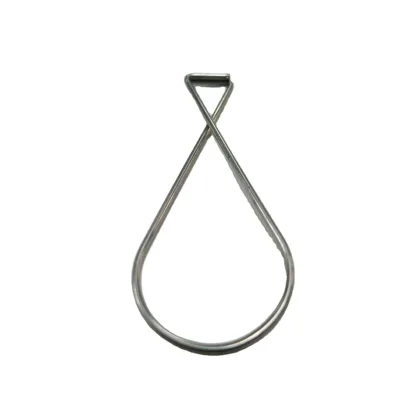


Stainless Steel 304 316 Heavy Duty Eye Ring Loop U Shaped Plate Pad Metal Ceiling Hook
$0.50 - $1.00
MOQ: 10000 Pieces


Comprehensive Sourcing Guide
Strategic Sourcing Guide for Stainless Cross Groove Ceiling Hooks
The procurement of specialized hardware components, specifically the Stainless Cross Groove Ceiling Hook, requires a disciplined approach that balances technical precision with supply chain reliability. These components serve critical functions in industrial, marine, and architectural settings where load-bearing capacity and environmental resistance are paramount. Buyers must navigate a complex landscape of material grades, manufacturing processes, and compliance standards to ensure that the selected hardware meets rigorous safety and performance criteria. This guide provides a structured framework for evaluating potential suppliers and specifications based on verified product attributes and industry best practices.
Technical Specifications and Material Composition
The foundation of a successful procurement strategy lies in a deep understanding of the technical specifications that define the product. For stainless cross groove ceiling hooks, the material composition is the primary determinant of durability and performance. The supplied data indicates a strong prevalence of Stainless Steel and Carbon Steel as the base materials. Specifically, observations confirm the availability of Stainless Steel hooks with a polished finish, which is essential for resisting corrosion in humid or marine environments. In contrast, other listings highlight Carbon Steel with a Grade 8 specification, suggesting a different application profile where high tensile strength is prioritized over corrosion resistance, or where the hooks are intended for indoor, controlled environments.
The physical dimensions and structural integrity of the hook are equally critical. Verified data points to specific model numbers such as Nuk-D Ring-001 and CEL-017, which correspond to distinct design geometries. The size specification of 6mm appears consistently across multiple entries, indicating a standard diameter for the shank or the eye of the hook. However, buyers must verify that the "6mm" reference aligns with the specific load-bearing requirement of their project, as it may refer to the wire diameter, the eye opening, or the overall width depending on the manufacturer's nomenclature. The weight of individual units, observed at approximately 0.037kg for certain models, provides a baseline for logistics planning but does not directly correlate to the Working Load Limit (WLL). The WLL is a more critical metric, with verified data citing a capacity of 150kg for specific configurations. This discrepancy between unit weight and load capacity underscores the importance of verifying the WLL for every specific model rather than relying on average weights.
The manufacturing process also dictates the final quality. Precision casting is identified as a key process for these components, ensuring that the cross-groove geometry is formed with high accuracy. This process is vital for maintaining the structural integrity of the hook under dynamic loads. Furthermore, the finish is described as polished, which not only enhances aesthetic appeal but also reduces surface friction and potential points of stress concentration. The connection method is typically a common bolt, and the head style is noted as flat, which facilitates flush mounting against ceiling surfaces.
Compliance, Certification, and Standard Verification
Navigating the regulatory landscape is a non-negotiable aspect of sourcing industrial hardware. The supplied product information references several standards, including ISO and ANSI, which serve as benchmarks for quality and safety. However, the presence of a standard reference in a product listing does not automatically guarantee that every unit supplied meets that specific certification. Buyers must explicitly request current certification documents from the supplier to verify compliance. For instance, while ISO standards are mentioned, the specific standard number (e.g., ISO 9001 for quality management or specific product safety standards) must be confirmed. Similarly, the ANSI standard reference requires validation to ensure it applies to the specific grade and type of hook being purchased.
The origin of the product is another critical factor in compliance. The data indicates origins in China, specifically from regions such as Shandong and Shanghai. While these regions are known for robust manufacturing capabilities, buyers should verify that the supplier adheres to international safety regulations relevant to their destination market. This includes checking for compliance with local building codes, marine safety regulations, and industrial safety standards. The "Customized" attribute suggests that many suppliers offer tailored solutions, but customization must be accompanied by rigorous testing to ensure that modifications do not compromise the structural integrity or safety ratings of the hook.
Cost Drivers and Pricing Dynamics
Understanding the cost structure of stainless cross groove ceiling hooks is essential for budgeting and negotiation. The observed price range in the market spans from $0.01 to $4,500, a variance that reflects the diversity of product types, from single lightweight units to bulk industrial orders or specialized custom configurations. The Minimum Order Quantity (MOQ) also varies significantly, ranging from 1 to 10,000 units. This wide range indicates that the market accommodates both small-scale procurement needs and large-scale industrial projects.
Several factors drive the final cost. Material grade is a primary driver; Stainless Steel typically commands a higher price than Carbon Steel due to its superior corrosion resistance and durability. The manufacturing process, such as precision casting versus simpler forging methods, also impacts cost. Additionally, the level of customization required, including logo support, specific dimensions, or unique groove shapes, will increase the unit price. The packaging method, whether standard cartons or specialized 25kg/carton bulk packaging, influences logistics costs. Buyers should be aware that the lowest price per unit often correlates with higher MOQs, and the "Selling Units" are frequently listed as single items, which may carry a premium compared to bulk purchasing.
Typical Applications and Usage Scenarios
The versatility of stainless cross groove ceiling hooks makes them suitable for a wide array of applications. The data highlights usage in industrial settings, including machinery and shipbuilding. Specifically, the hooks are designed for use in sun shade sails and boat applications, where resistance to saltwater and high temperatures is crucial. The "High Temperature Resistance" feature is a significant advantage for industrial environments where heat exposure is a concern.
In the marine sector, these hooks are utilized on yachts, boats, and sailboats. The specific mention of "Ceiling Hanging Hook" and "displayed hanging metal ceiling hook" suggests applications in retail, exhibition spaces, and residential interiors where aesthetic appeal and load-bearing capacity are required. The "Groove: Special Shape" attribute indicates that these hooks can be engineered for specific mounting requirements, allowing for secure attachment in complex ceiling structures. The "Lightweight" feature is particularly beneficial for applications where the weight of the hardware itself adds unnecessary load to the suspension system, such as in large-scale sun shade installations.
Supplier Evaluation and Selection Criteria
Selecting the right supplier requires a thorough evaluation of their capabilities and track record. Buyers should prioritize suppliers who demonstrate transparency regarding their manufacturing processes and quality control measures. The availability of customization options, such as logo support and specific model numbers like SINI C1025, indicates a supplier's flexibility and ability to meet unique project requirements. However, flexibility should not come at the expense of quality.
When evaluating suppliers, buyers should verify the consistency of their product attributes. For example, if a supplier claims to offer Stainless Steel hooks, they should be able to provide material test reports confirming the grade and composition. The "Condition: New" attribute is a basic requirement, but buyers must also ensure that the products are free from defects such as cracks, porosity, or surface imperfections that could arise during the casting or polishing process. The payment terms, typically L/C (Letter of Credit) and T/T (Telegraphic Transfer), are standard in international trade, but buyers should negotiate terms that protect their interests, such as partial payments upon delivery or inspection.
Quality Control and Inspection Protocols
Implementing a robust quality control (QC) protocol is essential to mitigate risks associated with hardware procurement. Given the critical nature of ceiling hooks, which are often used to support heavy loads, any failure can result in significant safety hazards. Buyers should insist on pre-shipment inspections that verify the WLL, dimensions, and surface finish. The "Polished" finish should be inspected for uniformity and the absence of scratches or pits that could act as stress concentrators.
For Carbon Steel hooks, buyers should verify the Grade 8 specification and ensure that the material has been treated to prevent rust, especially if the hooks are intended for outdoor or marine use. The "Special Shape" grooves should be measured to ensure they match the design specifications exactly. In cases where the hook is used in high-temperature environments, thermal resistance testing should be conducted to validate the "High Temperature Resistance" claim. The packaging, described as "Carton" or "25kg/Carton," should be inspected to ensure that the hooks are protected from damage during transit.
Long-Term Procurement and Supply Chain Considerations
Sourcing stainless cross groove ceiling hooks is not a one-time transaction but a long-term partnership that requires strategic planning. Buyers should consider the lead times and the reliability of the supply chain. The observed MOQ of up to 10,000 units suggests that some suppliers may have longer lead times for large orders, which could impact project timelines. Buyers should establish clear communication channels with suppliers to manage expectations regarding production schedules and delivery dates.
The "Customized" nature of many products means that supply chain flexibility is crucial. Buyers should work with suppliers who can adapt to changing design requirements or volume fluctuations without compromising quality. The origin of the product, whether from Shandong or Shanghai, should be factored into logistics planning, as shipping times and costs can vary. Finally, buyers should maintain a relationship with their suppliers to ensure a steady supply of replacement parts and to stay informed about new product developments or improvements in manufacturing technology. By adopting a proactive and evidence-based approach, buyers can secure high-quality stainless cross groove ceiling hooks that meet their specific operational needs and safety standards.
FAQs
What materials are used for stainless cross groove ceiling hooks?
These hooks are primarily manufactured from Stainless Steel or Carbon Steel. Stainless Steel offers high corrosion resistance for marine environments, while Carbon Steel provides high tensile strength for industrial machinery applications.
Can these hooks be customized with specific logos or dimensions?
Yes, customization is available for logos and specific dimensions. Suppliers support custom orders for unique groove shapes and sizes, allowing buyers to tailor the hooks to specific architectural or industrial mounting requirements.
What is the working load limit for these ceiling hooks?
The verified working load limit for specific configurations is 150kg. Buyers must verify this capacity for each model, as unit weight varies and does not directly correlate to the maximum safe load capacity.
Which manufacturing process ensures the structural integrity of these hooks?
Precision casting is the key manufacturing process used to form the cross-groove geometry. This method ensures high accuracy in the hook structure, which is vital for maintaining integrity under dynamic loads and stress.
What standards do these hooks comply with for safety verification?
The hooks reference ISO and ANSI standards for quality and safety benchmarks. Buyers must explicitly request current certification documents from suppliers to confirm that specific units meet these regulatory requirements for their destination market.
How does the finish affect the performance of the hooks?
The polished finish reduces surface friction and minimizes stress concentration points. This treatment enhances durability in humid or marine environments and improves the aesthetic appeal for retail or exhibition space installations.