Find Stainless Steel Heavy Duty Workbench for Labs, Hospitals, and Research Institutes
Browse 30 listings of the Stainless Steel Heavy Duty Workbench and compare specifications such as dimensions, materials, load capacity, certifications, and packing options. Filter by model, origin, and customization availability to identify suitable workbenches for your facility, then contact suppliers directly for pricing details.
Key considerations
Products List

$110.00 - $170.00
MOQ: 100 Pieces

$60.00 - $110.00
MOQ: 50 Pieces


Durable Stainless Steel Workbench for Chemical Resistant Applications
$1000.00 - $1500.00
MOQ: 1 Pieces


Stainless Steel Storage Work Table Bench
$150.00 - $200.00
MOQ: 5 Meters
Guangdong Zhijian Experimental Equipment Technology Co., Ltd.

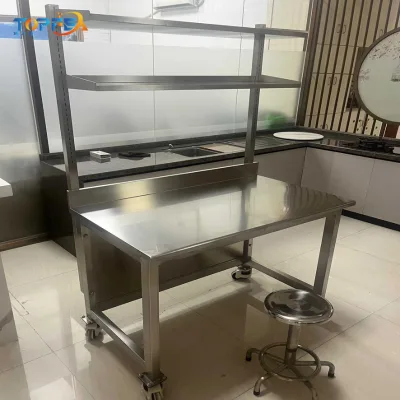
Heavy Duty Stainless Steel Workbench with Overshelf for Diverse Applications
$20.00 - $100.00
MOQ: 20 Pieces


Heavy Duty 3000kg Capacity Per Table Reinforced Steel Workbench
$50.00 - $200.00
MOQ: 10 Square Meters

15 Years Factory OEM Customized Size Color Heavy Duty Workbench
$50.00 - $200.00
MOQ: 10 Square Meters

Q355 Steel Reinforced Upright 2.5mm Thickness Heavy Duty Workbench
$50.00 - $200.00
MOQ: 10 Square Meters

Heavy Duty 1500kg Capacity Adjustable Height Steel Frame Workbench
$50.00 - $200.00
MOQ: 10 Square Meters

Q355 High Strength Steel 2500kg Capacity 3m Heavy Duty Workbench
$50.00 - $200.00
MOQ: 10 Square Meters
Comprehensive Sourcing Guide
Stainless Steel Heavy Duty Workbench Sourcing Guide
Selecting the right Stainless Steel Heavy Duty Workbench requires a careful balance between material integrity, structural stability, and specific operational needs. These workbenches are foundational assets in environments ranging from commercial kitchens and research institutes to industrial manufacturing floors, where hygiene, durability, and load-bearing capacity are non-negotiable. The procurement process must move beyond simple aesthetic considerations to evaluate the underlying engineering of the frame, the grade of the steel, and the quality of the welds. Buyers must recognize that "heavy duty" is a relative term; without verified specifications, a workbench may fail under dynamic loads or corrosive conditions, leading to costly downtime and safety hazards.
This guide provides a structured approach to sourcing these critical pieces of equipment. It focuses on verifying technical specifications, ensuring compliance with safety standards, and understanding the commercial variables that influence total cost of ownership. By adhering to the evidence-based insights provided, procurement professionals can mitigate risks associated with substandard materials, inadequate certifications, and unreliable supplier performance. The goal is to equip buyers with the knowledge to ask the right questions, demand the right documentation, and select suppliers who can consistently deliver high-quality, long-lasting workbenches that meet their specific operational demands.
Product Scope and Observed Listing Signals
The market for stainless steel workbenches presents a wide variety of configurations, from simple rectangular tables to complex central bench systems with integrated storage. Observed listings indicate a diverse range of product models, including specific designations like ESD variants and specialized units such as the ESD-2175F and ESD-1575F+XA35-4SG, which suggest applications in electronics or sensitive research environments. These variations highlight the importance of distinguishing between general-purpose utility tables and specialized workstations designed for static control or specific workflow requirements. Buyers should carefully review product names and model numbers to ensure the selected unit aligns with their functional needs, whether for general laboratory use, kitchen prep, or industrial assembly.
Dimensions and packaging methods vary significantly across suppliers, reflecting different logistical capabilities and product designs. Standard dimensions observed include widths ranging from 900mm to 2100mm and depths consistently around 750mm, with heights typically between 700mm and 800mm, though some models offer customizable heights. Packaging is reported in various forms, including cartons, wooden boxes, and plywood cases with bubble film, indicating that buyers must consider shipping protection and potential damage risks during transit. The presence of both customized and non-customized options suggests that while standard sizes are widely available, specialized dimensions may require additional lead time and negotiation, impacting the overall procurement timeline and budget.
Technical Specifications to Verify
Material composition is the primary determinant of a workbench's longevity and resistance to corrosion. While many listings specify stainless steel, buyers must verify the specific grade, such as 304 or 316, as lower grades may not withstand harsh cleaning agents or humid environments. Some product descriptions note that components like the motor, spindle, and bearing may differ from the main structure, indicating that not all parts are made of the same material. It is crucial to confirm that the visible surfaces and structural supports are indeed stainless steel and to inquire about the thickness of the steel used in the frame and legs, as thinner gauges can lead to wobbling and reduced load-bearing capacity over time.
Structural integrity and load capacity are critical for heavy duty applications. Buyers should verify the maximum bearing capacity, noting that some listings describe the capacity as "light," which may be insufficient for industrial use. The design of the legs and cross-bracing should be examined to ensure stability, especially for wider benches that may experience uneven weight distribution. Additionally, features such as casters or fixed feet should be confirmed, as some models are explicitly described as non-wheeled, while others may offer mobility options. The thickness of the countertop, which can range from 12.7mm to 25mm, also plays a significant role in durability and resistance to impact, so buyers should select a thickness appropriate for their intended use.
Compliance and Safety Documentation
Certifications provide essential assurance that the workbench meets recognized safety and quality standards. Common certifications observed in the market include CE, RoHS, and ISO9001, which indicate compliance with European safety directives, restrictions on hazardous substances, and quality management systems, respectively. Buyers should request copies of these certificates and verify their validity with the issuing bodies, as counterfeit documentation is a risk in some supply chains. Additionally, specific standards such as ISOFixed may apply to certain models, particularly those designed for secure installation in laboratory or industrial settings, so buyers must ensure that the product's certification aligns with their local regulatory requirements.
Safety features and material safety data are also important considerations. For workbenches used in environments where static discharge is a concern, ESD-compliant models may be necessary, and buyers should verify the specific ESD standards met by the product. The use of materials like PP (polypropylene) for certain components, such as countertops or cabinets, may offer chemical resistance benefits, but buyers should confirm that these materials are food-safe or chemically compatible with their intended use. Documentation regarding the origin of materials, such as the use of stainless steel from reputable mills, can also provide additional confidence in the product's quality and traceability.
Cost Drivers and Commercial Terms
The price range for stainless steel workbenches is broad, reflecting differences in material quality, design complexity, and supplier location. Observed prices range from approximately $20 to $1500, with the lower end likely representing smaller, simpler units or those with thinner materials, while the higher end corresponds to larger, more robust, or specialized models. Minimum order quantities (MOQs) vary from 1 to 100 units, indicating that suppliers cater to both individual buyers and large-scale procurement projects. Buyers should be aware that lower prices may correlate with reduced material thickness, lower-grade steel, or fewer safety certifications, so cost should not be the sole deciding factor.
Commercial terms such as lead times, shipping methods, and payment terms significantly impact the total cost of ownership. Suppliers located in different regions, such as Tianjin or Guangdong in China, may offer different logistical advantages and costs. Packaging methods, ranging from simple cartons to robust wooden boxes, affect shipping costs and the risk of damage, so buyers should factor these into their cost analysis. Customization options, such as specific dimensions or features, may incur additional charges and extend lead times, so buyers should clearly define their requirements early in the sourcing process to avoid unexpected costs and delays.
Supplier Qualification and Quality Control
Evaluating supplier qualifications is essential to ensure consistent product quality and reliable service. Buyers should verify the supplier's business license, manufacturing capabilities, and quality control processes. Suppliers with ISO9001 certification demonstrate a commitment to standardized quality management, which can reduce the risk of defects and inconsistencies. Additionally, buyers should inquire about the supplier's experience in producing stainless steel workbenches and their ability to handle custom orders, as this indicates their technical expertise and flexibility. Requesting references or case studies from previous clients can provide valuable insights into the supplier's reliability and customer service.
Quality control measures during production and pre-shipment inspections are critical for identifying and rectifying defects before delivery. Buyers should ask about the supplier's inspection protocols, including checks for material grade, weld quality, surface finish, and structural stability. Third-party inspection services can provide an independent verification of product quality, offering an additional layer of protection for the buyer. Clear communication regarding quality expectations and defect resolution policies is also important, ensuring that both parties have a shared understanding of what constitutes acceptable quality and how issues will be addressed if they arise.
Long-Term Procurement Checks
Establishing a long-term relationship with a reliable supplier requires ongoing monitoring and evaluation of performance metrics. Buyers should track key performance indicators such as on-time delivery rates, product defect rates, and responsiveness to issues. Regular audits of the supplier's quality control processes and manufacturing facilities can help identify potential problems early and ensure continued compliance with agreed-upon standards. Building a partnership based on transparency and mutual benefit can lead to better pricing, priority production, and improved support for future procurement needs.
Continuous improvement and adaptation to changing market conditions are also important for long-term success. Buyers should stay informed about advancements in stainless steel technology, new safety regulations, and emerging trends in workbench design. Engaging with suppliers to discuss potential improvements or new product offerings can help keep procurement strategies aligned with evolving operational needs. By maintaining a proactive approach to supplier management and quality assurance, buyers can ensure that their stainless steel heavy duty workbenches continue to meet their requirements for durability, safety, and performance over the long term.
FAQs
What certifications do stainless steel workbenches have?
These workbenches typically carry CE, RoHS, and ISO9001 certifications. The materials used are often stainless steel, ensuring durability and compliance with international safety standards for laboratory and industrial environments.
Can I customize the dimensions of the workbench?
Yes, customization is available for specific models to meet unique requirements. Product heights can range from 700 to 800mm and are adjustable according to customer needs, allowing for tailored solutions in various settings.
What is the typical packaging method for these units?
Packaging varies by model but often includes cartons, wooden boxes, or plywood cases with bubble film. Some items use wood safety packing to ensure the product arrives undamaged during international shipping and handling.
Where are these workbenches manufactured?
Manufacturing origins include locations such as Tianjin and Guangdong in China. These regions are known for producing high-quality laboratory and industrial furniture that meets specific international standards and specifications.
What is the minimum order quantity for these products?
The minimum order quantity ranges from 1 to 100 units depending on the specific supplier and model. Buyers should verify the exact MOQ with the vendor as it varies based on customization and stock availability.
Which materials are used for the workbench construction?
Primary materials include stainless steel, while some components may be made of PP or metal. Except for the motor, spindle, and bearing, most parts are constructed from durable materials suitable for heavy-duty use.