Find Swimming Suit options for swim, sports, and daily wear
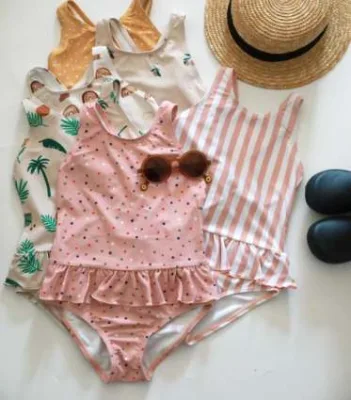
Source 25 verified Swimming Suit listings from suppliers in China offering ODM services and custom designs. Buyers can compare materials like nylon and cotton, sizes, and prices ranging from 0.5 to 14 USD to find the right fit for infants and toddlers.
Key considerations
Products List


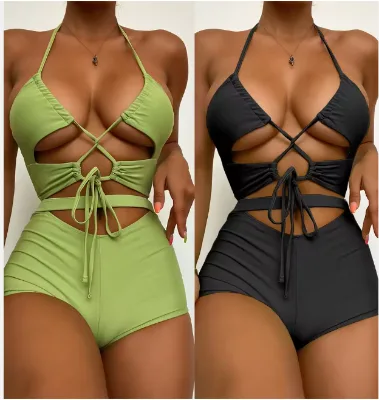
Women's Swimsuit Long Sleeved Surfing Suit Zippered One Piece Printed Swimsuit Women's Swimsuit
$9.80 - $12.50
MOQ: 200 Pieces


Comprehensive Sourcing Guide
Strategic Sourcing Guide for Baby Swimwear and Swim Suits
The global market for infant and toddler swimwear has expanded significantly, driven by a growing emphasis on sun safety, water hygiene, and the convenience of all-in-one garments. For procurement professionals and B2B buyers, sourcing a "Swimming Suit" requires a nuanced understanding of material science, supply chain logistics, and specific regulatory environments. Unlike general apparel, swimwear for infants demands rigorous attention to fabric durability in chlorinated or saltwater environments, skin safety, and the ability to maintain shape and color after repeated exposure to water and sunlight. This guide outlines the critical dimensions of sourcing these products, drawing on observed market data and technical specifications to ensure a robust procurement strategy.
Material Composition and Fabric Performance
The foundation of any high-quality baby swim suit lies in its material composition. In the current supply landscape, buyers encounter a distinct divergence between standard cotton blends and performance-oriented synthetic fibers. While some listings highlight "Organic Cotton" or "Spandex" blends, these are often better suited for casual baby clothing rather than active water use. For dedicated swimwear, the industry standard leans heavily toward synthetic polymers designed for elasticity and water resistance.
Observed product data indicates a prevalence of "Nylon" and "Polyester" as primary materials for swim-specific models. These materials offer superior tensile strength and resistance to degradation from chlorine and UV radiation compared to natural fibers. A specific material profile noted in the market includes a blend of Nylon and Polyester, often accompanied by "Spandex" to ensure the garment stretches comfortably around an infant's body without restricting movement. The fabric type is consistently described as "Knitted," which provides the necessary flexibility for a snug fit.
When evaluating suppliers, buyers must verify the exact percentage of synthetic fibers. A fabric that is too cotton-heavy may absorb water, become heavy, and lose its insulating properties when wet, posing a safety risk. Conversely, a high-performance blend ensures the garment dries quickly and retains its shape. The "Pattern" is frequently observed as "Pure Colour" or achieved through "Digital, Printed" techniques. Buyers should confirm that the printing method used is non-toxic and colorfast, ensuring that dyes do not leach into the water or onto the baby's skin during prolonged exposure.
Technical Specifications and Sizing Standards
Precision in sizing and technical specifications is paramount when sourcing for infants, whose growth rates and body proportions vary significantly. The market data reveals a structured approach to sizing, often correlating height with age ranges. For instance, specific size categories include 66CM for 0-3 months, 73CM for 3-6 months, 80CM for 6-9 months, and 90CM for 9-12 months. This granular sizing allows for a more accurate fit than generic "Small" or "Medium" labels, which can lead to returns and customer dissatisfaction.
The "Model Number" serves as a critical identifier for procurement teams, with specific codes like "ZY250" for rompers and distinct codes such as "Modest Swimsuit-054N" or "Modest Swimsuit-013F" for swim-specific items. These identifiers help in tracking inventory and ensuring consistency across production batches. Furthermore, the "Closure Type" is a vital functional specification. For baby swimwear, "Snap Button" closures are the industry standard. They facilitate easy diaper changes while ensuring the garment stays securely fastened during water activities.
Packaging specifications also play a role in logistics planning. Products are typically packed individually in polybags, with a single package size often cited as 1x1x1 cm for smaller items, though this may vary by model. The single gross weight is another key metric for freight calculations, with observed weights around 0.150 kg to 0.241 kg depending on the specific model and material density. Buyers must ensure that the packaging protects the garment from moisture and dust during transit, as swimwear materials can be sensitive to environmental conditions.
Compliance, Safety, and Certification Verification
Safety compliance is the most critical non-negotiable aspect of sourcing baby swimwear. Infants have sensitive skin, and the products they wear are in direct contact with water, which can accelerate the absorption of chemicals. While some background information mentions "OEKO-TEX" as a potential standard, buyers must not assume that any listed product automatically holds this certification. Instead, procurement teams must actively request and verify specific test reports.
Buyers should demand documentation proving that the materials are free from harmful substances such as azo dyes, formaldehyde, and heavy metals. The "Feature" of "Anti-Bacterial" properties, observed in some listings, requires specific validation. Claims of anti-bacterial functionality must be backed by laboratory test results demonstrating efficacy against common bacteria without the use of prohibited chemicals. Additionally, the "Advantage" of being "Soft Comfortable Breathable" is a qualitative observation that must be supported by tactile testing and durability assessments.
Regulatory compliance varies by destination market. In the European Union, products must meet REACH regulations, while in the United States, they must adhere to CPSC standards regarding flammability and chemical safety. Buyers should verify that the supplier's "Standard" is explicitly "customized" to meet the specific regulatory requirements of the target market. Relying on a generic standard is insufficient for infant apparel. The "Product Type" being identified as "Rompers" or "Swimsuits" dictates specific testing protocols, particularly regarding the strength of seams and the security of snaps to prevent choking hazards.
Cost Drivers and Pricing Dynamics
Understanding the cost structure of baby swimwear is essential for budgeting and margin analysis. The observed price range in the market spans from $0.50 to $14.00 USD, a wide variance that reflects differences in material quality, production complexity, and order volume. The lower end of the spectrum typically corresponds to basic designs with standard synthetic blends and minimal customization. The higher end often includes premium organic blends, complex digital printing, and specialized anti-bacterial treatments.
A significant cost driver is the Minimum Order Quantity (MOQ). While some suppliers list an MOQ of 5 units for sampling, the standard production MOQ observed in the data is 10,000 units. This high threshold is typical for ODM (Original Design Manufacturer) and OEM (Original Equipment Manufacturer) services, where the supplier invests in tooling and pattern making. Buyers must factor this volume requirement into their financial planning. For smaller retailers, the high MOQ may necessitate a consortium buying approach or a focus on suppliers offering lower volume tiers, which often come with a higher unit price.
Additional cost factors include the "Supply Type." Options such as "ODM," "Oem Service," and "In-Stock Items" carry different cost implications. In-stock items may offer faster delivery but less customization, while ODM services allow for unique designs but require longer lead times and higher setup costs. The "Lead Time" for sample orders is noted as 7 days, which is a critical metric for product development timelines. However, bulk production lead times are not explicitly defined in the provided data and must be negotiated based on the order size and complexity.
Supplier Evaluation and Customization Capabilities
When selecting a supplier for baby swimwear, buyers must look beyond the basic product listing to assess the supplier's operational capabilities. The "Place of Origin" is identified as "ZHE" (Zhejiang) or generally "China," a region known for a robust textile manufacturing ecosystem. However, the location alone does not guarantee quality. Buyers should evaluate the supplier's capacity for "Customization," which includes "Accept Custom Designs," "Custom Logo Accepted," and "Accept Customize Sample."
The ability to produce "Unisex" garments with specific "Gender" neutrality is a growing trend, allowing for broader market appeal. Suppliers that offer "Design" flexibility can help buyers differentiate their product lines in a crowded market. The "Sample" process is another key evaluation point. The data indicates support for a 7-day sample order lead time, which suggests a responsive production line. Buyers should utilize this capability to test the "Fabric Type" and "Closure Type" before committing to a large order.
It is crucial to verify the supplier's experience with swim-specific materials. A supplier accustomed to producing "Bodysuit Baby Clothes" may not automatically possess the expertise required for "Modest Swimsuit" models, which involve different stitching techniques and material treatments. The "Product Name" variations, such as "Newborn Baby Cotton Romper" versus "Modest Swimsuit," indicate that suppliers may have distinct production lines for different categories. Buyers should ensure the specific team handling their order has a proven track record with swimwear to avoid quality issues related to water resistance and seam integrity.
Quality Control and Long-Term Procurement Strategy
Establishing a robust quality control (QC) protocol is essential for maintaining brand reputation in the infant apparel sector. QC should begin at the raw material stage, verifying the "Material" composition against the agreed specifications. For swimwear, this includes testing for colorfastness, tensile strength, and the absence of harmful chemicals. The "Single package size" and "Single gross weight" should be monitored to ensure consistency in packaging, which affects shipping costs and shelf presentation.
Long-term procurement considerations involve building a relationship with suppliers who can scale with demand. The "MOQ" of 10,000 units suggests that buyers should plan for significant volume growth to justify the investment. However, the availability of "In-Stock Items" and "Sample" support indicates that suppliers are willing to accommodate smaller initial orders for testing purposes. Buyers should negotiate clear terms regarding "Lead Time" for bulk orders, as these can fluctuate based on raw material availability and production capacity.
Sustainability is also becoming a key differentiator. While the data mentions "Organic Cotton" as a material option, buyers should inquire about the sustainability of the synthetic fibers used in swimwear, such as recycled polyester or nylon. The "Feature" of being "Anti-Bacterial" can be achieved through various methods, some of which are more environmentally friendly than others. Buyers should prioritize suppliers who are transparent about their manufacturing processes and material sourcing.
Comparative Analysis of Product Attributes
To facilitate decision-making, the following table summarizes key attributes observed in the market for baby swimwear and related garments. This comparison highlights the distinctions between general baby clothing and specialized swimwear, aiding buyers in selecting the appropriate product category for their needs.
| Attribute Category | General Baby Romper / Bodysuit | Specialized Baby Swimwear |
|---|---|---|
| Primary Material | Spandex / Organic Cotton | Nylon / Polyester / Spandex |
| Fabric Type | Knitted | Knitted (High Elasticity) |
| Key Features | Soft, Comfortable, Breathable | Anti-Bacterial, Quick-Dry, Chlorine Resistant |
| Closure Type | Snap Button | Snap Button (Reinforced) |
| Design Focus | Daily Wear, Unisex | Water Safety, Modest Coverage |
| Typical MOQ | Variable (5-800 observed) | High (10,000 observed) |
| Sample Lead Time | 7 Days | 7 Days |
| Pattern | Pure Colour / Custom | Pure Colour / Digital Printed |
| Standard | Customized | Customized (Market Specific) |
This comparison underscores that while both categories share features like snap buttons and unisex designs, the material and performance requirements for swimwear are distinct. Procurement decisions should prioritize the specific functional needs of the end-user, ensuring that the chosen product meets the rigorous demands of water activities.
In conclusion, sourcing baby swimwear requires a meticulous approach that balances material science, regulatory compliance, and supply chain logistics. By focusing on verified specifications, demanding rigorous testing, and selecting suppliers with proven expertise in swim-specific manufacturing, buyers can secure high-quality products that ensure the safety and comfort of infants. The market offers a wide range of options, from basic in-stock items to fully customized ODM solutions, allowing buyers to tailor their procurement strategy to their specific business goals and market demands.
FAQs
What materials are used for baby swimming suits?
The primary materials observed are Nylon and Polyester blends, sometimes with Spandex. These synthetic fibers provide superior water resistance and durability compared to cotton, ensuring the garment maintains shape and dries quickly during water activities.
Can suppliers accept custom designs for swimwear?
Yes, suppliers accept custom designs and offer OEM services for branding. Buyers can request specific logos and patterns, though production typically requires meeting a minimum order quantity of 10,000 units for such customized manufacturing runs.
What is the typical lead time for sample orders?
The lead time for sample orders is supported at 7 days. This allows buyers to verify fabric quality and fit before committing to bulk production, which may involve different timelines depending on the final order volume and customization level.
Which closure types are standard for infant swimwear?
Snap button closures are the standard type observed for these garments. This design facilitates easy diaper changes while ensuring the suit stays securely fastened during water activities, preventing accidental exposure or discomfort for the infant.
How are baby swimming suits sized by age?
Sizing correlates height with age ranges, such as 66CM for 0-3 months and 90CM for 9-12 months. This granular approach ensures a proper fit for growing infants, avoiding the inaccuracies often associated with generic small or medium labels.
What is the minimum order quantity for production?
The standard production minimum order quantity is 10,000 units. While samples can be ordered with lower quantities, bulk manufacturing typically requires this high threshold to cover tooling and pattern making costs for ODM and OEM services.