Source Trailer for Construction, Logistics, and Mining
Explore 30 verified options for the Trailer, ranging from dump to non-dump structures with varying loading capacities. Buyers can compare specifications like air brake types, certifications, and origins to find the right equipment for their operational needs.
Key considerations
Products List




Comprehensive Sourcing Guide
Strategic Sourcing Guide for Commercial Trailers
The global market for commercial trailers presents a complex landscape where buyers must navigate diverse specifications, varying certification requirements, and a wide spectrum of pricing structures. For procurement professionals researching the core keyword "Trailer," the primary challenge lies in distinguishing between generic product listings and verified, high-quality assets that meet specific operational needs. The available data indicates a market dominated by manufacturers originating from China, with significant clusters in Shandong, Qingdao, and Dezhou. These regions offer a competitive advantage in terms of production volume and cost efficiency, yet they require rigorous due diligence regarding quality control and compliance. This guide outlines the essential factors for sourcing trailers effectively, focusing on technical attributes, regulatory compliance, cost analysis, and supplier evaluation strategies based on observed market realities.
Technical Specifications and Structural Diversity
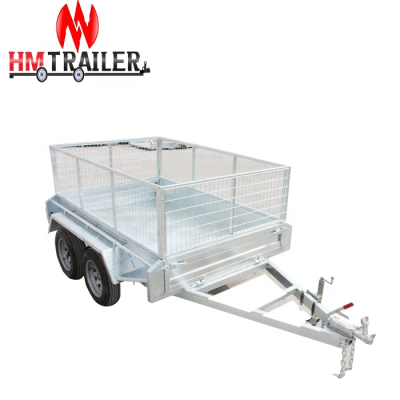
When evaluating trailers, the first step is to align technical specifications with intended operational use. The market exhibits a broad range of structural configurations, from dump trailers designed for heavy material transport to non-dump trailers suitable for general cargo. A critical observation in the current supply landscape is the variation in loading weights, which range significantly from light-duty models rated at 1 ton to heavy-duty units capable of handling 8 tons. Buyers must verify the specific "Loading Weight" attribute for each unit, as this directly impacts legal road compliance and payload efficiency.
The structural design is equally critical. Options include "Dump Trailer" configurations with backward dumping directions, as well as "Non-dump Trailer" variants. Some units feature a "Rear of Flank" dumping direction, which offers distinct advantages for specific unloading scenarios compared to standard rear dumping. Furthermore, the steering mechanism is a key differentiator; some models utilize "Wheel Steering" on the nosewheel, while others employ "Axle Steering." The choice between these mechanisms depends on the maneuverability requirements of the operating environment. Additionally, the material composition is predominantly steel, ensuring durability, though the specific grade and thickness should be confirmed during the inspection phase.
Compliance and Certification Verification
Navigating the certification landscape is perhaps the most critical aspect of international Trailer procurement. The observed data reveals a mix of certifications, including ISO/TS, CE, ISO9001 (specifically the 2000 version), CCC, and DOT. It is imperative for buyers to understand that not every listed product satisfies all these standards simultaneously. For instance, while some listings explicitly state "CE, ISO, CCC, ISO/TS," others may only carry "CE" or "ISO9001: 2000."
Buyers must verify the specific certification status for the exact model they intend to purchase. The presence of a certification mark does not guarantee that the specific unit meets the standard's requirements for the destination market. For example, the DOT certification is essential for operations in the United States, while CE is mandatory for European markets. The "ISO9001: 2000" standard indicates a quality management system, but buyers should be aware that newer versions of this standard exist, and the relevance of the 2000 version should be assessed against current regulatory expectations. Furthermore, the "3-10 Tons" standard mentioned in some listings likely refers to a specific regulatory classification or capacity bracket rather than a universal manufacturing standard, requiring clarification with the supplier.
Cost Drivers and Pricing Dynamics
The pricing for trailers in this sector is highly variable, with observed ranges spanning from $150 to $45,000 USD. This vast disparity is driven by several factors, including the loading capacity, structural complexity, and the level of customization available. The "Best" price attribute often appears in listings, but this is a marketing term rather than a fixed value. Buyers should expect that units with higher loading weights, such as the 8-ton models, will command prices at the upper end of the spectrum, while lighter 1-ton or 2-ton units will be more affordable.
Other cost drivers include the "Air Brake Type," with options ranging from "Air Inflating" to "Air Deflating," and the inclusion of advanced features like ABS systems, although some listings note "Without ABS." The "Self-dumping" capability also adds a premium to the cost. Additionally, the "prod_packing" method, whether "Iron Frame," "Pallet," or "Braided Bags," can influence the final landed cost due to varying shipping and handling requirements. Buyers must also consider the "MOQ" (Minimum Order Quantity), which ranges from 1 to 20 units. Purchasing a single unit may incur a higher per-unit cost compared to bulk orders, but the flexibility of low MOQs allows for smaller-scale testing or niche applications.
Typical Applications and Usage Scenarios
Understanding the application of the Trailer is essential for selecting the right model. The data indicates that these units are categorized as "Popular Type" and "Full Trailer," suggesting broad applicability across various industries. The "Scale" attribute, ranging from "Light Duty" to heavier classifications, helps buyers match the Trailer to their specific load requirements. For instance, a "Light Duty" Trailer with a 1-ton capacity is suitable for urban logistics or light construction sites, whereas an 8-ton dump Trailer is designed for heavy mining or large-scale earthmoving operations.
The "Shape" of the Trailer also dictates its use case. "Van-type" trailers offer enclosed protection for goods, making them ideal for sensitive cargo or weather-exposed environments. In contrast, open dump trailers are optimized for bulk materials like sand, gravel, or coal. The "Nosewheel Steering Mechanism" and "Axle Steering" options further refine the application; wheel steering is often preferred for tight maneuvering in urban settings, while axle steering might be better suited for long-haul highway transport. The "Dumping Direction," whether "Backward" or "Rear of Flank," should be selected based on the unloading site's layout and safety requirements.
Supplier Evaluation and Origin Analysis
The geographic origin of the supplier plays a significant role in the procurement strategy. The majority of the observed listings originate from China, with specific hubs in Shandong, Qingdao, and Dezhou. These regions are known for their established manufacturing ecosystems, which can offer competitive pricing and a wide variety of models. However, the concentration of suppliers in these areas also means that buyers must be vigilant about verifying the actual production capabilities of the vendor.
When evaluating suppliers, buyers should look for evidence of "Customization" availability, as this indicates a supplier's ability to adapt products to specific client needs. The "prod_model" identifiers, such as "sdyt66," "4TC," "7CX," and "7CX-3," serve as unique identifiers that buyers can use to track specific product lines. It is crucial to confirm that the supplier can consistently produce these models to the specified standards. Additionally, the "Condition" of the product is listed as "New" across the board, but buyers should verify the manufacturing date and any potential storage conditions that might affect the Trailer's longevity. The "Components" listed, such as the "Trailer Frame," should be inspected for quality and material integrity.
Quality Control and Long-Term Procurement
Ensuring long-term value requires a robust quality control (QC) framework. Buyers should prioritize suppliers who can provide detailed inspection reports and test results, although specific test data is not currently available in the general listings. The "Standard" attributes, such as "580KG" or "3-10 Tons," should be cross-referenced with actual load testing to ensure safety margins are met. The "Air Brake Type" and "ABS" systems are critical safety components that must be tested for reliability before deployment.
For long-term procurement, buyers should consider the "prod_packing" method to ensure safe transit and storage. "Iron Frame Packaging" or "Pallet" packing offers superior protection compared to "Braided Bags." Furthermore, the "Size" attribute, which is often listed as "Customer" or specific dimensions like "45---85," should be confirmed to ensure compatibility with existing infrastructure and regulatory limits. The "Colour" options, ranging from "Silver or Black" to "Many," allow for branding opportunities but should not compromise the protective coating quality.
Comparative Analysis of Key Attributes
To facilitate decision-making, the following table summarizes the key attributes observed in the market, highlighting the variability that buyers must navigate.
| Attribute Category | Observed Variations | Procurement Consideration |
|---|---|---|
| Loading Weight | 1t, 2T, 3T, 8T | Match to specific payload requirements; verify legal limits. |
| Structure | Dump Trailer, Non-dump Trailer, Full Trailer | Select based on cargo type (bulk vs. general). |
| Certification | CE, ISO9001:2000, DOT, CCC, ISO/TS | Verify specific certification for destination market. |
| Origin | China (Shandong, Qingdao, Dezhou) | Assess logistics costs and supplier reliability in these hubs. |
| Brake System | Air Inflating, Air Deflating, Without ABS | Ensure compatibility with towing vehicle and safety standards. |
| Packing | Iron Frame, Pallet, Braided Bags | Evaluate impact on shipping damage and storage needs. |
| Customization | Available | Confirm lead times and costs for tailored specifications. |
Final Procurement Considerations
In conclusion, sourcing trailers requires a meticulous approach that balances technical specifications, regulatory compliance, and cost efficiency. The market offers a diverse array of options, from light-duty 1-ton units to heavy-duty 8-ton dump trailers, with origins primarily in China. Buyers must carefully verify certifications, as the presence of marks like CE or DOT does not guarantee universal compliance without specific model validation. The wide price range of $150 to $45,000 USD reflects the significant differences in capacity, features, and customization levels.
Successful procurement hinges on the ability to evaluate suppliers based on their origin, customization capabilities, and quality control processes. By focusing on the specific attributes observed in the market, such as the "Air Brake Type," "Dumping Direction," and "Nosewheel Steering Mechanism," buyers can make informed decisions that align with their operational needs. Ultimately, the goal is to secure a Trailer that not only meets immediate logistical demands but also ensures long-term reliability and safety through rigorous verification of standards and manufacturing practices.
FAQs
What certifications do Trailer manufacturers typically provide?
Trailer manufacturers typically provide certifications such as CE, ISO9001, DOT, and ISO/TS. Buyers must verify the specific certification status for each model, as not every unit satisfies all standards simultaneously. Some listings include CCC, while others may only carry CE or ISO9001: 2000.
Which loading weight capacities are available for these trailers?
Available loading weights range from 1 ton to 8 tons depending on the specific model. Light-duty units are rated at 1 ton, while heavy-duty dump trailers can handle up to 8 tons. Buyers must verify the specific loading weight attribute to ensure legal road compliance and payload efficiency.
Can buyers request customization for Trailer specifications?
Yes, customization is available for most Trailer listings. Suppliers can adapt products to specific client needs regarding dimensions, packing, or structural features. Buyers should confirm lead times and costs for tailored specifications when requesting custom modifications to standard models.
How does the dumping direction vary among Trailer models?
Dumping directions vary between backward dumping and rear of flank configurations. Some units feature a rear of flank dumping direction, which offers distinct advantages for specific unloading scenarios compared to standard rear dumping. The choice depends on the unloading site layout and safety requirements.
What is the price range for commercial trailers in this market?
The price range spans from 150 to 45,000 USD based on capacity and features. Units with higher loading weights like 8-ton models command prices at the upper end, while lighter 1-ton units are more affordable. The best price attribute is a marketing term rather than a fixed value.
Which steering mechanisms are used on Trailer nosewheels?
Nosewheel steering mechanisms include wheel steering and axle steering options. Wheel steering is often preferred for tight maneuvering in urban settings, while axle steering might be better suited for long-haul highway transport. The choice depends on the maneuverability requirements of the operating environment.
Where are the primary manufacturing locations for these trailers?
Primary manufacturing locations are in China, with significant clusters in Shandong, Qingdao, and Dezhou. These regions offer competitive advantages in production volume and cost efficiency. Buyers must conduct due diligence regarding quality control and compliance for suppliers in these specific hubs.