Find, Compare, and Source Valve for Hydraulic, Gate, and Faucet Systems
Explore 30 verified listings for Valve products including hydraulic monoblock, gate, and faucet types. Buyers can compare specifications like flow rate, certification, and material to find suitable industrial solutions.
Key considerations
Products List


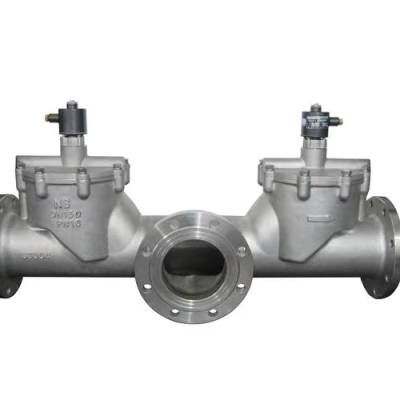


$100.00 - $400.00
MOQ: 1 Pieces

$100.00 - $400.00
MOQ: 1 Pieces

$100.00 - $400.00
MOQ: 1 Pieces

$100.00 - $400.00
MOQ: 1 Pieces


$1520.00 - $1950.00
MOQ: 1 Sets


Comprehensive Sourcing Guide
Strategic Sourcing Guide for Industrial Valves
Understanding the Technical Landscape of Valve Procurement
When initiating a search for industrial valves, buyers must first navigate a complex matrix of technical specifications that define the suitability of a component for a specific application. The market offers a diverse array of Valve types, ranging from self-operated hydraulic monoblock valves to gate valves and faucet valves, each engineered for distinct operational environments. A critical observation in the current supply landscape is the variation in power sources; while many industrial units are designed for hydraulic power systems, others may serve different fluid dynamics entirely. The flow capacity is another pivotal metric, with observed specifications indicating a flow rate of 45 liters per minute for certain hydraulic models, though this figure is not universal across all product categories.
Material composition plays a foundational role in Valve durability and performance. Steel is a frequently cited material in the current inventory, often subjected to rigorous processing techniques such as pressure casting and forging. The forging tolerance for these metal components is observed to be within a range of +/-0.5mm, a specification that requires precise verification during the quality assurance phase. Furthermore, the surface treatment of these metal parts often involves sand blasting to ensure longevity and resistance to environmental factors. The operating temperature range is another vital parameter; many standard units are rated for ordinary temperature conditions, which limits their application in extreme thermal environments unless specifically engineered otherwise. Buyers must carefully distinguish between these observed attributes and general claims, ensuring that the selected Valve matches the specific thermal and mechanical demands of their system.
Compliance and Certification Verification Protocols
In the realm of industrial procurement, compliance with international and regional standards is non-negotiable. The supply chain for valves presents a fragmented certification landscape where different products carry distinct regulatory endorsements. For instance, certain hydraulic monoblock valves are associated with CE and ISO certifications, while other models in the same category may also carry CCC, CCCF, GS, and GB8013-2005 designations. This variation underscores the necessity for buyers to verify the specific certification status of each unit rather than assuming a blanket compliance across a product line. Some products are explicitly linked to DOT standards, while others adhere to ASME standards or specific internal standards like tr414c.
The verification process must extend beyond the mere presence of a certification label. Buyers should demand documentation that confirms the validity of these standards for the specific model number being procured. For example, while one product listing mentions a standard of "200," another references "class150" for gate valves, indicating that the numerical value of the standard is highly model-dependent. The presence of ISO 9001 certification is noted in several entries, often in conjunction with material specifications, suggesting a focus on quality management systems. However, the absence of a specific certification in a listing does not necessarily imply non-compliance, but rather that the specific data point was not highlighted in the product description. Therefore, the procurement strategy must involve direct inquiry to suppliers to confirm the current status of certifications such as CE, ISO, and ASME for the exact batch of goods intended for purchase.
Cost Drivers and Pricing Dynamics
The pricing structure for industrial valves is influenced by a multitude of factors, resulting in a wide observed range that spans from nominal values to significant figures. The market data indicates a price range extending from $0.01 to $99,999, a disparity that reflects the vast difference between simple faucet valves and complex, high-specification hydraulic systems. This broad spectrum suggests that cost is not a linear function of the product category but is heavily dependent on material quality, manufacturing complexity, and the level of customization required.
Minimum Order Quantity (MOQ) is another significant driver of total procurement costs. The observed MOQ range varies from 1 unit to 1,000 units, offering flexibility for small-scale projects while potentially imposing volume constraints for large industrial deployments. Buyers must analyze the relationship between unit price and order volume; higher MOQs often correlate with reduced per-unit costs, but they also increase the initial capital outlay and inventory holding costs. Additionally, the customization availability is a key variable. Products marked as "Available" for customization will inherently carry a different cost structure compared to standard off-the-shelf items. The packing method, whether standard cartons, plywood cases, or custom solutions, also contributes to the final landed cost. Understanding these variables allows buyers to construct a total cost of ownership model that accounts for not just the purchase price, but also logistics, storage, and the potential for volume discounts.
Typical Applications and Operational Contexts
The application of valves is dictated by the specific media they are designed to handle and the systems in which they operate. A primary use case observed in the current market is for hydraulic systems, where the Valve acts as a critical control element for fluid power. These hydraulic monoblock valves are specifically engineered to manage oil media, a common fluid in heavy machinery and industrial automation. The self-operated nature of some of these valves suggests they are designed to function without external power sources, relying on the pressure of the fluid itself to operate, which is advantageous in remote or fail-safe scenarios.
Beyond hydraulic applications, valves are utilized in electronic accessories and general piping systems. The "Faucet Valve" category, for instance, points to applications in water distribution or general fluid control where precision is less critical than in hydraulic systems. The material choice of steel and the process of pressure casting indicate suitability for high-pressure environments, making these valves ideal for industrial settings where reliability is paramount. The temperature rating of "ordinary temperature" limits their use in extreme heat or cryogenic applications, necessitating careful selection for processes involving thermal extremes. Furthermore, the specific design features, such as the "Inner Tube: Without Inner Tube" attribute found in tire-related components, highlight the diversity of Valve applications, which can extend from automotive to general industrial fluid management. Buyers must align the Valve's media compatibility, pressure rating, and temperature tolerance with their specific operational requirements to ensure system integrity.
Supplier Evaluation and Origin Analysis
Evaluating potential suppliers requires a deep dive into their geographic origins and manufacturing capabilities. The supply data indicates a concentration of Valve manufacturers in specific regions of China, with Jiangsu Province and Zhejiang Province emerging as key hubs. Products originating from Jiangsu are often associated with hydraulic monoblock valves and steel components, while Zhejiang-based suppliers may be linked to faucet valves and other general-purpose units. This geographic clustering suggests established supply chains and specialized expertise in these regions, but it also necessitates due diligence regarding the specific factory capabilities.
The manufacturing process is a critical indicator of supplier quality. The presence of "Machining Center" operations and "Heat Treatment: Quenching" processes implies a sophisticated manufacturing environment capable of producing high-tolerance components. The "Forging Tolerance" of +/-0.5mm is a specific metric that buyers should request proof of for their orders, as it reflects the precision of the supplier's forging capabilities. Additionally, the "Surface Treatment: Sand Blasting" process is a standard quality indicator for metal components, ensuring a uniform finish and improved corrosion resistance. Buyers should verify that the supplier's stated processes match the actual production methods used for their specific order. The "Standard Packing" and "Carton" or "Plywood Case" options also reflect the supplier's logistics capabilities and attention to detail in product protection during transit.
Quality Control and Long-Term Procurement Considerations
Ensuring the long-term reliability of Valve procurement requires a robust quality control framework. The warranty terms observed in the market, ranging from one year to 12 months, provide a baseline for supplier confidence in their products. However, a warranty is only as valuable as the supplier's ability to honor it. Buyers should prioritize suppliers who offer clear warranty terms and have a track record of supporting their products. The "Standard" classification of many products suggests a baseline level of quality, but for critical applications, buyers should seek out products with more rigorous testing and certification records.
The "Selling Units" attribute, often listed as "Single item," indicates that the market supports both bulk and single-unit purchases, offering flexibility in procurement strategies. However, for long-term supply chain stability, buyers should consider the consistency of the product model. Variations in model numbers, such as "GRH-Valve," "GRHValve," "AC," and "TR13," suggest that buyers must maintain strict version control to ensure compatibility with existing systems. The "Molding Style" of forging and the "Processing Object" of metal are consistent indicators of the manufacturing method, but buyers must verify that these attributes remain constant across production batches. Ultimately, successful procurement hinges on a partnership with suppliers who can demonstrate consistent quality, transparent communication regarding certifications, and a commitment to long-term support through warranty and after-sales service.
Comparative Analysis of Valve Specifications
To facilitate decision-making, it is helpful to compare the key attributes of different Valve types found in the market. The following table summarizes the observed specifications for various Valve categories, highlighting the differences in material, certification, and application.
| Product Attribute | Hydraulic Monoblock Valve | Gate Valve | Faucet Valve | Tire/Tubeless Component |
|---|---|---|---|---|
| Primary Media | Oil | Metal Processing | Electronic Accessories | Air (Tire) |
| Material | Steel | Steel | Steel | Rubber/Steel (Implied) |
| Power Source | Hydraulic | Mechanical | Manual/Electronic | Pneumatic |
| Key Certifications | CE, ISO | ASME, ISO 9001 | ISO 9001 | DOT, tr414c |
| Flow Rate | 45 lpm | Class 150 | N/A | N/A |
| Origin | Jiangsu, China | Zhejiang, China | Zhejiang, China | China |
| Warranty | One Year | 12 Months | 12 Months | N/A |
This comparison illustrates that while there are commonalities in material and origin, the specific application and certification requirements vary significantly. Buyers must use this data as a reference point for their specific needs, ensuring that the selected Valve meets the precise operational and regulatory requirements of their project. The diversity in specifications reinforces the need for a tailored sourcing strategy rather than a one-size-fits-all approach.
FAQs
What certifications do hydraulic monoblock valves typically have?
Hydraulic monoblock valves often carry CE, ISO, CCC, CCCF, GS, and GB8013-2005 certifications. Buyers must verify the specific certification status for each model number rather than assuming blanket compliance across the entire product line.
Can I customize Valve specifications for my industrial needs?
Customization is available for many Valve products in the current inventory. Buyers should inquire directly with suppliers to confirm if their specific model supports customization and how it affects the final cost and lead time.
Which Valve types are suitable for handling oil media?
Self-operated hydraulic monoblock valves are specifically engineered to manage oil media in industrial systems. These units typically operate at ordinary temperatures and offer a flow rate of 45 liters per minute for standard applications.
What is the typical warranty period for industrial valves?
The observed warranty period for these valves ranges from one year to twelve months. Buyers should prioritize suppliers who offer clear warranty terms and have a track record of honoring these commitments for long-term reliability.
How are Valve products typically packed for shipping?
Valves are shipped in various packing methods including standard cartons, plywood cases, or standard packing. The specific packing method depends on the product type and supplier logistics capabilities to ensure protection during transit.
Which Valve models originate from Jiangsu Province in China?
Hydraulic monoblock valves and steel components frequently originate from Jiangsu Province, China. This region is a key manufacturing hub, but buyers should verify the specific origin for each model number to ensure supply chain accuracy.
What material is commonly used for forging Valve components?
Steel is the frequently cited material for Valve components, often subjected to pressure casting and forging. The forging tolerance for these metal parts is observed to be within a range of plus or minus 0.5 millimeters.