Source 18650 Rechargeable Power Tool Battery for drills, lights, and UPS
Explore 30 listings of 18650 Rechargeable Power Tool Battery options featuring varying capacities, voltages, and cell configurations. Buyers can compare specifications for applications in power tools, lighting systems, and UPS units with options for OEM customization.
Key considerations
Products List


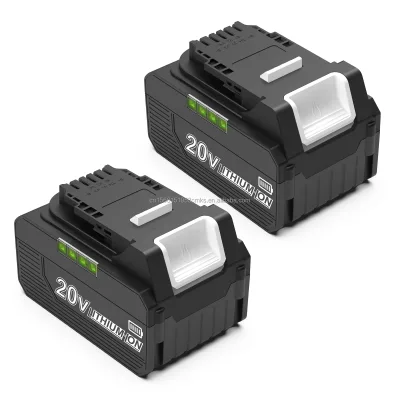

Electric Power Tools Replacement 18V 6ah 108W Rechargeable Lithium Battery
$21.00 - $25.00
MOQ: 50 Pieces


Lithium-Ion 18650 1500mAh 3.7V Rechargeable Power Battery for Power Tool
$0.54 - $0.58
MOQ: 1000 Pieces




Comprehensive Sourcing Guide
Strategic Sourcing Guide for 18650 Rechargeable Power Tool Batteries
Understanding the Technical Architecture of 18650 Power Tool Packs
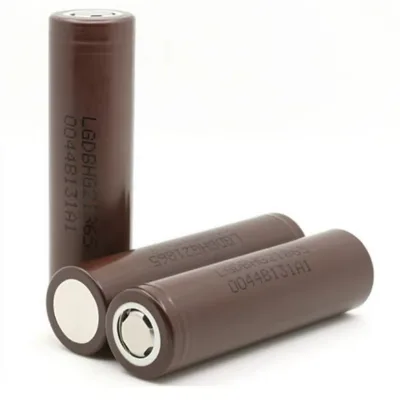
The core keyword "18650 Rechargeable Power Tool Battery" refers to a specific configuration where individual cylindrical lithium-ion cells are assembled into a pack to deliver the high voltage and current required by power tools. Unlike single-cell applications, power tool batteries demand a series-parallel arrangement to meet specific voltage and capacity targets. Based on observed market data, the fundamental building block is the 18650 cell, which typically features a diameter of 18mm and a length of 65mm. These cells are often grouped in specific configurations, such as a 3-cell series (186503) or a 10-cell series (1865010), to achieve target voltages.
A critical observation in the current supply landscape is the variance in voltage ratings. While standard configurations may target 10.8V, other high-performance packs are designed for 18V systems. The voltage rating is directly determined by the number of cells in series; for instance, a 3-cell pack typically yields approximately 10.8V to 11.1V, whereas a 10-cell configuration is engineered to reach the 18V threshold. The capacity of these packs also varies significantly, with observed specifications ranging from 1500mAh to 3000mAh, and in some high-capacity variants, exceeding 1000mAh. The cathode material used in these cells is frequently NCM (Nickel Cobalt Manganese), which offers a balance of energy density and discharge capability suitable for power tools.
The physical form factor of the final battery pack is equally important for tool compatibility. While the individual cells are cylindrical, the assembled pack often adopts a square or rectangular shape to fit the ergonomic grips of power tools. Dimensions vary by model, with specific examples showing sizes around 515180mm for lower voltage packs and larger dimensions like 114.80x74.55x65.20mm for 18V units. The weight of these packs is a function of the cell count and casing; observed weights range from 165g for compact 10.8V units to 546g for heavier 18V packs. Buyers must verify that the "Product Size" and "Shape" align precisely with the mounting interface of their specific power tool models to ensure a secure fit.
Compliance and Certification Verification Protocols
When sourcing 18650 rechargeable power tool batteries, verifying compliance with international safety and environmental standards is non-negotiable. The supply chain for these components is heavily regulated due to the high energy density of lithium-ion chemistry. Buyers should prioritize suppliers who can provide documentation for recognized certifications. Observed product listings frequently cite compliance with CE, RoHS, and FCC standards. The CE mark indicates conformity with health, safety, and environmental protection standards for products sold within the European Economic Area. RoHS compliance ensures that the battery pack is manufactured without specific hazardous materials, such as lead, mercury, or cadmium, which is critical for environmental regulations and recycling protocols.
In addition to CE and RoHS, other certifications such as TUV and FCC are often present in high-quality listings. TUV certification provides an independent verification of safety and quality, while FCC compliance is essential for electronic devices that may emit radio frequency interference. It is important to note that while some background knowledge suggests standards like UL 1642 or UL 2054, these specific numerical standards should not be assumed to be present unless explicitly stated by the supplier. Buyers must request test reports or certificates of conformity to confirm that the specific batch of batteries meets these standards.
The "Standard Voltage" and "Rated Capacity" are also subject to verification against these certifications. For example, a battery labeled with a standard voltage greater than 12V must be tested to ensure it does not exceed safety limits under short-circuit or overcharge conditions. The "prod_standard" field in supplier data often lists these certifications, but buyers should treat these as claims that require validation. Furthermore, the "Condition" of the product should always be "Brand New," as refurbished or used cells pose significant safety risks in high-drain power tool applications. Ensuring that the supplier adheres to these standards reduces the liability risk for the end-user and ensures the product can be legally imported and sold in various global markets.
Cost Drivers and Pricing Dynamics in the Market
The pricing of 18650 rechargeable power tool batteries is influenced by a complex interplay of factors, including cell chemistry, capacity, voltage, and the level of customization required. The observed price range in the market is substantial, spanning from 0.1 USD to 1800 USD. This wide disparity reflects the difference between single cells, small custom packs, and large-scale industrial battery solutions. The lower end of the spectrum typically corresponds to basic configurations or bulk cell purchases, while the higher end encompasses fully assembled packs with advanced Battery Management Systems (BMS), custom branding, and specialized packaging.
Capacity is a primary cost driver. A pack with a capacity of 1500mAh will generally be less expensive than one rated at 3000mAh or higher, as the latter requires more raw materials and cell count. Similarly, the voltage rating impacts cost; an 18V pack requires more cells in series than a 10.8V pack, increasing the material cost and the complexity of the assembly process. The "Discharge Rate" is another critical factor. High discharge rate batteries, which are essential for power tools that demand instant torque, often utilize higher-grade cells and more sophisticated internal circuitry, commanding a premium price compared to low discharge rate variants.
Customization is a significant variable in the final price. Suppliers offering OEM (Original Equipment Manufacturer) and ODM (Original Design Manufacturer) services allow buyers to tailor the battery pack to specific tool requirements, including custom casing shapes, branding, and connector types. This level of customization adds to the engineering and tooling costs. The "MOQ" (Minimum Order Quantity) also plays a role in unit pricing. Observed MOQs range from 2 to 1000 units. Buyers ordering near the lower end of this range may face higher per-unit costs, whereas bulk orders can leverage economies of scale to reduce the price. Additionally, the "Lead Time" of 3-7 days suggests a relatively agile supply chain, but rush orders or expedited shipping could incur additional charges. Buyers should negotiate based on the total cost of ownership, including shipping, duties, and the potential cost of quality failures, rather than focusing solely on the unit price.
Typical Applications and Performance Requirements
The primary application for 18650 rechargeable power tool batteries is in the power tool industry, where reliability and performance are paramount. These batteries are specifically engineered to handle the high current demands of drills, drivers, saws, and other handheld power equipment. The "Application" field in product specifications often explicitly mentions "Bl1830" or similar model codes, indicating compatibility with specific tool lines. The "Usage" category further expands to include UPS (Uninterruptible Power Supply) and lighting systems, demonstrating the versatility of these battery packs beyond just power tools.
Performance requirements for these applications are stringent. Power tools require a "High Discharge Rate" to deliver the necessary torque and speed. A battery with a "Low Discharge Rate" would be unsuitable for heavy-duty applications, as it would struggle to maintain voltage under load. The "Cycle Life" is another critical performance metric, with observed data indicating a cycle life of approximately 540 times. This figure represents the number of charge-discharge cycles the battery can undergo before its capacity degrades to a specified threshold. For professional users, a longer cycle life translates to lower long-term replacement costs and reduced downtime.
The "Installation" method is typically "Fixed," meaning the battery is designed to snap into a tool and remain secure during operation. The "Shape" of the battery, whether square or cylindrical, must match the tool's battery compartment. The "Product Weight" also affects user fatigue; lighter packs, such as the 165g variant, are preferable for overhead work, while heavier packs, like the 546g unit, may offer higher capacity for extended runtime. Buyers should evaluate the "Features" listed, such as "Long Cycle Life," to ensure the battery meets the specific operational demands of their workforce. The "Electrolyte" type, identified as Li-ion, confirms the chemistry used, which is standard for modern high-performance applications.
Supplier Evaluation and Quality Control Standards
Selecting a reliable supplier for 18650 rechargeable power tool batteries requires a rigorous evaluation process that goes beyond price comparisons. Buyers should assess the supplier's origin, with "Dongguan Guangdong" and "China" being common production hubs. The "prod_origin" field indicates the manufacturing location, which can influence shipping costs and lead times. A supplier with a "Lead Time" of 3-7 days demonstrates a responsive supply chain, but buyers must verify if this applies to all order sizes or only standard stock items.
Quality control is paramount in the lithium-ion battery sector. Buyers should request detailed information on the "Condition" of the products, ensuring they are "Brand New" and not refurbished. The "prod_packing" method, often described as "Standard Export Carton" or "Export Carton," should be evaluated for its ability to protect the batteries during transit. The "Inner Box Size" and "Outside Carton Size" are critical for logistics planning; for example, a carton containing 15 pieces with dimensions of 465310155mm must be accounted for in warehousing and shipping calculations.
Verification of the "Standard Voltage" and "Rated Capacity" is essential to prevent receiving substandard products. Buyers should insist on test reports that confirm the battery meets the claimed specifications. The "Certification" status, including RoHS, TUV, and CE, should be validated through official documentation. Additionally, the "Customization" capability of the supplier is a key differentiator. Suppliers offering OEM and ODM services can adapt the "prod_model" (e.g., BL1013, BL1830, CNS-18V5AH) to meet specific client needs. Buyers should also check the "Accessories Type" to ensure that necessary components, such as chargers or connectors, are included or available.
Long-Term Procurement Considerations and Strategic Sourcing
Sourcing 18650 rechargeable power tool batteries is not merely a transactional activity but a strategic decision that impacts long-term operational efficiency. Buyers should consider the "Cycle Life" and "Features" of the battery when planning for future replacements. A battery with a cycle life of 540 times may require replacement sooner than a higher-grade alternative, affecting the total cost of ownership. The "Rechargeable" nature of these batteries means that the procurement strategy must account for the entire lifecycle, including disposal and recycling, which is facilitated by "RoHS" compliance.
The "Type" of battery, whether labeled as "Lithium-Ion Batteries" or "Li-ion Battery Pack," should be consistent with the buyer's existing inventory and tool ecosystem. Standardization across different tool models can simplify maintenance and reduce the need for multiple charger types. The "Installation" method being "Fixed" suggests that the battery is an integral part of the tool, and any changes in design or compatibility could disrupt operations. Therefore, buyers should prioritize suppliers who offer stable product lines and consistent quality over time.
Finally, the "prod_standard" and "Standard Voltage" should be aligned with the buyer's regulatory requirements in their target markets. As regulations evolve, suppliers must be able to adapt their products to meet new standards. The "Location" of the supplier, such as "Made in China" or "Dongguan Guangdong," may also influence the ability to scale production and manage supply chain risks. Buyers should establish long-term relationships with suppliers who demonstrate reliability in meeting "Lead Time" commitments and maintaining high quality standards. By focusing on these strategic factors, buyers can ensure a sustainable and efficient procurement process for their 18650 Rechargeable Power Tool Battery needs.
Comparative Analysis of Common Battery Specifications
To assist buyers in making informed decisions, the following table summarizes the key specifications observed in the market for 18650 rechargeable power tool batteries. This comparison highlights the variations in voltage, capacity, and physical dimensions that are critical for tool compatibility.
| Specification | Model A (10.8V) | Model B (18V) | Model C (High Capacity) |
|---|---|---|---|
| Voltage | 10.8V | 18V | >12V |
| Capacity | 1500mAh | 3000mAh | >1000mAh |
| Cell Configuration | 18650*3 Cells | 18650*10 Cells | 18650*10 Cells |
| Product Size | 515180mm | 114.80x74.55x65.20mm | Medium |
| Product Weight | 165g | 546g | Variable |
| Discharge Rate | High Discharge Rate | High Discharge Rate | Low Discharge Rate |
| Cycle Life | N/A | 540 times | N/A |
| Certifications | CE, RoHS, FCC | RoHS, TUV, CE | CE, RoHS |
| Application | Power Tools | Power Tools | UPS, Lighting |
This table illustrates that while the core technology remains consistent, the specific configuration determines the suitability for different applications. Buyers must carefully match these specifications to their tool requirements to ensure optimal performance and safety.
FAQs
What is the typical voltage for 18650 power tool batteries?
Typical voltages include 10.8V and 18V depending on the cell configuration. A 3-cell pack usually yields 10.8V, while a 10-cell pack reaches 18V to meet specific tool requirements.
Can I customize the battery pack for my specific tool?
Yes, customization is available through OEM and ODM services. Suppliers can tailor the battery pack to match specific tool interfaces and branding needs.
Which certifications should I verify for safety compliance?
Verify that the product holds CE, RoHS, and FCC certifications. These standards ensure the battery meets international safety and environmental protection requirements for global markets.
How long does it take to receive the order?
The standard lead time is 3 to 7 days for most orders. This timeframe applies to standard stock items and may vary for custom configurations.
What is the minimum order quantity for these batteries?
The minimum order quantity ranges from 2 to 1000 units depending on the supplier. Lower MOQs allow for smaller trial orders while bulk purchases may offer better pricing.
What is the cycle life of these lithium-ion packs?
The observed cycle life is approximately 540 times for standard models. This metric indicates the number of charge-discharge cycles before capacity significantly degrades.
Which cathode material is used in these battery cells?
The cathode material is typically NCM, which stands for Nickel Cobalt Manganese. This chemistry offers a balance of energy density and discharge capability suitable for power tools.