Source 18mm Metal IP67 Proximity Switch for Home, Industry, and Traffic
Compare 30 listings for the 18mm Metal IP67 Proximity Switch designed for home, industry, and traffic applications. Buyers can evaluate specifications like IP67 protection, Eddy Current principles, and various models including LMF18 and LM40 from verified Chinese manufacturers.
Key considerations
Products List


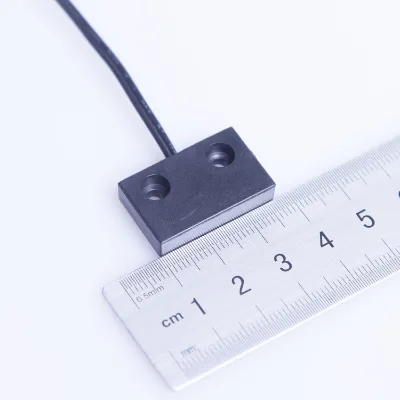


Comprehensive Sourcing Guide
Strategic Sourcing Guide for 18mm Metal IP67 Proximity Switches
The procurement of industrial automation components requires a rigorous approach to ensure reliability, safety, and operational continuity. For buyers specifically targeting the 18mm Metal IP67 Proximity Switch, the market offers a diverse array of options, yet the path to a successful acquisition depends on a deep understanding of technical specifications, material integrity, and compliance frameworks. This guide synthesizes available product data and industry standards to provide a structured framework for evaluating potential suppliers and selecting the optimal sensor for your application. The focus remains on the intersection of mechanical robustness, environmental sealing, and electrical performance, ensuring that the final selection aligns with the demanding conditions of modern industrial environments.
Technical Specifications and Operational Principles
When sourcing an 18mm metal proximity switch, the primary technical differentiator lies in the operating principle and the physical construction of the sensing face. The supplied product data indicates that Eddy Current principles are a dominant technology for metal detection in this form factor. This principle relies on the generation of high-frequency electromagnetic fields; when a metallic object enters this field, eddy currents are induced within the object, causing a change in the oscillator's amplitude that triggers the switch. This makes Eddy Current sensors particularly effective for detecting ferrous and non-ferrous metals, which is critical for applications involving machinery, assembly lines, and material handling.
The physical dimensions are non-negotiable for integration. The 18mm diameter is a standard metric size that allows for compact mounting in tight spaces while maintaining a robust sensing range. The housing material is explicitly noted as Metal, often described in specifications as Stainless Sheel (Stainless Steel), which provides the necessary mechanical strength to withstand impact and vibration. Furthermore, the IP67 protection rating is a critical specification found in the data, indicating that the device is dust-tight and can withstand temporary immersion in water up to 1 meter for 30 minutes. This level of protection is essential for environments where washdowns are frequent or where the equipment is exposed to coolants, oils, or dust.
The electrical output and switching behavior are equally vital. Data suggests the availability of Two-Wires configurations, which simplify wiring in legacy systems or space-constrained panels. The switching type is often NO (Normally Open), meaning the circuit is open when no target is present and closes upon detection. Buyers must also verify the Pull-in Value, with observed ranges indicating a sensitivity between 10-13AT (Ampere-Turns), which dictates the minimum magnetic field strength required to actuate the sensor. Additionally, the Repeated Precision of 0.1 suggests a high degree of consistency in the switching point, ensuring that the sensor triggers at the exact same distance every time, which is crucial for automated quality control and positioning tasks.
Compliance, Certification, and Regulatory Standards
Navigating the regulatory landscape is a fundamental step in B2B procurement to mitigate legal risks and ensure market access. The product data highlights a variety of certifications that suppliers may claim, including CE, ISO, RoHS, FCC, and CCC. The CE marking indicates conformity with health, safety, and environmental protection standards for products sold within the European Economic Area. RoHS (Restriction of Hazardous Substances) compliance ensures that the device does not contain specific hazardous materials, which is a requirement for most global markets. ISO certification implies that the manufacturer adheres to international quality management standards, while FCC is relevant for electromagnetic compatibility in the United States.
However, buyers must exercise caution when interpreting these claims. The data shows that not all listed products carry the same certification suite; for instance, some models list CE, ISO, RoHS, while others include FCC and CCC (China Compulsory Certification). This variance suggests that certification status is product-specific rather than a universal attribute of the category. When evaluating a supplier, procurement teams should request valid, up-to-date certification documents for the specific model number being purchased, such as 5CPS-F1827 or LMF18. Relying on general category claims without verifying the specific model's documentation can lead to compliance failures during customs clearance or regulatory audits.
Furthermore, the Standard of Flush mounting is a key installation requirement mentioned in the data. This implies that the sensor can be installed flush with the metal surface of the machine, which is common in high-speed applications to prevent snagging. However, the data also lists Plastic as a standard for other models, creating a potential point of confusion. Buyers must explicitly confirm that the 18mm metal variant they are sourcing is indeed designed for flush mounting in a metal environment, as plastic housings generally require non-flush mounting to avoid false triggering from the surrounding metal.
Cost Drivers and Economic Factors
The pricing of industrial sensors is influenced by a complex matrix of factors, including material costs, certification overhead, and production volume. The observed listed price range for similar components spans from 0.2 to 30 USD, a wide spectrum that reflects differences in brand positioning, material quality, and feature sets. The lower end of this range typically corresponds to generic or OEM-branded units, while the higher end often includes premium brands with extended warranties, advanced precision, or specialized certifications.
Material costs are a primary driver. The use of Stainless Steel for the shell and Rhodium for contact materials (where applicable) significantly increases the base cost compared to plastic or standard steel alternatives. Rhodium, in particular, is a precious metal known for its corrosion resistance and low contact resistance, making it a premium feature for high-reliability applications. The IP67 rating also adds to the cost, as it requires precise sealing mechanisms and rigorous testing to ensure water and dust resistance.
MOQ (Minimum Order Quantity) is another critical economic factor. The observed MOQ range of 1 to 1000 units suggests that suppliers offer flexible purchasing options. For prototyping or small-scale projects, buyers can source single units, but for mass production, negotiating a lower unit price at higher volumes (e.g., 1000 units) is standard practice. The Packing method, whether Carton, Box, or Export Standard Carton Box, can also impact logistics costs. Bulk packaging in export-standard cartons reduces per-unit shipping costs but requires careful handling to prevent damage during transit.
Buyers should also consider the Customization availability. The data confirms that customization is available, which can be a cost driver if specific cable lengths, connector types, or mounting threads are required. While customization adds value, it often extends lead times and increases the unit price. Therefore, a cost-benefit analysis should be performed to determine if standard off-the-shelf models meet the application needs before opting for custom configurations.
Typical Applications and Usage Scenarios
The versatility of the 18mm Metal IP67 Proximity Switch makes it suitable for a broad range of industries. The product data explicitly lists applications in Home, Industry, Car/Motorcycle, Special Equipment, Traffic, and Communication Electronic Products. In the Industrial sector, these sensors are ubiquitous for detecting the position of machine parts, counting items on a conveyor belt, or monitoring the presence of metal tools. The IP67 rating makes them ideal for food and beverage processing, where frequent washing is necessary, or for automotive manufacturing, where exposure to oils and coolants is common.
Specific use cases highlighted in the data include Anti-theft applications, suggesting that these sensors can be integrated into security systems to detect unauthorized movement or tampering. In Traffic and Special Equipment contexts, the robustness of the metal housing and the precision of the Eddy Current principle allow for reliable operation in outdoor or harsh environments. The Max Temperature range of -25 to +75 Degree Celsius further expands the applicability to extreme climates, ensuring that the sensor functions correctly in both freezing cold storage facilities and hot industrial furnaces.
The Type of sensor is identified as a Sensor or Microwave Sensor Switch in some contexts, though the Eddy Current principle is more specific to metal detection. Buyers must ensure that the selected model matches the intended application; for example, a Microwave Sensor might be better suited for non-metallic detection, whereas an Inductive Proximity Sensor Switch is the correct choice for metal detection. The Color options, such as White / Brown, are primarily aesthetic but may be relevant for visual identification in complex control panels.
Supplier Evaluation and Quality Assurance
Selecting the right supplier is as important as selecting the right product. The data indicates that manufacturers are often OEM (Original Equipment Manufacturer) based, with origins in China, specifically Shenzhen. While this region is a global hub for electronics manufacturing, it necessitates a rigorous vetting process. Buyers should verify the manufacturer's track record, focusing on their ability to maintain consistent quality across batches. The Condition of the product is listed as Original New, which is a baseline requirement; however, buyers must ensure that the supplier does not sell refurbished or reconditioned units as new.
Quality control should be a central part of the supplier evaluation. The Repeated Precision of 0.1 is a metric that should be verified through independent testing or third-party inspection reports. Buyers should request sample units to test the Pull-in Value and ensure it falls within the 10-13AT range. Additionally, the Protection Degree of IP67 should be validated through water and dust ingress testing, as this is a common point of failure in lower-quality sensors.
The Brand name, such as Winston, may appear in the data, but buyers should not rely solely on brand recognition. Instead, they should evaluate the supplier's technical support capabilities, warranty terms, and after-sales service. A supplier that offers comprehensive documentation, including datasheets and installation guides, is preferable to one that provides minimal support. The Standard of CE, ROHS compliance should be checked for every batch, as regulatory requirements can change, and suppliers must demonstrate their ability to adapt to new standards.
Long-Term Procurement and Lifecycle Management
Sourcing an 18mm Metal IP67 Proximity Switch is not just a one-time transaction but a long-term commitment to operational stability. The Lead Time and MOQ flexibility discussed earlier play a crucial role in supply chain resilience. Buyers should establish a relationship with suppliers who can guarantee consistent supply, even during market fluctuations. The Customization availability allows for future-proofing, enabling the integration of new features or modifications as the application evolves.
Maintenance and replacement strategies should be developed early. Given the IP67 rating and Metal construction, these sensors are designed for durability, but they are not immune to wear and tear. Buyers should plan for periodic inspections and have spare units on hand to minimize downtime. The Max Temperature range of -25 to +75 Degree should be monitored in the field to ensure the sensor is not operating outside its designed limits, which could lead to premature failure.
Finally, the Standard of Flush mounting requires careful consideration during the initial design phase. If the mounting surface changes or the machine layout is modified, the sensor may need to be replaced or repositioned. Buyers should work with suppliers who offer technical consultation to ensure that the installation design remains optimal over the product's lifecycle. By focusing on these long-term considerations, buyers can secure a reliable supply of high-quality proximity switches that support their operational goals for years to come.
Comparative Analysis of Key Product Attributes
To assist in the decision-making process, the following table summarizes the key attributes observed in the product data, highlighting the variations that buyers must navigate.
| Attribute | Observed Value / Range | Relevance to Buyer |
|---|---|---|
| Diameter | 18mm | Critical for mounting compatibility |
| Shell Material | Stainless Steel / Metal | Determines durability and corrosion resistance |
| Protection Rating | IP67 | Essential for harsh or washdown environments |
| Operating Principle | Eddy Current | Best for metal detection |
| Switching Type | NO (Normally Open) | Defines circuit logic |
| Certifications | CE, ISO, RoHS, FCC, CCC | Varies by model; must be verified per unit |
| Temperature Range | -25 to +75 Degree | Defines environmental limits |
| Wire Configuration | Two-Wires | Simplifies wiring in specific setups |
| Origin | China (Shenzhen) | Indicates manufacturing hub |
| Packing | Carton / Box / Export Standard | Affects logistics and handling |
This comparative view underscores the importance of verifying specific model details against the general category attributes. While the 18mm metal IP67 description provides a strong starting point, the nuances in certification, temperature range, and wiring configuration can significantly impact the suitability of a specific product for a given application. Buyers must treat these attributes as observations to be validated rather than universal guarantees, ensuring that the final procurement decision is based on accurate, model-specific data.
FAQs
What is the operating principle of the 18mm Metal IP67 Proximity Switch?
The device operates on the Eddy Current principle to detect metallic objects. This method generates electromagnetic fields that induce currents in metal targets, triggering the switch. It is specifically designed for detecting both ferrous and non-ferrous metals in industrial automation.
Which certifications are available for the 18mm Metal IP67 Proximity Switch?
Certifications vary by model but commonly include CE, ISO, RoHS, FCC, and CCC. Buyers must verify the specific certification suite for the requested model number, as not all products carry the same compliance documents. Some models may also meet flush mounting standards.
Can the 18mm Metal IP67 Proximity Switch be customized for specific needs?
Yes, customization is available for this product category. Buyers can request specific configurations, though this may impact lead times and unit pricing. Standard options include variations in wiring and mounting styles to suit different application requirements.
What is the typical price range for the 18mm Metal IP67 Proximity Switch?
The observed listed price range spans from 0.2 to 30 USD depending on the model and features. Lower prices often correspond to generic OEM units, while higher costs reflect premium materials like stainless steel shells or specialized certifications. Volume discounts may apply based on MOQ.
How does the IP67 rating affect the 18mm Metal IP67 Proximity Switch usage?
The IP67 rating ensures the device is dust-tight and can withstand temporary water immersion up to one meter. This makes it suitable for harsh environments like food processing or automotive manufacturing where exposure to coolants and dust is common. It guarantees reliability in washdown scenarios.
What is the maximum operating temperature for the 18mm Metal IP67 Proximity Switch?
The maximum operating temperature range is typically -25 to +75 degrees Celsius. This wide range allows the sensor to function in extreme climates, from freezing storage facilities to hot industrial furnaces. Buyers should confirm the specific temperature limits for their selected model.