Source 2 Axle Trailer Jack Stand for RVs, Trucks, and Boats
Compare 30 listings for the 2 Axle Trailer Jack Stand to find options with varying load capacities, heights, and certifications. Buyers can review specifications for universal fitment and customization needs across different trailer types.
Key considerations
Products List
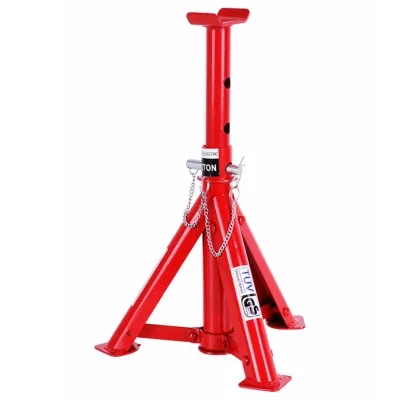


2 Ton Jack Stand Trailer Jack Stand Car Jack Stand Jack Stand in Lifting Trolley Jack Braces
$10.70 - $11.30
MOQ: 500 Pieces

3 Ton Trolley Jack Braces Jack Stand in Lifting Car Jack Stand Trailer Jack Stand
$16.90 - $17.80
MOQ: 500 Pieces
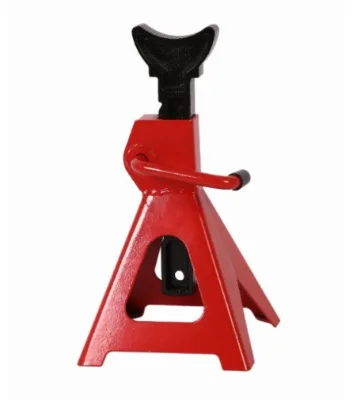


2000 Lbs Corrosion Resistance Trailer Parking Jack Trailer Axle Stand Jacks
$13.50 - $14.50
MOQ: 100 Pieces


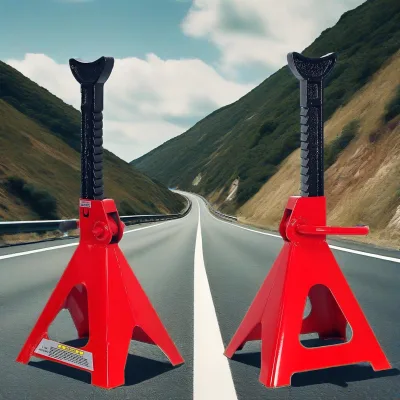


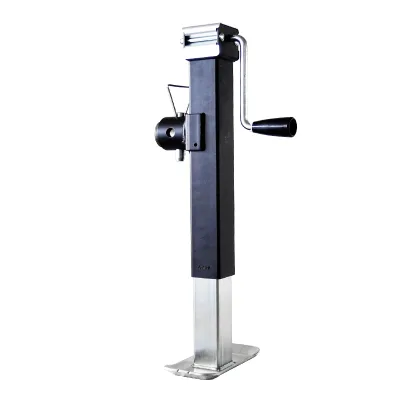

Truck Jack Stand 16t Heavy Duty Vehicle Support Stand Jack Stand for Trucks
$43.00 - $55.00
MOQ: 50 Pieces


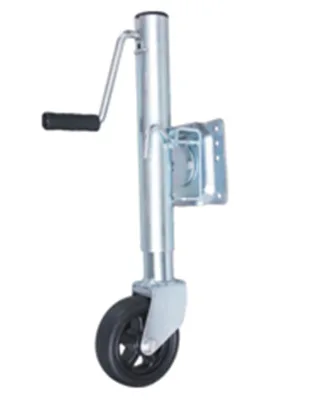
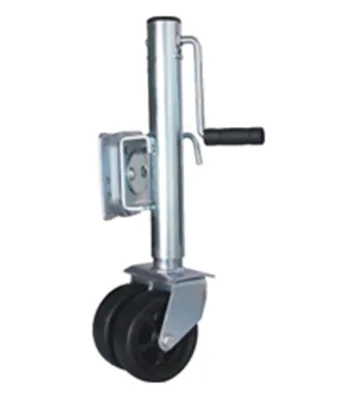
Trailer Stabilizer Lift Jack Stand with Rubber Jack Jockey for Boat Caravan
$15.00 - $20.00
MOQ: 100 Pieces

Comprehensive Sourcing Guide
Strategic Sourcing Guide for 2 Axle Trailer Jack Stands
The global market for heavy-duty lifting equipment, specifically the 2 Axle Trailer Jack Stand, presents a complex landscape for B2B procurement professionals. These devices are critical for maintaining vehicle stability during maintenance, storage, and transport operations. Unlike standard single-point jacks, 2 axle configurations offer enhanced load distribution and safety margins, making them essential for commercial fleets and industrial logistics. This guide synthesizes observed market data and technical attributes to provide a disciplined framework for sourcing these components without relying on unverified claims or speculative market figures.
Technical Specifications and Load Dynamics
When evaluating a 2 Axle Trailer Jack Stand, the primary focus must be on the load-bearing capacity and dimensional compatibility. The market data indicates a significant variance in specifications, ranging from standard automotive applications to heavy industrial requirements. Buyers must distinguish between the "Type" of the jack, which can range from a standard "jack stand" to a "Screw Jack" or "Pneumatic Air Jack." For instance, specific models in the observed dataset are identified as "Screw Jack" structures with a "Power Source" of "Lever," while others are explicitly labeled as "Pneumatic Air Jack" with a massive "Load Bearing Capacity" of 28t.
The dimensional parameters are equally critical for ensuring fitment within a specific trailer or vehicle bay. The observed "Minimum Height" varies significantly, with some units listed at 12 inches or 203mm, while others have a "Min Height" defined as "According to your type," suggesting high levels of customization. The "Maximum Height" is similarly variable, with ranges observed between 301-350mm and specific models reaching up to 840mm in "Installation Height." The "Lifting Stroke" is another vital metric, with observed values of 430mm or 480mm, which dictates the vertical travel range of the jack.
Furthermore, the material composition influences the weight and durability of the unit. Some units are constructed from "Aluminium," offering a lightweight solution with a "N.W" (Net Weight) of 1.4kg or 1.75kg, suitable for portable applications. In contrast, other specifications cite "Special grade steel" as the standard, implying a heavier but more robust construction for high-load scenarios. The "Single gross weight" can reach 3.000 kg for larger units, and the "Single package size" varies from 30X30X50 cm to 31X30X38 cm. Buyers must verify that the "Ideal for" attribute matches their operational needs, such as "Storing in Toolbox" for compact units versus heavy-duty industrial storage.
Compliance, Certification, and Safety Standards
Safety and regulatory compliance are non-negotiable in the procurement of lifting equipment. The observed product listings reveal a diverse array of certifications, including "ISO/Ts16949," "CCC," "DOT," "ISO," and "CE." These certifications indicate adherence to specific quality management systems and safety standards, though the specific application of each standard must be verified against the buyer's local regulations. For example, "DOT" certification is crucial for automotive applications in the United States, while "CCC" is mandatory for products sold within China.
The "Standard" attribute for these products often references "Special grade steel" or specific capacity ratings like "Capacity: 2 ton" or "Capacity: 3 ton." However, buyers should be cautious of generic standard references like "EN 1494" which appear in background data but require specific verification for the exact product batch. The "Static Load" capacity is another critical safety metric, with observed values ranging from 70t to 80t for high-capacity units. This figure represents the maximum weight the jack can support without movement, which is distinct from the dynamic lifting capacity.
It is imperative to note that while some products list "ABS" (Anti-lock Braking System) compatibility or "Complex" tent types, these attributes may be specific to certain model lines and not universal across all 2 axle jack stands. Procurement teams must request specific test reports and certification documents for the exact model number, such as "AM121-11-8902B" or "TP02301," rather than relying on general category claims. The "Condition" is consistently listed as "New," but the "After-Sales Service" offerings, such as "Installation Instructions" and "24h After-Sales Reply," are vital for ensuring operational continuity and safety compliance post-purchase.
Cost Drivers and Pricing Variables
The pricing structure for 2 axle trailer jack stands is influenced by a multitude of factors, including material costs, manufacturing complexity, and certification requirements. The observed price range in the market spans from $2 to $160 USD, a wide disparity that reflects the difference between basic lever-operated stands and advanced pneumatic or high-capacity hydraulic units. A unit with a "Load Bearing Capacity" of 28t will naturally command a higher price point than a standard 2-ton aluminium stand.
The "MOQ" (Minimum Order Quantity) is another significant cost driver. The observed range is 1 to 500 units, with specific high-volume models like the "Pneumatic Air Jack 80 Ton" requiring an MOQ of 500pcs. This suggests that smaller buyers may face higher per-unit costs due to the lack of economies of scale, while larger procurement contracts can negotiate more favorable pricing tiers. The "Selling Units" are typically listed as "Single item," but bulk purchasing often unlocks better rates.
Additionally, the "Customization" availability is a key variable in cost estimation. Products marked as "Customizable" with "Customizable" axle numbers or specific "Min Height" requirements will incur additional tooling and engineering costs. The "Place of Origin" also plays a role; while many products originate from "Shanghai, China" or "Jiaxing, Zhejiang," shipping costs and import duties will vary based on the final destination. The "prod_packing" method, whether "General Sea Packing" or "in Carton," also impacts the final landed cost, as specialized packaging for heavy or delicate items adds to the overall expense.
Typical Applications and Operational Context
The versatility of 2 axle trailer jack stands allows them to serve a broad spectrum of applications, from light automotive maintenance to heavy industrial logistics. The "Car Fitment" is often listed as "Universal," indicating compatibility with a wide range of vehicle types, including trailers, trucks, and buses. However, the specific "Type" of the jack determines its ideal use case. For instance, "Screw Jack" structures are often preferred for their precision and stability in static holding applications, while "Pneumatic Air Jacks" are utilized in environments requiring rapid deployment and high lifting speeds.
The "Ideal for" attribute suggests that some units are designed specifically for "Storing in Toolbox," making them suitable for mobile maintenance crews or roadside assistance. Conversely, high-capacity units with a "Load Bearing Capacity" of 28t are intended for stationary industrial settings, such as manufacturing plants or heavy equipment repair facilities. The "Installation Height" and "Lifting Stroke" must align with the specific clearance requirements of the trailer or vehicle being serviced. For example, a unit with a "Minimum Height" of 203mm may be required for low-clearance trailers, while others with a "Min Height" of 12 inches are better suited for standard automotive lifts.
The "After-Sales Service" component, including "Installation Instructions" and "24h After-Sales Reply," is particularly relevant for complex applications where proper setup is critical for safety. The "Warranty" period, ranging from "Six Months After Delivery" to "12 Months," provides a buffer against manufacturing defects, but the specific terms must be reviewed for each supplier. The "Condition" being "New" ensures that the equipment is free from prior wear, which is essential for maintaining safety standards in high-load scenarios.
Supplier Evaluation and Quality Assurance
Selecting the right supplier for 2 axle trailer jack stands requires a rigorous evaluation process that goes beyond price and basic specifications. The "Place of Origin" is a starting point, with "Shanghai, China" and "Jiaxing, Zhejiang" being common manufacturing hubs. However, buyers must verify the supplier's ability to meet specific "Standard" requirements, such as "Special grade steel" or specific capacity ratings. The "Certification" list, including "ISO/Ts16949," "CCC," "DOT," "ISO," and "CE," should be cross-referenced with the supplier's actual documentation to ensure authenticity.
Quality control measures should be a central part of the supplier evaluation. The "prod_standard" and "prod_model" attributes, such as "TP02301" or "TP02302," indicate specific product lines that may have distinct quality profiles. Buyers should request sample units to verify the "Construction" material, whether "Aluminium" or "Special grade steel," and to test the "Lifting Stroke" and "Installation Height" against the claimed specifications. The "Single gross weight" and "N.W" (Net Weight) should also be verified to ensure the product matches the physical description provided in the listing.
Furthermore, the "Customization" capability of the supplier is a critical factor for buyers with unique requirements. The ability to adjust the "Axle Number" or "Min Height" according to specific needs demonstrates the supplier's engineering flexibility. The "After-Sales Service" offerings, such as "Installation Instructions" and "24h After-Sales Reply," are also indicators of a supplier's commitment to customer support and long-term reliability. Buyers should prioritize suppliers who provide comprehensive documentation and responsive support channels to mitigate risks associated with equipment failure.
Long-Term Procurement and Lifecycle Management
Sourcing 2 axle trailer jack stands is not merely a transactional activity but a strategic decision that impacts long-term operational efficiency and safety. The "Warranty" period, whether "Six Months After Delivery" or "12 Months," is a key indicator of the supplier's confidence in their product quality. However, buyers should also consider the "After-Sales Service" capabilities, including the availability of replacement parts and technical support, to ensure the equipment remains operational throughout its lifecycle.
The "Customization" options available from suppliers allow for the adaptation of equipment to changing operational needs, which is essential for long-term procurement planning. The ability to modify the "Axle Number" or "Min Height" ensures that the equipment can be optimized for different trailer types or maintenance scenarios. The "prod_packing" method, whether "General Sea Packing" or "in Carton," also affects the longevity of the product during transit and storage, with specialized packaging offering better protection against environmental damage.
Finally, the "Condition" of the product and the "Warranty" terms should be reviewed in the context of the total cost of ownership. While a lower initial price may be attractive, the long-term reliability and safety of the equipment are paramount. Buyers should establish a robust quality control process that includes regular inspections and maintenance schedules to extend the lifespan of the 2 axle trailer jack stands. By focusing on these long-term considerations, procurement professionals can ensure a sustainable and safe supply chain for their lifting equipment needs.
FAQs
What certifications do 2 axle trailer jack stands typically have?
Products often carry ISO/Ts16949, CCC, DOT, ISO, and CE certifications. These indicate adherence to quality management and safety standards, though specific documents must be verified for each model batch.
How much is the minimum order quantity for these jacks?
The minimum order quantity ranges from 1 to 500 units depending on the specific model. Some high-volume pneumatic models require an MOQ of 500 pieces, while others allow single item purchases.
Can the minimum height be customized for specific trailers?
Yes, the minimum height can be customized according to your type requirements. Some models list specific heights like 203mm or 12 inches, while others offer adjustable dimensions for unique fitment needs.
What is the load bearing capacity for heavy duty units?
Load bearing capacities vary significantly, with some units rated at 28 tons and static loads up to 80 tons. Standard models may range from 2 to 3 tons, while industrial versions support much higher weights.
Where are these jack stands typically manufactured?
Manufacturing origins include Shanghai and Jiaxing, Zhejiang in China. These locations serve as common hubs for producing both standard and customized lifting equipment for global distribution.
What warranty periods are available for these products?
Warranty periods typically range from six months after delivery to twelve months. Specific terms depend on the supplier and model, covering potential manufacturing defects during the specified duration.